High-speed commuting

High-speed commuting

Here is an interesting idea that uses a solution to one problem to solve another.

House prices in the major cities of Australia are pretty much out of reach for working families not already in the market. Just to keep the roof over the kid’s bedroom is costing well over 50% of the family income for renters or buyers.

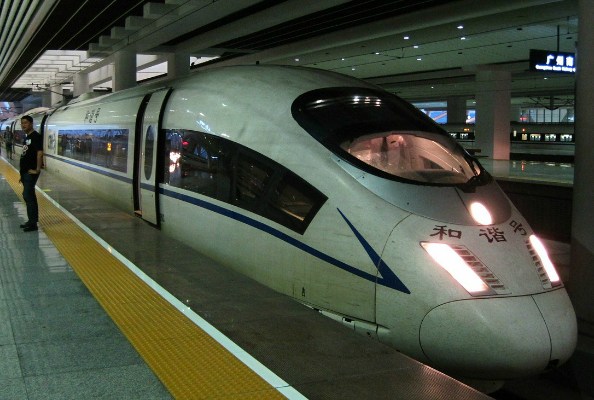
The latest solution to housing affordability is a high-speed rail link between Sydney and Melbourne financed predominantly from private capital.

Come again.

Well, the idea is that very fast transport links, such as covering the 878 km between Melbourne and Sydney in an hour of travel, would allow people to work in the city and live in the countryside where, of course, housing is much cheaper.

And should they cough up the infrastructure funds, the private sector can cash in on the growth in land values all along the route to easily cover the return on investment.

Now I should point out that the current commute from Penrith, an outer west suburb of Sydney, to the Sydney CBD, a distance of 55 km, takes at least 50 minutes on the fast train. The notion of getting to Melbourne by rail in just a few more minutes is fanciful.

You don’t want to know how long it takes to get to Canberra by rail, a destination not even half way to Melbourne. Let’s just say you’ll need to take a book.

But there are fast trains in the world and they move people around very efficiently indeed, famously so in Japan and continental Europe. And the new technologies for rapid transport systems make the working options look like a horse and cart.

Infrastructure at this scale does cost a lot of money. But there is also a lot of capital about looking for a return. So you can see why the idea emerges.

Except that it is crazily dumb.

The reason housing is so expensive is the concentration of wealth. The high paying jobs are in town and so people want to be in town. They pay rent (or a mortgage) for being close to work and this retains wealth in the city that stays in the hands of a relative few. Don’t forget the bank owns your house until the mortgage is paid off.

What would be better is if the jobs were more evenly distributed, then the people would happily move to the jobs. Demand in cities would slow and so would prices.

So instead of commuter trains, what about a high-speed rural train network designed to move produce rather than people. Give the aquaponics entrepreneur in Albury the ability to sell produce to the Sydney market where there are plenty of people still occupying the existing housing stock.

This would also get around the problem of an agricultural production system currently capital saturated. Farm business debt-equity ratios and production growth potential are maxed out under current practices. New production is needed to attract capital.

So rather than move the people to the capital why not move the capital to the people.

And this might even release some housing affordability pressure because capital has somewhere other than real estate to make a return.

Do you know what you want?

Do you know what you want?

A long time ago I was at a seminar by an upbeat American whose particular brand of snake oil was about how to get what you wanted in life. His specific pitch was creative visualisation.

Waved along by an expensive Italian suit he had people tell him exactly what they wanted in life. It was not enough to want a house with a picket fence. The deal, he said, is to know exactly where the house is, which suburb, street, and all the details right down to the shade of white paint and the distance between the rails on the fence out front.

Most of the people he asked to describe such detail did not have a clue. They had only a vague notion of what they wanted out of life.

Of course this worked like a charm for the charmer. “It’s all about visualisation you see.” He said, once again waving his arms. “If you can’t describe exactly the items you want you will never be able to get them.”

No surprise this has become a popular concept and not just because we are besotted with goods and chattels. Knowing what we want does motivate and guide our actions. Back in the day it got us out from the relative safety of the thicket onto the open plains where there was more risk but also success to be had, perhaps even a tasty warthog.

Today’s versions of warthog might be a new flat screen or the European coupe with the cute front grill and alloys, but the visualisation of things remains a strong motivator.

What do we want politically?

Wanting for things is easy but there is no reason it should not stretch to wanting a certain type of society with specific combinations of rights, freedoms, economic leanings and relationship to the past.

My hunch is that we don’t think of politics this way and have just as much trouble visualising what we want for society as imagining the most desirable garden border.

Clearly it is hard to see the radical-left or far right or Third Way as a tactile thing and so it is easy not to visualise our political stance at all. We don’t discover the detail of what our innate political leaning looks like in the smartphone world.

This is not about how you vote — the choice you must make among your countries versions of major party left or right or centre or even wether to pitch up to the voting booth. This is about what your leanings actually look like. How far apart are the rails on your radical-centre fence?

First you need to know how to place your innate political leanings. Where on the confusing spectrum of ideologies will you feel most comfortable?

Grab your smartphone and ask Google or Siri to search ‘political ideologies’ and click on the Wikipedia entry to see a very long list of the options. More simply you can follow these links to the main flavours

Left wing politics

Centrist politics

Right wing politics

Remember this is not about whether Wikipedia gets the ideological description correct, leave that never-ending argument to the political philosophers. Just pick the description that resonates.

In a jiffy you will have a description of the philosophies that align with feelings that always made you a staunch republican or so excited by Bernie Saunders vision of progression.

You will get to know what you feel about the tricky balance between personal and social responsibility — how much the government should interfere.

You’ll find yourself thinking about just how much capital should be allowed to flow and businesses encouraged with or without a social safety net. And, as former Australian prime minister Kevin Rudd was want to say, just how much of ‘a fair shake of the sauce bottle’ people should get.

You might even make sense of the Brexit decision and the new US president-elect although these events might be a stretch.

What you will find is that visualisation is hard.

Even if you land firmly in an established ideology that describes a political system with strong personal responsibility and a social safety net built on a free market economy [left-centre in case you were wondering]. What does that look like for policy on terror, boat people, exploitation of coal seam gas, or tax bracket creep?

So just like most of the people who had no idea that there were even shades of white in a picket fence, political visualisation is not for the lazy minded. It takes effort.

Only it is time to start making those mental images.

What do you want citizenship laws to look like? Should farmland be dotted with gas wells or modest pay rises tipping you across into the next tax bracket?

It is a very good time to do this because the shake up is upon us. The sauce bottles are out.

Just ask Donald.

Grexit

boat-ThailandBucket in hand you turf water over the side of your tiny sailboat as it bucks into the squall. It is a desperate act. The next wave will undo all your efforts. A few more big ones and the boat will sink.

What to do?

You could stop the eager bucket work and resign yourself to a dangerous swim in the open water. There is no doubt that if you stop the remedial measures the boat will sink.

You could keep bailing out and pray that the squall will end. At least then your continued bailing would steady the boat, maybe even raise it a little in the water above some of the less terrifying waves.

A glance at the sky leaves you forlorn. There is not even a hint of blue sky.

You look behind you and there is a huge tanker casting a vast and shadow over you. Its prow cuts through the angry water ignorant of the buffeting the waves are giving your tiny vessel.

A man in yellow waterproofs hails you from the bow of the tanker.

“Do you need help?” he asks through a loud hailer.

You raise your arms in a shrug.

“We can throw you a line. Tow you back to port” the man says holding up a ball of string. “Unfortunately we have to charge you for our trouble” he adds.

You beckon for the string not really sure what the last bit was about.

“Don’t forget to keep bailing” the man says as he tosses the string over the side. “Your boat looks like it is about to sink”.

Illogically the string feels like a lifeline. It is surely not strong enough pull the sailboat back to port but there it is. You are attached to something big and strong.

Another wave dumps a load of icy cold water into the boat. Time to bail some more.

Your hands are stinging from broken blisters and there is no respite. Every time you rest the water level rises. The bucket and your effort is not enough.

You stare at the string. It is not even taught.

You look up at the man in the tanker. He smiles back at you.

Then it hits you.

Why in the name of the Gods did you set out into a heavy squall in a small boat?

Monkeys like peanuts

Full disclosure throws up some very interesting comparisons.

For example we know that in Australia the prime minister is awarded an annual salary of $507,338

Not a bad earn. There will be allowances and the like and not too many groceries to buy thanks to endless corporate dinners and executive lunches. Certainly beats the socks off the salary of the average Australian that is $72,800 currently the 5th highest in the world.

Immediate reaction #1 — You have to be kidding, that’s far too much to pay a politician


Now we take a gander at the salaries of company CEOs. This is possible thanks to the requirement of boards to state executive remuneration in the company annual report. And there are websites that collate these numbers into accessible lists.

Turns out that the average [as in mean] salary of a top 50 business CEOs is $7,485,000 per annum. Just 15 times more than the PM.

In 2014 the pauper on the CEOs list, languishing down in 300th place on the earnings ladder, made $869,000

Immediate reaction #2 — You have to be kidding, that’s far too much to pay anyone


In what universe are the top ranking CEOs making decisions an order of magnitude more important that those of the prime minister. He was elected to look after our interests?

Turns out if you add up the salaries of PM and his cabinet ministers it comes to roughly $8.7 million — 13 CEOs earned more than this on their own.

It doesn’t make any sense. But if you, reluctantly I hope, accept that this is the world we live in where an individual is considered important enough to earn seven figures to run a company, then you get…

Immediate reaction #3 — You have to be kidding, pay peanuts get monkeys


Et tu Brute

Caesar‘You, too, Brutus’, said Caesar forlorn with sadness and perhaps a hint of incredulity across his brow at the moment of his agonised death. At least that is what Shakespeare decided were the last words of the most famous victim of murder for political gain.

I have just watched all three episodes of The Killing Season on iView — all 234 minutes in one sitting. It was an excellent piece of historical journalism by the ABCs Sara Ferguson that through interviews with key players lays bare the extraordinary events in Australian Federal politics from 2007 to 2012. There were four prime ministers, two elections and an open disregard for the best interests of the country. Easily the modern equivalent of murder for political gain.

Specifically it’s how a political party can trash itself from within. More worryingly it shows a triumph of ego over integrity that destroyed the public’s faith in political process.

Watch it. Pay special attention to body language and facial expressions. Some feelings are hard to hide even for the professional spin artists.

But this post is not about that sorry saga at all. It is about an opinion piece by Eleanor Gordon-Smith, a writer and radio producer who teaches philosophy and ethics at the University of Sydney.

Gordon-Smith claims that the violent words ‘assassin’, ‘midnight door knock’, ‘execution’ and the like have no place in rational journalism. Nice try but a hollow attempt to dilute the message.

I am sorry. No one can airbrush this blemish. The Australian Labour Party destroyed its integrity and that of the political process in not one, but two ‘coup de grace’. Luckily no daggers were required to achieve the ends — a leader replaced by another that the people did not vote for — but the result was the same.

That labour supporters resort to such pathetic excuses is actually more worrying still. It suggests that despite being shown the truth they still fail to accept that their internal systems were flawed. Systems so dysfunctional that individuals without a mandate and not much more than inflated egos could bring down prime ministers. The labour party should say sorry to us for such irresponsible behaviour.

Instead of clutching at a semantic straw they should fess up, preferably with a resounding commitment not to do it again. And, should the party govern again, it will promise to put the best interest of the country before any petty internal squabbling.

While all this was going on the political right weighed in with dirty politics of their own. They trash talked and played every card they had, including aligning with the kinds of extreme views that they now claim to despise. They too came out of this period smelling bad — like opportunists without a moral compass.

Caesar did not expect that his friend Brutus would desert him, but he did.

In modern times the political dagger is no less lethal because it destroys far more than political careers. It bleeds away our faith in democracy.

Stumps makes you dizzy

When I was a student we played a drinking game called stumps. There are variants on it everywhere but ours was a cricketing homage involving two teams of equal number. Ideally it was my mates lined up in single file on the outfield against the opposition we had just bowled out in their chase of our out of sight total. Each team member has a pint of beer in hand.

The first in line downs the pint and inverts the glass over his head to prove the point and then runs to a cricket stump in the ground 22 yards away. Sliding to a stop he places his forehead on the stump and then as fast as is humanly possible circles it 10 times without lifting his head. At the ten count he stands and runs back to tag the next teammate. The first team with all beers downed, stumps circled and last man across the start line wins.

Now there is no real reason for the beer. This game is hilarious when played sober for standing and running are relative concepts in a dizzy state.

Most people have a great deal of trouble staying on their feet let alone making it back to their line of cheering comrades. No amount of brow furrowing or steely gaze makes any difference as they make their acquaintance with the turf.

Nearby bushes simply add to the amusement.

When beer is involved, fast drinking is just an additional skill that can determine the outcome of the race. In tight finishes drinking can be replaced by pouring the beer over your head. More than once this has saved enough time to secure the win.

If drinking games are now just fond memories [thankfully] then suspend your reflex to berate the youth and give the game a try without the beer. It is truly funny to see determination on faces as they come crashing down.

It is also quite a metaphor.

We genuinely believe that we can control anything with our will.  And whilst we accept that luck might send external forces for good or evil our way from time to time, we can always rely on ourselves.

Our trust in control often defines us.

The lunacy of stumps cheerily explodes this myth. It is why it’s so funny.

The athlete, the nerd and the boofhead use their determination to the max visibly forcing out control over their bodies only to fall over.

It is a true leveller.

Postscript on spin

The thing is if you spin around enough times and then try to reach a destination the chances are you will fall over and look very silly.

I think that Petr Cretin suggested that this game would be a ripper to play and Tony Abbott agreed.

Sure enough he looks very silly.


The against colour

In recent weeks I have been running around more than usual talking to people who wear suits to work. They have nice offices and meeting rooms with coffee to order brought in by waiters with Kevin on their name badge. This is all very nice if a little challenging for your caffeine intake.

The discussions have been about green bonds, a newish variant on a familiar form of fixed income investment. Along with talk of debt, security, risk and annuities, a conundrum that befuddled the starched white-collar folk was how to define green — often put as succinctly as the simple question, ‘what is green?’

Pause for a moment to ponder this situation. Here we have the business end of town asking a question that they have always managed to ignore. The very question that environmental advocates have consumed careers trying to get them to even think about asking.

There was even the suggestion that failure to answer the question might slow the process of green bond origination. Suddenly the health of the environment was important…

Surely not.

But there it was, the question they wanted answered was ‘what is green?’

Regular Alloporus readers will know that green is not my favourite colour — pastilles are more me. Green is a colour waved to claim goodness and the moral high ground and a banner to deny and repel a host of things that some people find useful — the mahogany table in the meeting room for example.

But my fundamental problem is that green is an ‘against’ colour.

Green is against logging, against clearing and against anything that damages nature. Green is against exploitation, excess and exuberance. Green is even against agriculture even though vegans still have to eat something

All this ‘against’ naturally comes with the requirement of being ‘for’ anything that is green. You have to be ‘for’ saving the koala, forests and anything indigenous. Habitat corridors are good green things and so we have to have them. The fact that evidence for the green credentials of corridors is equivocal should just be ignored.

Before I am trolled into submission for my heresy, let it be known that there is green in me beyond my many lime green t-shirts. I try to reduce, reuse and recycle and would prefer to see better use and protection of the environment.

And having been lucky enough to see them in the wild I know it would be gut-wrenchingly tragic for the black rhino to go extinct in my lifetime as seems increasingly likely. My science training reminds me that the loss of any species is irreversible. I even felt a little nauseous at some Youtube footage of bow hunting that turned up in a review piece.

Except that all this has nothing to do with the question of ‘what is green’ asked over coffee on the 14th floor. That was asked with a very different thought in mind. The question was about how to show the activity could deliver more than the required financial benefit.

On any number of levels that was weird.

The answer needed a list of benefits and ways to record and report them. This is actually how business people think. They count and they account. It would not be enough to say that green is against these things and for some others.

Of course business has no real interest in green. They are looking for the cheapest finance with the fewest strings attached. If one of those strings is green, so be it.

I wonder if the ‘against’ colour can handle that.


Other Alloporus posts on green…

Greens

Green has moved on

The greens need a new name

Evidence-based decisions

Melbourne-skylineIn the last month I have been exploring decision making in business. It’s a long story that spins around one core assumption that I needed to test. The assumption is this.

If evidence is available people will use it to help them make smart choices.

Now I always thought that before any serious decision was made the brain recalled and sifted its available knowledge relevant to the decision. This coffee is hot. It must be because I just saw the barista pour steaming milk into it so I will sip it to avoid burning my tongue.

Other decisions rely on less categorical evidence. My superannuation scheme allows me to choose between steady and more risky but high-yield investments that have something to do with the mixture of stocks and bonds in my portfolio. I choose the steady option because I remember seeing a graph showing share price crashes occur often enough for another big one to happen before I retire.

Sipping coffee or avoiding risky stocks are evidence-based decisions even if the amount and quality of the evidence used is vastly different.

As a professional scientist evidence is my currency. Training and experience have taught me the skills to sift data into facts and to understand how facts can become evidence. And I always hope that the evidence is articulated in forms that influence decisions. This is a powerful paradigm that still underpins my consulting practice alloporus environmental.

It always made perfect sense to believe that if the human brain makes decisions based on facts, then if evidence were available people would use it.

Oh the bliss of naivety. If only it were possible to be in such a state indefinitely. Life would be so much easier.

Then I began to ask business types this question.

If evidence were available to help decision-making, would you use it?

Mumbling ensued. In just a handful of meetings it was clear that the real answer was no. There were claims of course and even the occasional example of actuarial prediction or due diligence report, but in reality decisions are gut feel things.

At best evidence is gathered in support of a decision already made.

It has been quite a shock to find a core assumption that is a given for a scientist is at best bent and at worst ignored in other walks of life, even where evidence is needed.

Then I paused and realised where evidence comes from for the majority of people who do not have the time or inclination to peruse academic tomes. It comes from their experience; usually their immediate experience that is still in the front of the mind.

And a good deal of this ‘evidence’ is incomplete.

What we see in the workplace or told by the boss or browse on the web is not evidence in the scientific sense. Even if it involves data it has no context to determine inference. In short we decide on a whim. What our guts tells us.

If this is true it begs some very interesting questions.

Why doesn’t the system fall over if we are relying on the [mostly] corpulent guts of [mostly] male business managers?

Why do we have evidence at all if nobody uses it?

Would decisions be better if they were made analytically?

Time for scepticism

coal mineAt what point did scepticism become a dirty word?

Perhaps it was when political correctness overtook us and we were forced to accept convention or risk ridicule from everyone, including the kids. Maybe it was when we disappeared into the virtual world where the only thing reminding us of reality was stiffness from ‘smartphone neck’. Or maybe it was when the media purposely made sceptic and denial mean the same thing.

Here is quick reminder of the real definition of sceptical… not easily convinced; having doubts or reservations.

What this means is that a sceptic is not convinced by the first thing she hears. She thinks about new information, turning it around to see it from all sides. She seeks other opinion, even counsel. She thinks some more and then makes a decision to believe or not.

The sceptic is not a denier even though she may choose to reject what she is told. She is much smarter than that — she starts with the idea that whatever new information is heard may not be all that it seems.

Recall any scene from your favourite reality TV show. The editors pull together snippets of action to present the most drama and then milk it with liberal use of mood music enhancement. This can make the little craziness in the scene much wilder and entertaining; but if we believed all these capers as the truth we would be foolish indeed.

Now let’s consider how the sceptic would deal with a more difficult example.

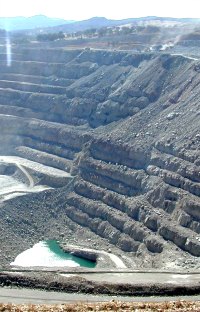
Should we believe the Australian government when it says that giving mining companies taxpayer funded offset credits to capture methane at new coal mines is a good tactic to achieve policy targets for emission reduction?

Under any carbon price mechanism the idea is to reduce the carbon intensity of human activities. This means that energy generation, manufacturing, transport and agriculture [the sectors that make up almost all the greenhouse gas emissions] should release less carbon to the atmosphere than in the past. Where the activity can’t be made less intensive, such as a coal-fired power station, emitters can buy credits [or are given allowances] that, in time, make them commercially inefficient and so they are replaced by cleaner technologies.

Methane gas is often associated with coal seams. The whole coal seam gas debate is about extracting this methane as a fuel source. But when the resource in demand is the coal, the methane is either incidental or too expensive to capture. Usually it is released to the atmosphere where it contributes to climate change effects because methane has 23 times the global warming potential of carbon dioxide. Capturing and burning the methane from coal mines would reduce this emission source because methane converts to carbon dioxide when burnt. And carbon dioxide has a net global warming potential of 1.

Burning methane would reduce net emissions from the activity of mining coal.

Except how does this contribute to emission reduction when new coal mines will extract millions of tons of the very stuff that generates greenhouse gases in the first place. No matter that most of the coal is exported and ends on the emissions accounts of another country.

Whatever the rhetoric the taxpayer is actually paying for more emissions not less. In effect it subsidises the development of new coal extraction capacity. This cannot be “a good tactic to achieve policy targets”.

So what should the sceptic do with all this? Be themselves and be sceptical, very sceptical.

This is a ruse by the mining sector to get paid for emitting, the exact opposite of the original policy objectives.

Sounds Crazy #12 | Fossil fuel subsidies

Here’s a thing. Why would you have any international agreement to reduce carbon emissions when governments across the globe are spending 8.5% of tax revenue on fossil fuel subsidies?

Allow yourself to imagine that you come from a nation where the per capita emissions was less than the global average of around 4.5 tCO2e — you could choose any from around 120 different ones.

You would not be too chuffed at any international agreement on emission reduction when you find out that a big chunk of taxpayers money goes to propping up the problem. You could ask this perfectly sensible question: Why not reduce the subsidies? Wouldn’t that make emitting more expensive and be the very market force that complex trading schemes were designed to achieve?

Now you would be told, well yes, but it’s not as simple as that.

Except that it is.