Maximising shareholder value

Maximising shareholder value

Any sane historian would have to admit that the wealth generated from the industrial revolution has come at an environmental cost.

Forests converted to paddocks, wetlands drained for suburbs, coal mined and burnt into the atmosphere, not to mention the supply chain infrastructure criss-crossing the landscape to feed and house everyone. The more perceptive would also see the trend as ongoing, boring into the environmental fabric that delivers fundamental human services. Development has done more than create smartphones.

The entrenched requirement to maximise shareholder value — it is usually illegal for company directors not to do this — ensures resources are exploited and costs externalised. And the legality neatly justifies these outcomes.

Except that value to shareholders is time bound.

Suppose that shares in a company have generated a consistent dividend of 7% per annum for a decade. These are not spectacular returns but a solid delivery of shareholder value over time. Inexplicably over the next few years, the dividends tank and the share price goes south too. The directors pull out all the stops to maximise shareholder value and their fiscal reporting says that they have done everything possible. It’s just that they maximised a very small amount of value.

A second company returned 4% on shares over the same ten years. Not so good. However, shares continue to return 4% for the next decade and the decade after that because the directors chose not maximise value. Instead, they maximised longevity in returns. They optimised shareholder value for the long haul… and went to jail for breaking the law.

If you invested $1,000 in each company, reinvested your dividends and chose to liquidate your overall value after 30 years, which company made you the most money?


Post script — It would seem that shareholder primacy is the formal term for some of this concept and people are questioning if it should still be the purpose of corporations

Leadership for the environment

Leadership for the environment

Be curious and humble

Be courageous and confident

Kat Cole, the 30 something president of a $1 billion brand believes that great leadership requires just these four key qualities.

Makes good sense.

Curiosity is essential for anyone leading the way along new paths into unknown territory. It implies a willingness to learn and anything genuinely new always supplies a steep learning curve.

Humility is self-restraint, self-understanding, awareness, and a good sense of perspective meaning that it is not about me. This is a true leadership quality.

Courage seems obvious. Someone must be the first to step out into the unknown to take on the curve.

Confidence is contagious. It energises those who have it and everyone they meet. It is a powerful attractive force that gathers and holds people together to deliver more than the sum of the parts.

There are few leaders who do not have these qualities. Absence or even a shortage in any one of them and a would-be leader couldn’t move forward and bring others along.

What do these qualities mean when it comes to environmental leadership?

Anyone with a smidgen of interest in the natural world usually has some curiosity. Variety, the unusual, and the strange are present in everything from trees to termites, and not even Sir David has seen it all.

Stand close enough to a wild elephant to hear her stomach rumble and humility will cascade over you to wash away your awe. Put a spoonful of soil under a microscope and the life teeming across your vision should make all your first world problems melt away. Once seen for what it truly is, nature can humble the mightiest ego.

They don’t call them environmental warriors for nothing. There is a fight on that demands courage enough to stand against convention and take on the reality that modern living exploits nature. It is hard for even the simplest sustainable action to be easier or cheaper than business as usual.

So far, so good as we can expect that most environmentalists are curious, humble and courageous.

Confidence is a feeling of self-assurance usually arising from an appreciation of one’s own abilities or qualities — the expression of self-belief.

Now here I would argue that environmental leaders have a problem. Many are strong, articulate and outgoing individuals for sure. And they are often passionate, sometimes fearless, advocates.

But these traits are not confidence.

Confidence can be very hard for environmentalists because at some level they all participate in the actions that exploit resources. They drive cars, fly in aeroplanes, consume the products of commercial agriculture and feed their dogs. They live a life that they know contributes to most environmental problems.

Only true narcissists can overcome such incongruity to be truly confident. Normal folk cannot overcome the flaw and appear fake or overly aggressive.

Right to vote

Right to vote

Throughout most of human history, democracy was not the norm. People were governed and told what to do in systems of focal control by kings, lords, chiefs, dictators or a single political ideology. Individuals had little say and even less choice.

The majority of people who have lived could not vote for anything. They just did what they were told or face stern consequences. Casting a ballot without retribution is a recent gift from democracy.

A cursory glance at history should be motivation enough to get down to the voting booth. Yet here we are, a few hundred years into the experiment of democratic freedom, and Australia, a safe, open, and multicultural nation forces its citizens into the ballot box. For the roughly 15 million registered voters in Australia, voting is compulsory.

At every Federal and State election if citizens fail to cast a vote they get a fine. Australia gives its people the right to vote and then punishes them if they fail to exercise that right.

Not surprisingly, Australia tops the table for voter turnout in national elections at around 95% of registered voters.

Surely this stick of compulsion is not necessary.

A free vote is a privilege not afforded to everyone. Citizens must know how important the right to vote is to their sense of self. They must know that many before them have sacrificed everything to make it so.

I’m curious to know why compulsory voting came in. Was there a run of lowly turnouts? Maybe it was because a forced engagement with the political process would encourage greater attention to it.

Most likely it was a government who figured out that they had a better chance of retaining power if everybody voted because most of the previous no-shows would vote for them. This would be classic Muppetville logic.

If politics was relevant and those elected were in touch with voters if politicians were courageous and led the way, if there was confidence in leadership, then there would be no need for a fine.

In the US where the privilege of democracy is entirely voluntary, voter turnout languishes at less than half of registered voters.

I wonder what the 100 million plus no shows think about their lethargy after 100 days of their ginger topped POTUS.

Where does life take you?

Where does life take you?

My youngest son has just taken a trip to London on a one-way ticket. It’s a brave move and even though he only intends to be away from Australia for a year, I recall leaving the UK for Zimbabwe with a similar intention 30 years ago. I’m still to make my way back for anything more than a holiday.

Once you step out into life, there is no telling where it will take you. This is a challenging realisation for a parent. When your son exists the departure lounge the mixed feelings of pride and loss are excruciating.

Through the wonders of Whatsapp we heard from the intrepid traveller a few days into his sojourn. His most acute initial observation was that if a beer is over five quid a pint and most casual work pays less than a tenner an hour, London is expensive.

Indeed it is, although by the beer and minimum wage metrics, probably no more so than Sydney. It’s just that on your own in a new country such sums take on a whole new meaning.

Already his initial plan, which was to find casual work after first having a look around, is fast-tracked. Some of the looking will have to wait. Apparently, a Scottish cousin might have some work in Wales.

And there it is. Life is already taking him in new directions after just a few days. It really does make you smile.

My own journey from a childhood in London to the quaintness of Norwich via Zimbabwe, Botswana, and suburban Sydney to my longest residency the Blue Mountains of NSW makes me smile too. It wasn’t planned especially. It had ambition at times, frustrations aplenty, and a vague logic that joins up the thread, yet really it was just a willingness to let the universe decide.

It is worth doing that I think. Be courageous enough to by the one-way ticket, then, all you need is the belief in what the world can offer.

As for the lad, nothing doing in Wales yet but a bedsit and barista work in Shoreditch, that is, apparently, a really happening place.

Madness

Madness

Here is what Professor Brian Cox, a particle physicist at the University of Manchester and popular interpreter of science, has to say about those who ridicule or ignore scientific consensus.

Imagine that we’re flying on a plane, and imagine that the passengers decide that they think they can fly the plane better than the captain. So they say ‘come on, we’ve had a vote and we all think that it’s our right as a citizen to land this plane rather than you. It doesn’t matter that you’ve studied it for 20 years

Do you want to be on that plane? I certainly don’t.

Any regular reader will know that I am rarely effusive on the qualities of scientists. I have doubts over the quality of research and the peer-review process that is supposed to maintain it. I question the training of future researchers and lament a seemingly pervasive misunderstanding of inference. The bunkers that scientists hide in restrict their worldview and too often the tug of opinion overrides objectivity.

But these are nuanced gripes of the middle aged.

I have never doubted the core of what science is and does. Any foibles are just that. Even modestly applied, the scientific method builds knowledge and understanding of everything from rockets to growing rocket. Without it we would still be hunting and gathering.

The captain of the plane may not be the greatest pilot on earth but I ‘d rather he have the controls than the elected nominee from random passengers.

Anyone who agrees should have a polite conversation with those who are comfortable that the $5 billion a year US Environmental Protection Agency has a budget cut of 30% whilst the US defence budget goes up by $50 billion, a 10% increase.

Madness.

Welcome to Muppetville

Welcome to Muppetville

In the Urban Dictionary the top definition for muppet is “a person who is ignorant and generally has no idea about anything”

Muppetville is the place where these people live… in complete bliss.

Imagine for a moment how delightful it must be to reside in Muppetville. You are totally unaware of your ignorance and dearth of ideas. All the people around you are just like you. They are clueless too.

Good coffee is available everywhere and there is never a day you need to pack your own lunch, or dinner for that matter. Rarely are there times when you must be quiet. A comrade or colleague is always nearby and eager for an exchange of glibness. Days are so full that there is not a moment to think. And all the time other Muppets are crazy busy rushing around to normalize your own mania.

There is no risk of some smartarse blasting your argument to the moon with a gentle quip. Ideas people rarely visit. The protection of so many fellow Muppets means there is no reason to doubt anything. And no fear either because as a clueless person you have no awareness of anything beyond the end of your nose.

Most remarkably, and for reasons not fully understood, the real world wants to know what’s going on in Muppetville. Every day, TV cameras and genetically blessed youngsters report on every move, random word string, and hi-vis vests of residents.

And there are many things to see. The revolving doors are always interesting. The gravity defying backflips are cockroach common, but thanks to the accompanying conviction failures, they rarely disappoint. And there are tears, always tears, despite the bliss.

Sometimes a Muppet will put on an extraordinary media performance that stands out from the usual incoherence. Here is a link to a fine example. These episodes are a glimpse inside the minds of people who live without ideas and knowledge.

When Muppets venture out of the ville, never alone and always protected by a coterie of blessed youngsters, they maintain a brave face. This shows tremendous courage. Not everyone can so easily leave the comfort of home to face bewilderment. Perhaps they do this to prepare for eviction that is surprisingly common.

There are many would be residents of Muppetville. Plenty of people want to live there. But it takes ruthlessness, some patience, and demonstrable incompetence to get in. Not everyone is up for that.

In fact, Muppetville has, over the years, drifted away into a kind of never-never land. Its residents and newcomers float with it unable to alter the current. Fewer and fewer people want to go there now. If this were evolution perhaps a new race would emerge from this drift, rife with inbreeding depression.

This could be the source of our fascination. Curiosity over where the current will take this lot next. Perhaps, but more likely, we are equally dumb.

After all, we let them run the country.

The quiet carriage

The quiet carriage

You are commuting to work on a train along with a few hundred others. It is quiet, a Monday morning. So quiet in fact that there are few sounds. The hum of the air conditioner, a rustle of a breakfast bar wrapper, an occasional cough, and the guard announcing rules for the quiet carriage.

At the next stop a young woman boards. Her phone is in her hand and she is deep in conversation. She blurts out a whinge against her family and it is loud. Her normal voice probably. She is not especially angry or agitated, as the complaining seems natural and well practised.

Now imagine what would happen if the commuters, still all quiet and respectful, were to arrive at this woman’s home this evening. They would not do anything. They are there to just stand in the corners and along the walls of the room and listen to the private conversation.

Of course, there would be incredulity and bedlam. The police would be called and the incident recorded in gossip for a generation.

The woman is easily aware of an invasion of her space but is totally oblivious to her invasion of others. In fact, if you point out to her that she might be disturbing the peace she would tell you to fuck off to the quiet carriage.

This is an insidious challenge.

Awareness of self and others is the core ingredient of both personal happiness and societal success. And it seems to be slipping away from us. As individuals retreat into their technology so they lose touch with themselves and everyone else.

Many have written about this and many more will suggest solutions. So here is mine.

Teach yoga to school kids.

Really poor leadership

Really poor leadership

Direct action on climate change is costing the Australian taxpayer over $2 billion to achieve around 177 million tCO2e or one years worth of abatement to meet the emission reduction target Australia presented in Paris.

A few people are being paid a lot of money (more than double the global market rate) to generate abatement while emitters continue to externalise their contribution to a warming world.

Policy that is in the interest of a few and the detriment of most is not good policy whatever your political leanings. Direct action is even worse because the government of the day is not committed to climate action at all. And instead of owning this position, they pay a sop to the voters, pretending to do something that is actually a way to line the pockets of a few.

The painful satire from Ross Gittings that sums up just how stupid modern politics has become tells us just how pathetic our political leadership is. And for once there is no mention of The Donald.

When something is really bad it does not tend to persist. This is true of really good things too because there is a regression to the mean in most things. The average eventually reasserts itself.

This will happen to our current leaders and perhaps to the current political system. Parliamentarians and those feeding off them should be worried.

Claiming coal is the answer in a record-breaking countrywide heatwave is as stupid as it looks. Everyone can see it.

Soon they will also see that many other policies, such as the ERF, are useless and unfair.

Disruption is at hand.


The biggest global challenges revisited

The biggest global challenges revisited

I am an ecologist of the academic kind so this typical list of the significant challenges facing humanity makes perfect sense to me

  • global biodiversity loss
  • anthropogenic pollution and associated climate change
  • land allocation
  • energy generation
  • growing global human population

Here are some similar lists from the United Nations, the Millenium Project and the World Economic Forum.

The usual suspects crop up that are mostly about loss and degradation from resource use by an ever increasing human population.

What is interesting though is how this type of list often conflates cause and effect. In the one above most of the biodiversity loss is a result of past land allocation (most people call it land clearing) itself driven by demand for food and space from a rapidly growing human population.

If we stopped population growth there will be lags before any tangible change in the consequences. There is also the small matter of resourcing the current population. So the challenges will not resolve simply by removing the driver. This is also true for many conservation issues too.

Somewhat ironically the most effective way to slow population growth is through wealth creation. When parents can see a future for their children they have fewer of them. This involves worsening the problem in order to fix it; always a risky proposition.

I propose a new list of biggest global challenges and here it is

  • raising awareness

That’s it, a list of one and only one item. If we raised awareness of self and of situation for everyone there is a good chance that the human race could persist alongside a functional environment indefinitely.

The issues on the usual list would persist for a while, but with everyone aware of them, creative solutions would be found. The reason is that awareness comes from a loss of ego. It makes most people far less concerned about themselves. They feel good from the greater good. Weird, but true.

What I really like about this list is not brevity, although that is a handy property, it’s that awareness is the solution to the fundamental producer of global challenges. The human psyche.

Awareness messes with our values, beliefs, prejudices and any number of other emotional and logical thought consequences of our brains. It challenges us to be more than slaves to ego.

This makes it a huge challenge. It dwarfs any of those on the lists of biggest global challenges.

Because it is up to you.

High-speed commuting

High-speed commuting

Here is an interesting idea that uses a solution to one problem to solve another.

House prices in the major cities of Australia are pretty much out of reach for working families not already in the market. Just to keep the roof over the kid’s bedroom is costing well over 50% of the family income for renters or buyers.

The latest solution to housing affordability is a high-speed rail link between Sydney and Melbourne financed predominantly from private capital.

Come again.

Well, the idea is that very fast transport links, such as covering the 878 km between Melbourne and Sydney in an hour of travel, would allow people to work in the city and live in the countryside where, of course, housing is much cheaper.

And should they cough up the infrastructure funds, the private sector can cash in on the growth in land values all along the route to easily cover the return on investment.

Now I should point out that the current commute from Penrith, an outer west suburb of Sydney, to the Sydney CBD, a distance of 55 km, takes at least 50 minutes on the fast train. The notion of getting to Melbourne by rail in just a few more minutes is fanciful.

You don’t want to know how long it takes to get to Canberra by rail, a destination not even half way to Melbourne. Let’s just say you’ll need to take a book.

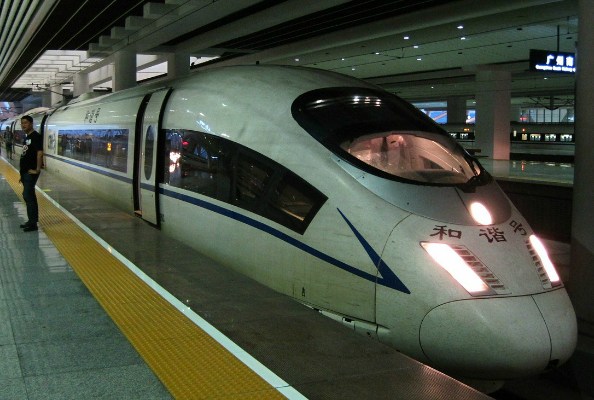
But there are fast trains in the world and they move people around very efficiently indeed, famously so in Japan and continental Europe. And the new technologies for rapid transport systems make the working options look like a horse and cart.

Infrastructure at this scale does cost a lot of money. But there is also a lot of capital about looking for a return. So you can see why the idea emerges.

Except that it is crazily dumb.

The reason housing is so expensive is the concentration of wealth. The high paying jobs are in town and so people want to be in town. They pay rent (or a mortgage) for being close to work and this retains wealth in the city that stays in the hands of a relative few. Don’t forget the bank owns your house until the mortgage is paid off.

What would be better is if the jobs were more evenly distributed, then the people would happily move to the jobs. Demand in cities would slow and so would prices.

So instead of commuter trains, what about a high-speed rural train network designed to move produce rather than people. Give the aquaponics entrepreneur in Albury the ability to sell produce to the Sydney market where there are plenty of people still occupying the existing housing stock.

This would also get around the problem of an agricultural production system currently capital saturated. Farm business debt-equity ratios and production growth potential are maxed out under current practices. New production is needed to attract capital.

So rather than move the people to the capital why not move the capital to the people.

And this might even release some housing affordability pressure because capital has somewhere other than real estate to make a return.