When craziness is too much

When craziness is too much

Sometimes the craziness is too much, it blows your synapses away. You are left in a bucket of incredulity.

Cop this quote from the former Australian PM Tony Abbott reported by SBS online from a summit in Hungary trying to explain the real threat to the existence of his kind…

“It seems to me that it is not so much our failure to reduce carbon dioxide emissions, but our failure to produce children that is the extinction reality against which we really need to work against”

Tony Abbott, Former Australian Prime Minister

Let’s just pause a moment.

This blatant click-baiting is trying to trick us that even though Australia failed to reduce emissions, that’s not the biggest problem. That accolade goes to our inability to produce enough white people.

Seriously, enough white people. You are kidding, right?

At first, I thought that I should write the obvious rebuttal that we are already reproducing 8,000 people per hour. An hourly net increase into the grand diaspora of the world, and it should matter little what tribes they come from. There are more than enough people to go around and satisfy every neoliberals wet dream.

Only when we last looked, the distribution of people and resources is uneven across the world. This means that some places will be crowded and run out of resources. And when the population growth rate is high, crowded places will become difficult to live in and people will want to leave to find a better opportunity. Emigration is inevitable and these people have to go somewhere.

Do you want to live in these crowded places? No, neither does Tony.

But then I thought again.

This kind of craziness is too common compared to the proportion of people who might actually believe the nonsense.

Here is a fascinating graphic from Statista chart of the day

What it says is that less than 1 in 20 people actually deny the existence of climate change in most developed countries. A party representing this minority would never win an election and yet the rhetoric from the deniers remains powerful in the social mix.

This is what Abbot and his cronies bank on.

They know their opinions are not shared by most but that is not what matters. Influence is the game and, no matter there are kids on strike and a 16 year old girl calling out the UN, these noisy minorities are good at it.

It turns out I can’t push the incredulity aside. It is gut-wrenching because these people are incorrigible.

What I have to learn is that numbers are not enough.
Did the Daleks really mean it — Do we?

Did the Daleks really mean it — Do we?

“Exterminate! Exterminate!”

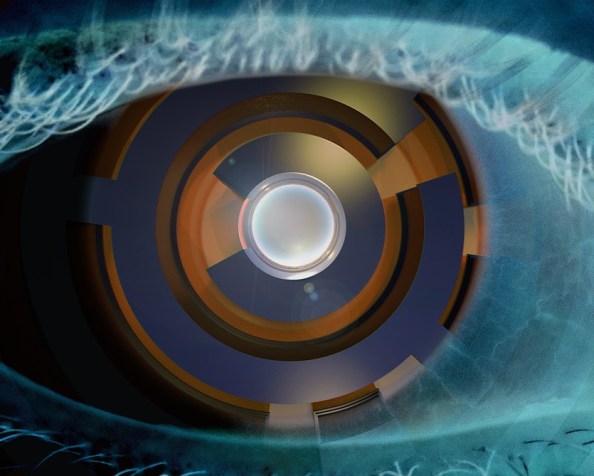
So shrieks the violent, merciless and pitiless cyborg aliens that Terry Nation invented to populate the Dr Who television universe. These complete metal-clad gits demand total conformity as they seek conquest of the universe and the extermination of what they see as inferior races… just like the Nazis.

Engineered by Davros to have nothing but hate in their souls, the Dalek is the archetype villain that can only be stopped through destruction. Be or be killed. Throw all that anger and disgust toward the source of hostility and exterminate them or they must destroy you. No half measures.

Jeff Sapprow thinks that our current global environmental crisis embodied by warming and biodiversity loss is an ‘extermination event’ and claims that the people killing nature know what they are doing.

Here are just two snippets from his piece in the Guardian.

In 1988 George HW Bush promised on the campaign trail to fight climate change. “I am an environmentalist,” he declared. “Those who think we are powerless to do anything about the greenhouse effect are forgetting about the White House effect.”

Jeff Sparrow

HW wasn’t an environmentalist and the White House? Well, it is just a residence with ineffectual tenants. No matter than some were well-meaning.

“In 1997 the world’s leaders signed the Kyoto protocol, with Bill Clinton declaring “a commitment from our generation to act in the interests of future generations”. More emissions have been released since that agreement than in all of previous history.”

Jeff Sparrow

Yes, in all previous history.

The last twenty years have seen us all burn, belch and clear to release more greenhouse gas than the combined efforts of all the people gone before. The Daleks would have nodded if they could.

That we have done this with intent, along with the habitat conversion, pollution and resource depletion that goes with it, is a bold call. Did we do it to exterminate and control the universe or just to make a buck and fuck?

The evidence is that we have not been blind. The warming and the loss we have known about since the 1950’s making ignorance a poor excuse. If we knew what was happening, then we knew what we were doing.

Obviously we knew (know) that we were (are) pillaging but our intent was (is) probably personal.

We each want a better life for ourselves and, maybe at a push, for our children. Better means more food, a bigger house, bolder cars and streaming services. Those in less blessed places just want some food and a bicycle. Either way, it is personal motivation, not exactly global domination at the expense of the weak and inferior that guides our behaviours.

However, it is bold to say that our intent is to exterminate.

The Dalek caricature strips back any mediating emotions to leave hate as the primary source of power for raw hate is blind and ruthless.

Surely we have some mitigating emotions within us. There is a kernel of goodness in there. We connect, love and live amongst each other most of the time. That you can dial 000 and get help remains quite remarkable evidence that we are not all bad.

Indeed, when my tooth broke this week and my wife booked a dental appointment for the next day from her phone at the beach it was awesome. Then when the treatment was super high-tech and the dentist first-class fixing the tooth within 24 hours I knew I was both fortunate but also grateful.

So I do not believe it is an extermination event, even though it looks like one.

Humans are not pitiless cyborgs but we are easily led by the stupid, ignorant and morally corrupt. The result might be the same.

I’ll leave with a reminder from Jeff Sparrow’s piece of how fine the line is between the two motivations.

“How petty, how small, how childish do those politicians with the temerity to attack Greta Thunberg look! She speaks for science, idealism and hope; they embody an ignorance or cynicism so deep as to constitute depravity.”

Jeff Sparrow

More on the CEO salary issue

More on the CEO salary issue

In a previous Alloporus post on average CEO salaries Alloporus commented on reports that $187 million was paid to the top 10 CEOs in Australia in FY17.

That is a whole heap of cash.

It made sense to try and put this number into context. A quick calculation revealed that the $187 million pocketed by the CEOs was roughly 6,309 person-years worth of time for money at delivery driver rates.

Over 6,000 person-years for the work of 11 men.

The comment was that this amount of money was smelly, very smelly indeed.

Here is what happened in the FY18

That little lot adds up to $148,343,764. A bad year for the CEOs. Heaven forbid a terrible year, drought and pestilence on us all.

The top dude earned $13 million less and the overall total was well down.

Only it still stinks, especially as many of the same blokes are on the list.

Not sure what happened to the pizza guy though.

At some point it will be clear that whilst there is some sense in paying people to make tough decisions and to take responsibility, there is a limit to what is reasonable and respectable. What we have in Australia at the moment is neither.

Some numbers you should know

Some numbers you should know

In May 2019 the UN Intergovernmental Science-Policy Platform on Biodiversity and Ecosystem Services (IPBES) released a report with this headline for the media release

Nature’s Dangerous Decline ‘Unprecedented’ Species Extinction Rates ‘Accelerating’.

No doubt this is designed to be scary.

Any sentence that includes ‘dangerous’, ‘unprecedented’ and ‘accelerating’ strategically placed among the eight words is not a feel-good aphorism.

I could be glib here, but for once I will not.

Cooked or not, the numbers are bad. And despite the hyperbole, the UN technocrats didn’t put ecosystem services in the title of their organisation for nothing.

It is true.

We are eroding natural capital that includes biodiversity at a rate that will hurt us through declining ecosystem services that include everything from food production to clean air. This is happening just when the demand for these services is greater than ever before and grows by the day along with an expectant population.

The loss of turtles, koalas and pandas will dominate the media comment and fuel the angst but there are a couple of summary numbers that you should also know about.

300% increase in food crop production since 1970

This is a remarkable gain.

Even the stingiest financier would take annual growth of 6% over 50 years. It is more remarkable considering that by 1970 the Green Revolution had peaked thanks to extensive adoption of fossil fuel inputs via tractors, fertilizers and pesticides.

The implication of the 300% for ‘nature’s dangerous decline’ is that along with technologies for production efficiency land has been appropriated for crops. This worries the IPBES because land converted to agriculture not only reduces the land available for wildlife, it also increases habitat fragmentation, water pollution from nutrient and pesticide runoff, encourages weeds, and creates additional greenhouse gas emissions.

So the biodiversity losses from the growth in agriculture will be the headline.

Pause for a moment though and remember that since 1970 more than 4 billion people have joined in the global fun and games, more than double the number around when Barry White was gonna love you just a little more baby.

There is a bit of chicken and egg here but we would be lost without all that additional food.

Here is another number to ponder.

23% of land area that have seen a reduction in productivity due to land degradation

This is a remarkable number alongside the 300%. All that food production gain came in spite of nearly a quarter of agricultural land becoming degraded.

At the core of this contradiction is that we clear land for production all the time. This helps keep the production curve going up even as we mine and degrade the soil in one in four of the fields and paddocks where the food is grown.

This will have to stop at some point when there is no more land to clear.

This land shortage will happen. It already has in some parts of the world. Then we have to get smarter in how we use the agricultural land we have so that it is restored or, better, does not degrade in the first place.

We can do this. We know how to do it. There is even a simple premise to cover all the specifics — restore soil carbon. Do this across all landscapes and many of the biodiversity and climate issues are eased. It is not a silver bullet but it is darned close.

“Soil,” you say. “What does dirt have to do with anything?”

Well, this is the foundation of all things – our food, clean water and pure air. Soil is the foundation because it is where the plants grow.

Whilst we learn to replace the soil with hydroponic and aquaponic food systems and proteins from bacteria, the bulk of our food for the next 100 years or more will need soil.

The IPBES report does mention soil several times. But, as is usual, soil is not in the headlines.

It really should be.

Perceptions are everything we need to question

Perceptions are everything we need to question

I just read a fascinating book entitled Radical Help by social entrepreneur Hilary Cottam. This woman, a maverick with a heart of gold, is taking on the establishment in ways it hates, by questioning everything.

What she has discovered is gold.

She begins her descriptions of what she calls ‘experiments’ with a social statement, here is one…

Wages for more than twenty million British families – 64 per cent of the population – are too low to live on. It is worth repeating that a far greater proportion of benefits are paid to those in work on low wages than to those out of work, as for millions the categories of work and welfare collapse into one another.

Hilary Cottam, Radical Help

In other words, the economic system is failing the majority, including those who find fulfilment and purpose in gainful employment.

Add to this 64% figure the fact that payments to those out of work account for just 1% of the UK welfare budget – equivalent to less than £3 billion a year – and the clear implication is that people are not bludgers, they want to work for a fair wage, enough to live and raise their families.

Thinking on these numbers some more, Cottam adds another key insight. People want purpose. Give them this and they will not only work hard but at almost any task aligned to their purpose.

How easy should it be to harness this immense power? When people can connect, cooperate, innovate they will solve what seems intractable. Everything is possible with aligned people power. Except that this is not some neo-socialism virus about to infect us all, it is actually about each person and how each one of us goes about our everyday lives. It is the power to grow our own wellbeing.

At the core of this power is the human connections we make.

When we are close to one another we literally move mountains. When I tell my wife this dramatic insight she simply smiles knowingly. A retired couples therapist, her entire career gave evidence to the power of connection. Deep connections are what hold us up and keep us together.

George Monbiot, in typical acerbic style, tells it more simply — no human on the savanna would have survived one night on their own.

Putting people together so that they can form connections that matter to them is what Hilary Cottam does in her experiments. It matters little if the people are old, young, disadvantaged or disabled. It seems that even the bored and the disillusioned will succumb to the salve of genuine human connection.

Back in the real world, the perception we are sold is that people are lazy, preferring the couch and a games controller to work and responsibility.

This may be true for some but it is not our natural state. Humans would not be so populous and prosperous today if our ancestors were innate bludgers with no connections. Our genes would have gone the way of the dodo and maybe neanderthals would be thumping their way around the globe.

So next time you hear that we are obese, lazy slobs with diabetes… do not, and I repeat in big letters, DO NOT believe this nonsense.

Instead, go get yourself a copy of Radical Help, read it and then go lobby your local politician.

Don’t tell them to change the system, just let them know that people are all-powerful, they just need a helping hand, not a handout.

Seriously, go read it. You will be amazed.

What it means to have more people in the world

What it means to have more people in the world

Here are a couple of anecdotes of what it means to have more people in the world than seems possible.

Spiders

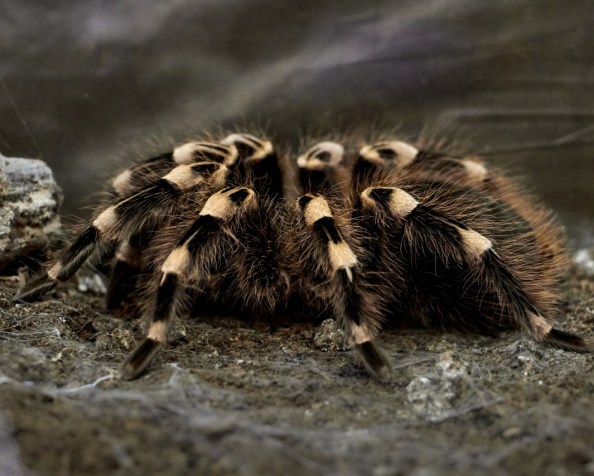
‘A-Ping’ are a popular edible treat in Cambodia. For the uninitiated, ‘A-Ping’ are fried tarantulas that are, apparently, irresistible. The females are especially prized. Apparently the eggs in the abdomen are the really good bit. This odd street food is popular enough for sellers to shift 100 spiders on a good day.

Loss of forest and over-hunting means that local supplies of tarantulas near towns and cities are spent. Supply is falling as demand grows and inevitably the price rises. Spiders are sourced far from the cities where people are poor so the high prices make collection attractive. Something similar happens in many parts of Africa and is labelled poaching.

The combination of demand, supply and price leads to what ABC journalist Zoe Osborne calls an unsustainable demand. More strictly is unstainable supply for demand is a function of the number of people (growing) and their purchasing power (rising).

Either way, it is bad news for tarantula species.

Side note

Tarantula is the term used here. Sellers fry ‘A-Ping’, the large hairy spider. There are over 800 tarantula species in the world meaning that numerous species make up the ‘A-Ping’ trade. Certainly, some of them will be rare naturally, even before the additional hunting pressure. Several species will be rare now.

Donkeys

The Norwegians can be a generous bunch. Turns out that Norway is in the top ten countries for development aid giving over $4 billion in 2018 putting them second to Sweden as a proportion of gross national income and first in dollars spent per capita. They are good folk.

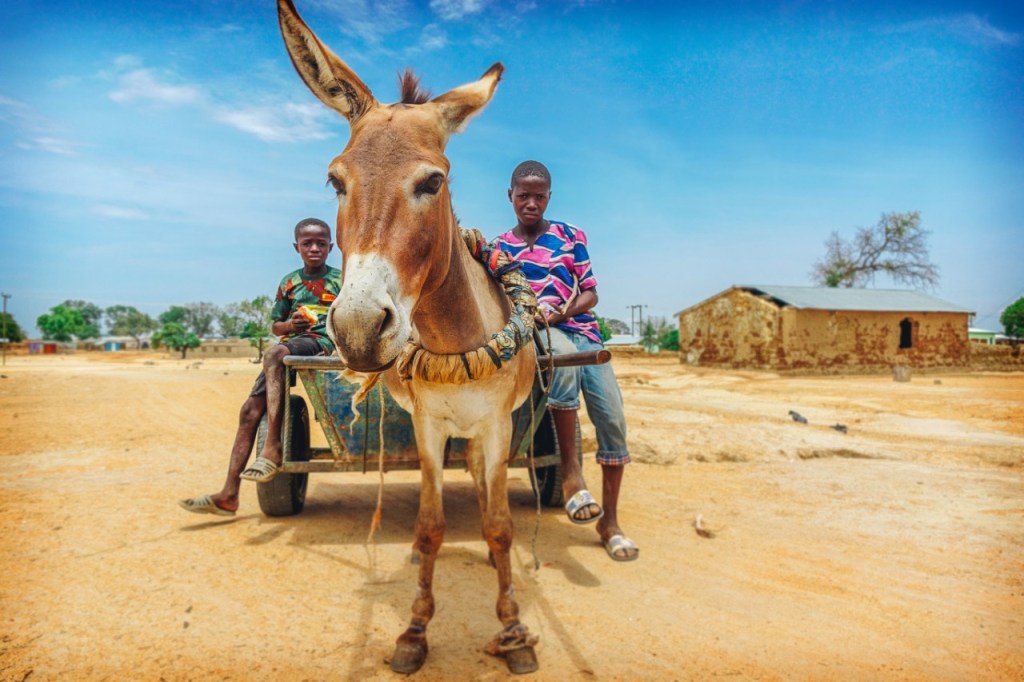
Many years ago one of the Norwegian aid projects gave donkeys to the people of Botswana who are fond of donkeys. The herd boys ride them and they are often used to pull carts. It made sense to provide poorer communities with free donkeys.

The gift was well received and for a while provided the intended benefits. As time passed the donkeys prospered along with the Botswana economy — a coincidence not a consequence. Soon there were many more donkeys in Botswana than were needed as prosperity from diamonds gave the herd boys other things to do and donkey carts were replaced with four-wheel-drive trucks.

Spare donkeys became a traffic hazard for they are as stubburn as their mule cousins and refuse to get out the way of the aforementioned trucks zipping along at 140 clicks.

Then the Chinese decided that there was a huge market for donkey gelatin in their country where it is known as ‘ejiao’. It is better not to ask why but we are talking rice delicacies and use in herbal medicine to treat a range of ailments from bleeding, dizziness, and insomnia to a dry cough. The demand for ‘ejiao’ is growing rapidly thanks to population growth and affluence, in this case in China. As the Chinese prosper economically so the demand for remedies to improve health and well-being, proven or anecdotal, goes up.

A few years ago donkey prices around the world began to rise sharply due to this rising demand from Chinese herbalism. Uganda, Tanzania, Botswana, Niger, Burkina Faso, Mali, and Senegal banned donkey exports to China because, not unlike the spider example above, poor people could get a favourable price for their donkey.

Arguably the removal of donkeys from the roads in Botswana is not such a bad thing so long as the herd boys are still on the internet. But, as always, the disadvantaged are further repressed when they find themselves in need of draught power.

Photo by Henry Desouza Nelson on Unsplash

What it means to have more people

Spider species joining the lists of rare and endangered, cruelty to donkeys and desperate measures for rural poor.

Who would have thought it?

When does speed and certainty overide accuracy?

When does speed and certainty overide accuracy?

“…ours is a brain that is programmed for a combination of speed and certainty, not accuracy. Acting decisively in the face of a speeding truck can save your life, while trying to determine truth can leave you a splatter on the road.

Patrick King, The Art of Clear Thinking

Do you feel the truth in this? We are so easily a splatter on the road if we let our thinking brains slow us down.

So we don’t. We prefer speed for our own safety.

The instant we realise, getting out of the way of the pouncing lion is imperative. Instinct triggers the impulse to leap (speed) as a proven option for giving us a chance to escape (certainty). Given enough time to think about the lion, our brains would come up with any number of smart options to manage predator exposure in the first place, such as deciding who should be the lookout with sharp eyes willing to stay awake (accuracy).

Accuracy takes way too much time and effort so in the human brain opts for speed and certainty.

Daniel Kahneman talks about this as thinking fast and slow.

Accuracy that requires us to weigh up options, think through options and make evidence-based decisions just takes too long and too much effort on our part for the majority of everyday decisions. If we did it all the time we would grind to a halt from inertia. So the fast brain takes over. This gives us quick options and makes us intellectually as well as physically nimble.

In human evolution, this was essential and perhaps one of the things that made us so successful. We are fast thinkers. Our speed and certainty of thought give us a competitive advantage over most creatures, other tribes, and even human rivals in our own team.

Once we escaped the lion and were relatively safe around the campfire, so then we were able to ponder, remember and weigh up our experiences and, through language, share our ideas with others. This time to ponder set us up for big innovations and future successes that made evolutionary sense of having both thinking mechanisms.

It also gave us connections with each other. Slow thinking helps deepen the connections that allow us to build trust and organise the lookout roster.

All good so far.

Patrick King goes on to say…

In the absence of threats to your life, truth should always be the end goal, and opinions should be formed only after making an honest effort to pursue it.

Patrick King

This is a laudable suggestion. We would all do well to heed it for even if we are just aware that we have two modes of thinking that is a great start. And even if the longer one takes effort, the accuracy if offers should be attractive enough for us to use it more often. No matter how fast you think there are times when you will appreciate the heads up from the lookout.

So what happened to all that debate in the pub? Wither the discourse and thought about issues of the day and the future? Replaced it seems by cute cat pictures and a swipe right.

In our modern jungles, the benefits of the slower, more considered mode of thinking seem forgotten. Immediacy has again taken over from thought.

Ironically, there are a thousand discussions on this issue of how we became thoughtless and the conclusion appears to be that speed and certainty override accuracy because most matters no longer require serious thought. In the west at least, immediate needs are easily met with fast decisions — pizza or Thai? — the everydayness of everything. It is easy to get by without a nightwatchman.

When there are more serious matters, such as who should get my vote, the choices are lamentable with little payoff from seeking accuracy.

If we combine lack of need with a limited payoff then the call to ‘honest effort’ will ring hollow. Why put in the effort for no reward?

Enough.

If you have read any posts on this blog or anything by dozens of more erudite thinkers then you know this is not even a question. There are 7.7 billion reasons to make the effort and you are one of them.

Everyone has a duty to buck up their ideas, turn their thinking brains on every day, build strong connections, and find some solutions to the multitude of challenges presented by so many souls.

Help a brother by thinking about accuracy.

This is pivot day

This is pivot day

I don’t know why it’s this day, but today is pivotal.

It is the day when the past is very different to the future.

Today is when the passengers in the global busload of humanity wake and realise that the driver is heading for the cliff of chaos with his foot on the floor.

Today people realise.

They start to squirm in their seats.

This day they mutter amongst themselves, they tell the driver to apply the brake and steer away or else.

This is the day.

26 September 2019

Mark it.

Put a sticky on it, make a special diary entry, come back to note that this day happened, the day of the first twitch toward a better future.

Boris, oh my Lordy

Boris, oh my Lordy

What Johnson understood was that in the digital age, voters were behaving more like an audience consuming entertainment than a civically engaged electorate.

Matthew d’Ancona, Guardian columnist

In the early 1930s, the German people were trying to come back from the cost and emotional loss of the war to end all wars. Naturally, they were struggling.

The Treaty of Versailles signed in 1919 and the subsequent London Schedule of Payments from 1921 required Germany to pay 132 billion gold marks (US$33 billion) to cover civilian damage caused during the war. That is a lot of money today, let alone 100 years ago when a US dollar would buy a six-pack and some change.

Most families knew personal losses from the war and carried a collective pain from defeat. Historians suggest that the German people knew they had to work hard to recover and investors, especially from America, saw the opportunity and poured money into the country. Then the Wall Street crash of 1929 hit and the decade long depression that followed scrambled everyone’s options.

The conventional wisdom is that these setbacks resulted in economic and social unrest, specifically inflation and high unemployment, a pattern that was repeated across Europe and the US. These were trying times everywhere.

The census of 1933 had the population of Germany at over 65 million people. In the previous year, there was an election. Many adults thought it wise enough to cast their vote for National Socialist German Workers’ Party who had made their ideology to strengthen the Germanic people, the “Aryan master race” perfectly clear. A third of the German electorate voted for the Nazi party in 1932.

Millions of sane people voted for “racial purity and eugenics, broad social welfare programs, and a collective subordination of individual rights, which could be sacrificed for the good of the state on behalf of the people”. What were they thinking?

Presumably, they were in a similar space to societies who allow crazy people with warped ideologies to lead them. Maybe they were a little lost. Scared, maybe given they had lost a world war and were struggling with the aftermath and a global economic downturn.

Perhaps they thought that the government could solve their problems. Maybe that gave them some hope.

Whatever they thought would happen not many would have predicted where the society would end up 13 years later.

In 1965, when the first electronic computers entered offices, Eric Hoffer warned in the New York Times that “a skilled population deprived of its sense and usefulness would be the ideal setup for an American Hitler.” That did not happen. Instead, people listened to Kennedy and went to the moon.

In the 58th quadrennial American presidential election in 2016, Donald Trump was elected president with 62,984,828 votes, 46.09% of the votes cast, even though his main rival received 2.1% more votes.

According to the electoral commission, the republicans spent $303 million on the election, less than half the democrat spend of $640 million. Presumably, this means you can’t buy happiness. It also means that nearly 63 million people though that what Trump had to offer via Twitter was what they needed to improve their lives and the fate of the country.

In 2019 there was another vote, this time in the UK to replace the prime minister.

Boris Johnson received 92,153 votes from Conservative members, a group that collectively accounts for 0.13 per cent of the British population and have far more men than women, are overwhelmingly white, and significantly more right-wing than the average voter. Handy for Boris and a bit of a nightmare for everyone else.

It would seem that money may not buy power but a minority will.

Each of these brief historical descriptions is a salutary lesson for democracy. It is quite easy for a sequence of events that appear of little consequence to reach far into very dark places.

Obviously we are in another of these historical moments.

Everyone should pay serious attention and become that engaged electorate. We all need to vote with extreme care each and every time that we can and, where it matters, speak out on the streets, on the web, and around the kitchen table.

The Germans didn’t see it coming, nor did the Americans or the British.

Do you?

Density and competition

Density and competition

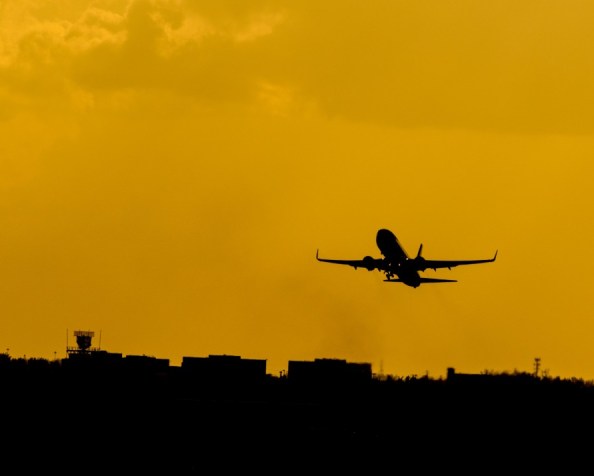
In the second year of my PhD scholarship, I boarded my first aircraft, a bog-standard commercial flight from London to Rome but wow, what a thing?

The energy pushing you back into your seat, the stupidity of being suspended 30,000 feet up in the air and the impossibility of such a heavy tube of metal being able to get you and your seat up there. Just one experience I now take for granted that 30 odd years ago were a wonder to a youngster.

The journey was the first of many plane trips in my professional career, including some far more risky ones than a smooth jaunt across Europe. This first one was to attend a scientific conference, a meeting of minds for most of the world’s woodlice researchers. Some 50 people from all over Europe and North America who were into the behaviours, physiology and ecology of the terrestrial branch of Isopoda, an order of Crustaceans, the majority of whom live in water. The isopods that is.

So before we get to the publication, a brief ponder on the notion of a woodlouse conference. That humans, the most curious of beings, should have individuals dedicated enough to spend most of their waking hours understanding the biology of a peculiar group of animals that should be in the ocean but are not is quite miraculous. That these scientists can also be organised enough to get together periodically to discuss their obscure findings is bizarre too. This one in Urbino on the east coast of Italy in September 1986 was the Second International Symposium on the Biology of Terrestrial Isopods. It was a hoot, including a crustacean themed dinner with more than a dozen courses one of the very few meals from the distant past that I can still remember.

I was there to present some of my PhD research on competition and in the conference proceedings appeared my first single-author paper.

Dangerfield J.M. (1989) Competition and the effects of density on terrestrial isopods. Monitore Zoologico Italiano (N.S.) Monograph 4: 411-423

When reading this piece again for this post I could not even recall running the experiments the paper describes. It wasn’t until I read the methods of culturing broods of the tiny critters in plastic containers and feeding them uniformly ground leaf litter that it came back to me. The pots layered up on racks in controlled temperature rooms and hours weighing thousands of animals individually. Such is the dedication and forgetfulness required for higher learning.

A series of experiments tested the effects of crowding (although I called it density for formality) on growth, survival of young and the reproduction in adult Armadillidium vulgare, the common pillbug, with the general result that crowding matters. That is if you’re a woodlouse and you are around your woodlouse buddies too much they affect your biological success. The more is not the merrier for woodlice even if there is abundant food. Woodlice also compete against other woodlouse species, who doesn’t, only the win in the competition is affected by the size of the arena. It would seem that for woodlouse at least life is lived very much in three dimensions.

All up my conclusion and the most likely explanation was that there was interference going on in the cultures. The activity doing enough to generate measurable competitive effects. Noting that there was always enough food to go around, at least that is what I assumed. I remember being quite chuffed at this explanation because at the time the theory was that competition was not just about food but proving this was always tricky. So to have generated numbers suggesting it for such a lowly critter was fair play.

By Franco Folini – San Francisco, California, CC BY 2.5, https://commons.wikimedia.org/w/index.php?curid=789616

It is hard to go past a simple experiment. Easy to design and deliver with all the satisfaction of hypothesis testing at the end. It’s the stuff of early career ecologists, they love it. I certainly did.

Did this science add to the pile of human knowledge? Well, not really, despite my enthusiasm over interference. It is likely that woodlice are competitive and these interactions can have consequences for their populations but there is also a lot more going on. Just because a mechanism exists does not mean it is important. But finding out that it is possible is worth the effort.

Later work could build on the findings but even in themselves, they show how complex patterns in nature can be. Today I would say that all of nature is constantly competitive. It is why we have natural selection and why there is so much diversity. Organisms become different to try and avoid as much of the constant competition as they can, usually with only limited success.

If nature is innately competitive, and we are of nature, not a rhetorical question, then we need not go much further than competition and how to avoid it as an explanation for many a human woe.

Back in 1986, that first plane trip got me started on my research career. My first single-author paper and a small but important step toward independence as a researcher.

Little did I realise how far and wide that journey would go.