We have let

We have let

The Guardian online is running a series of 2020 Visions from prominent Australians about the future of a country that is in a mess.

We are flapping our arms around as if after years of surfing we suddenly forgot how to swim.

Our politics is morally bankrupt and devoid of ideas, the people are hiding behind a mountain of household debt so high you need oxygen at base camp, and the outback has had enough sending drought, dust, obscene heat, fire, smoke and finally flood just about everywhere.

Bugger, if it wasn’t for air conditioning, filters and heroic emergency services personnel the place would be unlivable.

It’s been one hell of summer down under.

Any kind of vision for the future is welcome in such dire times.

Here is a quote from the 2020 Vision Series looking for serious answers

Instead, we have let untruths, half-truths, misrepresentations, hypocrisy and hyperbole become the currency of our age. Secrecy is now standard operating procedure in politics. The public interest and the right to know is too often subordinate to some alleged higher interest, grandly and sometimes scarily defined as “security” or “on water” or “in the bubble”, so of little relevance to anybody declared to be outside it: the rest of the country

Professor Ian Chubb, neuroscientist and former chief scientist of Australia

Only three words really matter in this otherwise truthful statement from a senior scientist who spent time with political numpties…

we have let

Yep, we sure have. The people have allowed the irresponsible to break the tiller of the sailboat and failed to repair it. We have let the boat come adrift at the mercy of an angry sea.

It’s our fault.

Don’t blame the politicians or the lefties or the neo-Nazis or the abbos or the DINKys or the Landcruiser MILFs or even the neighbour’s french bulldog that barks like a cat.

Blame yourself.

Yes, you. And me. And every other card-carrying citizen who has stood by and let all this happen.

You know I am right.

Just look at the outpouring of praise for the Rural Fire Service volunteers who have performed miracles to save lives and properties on over 18 million hectares of the country that burnt.

It was effusive and genuine gratitude because we all knew they saved our arses, literally.

We let his risk of catastrophe escalate and then when the crisis came it was local volunteers who bailed us out. They deserve a medal and some serious pay. So much by so many to so few, a famous dude once said.

We have let.

Here is a summary of the 2020 bushfire season

As of 14 January 2020, fires this season have burnt an estimated 18.6 million hectares (46 million acres; 186,000 square kilometres; 72,000 square miles), destroyed over 5,900 buildings (including 2,779 homes) and killed at least 34 people. An estimated one billion animals have been killed and some endangered species may be driven to extinction. Air quality has dropped to hazardous levels. The cost of dealing with the bushfires is expected to exceed the A$4.4 billion of the 2009 Black Saturday fires, and tourism sector revenues have fallen more than A$1 billion. By 7 January 2020, the smoke had moved approximately 11,000 kilometres (6,800 mi) across the South Pacific Ocean to Chile and Argentina. As of 2 January 2020, NASA estimated that 306 million tonnes (337 million short tons) of CO2 was emitted.

Just for comparison, the Australian government estimates that Australia’s net emissions in 2017 were 556.4 million tonnes CO2-equivalent.

Ian Chubb thinks the solution is our re-engagement with democracy when ‘we have let’ becomes ‘no we don’t let’, we demand better.

The sixteen-year-olds are on the case, thank goodness — go Greta.

Unfortunately, we don’t have the 30 odd years it will take before they get strong enough to kick our sorry arses out. So, it is up to us to help them.

Here is what Ian Chubb suggests we do

When we wake up, we will demand leadership: one that is bold, courageous and open, with an unswerving commitment to our right to know. We will need leaders with the ability to build an appropriate vision for our country, along with the competence and capacity to persuade us why we need to do what they propose we do – all the while exposing their evidence base to us so we can see why one option was chosen over another.

Professor Ian Chubb, neuroscientist and former chief scientist of Australia

In short, we must demand logic and accountability.

Actions that make common sense.

No more bubbles and bullshit and pork barrels, just honesty and common sense.

‘We have let’, believe it.
Never leave a number alone

Never leave a number alone

Is 90,000 a big number?

It could be.

If 90,000 were the number of…

  • children who died from preventable diseases in the last month it would be both big and tragic and unacceptable
  • passengers aloft in commercial airliners at any given time, then a whole heap of airlines would go bust overnight given there are roughly a million people in the air at any one time
  • potholes per km of road you would be in Zambia

The problem is that on its own 90,000 has no context or comparison. It is meaningless.

I could tell you that 90,000 ha of native vegetation cleared for agriculture is a policy review trigger. Farmers apply to legally manage or clear native vegetation on their properties and when the cumulative area of approvals reaches 90,000 ha it is agreed in advance to take a close look at the policy. Noting that during the policy development any agreement on the trigger number was hard-fought, for there are advocates for zero hectares and those who believe that no number is big enough.

At least this 90,000 has context. It represents an area of land and has a purpose.

Even with context 90,000 will have advocates who claim the economic progress from agricultural development and detractors who lament the loss of native plants from the landscape. On its own, 90,000 ha just garners opinions, even as a trigger number.

What 90,000 really needs is some company.

To know its place and find meaning in its existence the 90,000 needs to have some other numbers. For example, the area of native vegetation under conservation, restoration or active management (12,863,450 ha), the area of winter crop for 2018 (3,100,000 ha) or a string of numbers such as the area converted to arable agriculture each year for the last 50 years (curiously this value is difficult to pin down). Only when 90,000 ha has other numbers can it find itself, make sense and contribute to society.

This is true of almost all reported numbers.

Suppose a Minister announces with great fanfare a further $4 million in funding for schools. Not bad you might think. It would take the average Joe a couple of working lifetimes or a lottery win to get that kind of cash.

In Australia, $4 million is enough for the salaries and overheads of roughly 40 teachers for one year. These teachers would be expected to look after 560 students, quite a few it would seem. Only there are 1.52 million high school students in Australia making 560 a tiny proportion of those seeking erudition and selfies.

So the 40 extra teachers recruited from the Minister’s largess would teach 0.036% of the high school population for one year.

After that, the Minister would need to make another announcement.

Now back to the 90,000 ha.

It is certainly a precautionary number in its context of area treated under a native vegetation policy. As a proportion of the area of NSW (80.9 million ha) it is minuscule, even as a proportion of area under arable production it is small.

Then there is an unprecedented fire season and over 5 million hectares is burnt by bushfires that rage for months, the largest covering more than 800,000 hectares of continuous forest.

This time 90,000 ha has a very different context. Fire is not the same as clearing for most trees will recover from fire and seedlings will establish in the ash beds when it rains but the point is that the area needs context.

It is worth discussion if the trigger is just 10% of the area of a single fire.

Comparison is always critical when dealing with numbers. On its own, a number makes no sense, its naked, self-conscious and insecure. It needs some context for clothing and some friends to compare against.

Next time there is an argument over a single number — like there will be over the 5 million+ hectares of bushland burnt in the NSW summer of 2019 — remember you can’t leave it on its own.


It would be great if you passed this post onto your social networks.

When to change business-as-usual

When to change business-as-usual

In the First World War, the first tanks appear on the battlefield. They were fearsome things in their day, able to repel machine guns and straddle trenches to fire down on the occupants. No matter they were slow and easily picked off by artillery.

Their biggest weakness was their means of communication: carrier pigeons. Business-as-usual was to write a short message and attach it to the leg of a bird that may or may not make its way back to base, a none too helpful one-way message.

In the Second World War, tanks had moved on. Radios replaced the pigeons but they had no off switch and so the entire brigade heard the screams of the crews consumed by fire when their coffin on tracks was hit. It must have been horrendous.

Modern tanks all have GPS, are tracked to the millimetre and second, carry multiple comms backups and yet are still vulnerable to anti-tank grenades delivered old-school.

Soon enough drone tanks will become business-as-usual. Unmanned killing machines without feelings or fear.

Everything evolves.

What worked yesterday may not today.

There are two reasons for this.

The first is that there is a good chance that something better, more fit for purpose, has appeared through the human addiction to innovation and being smart. A new way of doing whatever it is gets invented out of curiosity or profit that is way better than business-as-usual.

The second reason is that there is no such thing as usual. If you have been around long enough you know what I mean. Nature, people, commerce, tanks, whatever it is, today’s circumstances are not the same as yesterday’s and tomorrow is yesterday today.

When change is everywhere and inevitable, business-as-usual is the least effective idiom we have.

It should be business-as-change.

Instead, we latch onto BAU believing in it. It is the system that works right now so why change it. This is the common paradigm of ‘if it ain’t broke’ and is actually fine if it ain’t. The problem is that we don’t always know if the system is broken or not, especially when usual activities are slowly changing the conditions, as happens in agriculture.

In a few instances, business-as-usual may be the only option because it is not possible to change.

Those early tanks had pigeons because there was nothing else. In a famous example, the tanks won a battle and punched a hole in the enemy lines but the infantry commanders didn’t know and by the time they found out the enemy had regrouped. At the time there was no better way to communicate.

Modernity has a few of these scenarios still where we actually are stuck because there is, as yet, nothing better.

Alloporus contends that this is actually quite rare. More often business-as-usual is our mantra because it is the easiest path or the path that is familiar. And so we stick with it instead of asking for change towards something better.

Herein is the challenge.

A lot of what we do today under the guise of commerce for profit justified by its familiarity is actually killing the goose. We are mining our soils, clearing vegetation that provides services, changing the climate and simplifying nature every chance we get to the extent that business-as-usual in our agricultural systems will send us broke and starve half the world.

Fortunately, there are better ways already available. Most of the environmental challenges we face can either be fixed, mitigated or adapted to but not, repeat not, under BAU.

When to change business-as-usual is right now.


Post script

Oh my, it’s going extinct… again.

Since this post was first drafted more than 5 million hectares of forest in NSW have been burned in large and voracious bushfires.

The extent and severity of this disturbance to mostly wild forest systems is new, at least to the historical record. It might have happened in the distant past but nothing like it recently.

The fires will have knocked back animal pests and weeds to levels not imagined under business-as-usual control.

It is a challenge with many native animals lost but also a massive opportunity to create a better place for the survivors.


If you like what you find here on Alloporus, please share with your social networks.

When craziness is too much

When craziness is too much

Sometimes the craziness is too much, it blows your synapses away. You are left in a bucket of incredulity.

Cop this quote from the former Australian PM Tony Abbott reported by SBS online from a summit in Hungary trying to explain the real threat to the existence of his kind…

“It seems to me that it is not so much our failure to reduce carbon dioxide emissions, but our failure to produce children that is the extinction reality against which we really need to work against”

Tony Abbott, Former Australian Prime Minister

Let’s just pause a moment.

This blatant click-baiting is trying to trick us that even though Australia failed to reduce emissions, that’s not the biggest problem. That accolade goes to our inability to produce enough white people.

Seriously, enough white people. You are kidding, right?

At first, I thought that I should write the obvious rebuttal that we are already reproducing 8,000 people per hour. An hourly net increase into the grand diaspora of the world, and it should matter little what tribes they come from. There are more than enough people to go around and satisfy every neoliberals wet dream.

Only when we last looked, the distribution of people and resources is uneven across the world. This means that some places will be crowded and run out of resources. And when the population growth rate is high, crowded places will become difficult to live in and people will want to leave to find a better opportunity. Emigration is inevitable and these people have to go somewhere.

Do you want to live in these crowded places? No, neither does Tony.

But then I thought again.

This kind of craziness is too common compared to the proportion of people who might actually believe the nonsense.

Here is a fascinating graphic from Statista chart of the day

What it says is that less than 1 in 20 people actually deny the existence of climate change in most developed countries. A party representing this minority would never win an election and yet the rhetoric from the deniers remains powerful in the social mix.

This is what Abbot and his cronies bank on.

They know their opinions are not shared by most but that is not what matters. Influence is the game and, no matter there are kids on strike and a 16 year old girl calling out the UN, these noisy minorities are good at it.

It turns out I can’t push the incredulity aside. It is gut-wrenching because these people are incorrigible.

What I have to learn is that numbers are not enough.

More on the CEO salary issue

More on the CEO salary issue

In a previous Alloporus post on average CEO salaries Alloporus commented on reports that $187 million was paid to the top 10 CEOs in Australia in FY17.

That is a whole heap of cash.

It made sense to try and put this number into context. A quick calculation revealed that the $187 million pocketed by the CEOs was roughly 6,309 person-years worth of time for money at delivery driver rates.

Over 6,000 person-years for the work of 11 men.

The comment was that this amount of money was smelly, very smelly indeed.

Here is what happened in the FY18

That little lot adds up to $148,343,764. A bad year for the CEOs. Heaven forbid a terrible year, drought and pestilence on us all.

The top dude earned $13 million less and the overall total was well down.

Only it still stinks, especially as many of the same blokes are on the list.

Not sure what happened to the pizza guy though.

At some point it will be clear that whilst there is some sense in paying people to make tough decisions and to take responsibility, there is a limit to what is reasonable and respectable. What we have in Australia at the moment is neither.

Perceptions are everything we need to question

Perceptions are everything we need to question

I just read a fascinating book entitled Radical Help by social entrepreneur Hilary Cottam. This woman, a maverick with a heart of gold, is taking on the establishment in ways it hates, by questioning everything.

What she has discovered is gold.

She begins her descriptions of what she calls ‘experiments’ with a social statement, here is one…

Wages for more than twenty million British families – 64 per cent of the population – are too low to live on. It is worth repeating that a far greater proportion of benefits are paid to those in work on low wages than to those out of work, as for millions the categories of work and welfare collapse into one another.

Hilary Cottam, Radical Help

In other words, the economic system is failing the majority, including those who find fulfilment and purpose in gainful employment.

Add to this 64% figure the fact that payments to those out of work account for just 1% of the UK welfare budget – equivalent to less than £3 billion a year – and the clear implication is that people are not bludgers, they want to work for a fair wage, enough to live and raise their families.

Thinking on these numbers some more, Cottam adds another key insight. People want purpose. Give them this and they will not only work hard but at almost any task aligned to their purpose.

How easy should it be to harness this immense power? When people can connect, cooperate, innovate they will solve what seems intractable. Everything is possible with aligned people power. Except that this is not some neo-socialism virus about to infect us all, it is actually about each person and how each one of us goes about our everyday lives. It is the power to grow our own wellbeing.

At the core of this power is the human connections we make.

When we are close to one another we literally move mountains. When I tell my wife this dramatic insight she simply smiles knowingly. A retired couples therapist, her entire career gave evidence to the power of connection. Deep connections are what hold us up and keep us together.

George Monbiot, in typical acerbic style, tells it more simply — no human on the savanna would have survived one night on their own.

Putting people together so that they can form connections that matter to them is what Hilary Cottam does in her experiments. It matters little if the people are old, young, disadvantaged or disabled. It seems that even the bored and the disillusioned will succumb to the salve of genuine human connection.

Back in the real world, the perception we are sold is that people are lazy, preferring the couch and a games controller to work and responsibility.

This may be true for some but it is not our natural state. Humans would not be so populous and prosperous today if our ancestors were innate bludgers with no connections. Our genes would have gone the way of the dodo and maybe neanderthals would be thumping their way around the globe.

So next time you hear that we are obese, lazy slobs with diabetes… do not, and I repeat in big letters, DO NOT believe this nonsense.

Instead, go get yourself a copy of Radical Help, read it and then go lobby your local politician.

Don’t tell them to change the system, just let them know that people are all-powerful, they just need a helping hand, not a handout.

Seriously, go read it. You will be amazed.

What it means to have more people in the world

What it means to have more people in the world

Here are a couple of anecdotes of what it means to have more people in the world than seems possible.

Spiders

‘A-Ping’ are a popular edible treat in Cambodia. For the uninitiated, ‘A-Ping’ are fried tarantulas that are, apparently, irresistible. The females are especially prized. Apparently the eggs in the abdomen are the really good bit. This odd street food is popular enough for sellers to shift 100 spiders on a good day.

Loss of forest and over-hunting means that local supplies of tarantulas near towns and cities are spent. Supply is falling as demand grows and inevitably the price rises. Spiders are sourced far from the cities where people are poor so the high prices make collection attractive. Something similar happens in many parts of Africa and is labelled poaching.

The combination of demand, supply and price leads to what ABC journalist Zoe Osborne calls an unsustainable demand. More strictly is unstainable supply for demand is a function of the number of people (growing) and their purchasing power (rising).

Either way, it is bad news for tarantula species.

Side note

Tarantula is the term used here. Sellers fry ‘A-Ping’, the large hairy spider. There are over 800 tarantula species in the world meaning that numerous species make up the ‘A-Ping’ trade. Certainly, some of them will be rare naturally, even before the additional hunting pressure. Several species will be rare now.

Donkeys

The Norwegians can be a generous bunch. Turns out that Norway is in the top ten countries for development aid giving over $4 billion in 2018 putting them second to Sweden as a proportion of gross national income and first in dollars spent per capita. They are good folk.

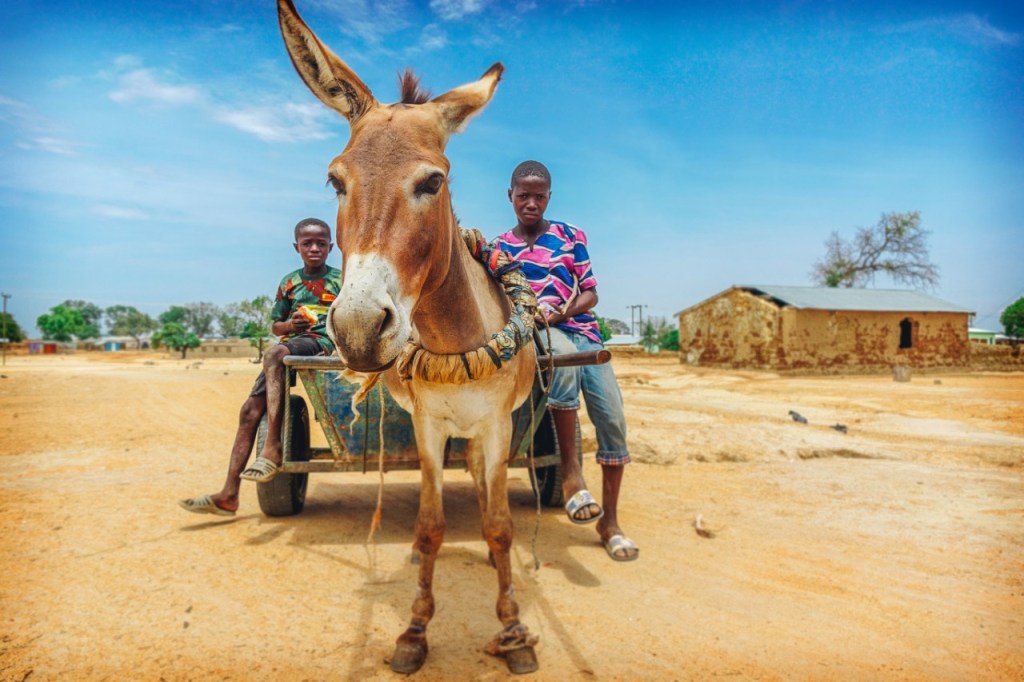
Many years ago one of the Norwegian aid projects gave donkeys to the people of Botswana who are fond of donkeys. The herd boys ride them and they are often used to pull carts. It made sense to provide poorer communities with free donkeys.

The gift was well received and for a while provided the intended benefits. As time passed the donkeys prospered along with the Botswana economy — a coincidence not a consequence. Soon there were many more donkeys in Botswana than were needed as prosperity from diamonds gave the herd boys other things to do and donkey carts were replaced with four-wheel-drive trucks.

Spare donkeys became a traffic hazard for they are as stubburn as their mule cousins and refuse to get out the way of the aforementioned trucks zipping along at 140 clicks.

Then the Chinese decided that there was a huge market for donkey gelatin in their country where it is known as ‘ejiao’. It is better not to ask why but we are talking rice delicacies and use in herbal medicine to treat a range of ailments from bleeding, dizziness, and insomnia to a dry cough. The demand for ‘ejiao’ is growing rapidly thanks to population growth and affluence, in this case in China. As the Chinese prosper economically so the demand for remedies to improve health and well-being, proven or anecdotal, goes up.

A few years ago donkey prices around the world began to rise sharply due to this rising demand from Chinese herbalism. Uganda, Tanzania, Botswana, Niger, Burkina Faso, Mali, and Senegal banned donkey exports to China because, not unlike the spider example above, poor people could get a favourable price for their donkey.

Arguably the removal of donkeys from the roads in Botswana is not such a bad thing so long as the herd boys are still on the internet. But, as always, the disadvantaged are further repressed when they find themselves in need of draught power.

Photo by Henry Desouza Nelson on Unsplash

What it means to have more people

Spider species joining the lists of rare and endangered, cruelty to donkeys and desperate measures for rural poor.

Who would have thought it?

Boris, oh my Lordy

Boris, oh my Lordy

What Johnson understood was that in the digital age, voters were behaving more like an audience consuming entertainment than a civically engaged electorate.

Matthew d’Ancona, Guardian columnist

In the early 1930s, the German people were trying to come back from the cost and emotional loss of the war to end all wars. Naturally, they were struggling.

The Treaty of Versailles signed in 1919 and the subsequent London Schedule of Payments from 1921 required Germany to pay 132 billion gold marks (US$33 billion) to cover civilian damage caused during the war. That is a lot of money today, let alone 100 years ago when a US dollar would buy a six-pack and some change.

Most families knew personal losses from the war and carried a collective pain from defeat. Historians suggest that the German people knew they had to work hard to recover and investors, especially from America, saw the opportunity and poured money into the country. Then the Wall Street crash of 1929 hit and the decade long depression that followed scrambled everyone’s options.

The conventional wisdom is that these setbacks resulted in economic and social unrest, specifically inflation and high unemployment, a pattern that was repeated across Europe and the US. These were trying times everywhere.

The census of 1933 had the population of Germany at over 65 million people. In the previous year, there was an election. Many adults thought it wise enough to cast their vote for National Socialist German Workers’ Party who had made their ideology to strengthen the Germanic people, the “Aryan master race” perfectly clear. A third of the German electorate voted for the Nazi party in 1932.

Millions of sane people voted for “racial purity and eugenics, broad social welfare programs, and a collective subordination of individual rights, which could be sacrificed for the good of the state on behalf of the people”. What were they thinking?

Presumably, they were in a similar space to societies who allow crazy people with warped ideologies to lead them. Maybe they were a little lost. Scared, maybe given they had lost a world war and were struggling with the aftermath and a global economic downturn.

Perhaps they thought that the government could solve their problems. Maybe that gave them some hope.

Whatever they thought would happen not many would have predicted where the society would end up 13 years later.

In 1965, when the first electronic computers entered offices, Eric Hoffer warned in the New York Times that “a skilled population deprived of its sense and usefulness would be the ideal setup for an American Hitler.” That did not happen. Instead, people listened to Kennedy and went to the moon.

In the 58th quadrennial American presidential election in 2016, Donald Trump was elected president with 62,984,828 votes, 46.09% of the votes cast, even though his main rival received 2.1% more votes.

According to the electoral commission, the republicans spent $303 million on the election, less than half the democrat spend of $640 million. Presumably, this means you can’t buy happiness. It also means that nearly 63 million people though that what Trump had to offer via Twitter was what they needed to improve their lives and the fate of the country.

In 2019 there was another vote, this time in the UK to replace the prime minister.

Boris Johnson received 92,153 votes from Conservative members, a group that collectively accounts for 0.13 per cent of the British population and have far more men than women, are overwhelmingly white, and significantly more right-wing than the average voter. Handy for Boris and a bit of a nightmare for everyone else.

It would seem that money may not buy power but a minority will.

Each of these brief historical descriptions is a salutary lesson for democracy. It is quite easy for a sequence of events that appear of little consequence to reach far into very dark places.

Obviously we are in another of these historical moments.

Everyone should pay serious attention and become that engaged electorate. We all need to vote with extreme care each and every time that we can and, where it matters, speak out on the streets, on the web, and around the kitchen table.

The Germans didn’t see it coming, nor did the Americans or the British.

Do you?

Why modern leaders don’t lead

Why modern leaders don’t lead

Here is what Strategic futurist Dr Richard Hames has to say about the reasons modern politicians fail to prepare for the future…

“It takes work and they do not have the time once all of their administrative duties have filled their days. We need to change the shared worldview regarding what is important and re-frame leadership in that context. But there is no time for such work.

The world has become so complex that most leaders are out of their depth. They lack a relevant toolkit and are in no mood to learn a new one because as leaders they are supposed to know and have the answers.”


Dr Richard Hames, Strategic Futurist

Fair call.

Our leaders have the wrong toolkit given that most carry around the one supplied to the stupid white man and no time to do the work to upgrade or to complete the artisanship any new tools would allow them. This lamentable lack of intent to retrain is capped off with a need to save face. No wonder there is no time.

What a mess this is.

There is one phrase that makes the most sense and that leaves some hope… “out of their depth“. This we can deal with if we pay attention. We can ensure that the next leaders are good swimmers.

How?

Create awareness of the complexities.

This is crucial although very hard to do. Europe has a refugee crisis that on no small part led to other crises like Brexit and the horrendous prospect of Boris in the captain’s chair. But why does it have a refugee crisis? Well, there are many people who would risk a sea crossing in a small boat to a country that will not welcome them rather than stay where they are in the land of their birth. It is so bad that they will also risk the lives of their children on the small boats in the hands of the unscrupulous.

Imagine what it must be like to make such a call; to risk the lives of your children. Don’t assume that the gold across the sea is a big pull to become a refugee, even if that might be your first thought, but think also about the push. Mortar fire, foreign soldiers using your garden fence as cover from snipers, food shortages that mean you have to risk the marketplace each day when last week a suicide bomber met his maker just where you buy bread. More bombs. If you live with this evidence you have a huge push and the risk to your children is worth it.

This, of course, should be an easy one that even Boris should be able to comprehend. Most of the world’s complexities are far more convoluted with predictable, unpredictable, and unknown consequences. What happens if the Greenland ice sheet melts, say by 20%? What would a theatre war centred on the Straits of Hormuz do to the global economy? What happens if the required 2% per annum growth in global food production is not met? Do we know what to do if unemployment goes over 20% thanks to some clever robots?

Whatever the complexity, the skill is to understand the feelings and motivations of the people closest to it. Makes their concerns the centre of thought and the guide to the solution.

For example, it’s not that we have climate change and that we could fix it with a trillion trees. It is that the climate is changing, will change, and, even with a trillion trees that we don’t have the land area to plant, the climate is more a people problem than an environmental one.

What will we do when it is too hot for one month and too wet a few months later only to be drought the next year? It messes with people’s heads and they want the government to fix something that is not fixable.

This is the complexity you need tools to handle. They are the tools of courage and awareness.

Some say that empathy is more useful than fear as the solution because “human sense of empathy is a greater motivator for us to join forces to protect each other and to fight for a better world.

So there you go Boris, put your own stuff down and imagine what it is like to live the lives of ordinary people all around the world, not just those you want to vote for you.

When food and nutrition is a scary prospect

When food and nutrition is a scary prospect

Alloporus is looking into online courses. I know, once a student, always a student is a nasty affliction.

It is fascinating to see how this format has evolved given that back in the day, that being the late 1990’s when I first built a website for my undergraduate students at Macquarie University, it was a struggle just to code a homepage. How I would have swooned over today’s functionality back then. Uploading self-made videos to cloud platforms with real-time chat, get outta here. I guess that just makes me old.

Anyway, please excuse my reminiscences and get us up to date to an online course from the excellent and free MOOC edX.org entitled “Feeding a Hungry Planet: Agriculture, Nutrition and Sustainability”.

It is fascinating and, I have to say, scary stuff.

Early in the proceedings Professor Achim Dobermann who is Director and CEO of Rothamsted Research UK, the oldest continually operating agricultural research station in the world, gives a 12-minute presentation on the risks associated with agriculture to 2050 should the world follow current business-as-usual for food production.

It is a courageous and smart summary of what global food and nutrition will be like for the next 30 years.

Here are a couple of headline numbers for what is required.

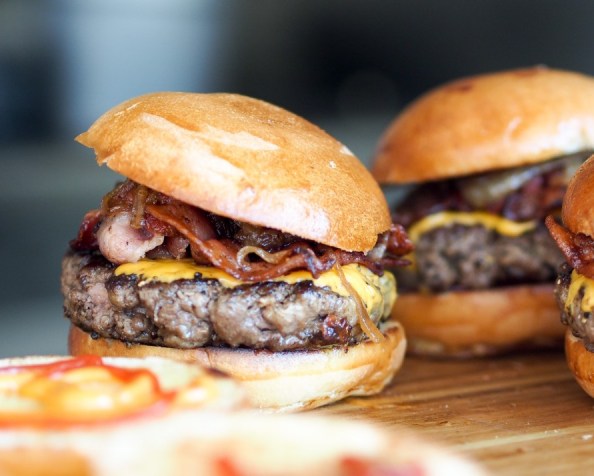
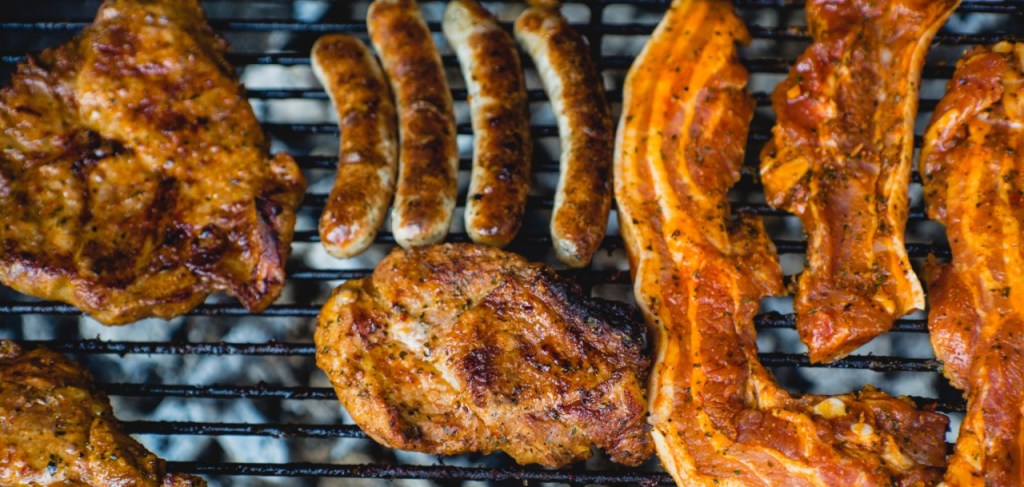
Global per capita meat consumption will rise from 40 to 50 kg per annum that will mean an additional 180 million tons of livestock production or 64% more than today.

Grain consumption per person will rise too and overall grain production will need to increase 1.1 billion tons or 52% more than today, in part to feed the extra animals.

My take is that agricultural and social science is telling us that food supply has to grow at an average of 2% per annum each and every year for over a generation. In short, another Green Revolution.

Such a change to business-as-usual will mean a plethora of production and consumption efficiency gains along the whole supply chain, innovation everywhere, and some nimble policy.

You can see Professor Dobermann’s full presentation here.

These numbers and their consequences present any number of risks to getting a second Green Revolution underway. Here are a few off the top of my head…

  • not enough land for agriculture
  • not enough usable water to increase yields
  • soil degradation, especially ongoing loss of soil carbon
  • peak fertilizer, especially micro-nutrients
  • pests and disease, especially of core crops
  • climate change

These are some of the obvious food production end risks, but once we get to the people part there are many more…

  • resistance to agricultural innovation
  • rapid changes to diet
  • food waste

And then there are the food supply chains themselves that these days are long and involve many parties each claiming a clip. This evens out supply by moving seasonal produce around and feeding the people now congregated in cities — 55% of the total according to the UN. In other words, we would be lost without them.

But long can be brittle, inefficient with losses at each stage and, thanks to the many parties and their clip, raises the price of food; all factors that reduce food security.

On the upside, mass transport and production efficiency has reduced the global agricultural price index over the last century which is a good thing for most consumers; only it has also lowered the farm gate price. This is not so good.

It means that many farmers must push their production rather than nurture it. When the price squeeze happens at the farm gate they must mine their natural capital to keep their business alive instead of investing returns into efficiencies and soil inputs.

Whilst the level of risk and demand growth is scary, at least they are known. The big picture is clear enough.

In addition, we already have a thousand solutions to reduce or mitigate risks from biochar to farmers co-ops to Meatless Monday. We can and should use all of them as and where they make sense because 2% efficiency gains across the board each and every year for 30 years is a massive challenge with unfathomable complexity.

Also, being a bit scared is a good thing. It is a powerful motivator to do something positive.

180 million tonnes extra is a lot

Endnote on awareness

We have to avoid the single focus solutions.

One of the latest is the trillion trees idea — to save the world from climate change we need to plant a trillion trees.

Good idea if you are worried about greenhouse gas emissions given that trees sequester CO2 into woody biomass that can persist for a long time in the landscape. So yes, we should plant, nurture and grow trees and we should resist cutting any trees down.

Only we have to be very careful where we do it.

We can’t put tree planting on the lists of risks to the 2% per annum of food production growth.