Five percent

Five percent

What is 5%?

Well apart from being a proportion, here are a few things.

  • 5% is one in twenty
  • 5% is an arbitrary threshold value considered significant in statistical analyses
  • 5% is half the current rate of GST in Australia
  • 5% is a pay rise almost worth having
  • 5% is less than the percentage increase in US military spend under the Trump administration

5% is quite the conundrum. It is not very big and yet it can be big enough to be noticed. You would not want food prices to increase by 5% but they have, roughly every two years or so in most mature economies.

You’d like a 5% pay rise over no pay rise at all but in the US rust belt, many workers have waited over a decade to get it, only for it not to really matter that much.

It seems that 5% is an awkward, niggly kind of proportion. Always a bit on the cusp of significance — one in twenty is surely just chance. Give me one in a hundred and I’m listening.

The other day a friend of mine, also a fellow science nerd, told me that 5% of the hip pocket dollar is spent on the environment.

One in twenty of the dollars in the average wallet ends up as an environmental expenditure.

Now this bald statement that could take a bit of unpacking. What’s in the hip pocket? What is the environment in this context? Would the 5% spend include food or the council waste levy or just donations to the WWF?

In most of the developed world food counts for around 8% of household spend. There is an environmental levy in my own local council but I pay that in my rates, part of my tax spend. And my hip pocket has a whole heap of unavoidable bills from utilities to the mortgage.

We could be here all day figuring it out, so let’s just say that, on average, people spend 5% of their after-tax dollar on something environmental.

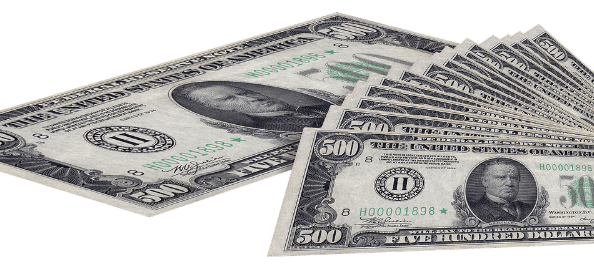
That’s $5 for every $100 that arrives in their bank account, at their discretion.

So is this enough? Is it significant?

People die if they don’t eat and have access to clean water. They need somewhere safe to stay and the opportunity to build a meaningful life with some fun in it. These primary needs would use up most of the $100, most of the time.

Add in the inevitable unexpected cost when the boiler bursts, the roof leaks or a family member needs hospital care and there may rarely be 5% left over.

$5 is significant if the cost of living has already allocated the contents of your hip pocket to the necessities of life.

This is where the thought usually stops.

The cost of living is unavoidable. If it eats up all you can earn, then the environment is not even a thought.

Only think a little longer. The environment is where the food, clean water, timber for the house, sand for the mortar, clean air, space for fun, among many other key necessities comes from.

Ignore the environment and it is used up, polluted and dysfunctional for these key goods and services.

Fail to pay anything for these things and they stop.

We should be very scared that we spend only 5% for there is no point in investing in ourselves if the foundation for many of the vital things we need is eroding away beneath us.

The cost of food

The cost of food

Regular readers will know that my youngest son has just moved to London. He was disturbed to find that with beer costing over five quid a pint and most casual work paying less than a tenner an hour, London, and realistically any large modern city, is expensive for youngsters.

You could see the maths bouncing around in his head. Rent, food, travel, phone and beer essentials would be hard to squeeze out of a tenner an hour.

It’s a motivator for sure. True independence is a demanding master that builds strength and character in most. It even has the power to remove beer from the list of life’s essentials.

Just imagine for a moment if the item on the list that consumes half your income is food. Not the occasional 5 in 10, but half of everything you earn.

Each week the cost of basic foodstuffs to keep you and your family from going hungry takes up 50 cents of every dollar earned. Harsh you would think.

There is not much left for the other essentials on the list.

And if your rent is steep too, maybe 25 cents in the dollar, any financial buffer is a layer of paint thin. All the time there would be difficult decisions to make on what to do with the remaining 25 cents from buying power for cooking to school uniforms for the kids.

In many parts of the world, people face this problem every day. They must use a big slice of their income just to secure nourishment. It is a precarious existence when such a basic need takes up half your resources.

But here is the kicker.

What happens when food prices double?

If the price of food doubles buying food uses all your income. I’ll just say that again because it might take a while to sink in. If the price of food doubles buying food uses all your income.

This has happened, most recently across much of Ethiopia, Kenya, Somalia and nearby countries due to a drought that originated in the Indian Ocean Dipole.

Remarkably, people find solutions to this calamity. They eat less and find cheaper foods. They grow more of their own. They work harder and lean on support networks. They survive.

But they should not have to.

There are enough calories produced in farms across the world to feed everyone. For every individual praying for the price spike to end there is an overweight or obese counterpart in another country.

Here is an idea.

What about a global food safety net? Let’s say a FAO, World Bank collaboration to purchase a reserve of calories each year to ensure that the supply curve does not dip too far for the more than 5 billion people who live on less than $10 a day.

If everyone living in a country where the weekly food bill is less than 15% of family income contributed the price of a UK pint a week, such a fund would have more than enough annuity to deliver food security for everyone.

And how would we persuade people to give up their beer money?

Remind them that what hungry people do is move to find food — think about it.

Whoops, no more Pleistocene

Whoops, no more Pleistocene

You may not be aware of this but we are living in a new geological epoch. It is called the Anthropocene.

This is actually quite momentous because there have not been many epochs to date; just eight in 66 million years. On average one every 8 million years. So to be alive when one starts is remarkable.

Epochs are a subdivision of geological time used for more recent periods of geological that are well defined by the fossil record.

This brand new one has our name on it. Geologists have decided that the Holocene has ended because humans have altered enough global processes in the oceans, land and atmosphere to warrant a new epoch. This is a big call.

Remember that the earth is huge and we are small. The volume of ocean water alone could swallow us all in an instant and may well do this to our coastal cities. So to say that humans have done enough in a little over 10,000 years — before this time there were only a few of us wandering around doing what other mammals were doing — to create a new geological time period is remarkable.

Global atmospheric, ocean and landform generating processes altered by a single species of primate. Really?

Of course, the division of the distant past into discrete periods is a human invention, a way to section geological history into units to make life easier for geologists. It helps them explain unfathomable lengths of time and to generate details that high school students must memorise. No surprise then that we chose to name one after ourselves.

It is the ultimate recognition of our success.

Human ingenuity and skill are now so pervasive it has changed the way the planet works. We have become the ultimate ecosystem engineer. It is a proud and, dare I say, noble achievement. As the bible says “take dominion” and this we have done.

We have fulfilled our own prophecy.

Maximising shareholder value

Maximising shareholder value

Any sane historian would have to admit that the wealth generated from the industrial revolution has come at an environmental cost.

Forests converted to paddocks, wetlands drained for suburbs, coal mined and burnt into the atmosphere, not to mention the supply chain infrastructure criss-crossing the landscape to feed and house everyone. The more perceptive would also see the trend as ongoing, boring into the environmental fabric that delivers fundamental human services. Development has done more than create smartphones.

The entrenched requirement to maximise shareholder value — it is usually illegal for company directors not to do this — ensures resources are exploited and costs externalised. And the legality neatly justifies these outcomes.

Except that value to shareholders is time bound.

Suppose that shares in a company have generated a consistent dividend of 7% per annum for a decade. These are not spectacular returns but a solid delivery of shareholder value over time. Inexplicably over the next few years, the dividends tank and the share price goes south too. The directors pull out all the stops to maximise shareholder value and their fiscal reporting says that they have done everything possible. It’s just that they maximised a very small amount of value.

A second company returned 4% on shares over the same ten years. Not so good. However, shares continue to return 4% for the next decade and the decade after that because the directors chose not maximise value. Instead, they maximised longevity in returns. They optimised shareholder value for the long haul… and went to jail for breaking the law.

If you invested $1,000 in each company, reinvested your dividends and chose to liquidate your overall value after 30 years, which company made you the most money?


Post script — It would seem that shareholder primacy is the formal term for some of this concept and people are questioning if it should still be the purpose of corporations

Leadership for the environment

Leadership for the environment

Be curious and humble

Be courageous and confident

Kat Cole, the 30 something president of a $1 billion brand believes that great leadership requires just these four key qualities.

Makes good sense.

Curiosity is essential for anyone leading the way along new paths into unknown territory. It implies a willingness to learn and anything genuinely new always supplies a steep learning curve.

Humility is self-restraint, self-understanding, awareness, and a good sense of perspective meaning that it is not about me. This is a true leadership quality.

Courage seems obvious. Someone must be the first to step out into the unknown to take on the curve.

Confidence is contagious. It energises those who have it and everyone they meet. It is a powerful attractive force that gathers and holds people together to deliver more than the sum of the parts.

There are few leaders who do not have these qualities. Absence or even a shortage in any one of them and a would-be leader couldn’t move forward and bring others along.

What do these qualities mean when it comes to environmental leadership?

Anyone with a smidgen of interest in the natural world usually has some curiosity. Variety, the unusual, and the strange are present in everything from trees to termites, and not even Sir David has seen it all.

Stand close enough to a wild elephant to hear her stomach rumble and humility will cascade over you to wash away your awe. Put a spoonful of soil under a microscope and the life teeming across your vision should make all your first world problems melt away. Once seen for what it truly is, nature can humble the mightiest ego.

They don’t call them environmental warriors for nothing. There is a fight on that demands courage enough to stand against convention and take on the reality that modern living exploits nature. It is hard for even the simplest sustainable action to be easier or cheaper than business as usual.

So far, so good as we can expect that most environmentalists are curious, humble and courageous.

Confidence is a feeling of self-assurance usually arising from an appreciation of one’s own abilities or qualities — the expression of self-belief.

Now here I would argue that environmental leaders have a problem. Many are strong, articulate and outgoing individuals for sure. And they are often passionate, sometimes fearless, advocates.

But these traits are not confidence.

Confidence can be very hard for environmentalists because at some level they all participate in the actions that exploit resources. They drive cars, fly in aeroplanes, consume the products of commercial agriculture and feed their dogs. They live a life that they know contributes to most environmental problems.

Only true narcissists can overcome such incongruity to be truly confident. Normal folk cannot overcome the flaw and appear fake or overly aggressive.

Madness

Madness

Here is what Professor Brian Cox, a particle physicist at the University of Manchester and popular interpreter of science, has to say about those who ridicule or ignore scientific consensus.

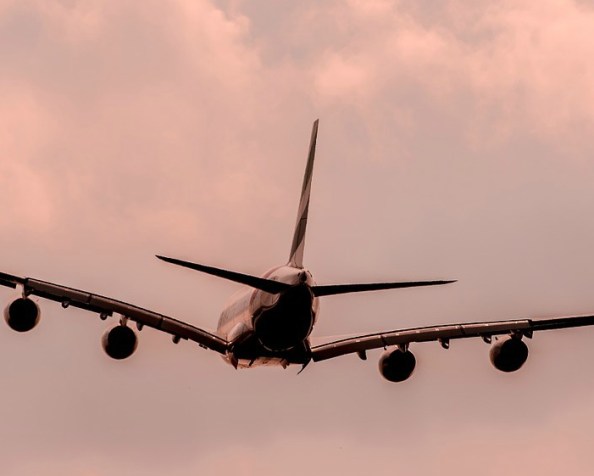
Imagine that we’re flying on a plane, and imagine that the passengers decide that they think they can fly the plane better than the captain. So they say ‘come on, we’ve had a vote and we all think that it’s our right as a citizen to land this plane rather than you. It doesn’t matter that you’ve studied it for 20 years

Do you want to be on that plane? I certainly don’t.

Any regular reader will know that I am rarely effusive on the qualities of scientists. I have doubts over the quality of research and the peer-review process that is supposed to maintain it. I question the training of future researchers and lament a seemingly pervasive misunderstanding of inference. The bunkers that scientists hide in restrict their worldview and too often the tug of opinion overrides objectivity.

But these are nuanced gripes of the middle aged.

I have never doubted the core of what science is and does. Any foibles are just that. Even modestly applied, the scientific method builds knowledge and understanding of everything from rockets to growing rocket. Without it we would still be hunting and gathering.

The captain of the plane may not be the greatest pilot on earth but I ‘d rather he have the controls than the elected nominee from random passengers.

Anyone who agrees should have a polite conversation with those who are comfortable that the $5 billion a year US Environmental Protection Agency has a budget cut of 30% whilst the US defence budget goes up by $50 billion, a 10% increase.

Madness.

Welcome to Muppetville

Welcome to Muppetville

In the Urban Dictionary the top definition for muppet is “a person who is ignorant and generally has no idea about anything”

Muppetville is the place where these people live… in complete bliss.

Imagine for a moment how delightful it must be to reside in Muppetville. You are totally unaware of your ignorance and dearth of ideas. All the people around you are just like you. They are clueless too.

Good coffee is available everywhere and there is never a day you need to pack your own lunch, or dinner for that matter. Rarely are there times when you must be quiet. A comrade or colleague is always nearby and eager for an exchange of glibness. Days are so full that there is not a moment to think. And all the time other Muppets are crazy busy rushing around to normalize your own mania.

There is no risk of some smartarse blasting your argument to the moon with a gentle quip. Ideas people rarely visit. The protection of so many fellow Muppets means there is no reason to doubt anything. And no fear either because as a clueless person you have no awareness of anything beyond the end of your nose.

Most remarkably, and for reasons not fully understood, the real world wants to know what’s going on in Muppetville. Every day, TV cameras and genetically blessed youngsters report on every move, random word string, and hi-vis vests of residents.

And there are many things to see. The revolving doors are always interesting. The gravity defying backflips are cockroach common, but thanks to the accompanying conviction failures, they rarely disappoint. And there are tears, always tears, despite the bliss.

Sometimes a Muppet will put on an extraordinary media performance that stands out from the usual incoherence. Here is a link to a fine example. These episodes are a glimpse inside the minds of people who live without ideas and knowledge.

When Muppets venture out of the ville, never alone and always protected by a coterie of blessed youngsters, they maintain a brave face. This shows tremendous courage. Not everyone can so easily leave the comfort of home to face bewilderment. Perhaps they do this to prepare for eviction that is surprisingly common.

There are many would be residents of Muppetville. Plenty of people want to live there. But it takes ruthlessness, some patience, and demonstrable incompetence to get in. Not everyone is up for that.

In fact, Muppetville has, over the years, drifted away into a kind of never-never land. Its residents and newcomers float with it unable to alter the current. Fewer and fewer people want to go there now. If this were evolution perhaps a new race would emerge from this drift, rife with inbreeding depression.

This could be the source of our fascination. Curiosity over where the current will take this lot next. Perhaps, but more likely, we are equally dumb.

After all, we let them run the country.

Really poor leadership

Really poor leadership

Direct action on climate change is costing the Australian taxpayer over $2 billion to achieve around 177 million tCO2e or one years worth of abatement to meet the emission reduction target Australia presented in Paris.

A few people are being paid a lot of money (more than double the global market rate) to generate abatement while emitters continue to externalise their contribution to a warming world.

Policy that is in the interest of a few and the detriment of most is not good policy whatever your political leanings. Direct action is even worse because the government of the day is not committed to climate action at all. And instead of owning this position, they pay a sop to the voters, pretending to do something that is actually a way to line the pockets of a few.

The painful satire from Ross Gittings that sums up just how stupid modern politics has become tells us just how pathetic our political leadership is. And for once there is no mention of The Donald.

When something is really bad it does not tend to persist. This is true of really good things too because there is a regression to the mean in most things. The average eventually reasserts itself.

This will happen to our current leaders and perhaps to the current political system. Parliamentarians and those feeding off them should be worried.

Claiming coal is the answer in a record-breaking countrywide heatwave is as stupid as it looks. Everyone can see it.

Soon they will also see that many other policies, such as the ERF, are useless and unfair.

Disruption is at hand.


High-speed commuting

High-speed commuting

Here is an interesting idea that uses a solution to one problem to solve another.

House prices in the major cities of Australia are pretty much out of reach for working families not already in the market. Just to keep the roof over the kid’s bedroom is costing well over 50% of the family income for renters or buyers.

The latest solution to housing affordability is a high-speed rail link between Sydney and Melbourne financed predominantly from private capital.

Come again.

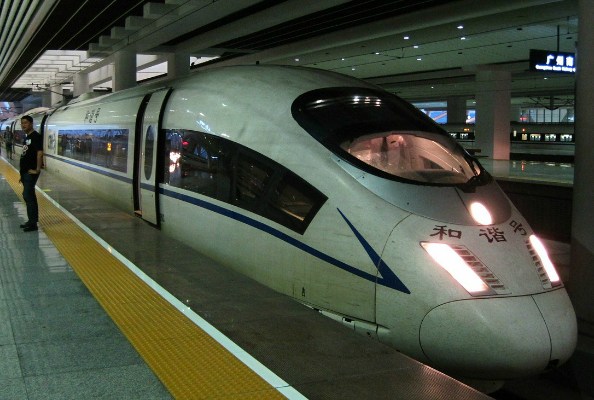
Well, the idea is that very fast transport links, such as covering the 878 km between Melbourne and Sydney in an hour of travel, would allow people to work in the city and live in the countryside where, of course, housing is much cheaper.

And should they cough up the infrastructure funds, the private sector can cash in on the growth in land values all along the route to easily cover the return on investment.

Now I should point out that the current commute from Penrith, an outer west suburb of Sydney, to the Sydney CBD, a distance of 55 km, takes at least 50 minutes on the fast train. The notion of getting to Melbourne by rail in just a few more minutes is fanciful.

You don’t want to know how long it takes to get to Canberra by rail, a destination not even half way to Melbourne. Let’s just say you’ll need to take a book.

But there are fast trains in the world and they move people around very efficiently indeed, famously so in Japan and continental Europe. And the new technologies for rapid transport systems make the working options look like a horse and cart.

Infrastructure at this scale does cost a lot of money. But there is also a lot of capital about looking for a return. So you can see why the idea emerges.

Except that it is crazily dumb.

The reason housing is so expensive is the concentration of wealth. The high paying jobs are in town and so people want to be in town. They pay rent (or a mortgage) for being close to work and this retains wealth in the city that stays in the hands of a relative few. Don’t forget the bank owns your house until the mortgage is paid off.

What would be better is if the jobs were more evenly distributed, then the people would happily move to the jobs. Demand in cities would slow and so would prices.

So instead of commuter trains, what about a high-speed rural train network designed to move produce rather than people. Give the aquaponics entrepreneur in Albury the ability to sell produce to the Sydney market where there are plenty of people still occupying the existing housing stock.

This would also get around the problem of an agricultural production system currently capital saturated. Farm business debt-equity ratios and production growth potential are maxed out under current practices. New production is needed to attract capital.

So rather than move the people to the capital why not move the capital to the people.

And this might even release some housing affordability pressure because capital has somewhere other than real estate to make a return.

The lily pad puzzle

The lily pad puzzle

Imagine a small pond that has clear blue water reflecting the summer sky.

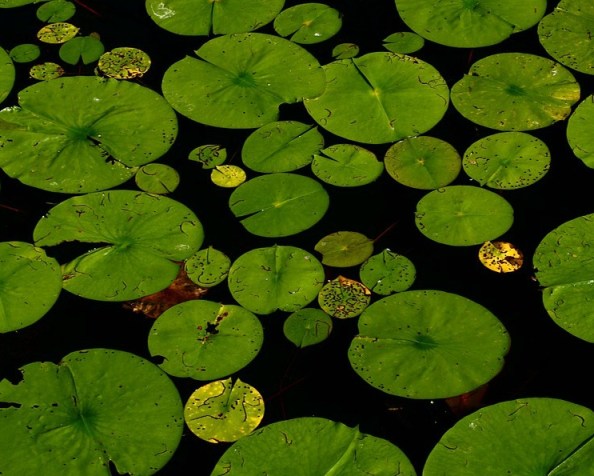
In the centre of the pond are two lily pads, the emergent leaves of an aquatic plant, floating safely on the surface of the water, curled up edges keeping the surface of the leaf dry.

On one pad is a green frog.

The frog is hard to pick out on the green of the leaf but a yellow stripe on its back gives it away.

Chance happens that a week later you pass by the same pond and stop to admire the scene. Sure enough, the frog is still there only you notice that there are now four lily pads; the number of leaves has doubled. In a week the frog has gained surface real estate.

A week later you happen to pass by the pond again and even before you spot the frog you see that there are now eight lily pads. These aquatic plants are quite prolific.

You have to go away for a while and forget the frog and his growing number of Lilypads. A few months pass. Delighted to return home you saunter by the pond again. The first thing you see is that the pond is now mostly green as half of it is covered with lily pads and rather less of the blue sky is reflected in the water.

Sure enough the frog is still sitting proud in the middle.

The puzzle question is this.

How many more weeks until the pond is completely covered with lily pads and the frog can hop to shore without getting wet?

The lily pad puzzle answer is…

One week.

When the pond is half covered with lily pads and they are doubling every week, the pond will go from being half covered to totally covered in just one week. It is the reality of doubling.

Two to four seems like nothing much. Four to eight is mostly trivial too. But when the number is large and the doubling time short, then it is a different thing.

3,500,000,000 is a large number.

It happens to be the number of people on earth in 1967 just 44 years ago. Since then the human population has doubled to 7,000,000,000 (7 billion).

Unlike the pond, we cannot make the Earth any bigger than it already is. So we must hope that should the population double again, there is space enough.

The cute animal postscript

Hans Rosling explains why the human population is unlikely to double again. There are demographics at play that will see family size decline as kids survive better in poorer countries and most of the world passes through the demographic transition.

But 12 billion people is a distinct possibility.