Monkeys like peanuts

Full disclosure throws up some very interesting comparisons.

For example we know that in Australia the prime minister is awarded an annual salary of $507,338

Not a bad earn. There will be allowances and the like and not too many groceries to buy thanks to endless corporate dinners and executive lunches. Certainly beats the socks off the salary of the average Australian that is $72,800 currently the 5th highest in the world.

Immediate reaction #1 — You have to be kidding, that’s far too much to pay a politician


Now we take a gander at the salaries of company CEOs. This is possible thanks to the requirement of boards to state executive remuneration in the company annual report. And there are websites that collate these numbers into accessible lists.

Turns out that the average [as in mean] salary of a top 50 business CEOs is $7,485,000 per annum. Just 15 times more than the PM.

In 2014 the pauper on the CEOs list, languishing down in 300th place on the earnings ladder, made $869,000

Immediate reaction #2 — You have to be kidding, that’s far too much to pay anyone


In what universe are the top ranking CEOs making decisions an order of magnitude more important that those of the prime minister. He was elected to look after our interests?

Turns out if you add up the salaries of PM and his cabinet ministers it comes to roughly $8.7 million — 13 CEOs earned more than this on their own.

It doesn’t make any sense. But if you, reluctantly I hope, accept that this is the world we live in where an individual is considered important enough to earn seven figures to run a company, then you get…

Immediate reaction #3 — You have to be kidding, pay peanuts get monkeys


Et tu Brute

Caesar‘You, too, Brutus’, said Caesar forlorn with sadness and perhaps a hint of incredulity across his brow at the moment of his agonised death. At least that is what Shakespeare decided were the last words of the most famous victim of murder for political gain.

I have just watched all three episodes of The Killing Season on iView — all 234 minutes in one sitting. It was an excellent piece of historical journalism by the ABCs Sara Ferguson that through interviews with key players lays bare the extraordinary events in Australian Federal politics from 2007 to 2012. There were four prime ministers, two elections and an open disregard for the best interests of the country. Easily the modern equivalent of murder for political gain.

Specifically it’s how a political party can trash itself from within. More worryingly it shows a triumph of ego over integrity that destroyed the public’s faith in political process.

Watch it. Pay special attention to body language and facial expressions. Some feelings are hard to hide even for the professional spin artists.

But this post is not about that sorry saga at all. It is about an opinion piece by Eleanor Gordon-Smith, a writer and radio producer who teaches philosophy and ethics at the University of Sydney.

Gordon-Smith claims that the violent words ‘assassin’, ‘midnight door knock’, ‘execution’ and the like have no place in rational journalism. Nice try but a hollow attempt to dilute the message.

I am sorry. No one can airbrush this blemish. The Australian Labour Party destroyed its integrity and that of the political process in not one, but two ‘coup de grace’. Luckily no daggers were required to achieve the ends — a leader replaced by another that the people did not vote for — but the result was the same.

That labour supporters resort to such pathetic excuses is actually more worrying still. It suggests that despite being shown the truth they still fail to accept that their internal systems were flawed. Systems so dysfunctional that individuals without a mandate and not much more than inflated egos could bring down prime ministers. The labour party should say sorry to us for such irresponsible behaviour.

Instead of clutching at a semantic straw they should fess up, preferably with a resounding commitment not to do it again. And, should the party govern again, it will promise to put the best interest of the country before any petty internal squabbling.

While all this was going on the political right weighed in with dirty politics of their own. They trash talked and played every card they had, including aligning with the kinds of extreme views that they now claim to despise. They too came out of this period smelling bad — like opportunists without a moral compass.

Caesar did not expect that his friend Brutus would desert him, but he did.

In modern times the political dagger is no less lethal because it destroys far more than political careers. It bleeds away our faith in democracy.

What to do with grumpies

OLYMPUS DIGITAL CAMERAIf you are of a certain age you will be familiar with a lessening of capacities. The muscles ache a little more than they should, the hair is grey or gone and the boobs are sagging. And no, this is not sexist — just have a surreptitious gander at a few middle-aged men next time you’re about town.

For grumpies this is the time of life for reflection, a pondering of why time steals faculties. And for some it is a time of crisis.

Needless to say I plumped for crisis. What else would you expect from a wannabe writer and career risk taker? It is inevitable that once the energy of youth is spent there is little left to fuel the courage needed to absorb uncertainty. Almost overnight we want life to be simple, predictable and safe.

The time for dream chasing is replaced with rounds of golf and coffee after yoga class. But even this is not enough because the ego suddenly realises that it might not be needed if all you are going to do is relax and sip lattes. It rails at its impending redundancy and makes you feel like a failure.

Before you know it, sagging pecs are the least of your worries.

At this time in the world’s history the towns and cities of western economies are replete with people of this certain age. A quirk of demography, nutrition and the wonders of modern medicine have made it so. There are lots of folk pondering and trying to come to terms with their depleted courage.

Some of them are still in boardrooms and in parliament where they stumble onto decisions that reflect their mood and what got them there — the status quo. The time for radical risk and innovation is long passed for there is no courage left for such things. Instead the obvious is to conserve what we have by doing more of the same. After all, it worked didn’t it. At least that is what President Obama just told the State of the Union.

When you add up more of the same what you get is growth. More of everything got us here, so yet more of everything will see us through any crisis, personal or otherwise.

Does this mean we are addicted to growth? No, probably not. It means we are mentally lazy and lack courage. And these are two of the inevitable properties of a certain age. And being of that certain age myself, it freaks me out.

The obvious solution is to replace all the grumpies with newer models — energetic, courageous types with an idea or two and a spring in their step. Only this takes time for the system first makes youngsters jump through enough hoops to use up all their sprightliness. And if we fast tracked them they’d lack all the life experience that is an undeniable benefit of being a certain age.

No, the solution is this. Reenergise at least some of the grumpies with a dose of certainty. Give them permission to spend a decade at the end of their careers revisiting the ideas of their youth. Allow them to discuss way out notions and suggest possibilities without fear of persecution at the polls or on Facebook. Let them feel free to give it a go.

Who knows what will happen. It cannot be any worse that the leadership vacuum we are in.

Civil service overhaul

officesHere’s a line from a recent article by Harold Mitchell writing in the Sydney Morning Herald on club mentality in the civil serviceIf we just keep swapping jobs around among the boys, before we know where we are, the world will have gone past us and the boys won’t care. 

The lament is not a new one. Many know that the civil service system inherited from the British is a cunning mixture of yes minister patronising and self-preservation. Don’t appear to rock the boat as you climb the bureaucrat ladder to success. Adhere to these two metaphors and you should rise in the system cleverly skipping from department to department. It is smart to hone skills in boating and rung adherence because they are far more important than any topic expertise.

Arguably it is no better in business. Only there it is ok to rock the boat near to capsize as you climb the ladder. But in business it is unlikely that you can readily switch from let’s say the insurance ladder to one in pharmaceuticals. In business topic expertise also has some value.

Harold Mitchell was calling for a change to the club mentality that sees senior public servants shuffle around with abandon among the portfolios. He might have added that the same happens in the lower ranks too. Especially at Federal level, junior staff also shuffle between positions and from ladder to ladder all too frequently. They learn the fine art of survival in a system they see as being inherently unstable and insecure.

Risk is the given justification for feeling antsy. Certainly if I had a dollar for every departmental name change over the last 15 years or 10c for every time I heard a staffer say ‘there are not enough resources to do that’ then I could retire from my own ladder today. But this is a ruse. In fact the tasks are the same whatever the moniker and the resources are still there. Almost all of those who claimed to be in fear of their jobs are still in one.

I think that what happens is that club mentality in the high ranks seeps down the ladders too. It creates an atmosphere of fear and even loathing that cramps the creativity and drains the capacity of the whole system.

My experience with the Feds has mainly been with the wonders of the Carbon Farming Initiative. Here in the land of carbon offsets and emission abatement — that without irony has nothing to do with farming as you and I understand the term — you can see the system visibly strangling the staff and shunting them around. Staffers seem to move just when they are about to understand the details of their job and those that stay pretend that they have no idea. Now I can’t pass without saying that some of these people were complicit. They were boating and laddering with the best of them. Most though were prevented from being good at their jobs by the system.

This inefficiency was not the only reason that the CFI was a wasted opportunity to make a real difference to the climate change conundrum but it certainly didn’t help. Now that the CFI has become ‘Direct Action’ a new round of staff has set about reinventing offset payments yet again. Only this time coal mines can get offsets for mining coal — go figure.

Meantime the world has indeed gone past us.

Sayre’s law now applies to politics

Wallace Stanley Sayre (1905–1972) was a U.S. political scientist and professor at Columbia University who came up with the following law of human nature: “In any dispute the intensity of feeling is inversely proportional to the value of the issues at stake.”

Smart fellow to notice the universality that when it doesn’t matter, we get really intense.

The law would clearly apply to ‘does my bum look big in this’ or ‘that really isn’t your colour’ or equally ‘Rooney will never be a number 10’.

Much of this is because we are more attuned to drama than the truth. The soap opera formula is the definitive expression swaying as it does from one drama to the next failing elegantly to resolve any issue. Most reality TV offers up the same basic plan.

Sayre found the proof of his law in observation of academics. He is quoted as saying “Academic politics is the most vicious and bitter form of politics, because the stakes are so low.” And having had a previous life in the hallowed halls of academia I have to agree. Create job security and it takes everyone off their toes only to channel energies at each other. It’s weird indeed. When I left the ivory towers it was because I am cursed with a copy of the entrepreneur gene, but the bickering was easy to leave behind and observed from a safe distance.

What concerns me is that Sayre’s law appears to be leaking into big P politics. There is fierce agreement over the big values such as perceived threats to security even if they are a loose excuse to justify war. Much head nodding and stoic repose on the cross-benches whenever the PM speaks of response to atrocity.

Move to question time and suddenly there is mayhem over a medicare co-payment. The shadow health minister turns red and is about to explode forcing the speaker to announce that the end of the world is near. It makes crazy posts like Fun with flags seem normal.

This should be a big worry. Am I wrong to expect parliamentarians to get fired up about the big stuff? No, I want them to debate the crucial decisions even if they end up in agreement — and it can’t get more serious than war and what to do about terrorism.

Yet we are deafened by silence. Instead the debate spills into the streets causing pain to many an innocent. This is very poor leadership.

I am left with the absence of Australian PM at the UN climate summit in New York, only for him to take the proverbial by pitching up in the big apple the very next day to address a somewhat disinterested general assembly.

Agreement mutes debate and so does avoiding the issue. It’s not good at all.

Warrior

Warriors beachThe desert bakes the feet of the brave warrior even in the shade of the acacia. A waft of thick air brings a strange scent, somehow fresh and made of vibrant colour. Our warrior turns toward the smell and an urge comes to stride out. Instinct draws feet forward ever faster as clean air banishes the torpor of heat. So powerful is this cleansing that he runs towards the breeze. As beads become rivulets down his temples he reaches the edge of a cliff and is amazed at what he sees, an azure vista full of promise and opportunity. Fatally he stops to think. The view is too much. It calls and repels in equal measure, pregnant with the opportunity of pastures new and yet is far away. His breath hurts and his legs stiffen in fear of further exertion. He thinks again and returns to the safety of the scalded earth.

Away team

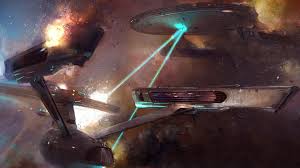
StarTrekPhotonTorpedoThe instant a photon torpedo rents the hull of the USS Enterprise, the explosion ejects hapless crew members into the vacuum of space. Red and blue arms spiral over black booted legs into the ether.

It is always a haunting image that mixes death with vast emptiness.

And yet there are worse ways to go. Being hit by a bus or the ravages of a carcinoma seem much nastier.

Imagine the same scene on the Enterprise in super slow motion. In this version nano-seconds become months or even years. Now the torpedo is visible. It takes forever to deliver the inevitable, the fusilage opens without force and the air feels still rather than explodes. It takes a long while for the expression on the faces to change and the reality of consignment to cold emptiness doesn’t seem sink in at all.

You see we  respond to real and present danger with fight, flight or freeze [the last one being a recently discovered ability of our brainstem]. These core instincts trigger when the scene plays in real-time, but slow it down and we just don’t feel the same. Our brain just says ‘get on with it already’ and finds something else to think about.

Now imagine that the developed world is the USS Enterprise. It has been hit by a photon torpedo. Disabled and defenseless, its contents fly into the depths of space. Only this is happening in super slow motion. So slowly that nobody has the attention span to notice. The crew are still blindly going about their business as usual.

We don’t see that there is no leadership, no options or ideas to deal with the situation, and no James T Kirk to save the day. It is all happening so slowly that there is no drama in it and nothing to hold our attention.

It is as though Kirk, Spock, McCoy, Uhura, Sulu and all the other members of the flight deck, right down to the unknown ensign, have all gone on the away team. The only ones left on the bridge are nameless crewmen who are ultimately anonymous and dispensable making ready for their cartwheeling exit.

We remember Lincoln, Kennedy, Churchill and their ilk because they were leaders. Few will remember modern politicians for they behave like the dispensable extras. Nothing is expected of them.

Our real problem is that we cannot speed up our scene. It is designed to play out slowly, far slower than our instincts can detect. Even the moderating effects of the limbic and frontal cortex of our brains that have helped us to slow things down, to plan and to think can’t see the rent coming. We cannot see the consequences of leadership loss ejecting us into the true emptiness of the universe.

And for this we must be eternally grateful. For if we knew what was coming it would be chaos as we are overtaken by fear. At least without leadership we can stay blissfully ignorant.

Thank goodness Kirk are still on an away team.

Fun with flags

fun with flagsWould Nick Xenophon, the independent senator for South Australia, be in favour of scrapping the market economy? Perhaps he is.

Recently he teamed up with DLP senator for Victoria John Madigan to decry the deplorable situation that the Australian flag flying over commonwealth buildings might not be made in Australia. The senators are to introduce legislation to the Australian parliament that mandates all flags flown above government buildings be wholly produced in Australia.

But what if flags made in China are better quality and cheaper?

In a global economy it is smart to find the best value for money, not just because value makes sense, but because you also want the global economy to find value for money in Australian coal, iron ore, beef cattle, financial expertise and a whole raft of other goods and services. Or not.

Maybe instead we should be parochial and let everyone else buy globally. After all we have no need for a global economy purring along to everyone’s benefit thanks to buying and selling.

But hold on, fans of Big Bang Theory know there is something in the flag issue.

I reckon we should get Dr Sheldon Cooper to stand for election to the Australian parliament. He’s so popular that he’d be a shoe in and then we could get some real fun with flags.

And then I thought…

That the ABC radio news reported this nonsense is amazing; that I wrote a post about it is equally bizarre. That elected leaders don’t have better things to do with their time is a real worry.


Barry O’Farrell resigns as NSW premier

So there we have it.

After 7 years as leader of the opposition waiting for his tilt at the top job, Barry O’Farrell lasted three years as premier. Forced to resign for misleading the Independent Commission Against Corruption because he obviously did receive a $3,000 bottle of wine as a ‘gift’ after all.

This is not what usually happens. In politics there are no lies, there is just being economical with the truth. Politicians usually spout so much waffle and fluff their comments can be cut down to one word without loss of meaning. Consequently a host of dodgy doings and ‘mistakes’ can be erased, buried or simply forgotten.

So why did he resign? Many a politician of every hue has survived much worse.

Clearly it is not about the wine. Or even that he claimed not to have received it. It is about a system that is the epitome of not what but who you know.

We all walk around blinkered thinking that the world is meritorious. We believe that the best athletes play professional sport for our team, the best singers are the ones we download, the best minds are employed to engineer better lifestyles for us, and that the best organisers run our commerce.

We also believe that we elect the best politicians to sit in parliament and make the laws that we live by — yes, believe it or not, politicians are elected to make the laws that we are expected to live by. Not only that, but we believe they do the right thing in selecting the help they need to run things.

Well they don’t.

Barry resigned because he stuffed up. And presumably because he is an honest sort of bloke, felt that the stuff up was irretrievable. Except that by resigning he also took the spotlight off the truth of the matter. The political system is about who and not what you know. People get the job and companies get the tender because they are known. And sometimes to get known you need to send out expensive bottles of wine. It is the way of things. It is not necessarily corrupt but it always comes close.

The premier resigned because he nearly exposed the system for what it is and always has been… dodgy.

Sounds Crazy #9 | Bandwidth

Back in my academic days we were not allowed to spend any University money on coffee and tea. I would ask politely why I couldn’t create a more convivial workplace by providing free beverages for my postgrad students and research assistants only to be told it was not allowed. Even in the department tearoom there was an honesty box to cover the cost of the milk.

I never understood this and used to think it was just the system being stingy. And being me, I railed, often taking my team out for coffee even though we had a perfectly suitable coffee room next to the labs. The first thing that happened when I converted our research into a company was the purchase of a kettle followed swiftly by a water cooler.

What upset me back then was the assumption that productivity was all about the number of hours at the desk and how expertly one counted beans. It obviously had nothing to do with how happy people were at work.

Research is repetitive stuff. In our case there were many hours of routine sample processing every day. This meant taking regular breaks was essential to our sanity. The irony is that these days we would be instructed by the OH&S officer to stop peering down the microscope and go to yoga class — but I digress.

What got my goat recently was a report on the front page of the weekend paper telling us that the new Australian prime minister has decreed that all travel by politicians and Federal bureaucrats must have permission.

Mr Abbot requires that government ministers sign off on travel requests from civil servants and that he himself must agree to any travel that costs more than $50,000.

Now I don’t know about you, but I always thought that members of parliament and the senior staff that support their efforts were there to develop, debate, design and implement public policy.

Instead Mr Abbot wants them to be travel agents.

I would rather have the finite daily energy allocation to the brains of national leaders and their staff to be used furthering the public good.

I want them thinking about policy and figuring out the endless machinations of delivering it effectively. Not wasting valuable mental bandwidth as travel police.

Next they will be buying their own coffee.

Sounds crazy because it is.