Welcome to Muppetville

Welcome to Muppetville

In the Urban Dictionary the top definition for muppet is “a person who is ignorant and generally has no idea about anything”

Muppetville is the place where these people live… in complete bliss.

Imagine for a moment how delightful it must be to reside in Muppetville. You are totally unaware of your ignorance and dearth of ideas. All the people around you are just like you. They are clueless too.

Good coffee is available everywhere and there is never a day you need to pack your own lunch, or dinner for that matter. Rarely are there times when you must be quiet. A comrade or colleague is always nearby and eager for an exchange of glibness. Days are so full that there is not a moment to think. And all the time other Muppets are crazy busy rushing around to normalize your own mania.

There is no risk of some smartarse blasting your argument to the moon with a gentle quip. Ideas people rarely visit. The protection of so many fellow Muppets means there is no reason to doubt anything. And no fear either because as a clueless person you have no awareness of anything beyond the end of your nose.

Most remarkably, and for reasons not fully understood, the real world wants to know what’s going on in Muppetville. Every day, TV cameras and genetically blessed youngsters report on every move, random word string, and hi-vis vests of residents.

And there are many things to see. The revolving doors are always interesting. The gravity defying backflips are cockroach common, but thanks to the accompanying conviction failures, they rarely disappoint. And there are tears, always tears, despite the bliss.

Sometimes a Muppet will put on an extraordinary media performance that stands out from the usual incoherence. Here is a link to a fine example. These episodes are a glimpse inside the minds of people who live without ideas and knowledge.

When Muppets venture out of the ville, never alone and always protected by a coterie of blessed youngsters, they maintain a brave face. This shows tremendous courage. Not everyone can so easily leave the comfort of home to face bewilderment. Perhaps they do this to prepare for eviction that is surprisingly common.

There are many would be residents of Muppetville. Plenty of people want to live there. But it takes ruthlessness, some patience, and demonstrable incompetence to get in. Not everyone is up for that.

In fact, Muppetville has, over the years, drifted away into a kind of never-never land. Its residents and newcomers float with it unable to alter the current. Fewer and fewer people want to go there now. If this were evolution perhaps a new race would emerge from this drift, rife with inbreeding depression.

This could be the source of our fascination. Curiosity over where the current will take this lot next. Perhaps, but more likely, we are equally dumb.

After all, we let them run the country.

Really poor leadership

Really poor leadership

Direct action on climate change is costing the Australian taxpayer over $2 billion to achieve around 177 million tCO2e or one years worth of abatement to meet the emission reduction target Australia presented in Paris.

A few people are being paid a lot of money (more than double the global market rate) to generate abatement while emitters continue to externalise their contribution to a warming world.

Policy that is in the interest of a few and the detriment of most is not good policy whatever your political leanings. Direct action is even worse because the government of the day is not committed to climate action at all. And instead of owning this position, they pay a sop to the voters, pretending to do something that is actually a way to line the pockets of a few.

The painful satire from Ross Gittings that sums up just how stupid modern politics has become tells us just how pathetic our political leadership is. And for once there is no mention of The Donald.

When something is really bad it does not tend to persist. This is true of really good things too because there is a regression to the mean in most things. The average eventually reasserts itself.

This will happen to our current leaders and perhaps to the current political system. Parliamentarians and those feeding off them should be worried.

Claiming coal is the answer in a record-breaking countrywide heatwave is as stupid as it looks. Everyone can see it.

Soon they will also see that many other policies, such as the ERF, are useless and unfair.

Disruption is at hand.


High-speed commuting

High-speed commuting

Here is an interesting idea that uses a solution to one problem to solve another.

House prices in the major cities of Australia are pretty much out of reach for working families not already in the market. Just to keep the roof over the kid’s bedroom is costing well over 50% of the family income for renters or buyers.

The latest solution to housing affordability is a high-speed rail link between Sydney and Melbourne financed predominantly from private capital.

Come again.

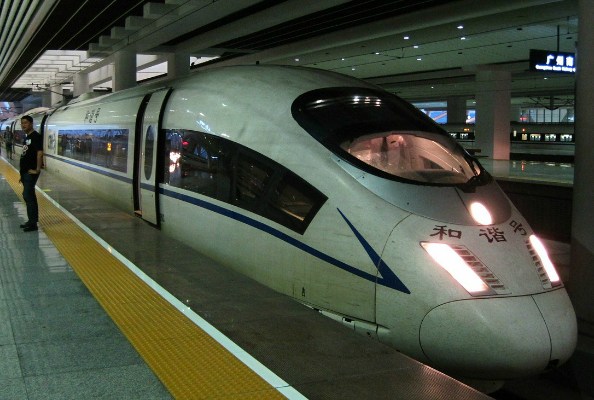
Well, the idea is that very fast transport links, such as covering the 878 km between Melbourne and Sydney in an hour of travel, would allow people to work in the city and live in the countryside where, of course, housing is much cheaper.

And should they cough up the infrastructure funds, the private sector can cash in on the growth in land values all along the route to easily cover the return on investment.

Now I should point out that the current commute from Penrith, an outer west suburb of Sydney, to the Sydney CBD, a distance of 55 km, takes at least 50 minutes on the fast train. The notion of getting to Melbourne by rail in just a few more minutes is fanciful.

You don’t want to know how long it takes to get to Canberra by rail, a destination not even half way to Melbourne. Let’s just say you’ll need to take a book.

But there are fast trains in the world and they move people around very efficiently indeed, famously so in Japan and continental Europe. And the new technologies for rapid transport systems make the working options look like a horse and cart.

Infrastructure at this scale does cost a lot of money. But there is also a lot of capital about looking for a return. So you can see why the idea emerges.

Except that it is crazily dumb.

The reason housing is so expensive is the concentration of wealth. The high paying jobs are in town and so people want to be in town. They pay rent (or a mortgage) for being close to work and this retains wealth in the city that stays in the hands of a relative few. Don’t forget the bank owns your house until the mortgage is paid off.

What would be better is if the jobs were more evenly distributed, then the people would happily move to the jobs. Demand in cities would slow and so would prices.

So instead of commuter trains, what about a high-speed rural train network designed to move produce rather than people. Give the aquaponics entrepreneur in Albury the ability to sell produce to the Sydney market where there are plenty of people still occupying the existing housing stock.

This would also get around the problem of an agricultural production system currently capital saturated. Farm business debt-equity ratios and production growth potential are maxed out under current practices. New production is needed to attract capital.

So rather than move the people to the capital why not move the capital to the people.

And this might even release some housing affordability pressure because capital has somewhere other than real estate to make a return.

Merry-go-round

Merry-go-round

Suppose you are a smart person with considerable experience of the world. You have worked hard and sacrificed much for a stellar career that now has you among the CEO ranks. One of your rewards is a seven figure a year salary that puts you just shy of the top 250 CEO earners on 2014 numbers.

In a most peculiar turn of events in 2016, you go from being the CEO of a global environmental consulting firm to running a major power corporation and then, just six months later, you take over as head of the largest a private health fund in the country.

Not in a million years. Such career shifts are impossible in the real world. Consulting firm to energy company maybe. Even energy company to health fund is possible. But not from environment to industry to health in six months. Impossible.

Such career shifts are impossible in the real world. Consulting firm to energy company maybe. Even energy company to health fund is possible. But not from environment to industry to health in six months. Impossible.

Impossible.

Unless of course, you are a minister in the Australian federal government. Then you can make the change from Environment minister to Industry minister to Health minister in a jiffy. In your latest incarnation at health, you are responsible for a $65 billion portfolio. Quite some responsibility.

Somewhat surprisingly, your annual remuneration for handling the health of the nation is just $330,000 plus some expenses — but you have to be very careful indeed not to abuse any entitlements.

I’m not sure what is more bizarre. The merry-go-round of ministers running around the cabinet room and putting their bums down on the nearest chair when to music stops. Or the fact that they are paid such a pittance to take on huge financial and, dare I say moral responsibility.

Professor John Rice, writing in The Conversation, is optimistic that some positive policy settings can survive a similar revolving door of ministers in the science portfolio.  He may be right if all the newest minister has to do is keep on the innovation course and maintain the finding. Only it never is quite so simple.

The analogy with commercial firms is not a trivial one. CEOs steer their ships through turbulent waters towards profit. Shareholders demand that they do this wisely and the law protects their interests from incompetence as well as malfeasance. Rarely will the CEO survive without relevant experience and at least some knowledge.

Why should ministers be any different? It is just as important that they have at least some topic skills and experience in their portfolio even though their remuneration seems not to depend on it.


Monkeys like peanuts — more on CEO salaries

Is the world changing?

Is the world changing?

Love him or loath him, infamous climate scientist Dr Michael Mann recently made an important point about Donald Trump’s rhetoric on bringing manufacturing industry back to make the US great again.

On the America Adapts podcast Mann suggests that to achieve such a goal, manufacturing in the US must embrace the energy revolution. Implying factories running on fossil fuel energy will not be competitive in a global market.

The only way a fossil fuel based industry would be competitive is if there were trade restrictions and tariffs to keep them competitive. This makes Trump’s anti-trade agreement gambit a typical business bully approach to finding a competitive edge that, in this case, US manufacturers would not have.

The evidence is that the energy revolution is well advanced. All over the world technologies are maturing rapidly to deliver distributed clean energy. It is realistic to believe the many mayors and governors that claim carbon neutrality for their towns and jurisdictions when their constituents are all up for a Tesla wall.

Today’s first graders, who will consume a fair amount of electricity in their lifetimes, may not know or care, but most of that energy will not come from a coal-fired power station.

This change from fossil fuel to alternative energy and the accompanying shift from centralised to distributed generation is exactly the one that was needed to tackle the climate issues Michael Mann is so passionate about. Only it is happening because it makes economic sense and not because of a limp international agreement made in a Japanese city or from late night breakthroughs in Paris.

Let’s not kid ourselves. The change is happening certainly. Only it is happening because the technology is becoming commercially competitive. So competitive in fact, that a US president is elected on the back of rhetoric to prop up his countries uncompetitive energy system and hold on to the past.

Does all this mean that the world is changing? Not really. Those first graders, who will spend more of their lives looking at a screen than the trees, may notice more wind farms and will drive an electric car they plug into ports on the street to share the energy captured from the roof at home. But they will also be fiercely competitive and, just like their parents and grand pappy, rely on markets to deliver their lifestyle.

They will work, eat, sleep, and procreate with their mobile device never more than an arm’s length away. They will earn money and use it to pay for their data plans. Not much will be different…

Unless, just maybe, perhaps, possibly…

All this distributed energy makes everything easier, and the system changes. If stuff gets cheaper and cheaper, maybe value is recognised in what people do and not what they have.

Here’s hoping.

When in doubt start a new business

When in doubt start a new business

What I learned lately about… risk

I have made a career out of avoiding the safe options in favour of not knowing where the next contract will come from. On and off for over a decade I have worked for myself.

It means being your own boss and that is supposed to be good. But it also means you are your own marketing director, project manager, sales staff and tea lady.

There are times when so many hats sit real heavy on your head and you sag. It all gets too much.

The thing is the risk is addictive, probably in the same destructive way that gambling can be. So when doubt mushrooms out of the compost the solution is to take on more risk and start another company.

Here is the website.


President Trump — the shock we had to have

trump-1266570_1280

In 1990, Paul Keating, as Treasurer in the Hawke government, famously described the 1990s recession in Australia as “the recession we had to have” to correct a series of excesses through the 1980’s. Keating challenged Bob Hawke for the leadership of the Labor Party in 1991 and became Prime Minister of Australia.

This week the American people, via a slim minority, voted Donald Trump into the Presidency of the United States.

It is the shock they (and we) had to have.

What happened is that a nation of educated folk just put a narcissistic isolationist with little respect for anyone but himself and no experience of public office into the highest position in the land. Is this man really the best person from among the 322 million or so options?

You would have to think not. There had to be someone better, although not the democratic candidate apparently.

So what is going on?

There are a large number of people who now have no faith in the system of government to improve their lot. Median income in the US is now $30,525 up just $1,113 since 2000, less than 4% in over a decade. Average wages for those without a college degree in the US have declined over the same period and the number without a job has increased. Meantime median house prices have doubled to $304,800.

A xenophobic return to the old days was a message people wanted to hear.

There are some bigger picture numbers too. A growing disparity in wealth due as much to concentration into the few wealthy as to the loss of earnings among workers. A high risk of GFC 2.0 despite the national debt ballooning to $19.8 trillion raised ostensibly to stave off such a catastrophe. A law making establishment that is out of touch.

Check out the US national debt clock

But these individual and economic symptoms are best seen through the lens of what brought them about. Slavish adherence to the market and its fixation with growth, neo-liberalism it’s called.

Ironically Trump is going to be the messenger that demonstrates this slavish adherence is untenable. Because he will not be able to deliver on most of his promises. Given the debt, wealth concentration and stagnant growth, the system cannot afford his tax cuts, wall construction or restricted trade.

Imagine halving corporate tax when the country carries more debt than its GDP.

If he insists on keeping his promises the fragile economy collapses. If he relents, the people are let down (again). Either way, there is a jolt to the system. An opportunity is created for genuine progressive change.

There is a reason this feels like much more than trying to find a silver lining in a dark misogynistic cloud.

On the night before the US election I attended a public function in Sydney under the 100 Resilience Cities program. The theme was ‘Is Sydney ready? Working together for a resilient city’ and even a confirmed skeptic like myself would have to say, yes.

Because for the first time it became clear to me what resilience is. It is the ability of people to connect with each other across the barriers we all erect to find common ground and support. Throughout the evening there was evidence of people doing this more and more. Just the recognition that resilience is all about people is huge.

And this is the real change that can truly help those who voted for the orange guy. Where people actually talk to each other, find things they agree on, accept the things they cannot agree on, and build things together.

It will happen.

Donald is the shock we need to make it so.

Confidence

Blinded by the disbelief of another prime minister sworn in on the back of 54 party room votes I almost missed the real political change last week. After 5 attempts in as many years Australia has an optimist in charge.

Once the claimer of moral heights Kevin Rudd capitulated over climate policy and we realised that he could get things done for Kevin but not for everyone else, Australians have been led by negativity. Julia Gillard tried her best to be positive but the bloodied knife she carried was just too heavy for progress to prevail. Then she was knifed too.

Mr Abbott who squeaked past Mr Turnbull in 2009 by one vote to become party leader is supposed to be a nice guy. He works for charity on his time off and is loyal to a fault but every phrase he uttered in the top job came from a place of fear.

Stop can be a positive word but from Tony Abbot it was never really clear why things had to stop. They just had to. Anything that should be positive —more jobs, more growth, less deficit — came across as a justification. As if proof were always needed that the government was doing well, when they were just scared.

Then yesterday for the first time in many a year a prime minister of Australia stood up at parliamentary question time and said that the country has a great opportunity and that times are exciting for the nation. Mr Turnbull was positive. He almost led a rendition of ‘yes we can’ and it felt like he wanted to.

This is momentous.

If he can keep it going, and admittedly that is a big if, we could see some confidence return. We might actually join the many other countries with far worse economic outlooks and social challenges than Australia who are finding solutions because of a belief in the best of their people.

As a social centrist myself I would rather this breath of fresh air to have come from the left side of politics. Mr Turnbull may look trendy but he is still a brown. But the labour party are mired in their own brand of negativity that cannot hide the fact that they spend too much time playing with knives.

So instead I will take Mr Turnbull at his word for confidence has great power to do good. And we really need that.

Fear or morality

I recently watched a documentary on the rise of ISIS.

It was shocking. The graphic footage of bloodlust was visceral and brutal.

How can a man place a gun to the back of the head of another bound and helpless in the dirt, and pull the trigger? How could he? He is a human being and I am a human being.

Instant fear.

Not for the prospect of being the victim but for being the perpetrator. There but for the grace of god anyone goes.

Fear that such moral depravity is possible, that we are capable of inflicting such pain on ourselves. For the pain is held by the living not the helpless victim. His is, at least, short-lived.

This horror is not to make people scared. Instead this was domination through callous and morally bankrupt behaviours.

But it was scary to see what a man is capable of doing to a countryman who follows the same religion, just not the right variety.

These killings are Illegal acts under any civilised legal code even those that apply when countries are at war. Killing in cold blood is and always should be criminal however it might be dressed.

And yet what to do about it presents a huge moral challenge.

Standing back and pretending it is only an internal problem condemns the victims and effectively condones the actions. Stepping in with guns blazing did not work the first (or the second) time, so who can say it would this time.

Military aircraft are something of a compromise at least strategically and politically. I am not sure where it leaves our morals for how far from the gun to the back of the head is the red button that releases the air to ground missile?

The most worrying of all was footage of ISIS flags flying atop American tanks and armoured vehicles so brand spanking new they didn’t have a scratch — hardware acquired when the Iraqi army forces were overrun. Now the bloodshed is aided by equipment sold for profit.

No matter how they were acquired, that is moral depravity too.

So next time the media try to frighten you with the prospects of terrorism in your hometown or the government comes across so proud to make a big deal of apprehending a handful of alleged recruits at the airport, have a think.

Just imagine an American tank rolling through a conquered city draped in a black flag.

This is the real deal and I don’t know if we are up to tackling it.

Liability of disclosure

car-wheelsTony knows something. He glanced down at the floor just before he sat in the passenger seat of his mate Joe’s car. Under the wheel was a rusty nail.

If Joe drives off there is a good chance the nail will puncture the tyre.

“Wait a sec,” Tony says jumping out of the car and removing the nail. “OK, good to go”.

Joe looks across bewildered and drives off barely registering another eccentricity of his old mate. And oblivious to the inconvenience averted.

Tony had no reason to disclose his knowledge of the nail to Joe and as Joe didn’t ask, the incident passed without consequence.

What if Tony noticed the nail but failed to act?

Suppose he sat in the seat unmoved as Joe drove the car over the nail and was forced to spend the next twenty minutes changing to the spare and cussing at the dirt advancing toward his Armani suit.

Joe puts it down to bad luck. These things happen. It didn’t even cross his mind that Tony might have seen the nail and was in a position to prevent the damage and inconvenience.

Tony gets away with what some would consider negligence. If Tony knows that harm will happen if he does nothing then he is obliged to act. Indeed he has a liability if he doesn’t.

Should his mate Joe find out that Tony knew about the nail and didn’t get off his butt to remove it, Joe is annoyed at least and more likely will clock his mate on the nose. No more free lifts for Tony.

More important than the event is the loss of trust from failing to disclose. Joe will always have a nagging doubt about Tony’s integrity.

This is a classic moral dilemma that philosophers have pondered for generations. The problem with knowing is when and what to disclose, to whom, and with what repercussions. The legal profession has dined out at the best restaurants on answers they give to the bewildered.

There are murmurs that the risks to business from a changing climate are a nail under a tyre that everyone knows is there. Directors and trustees cannot be a negligent and not act on what they know. They are liable for this knowledge and required to disclose.

Sarah Barker has written an excellent article explaining what it all means for the champions of business — directors duties in the anthropocene — that won a Sustainalytics Awards for Excellence from the PRI in 2014.

Meantime I wonder if Tony knows what failure to act might bring beyond the loss of a mate.