Sayre’s law now applies to politics

Wallace Stanley Sayre (1905–1972) was a U.S. political scientist and professor at Columbia University who came up with the following law of human nature: “In any dispute the intensity of feeling is inversely proportional to the value of the issues at stake.”

Smart fellow to notice the universality that when it doesn’t matter, we get really intense.

The law would clearly apply to ‘does my bum look big in this’ or ‘that really isn’t your colour’ or equally ‘Rooney will never be a number 10’.

Much of this is because we are more attuned to drama than the truth. The soap opera formula is the definitive expression swaying as it does from one drama to the next failing elegantly to resolve any issue. Most reality TV offers up the same basic plan.

Sayre found the proof of his law in observation of academics. He is quoted as saying “Academic politics is the most vicious and bitter form of politics, because the stakes are so low.” And having had a previous life in the hallowed halls of academia I have to agree. Create job security and it takes everyone off their toes only to channel energies at each other. It’s weird indeed. When I left the ivory towers it was because I am cursed with a copy of the entrepreneur gene, but the bickering was easy to leave behind and observed from a safe distance.

What concerns me is that Sayre’s law appears to be leaking into big P politics. There is fierce agreement over the big values such as perceived threats to security even if they are a loose excuse to justify war. Much head nodding and stoic repose on the cross-benches whenever the PM speaks of response to atrocity.

Move to question time and suddenly there is mayhem over a medicare co-payment. The shadow health minister turns red and is about to explode forcing the speaker to announce that the end of the world is near. It makes crazy posts like Fun with flags seem normal.

This should be a big worry. Am I wrong to expect parliamentarians to get fired up about the big stuff? No, I want them to debate the crucial decisions even if they end up in agreement — and it can’t get more serious than war and what to do about terrorism.

Yet we are deafened by silence. Instead the debate spills into the streets causing pain to many an innocent. This is very poor leadership.

I am left with the absence of Australian PM at the UN climate summit in New York, only for him to take the proverbial by pitching up in the big apple the very next day to address a somewhat disinterested general assembly.

Agreement mutes debate and so does avoiding the issue. It’s not good at all.

Fun with flags

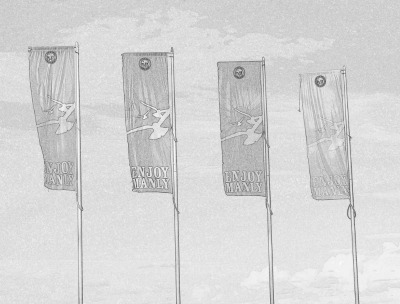
fun with flagsWould Nick Xenophon, the independent senator for South Australia, be in favour of scrapping the market economy? Perhaps he is.

Recently he teamed up with DLP senator for Victoria John Madigan to decry the deplorable situation that the Australian flag flying over commonwealth buildings might not be made in Australia. The senators are to introduce legislation to the Australian parliament that mandates all flags flown above government buildings be wholly produced in Australia.

But what if flags made in China are better quality and cheaper?

In a global economy it is smart to find the best value for money, not just because value makes sense, but because you also want the global economy to find value for money in Australian coal, iron ore, beef cattle, financial expertise and a whole raft of other goods and services. Or not.

Maybe instead we should be parochial and let everyone else buy globally. After all we have no need for a global economy purring along to everyone’s benefit thanks to buying and selling.

But hold on, fans of Big Bang Theory know there is something in the flag issue.

I reckon we should get Dr Sheldon Cooper to stand for election to the Australian parliament. He’s so popular that he’d be a shoe in and then we could get some real fun with flags.

And then I thought…

That the ABC radio news reported this nonsense is amazing; that I wrote a post about it is equally bizarre. That elected leaders don’t have better things to do with their time is a real worry.


Barry O’Farrell resigns as NSW premier

So there we have it.

After 7 years as leader of the opposition waiting for his tilt at the top job, Barry O’Farrell lasted three years as premier. Forced to resign for misleading the Independent Commission Against Corruption because he obviously did receive a $3,000 bottle of wine as a ‘gift’ after all.

This is not what usually happens. In politics there are no lies, there is just being economical with the truth. Politicians usually spout so much waffle and fluff their comments can be cut down to one word without loss of meaning. Consequently a host of dodgy doings and ‘mistakes’ can be erased, buried or simply forgotten.

So why did he resign? Many a politician of every hue has survived much worse.

Clearly it is not about the wine. Or even that he claimed not to have received it. It is about a system that is the epitome of not what but who you know.

We all walk around blinkered thinking that the world is meritorious. We believe that the best athletes play professional sport for our team, the best singers are the ones we download, the best minds are employed to engineer better lifestyles for us, and that the best organisers run our commerce.

We also believe that we elect the best politicians to sit in parliament and make the laws that we live by — yes, believe it or not, politicians are elected to make the laws that we are expected to live by. Not only that, but we believe they do the right thing in selecting the help they need to run things.

Well they don’t.

Barry resigned because he stuffed up. And presumably because he is an honest sort of bloke, felt that the stuff up was irretrievable. Except that by resigning he also took the spotlight off the truth of the matter. The political system is about who and not what you know. People get the job and companies get the tender because they are known. And sometimes to get known you need to send out expensive bottles of wine. It is the way of things. It is not necessarily corrupt but it always comes close.

The premier resigned because he nearly exposed the system for what it is and always has been… dodgy.

That’s Africa

Okavango Africa.jpgLast Wednesday night I tuned in to the ABC News24 coverage of the memorial service for Nelson Mandela expecting somber reverence or perhaps the kind of party that only Africans can do.

I should have known it would be something else.

The start was delayed by the requirement for every dignitary to make his or her own special entrance aided by typically inept African organizing but, conveniently, heavy rain could take the blame.

And nobody seemed to mind.

Filling in the airtime was anther matter. The ABC wheeled in a former activist who had struggled against the apartheid regime and then escaped [long before Mandela was released] to become an Australian citizen.

Unfortunately he was sadly bitter. His deep hurt and anger had travelled with him and he still had it in spades. His comments ran as though the oppressors were still oppressing and Nelson Mandela had not existed.  This attitude of hatred and recrimination was exactly what Mandela knew he had to diffuse. The miracle was that through courage and compassion he did it for a nation, but sadly not for this exile.

Quickly we abandoned the ABC and its disrespectful commentator and streamed the coverage.

You had to laugh out loud at the antics.

There were the random guys in the foyer as the dignitaries arrived. These are the traditional ‘hangers around’ that are everywhere in Africa, who obviously had nothing to do but hang around. Presumably they had security clearance… presumably.

There was an extraordinary performance by a gospel cum rap singer trying desperately to energise the crowd to God by being energetic himself. As his antics became more and more exuberant another random guy assigned to hold an umbrella over the singer was finding it more and more difficult to complete his assigned task. He was stoic and hugely comical as he did his best.

Then there was the huge amusement of Ban Ki Moon claiming the applause of another African dignitary as the latter ascended the stage to be embarrassingly ignored by the UN Secretary General.

President Obama showed how to calm the restless crowd with an impassioned speech that closed in on the truth of what Mandela gave us. Cleverly he still managed a sly dig at the current crop of African leaders who cannot hold a candle anywhere near the father of the nation. Only he spoilt it later by helping the Danish PM take a selfie — and we thought only Kevin Rudd did that.

And there were the boos for President Jacob Zuma. Not, as I thought at the time, because there was politics even at the memorial service for one of the world’s greatest, but because he had not made the day a public holiday. Fair enough, he deserves a slap for that.

Then we ran out of steam and let the remaining hours of the ceremony go.

The bit we watched was classic Africa, full of cheer, cheek and irreverence layered over famously sloppy organization. It rained and was obviously cold, went on for hours, and still the people danced to celebrate a great life.

I reckon Madiba was watching all the antics as proud as punch with his famous smile lighting up the heavens.

Farming not fracking

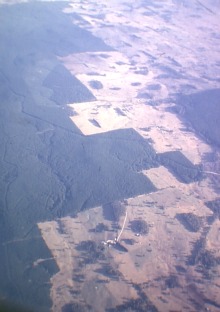
land-clearing-farmingStrolling through the village, as you do on a sunny winter’s Saturday morning, is a real treat.  It is a privilege just to take in the bustle of folk going about their weekend business — buying the paper, greeting a neighbor or settling down for coffee with friends serenaded by a teenager with a guitar and dreams of fame and fortune from his songs. This is why we are so fond of community.

Abruptly my reverie was rudely broken.

“No thank you,” I said to a brusque individual who ambushed me from behind the ‘vote green’ placards that were cluttering the pavement. The pamphlet purveyor was most indignant at my refusal and gave me the death stare. If that had happened in the playground it would have been called bullying.

I strolled on by and observed both the wave of annoyance that passed over me, and the slogan on one of the placards that read ‘ farming not fracking’.

For the uninitiated fracking is the controversial process of getting gas from coal seams by injecting fluid into deep rock layers to fracture them. This releases the pressure that holds onto the gas. Once free the gas can be piped to the surface. It is similar physics that happens when the seal is broken on a soda bottle and bubbles start to rise.

The Greens are on to fracking because it is another nasty resource exploitation process that results in burning of yet more fossil fuels, risks pollution of groundwater or local subsidence, and worst of all, will displace farmers from the land. Not all land, but the land gas companies might buy to exploit the gas reserves beneath the paddocks.

No matter that in greenhouse gas terms natural gas is cleaner than the coal that will be burnt instead to meet growing energy demand, that boreholes have always coexist with farming, and that legislation already prevents anything nasty being used as the lubricant.

As a slogan ‘farming not fracking’ is just silly. It is not even the issue.

Deliver it with a ‘holier than thou’ look on your face and even your supporters will cringe. Everyone else will tell you to take a hike, probably far less politely.

How about this instead?

We don’t like fracking or exploitation of coal seam gas so we have come up with this solution.

The energy that would have come from gas can be generated from alternative sources [solar, wind, wave, geothermal] plus some savings from improved energy efficiency. Both initiatives could be resourced from a small but compulsory ‘no fracking’ investment of say $500 from every household in the country — this one-off payment from everyone  would raise roughly $4 billion.

The return on investment is twofold. Cheap energy in the long run as alternative sources would get over the commercial hump and there will be environmental benefits from avoiding pollution risk. Plus, there would be lower greenhouse gas emissions from the soon to be necessary shift to alternative energy sources again saving money on transition costs.

All this for the annual expenditure to households of one weekly coffee and cake in the village.

The pamphleteer would probably look at me aghast and blurt out, “You mean to ask people to give up their Saturday morning coffee and cake, what are you thinking?”

Then he would spontaneously take up the chant “farming not fracking, farming not fracking…”

And no doubt the young songwriter could weave it all into a lyric.

Spillage

The ghost of Abraham Maslov would be having a chuckle right now, or maybe a wry smile at a spectacular confirmation of his hierarchy of needs theory played out in Australian politics. Elected members of the Australian Labour Party so frightened for their psychological health at the prospect of losing their jobs, last night rolled the first woman prime minister in favour of the previous prime minister they rolled when they were feeling a bit more secure.

The short version of events is that Kevin Rudd was elected prime minister in 2007 on a majority. His colleagues deposed him in 2010 in favour of Julia Gillard who, despite starting with a healthy lead in the polls, returned after the 2010 election to lead a minority government in a hung parliament. She and the party fell so far behind in popularity that all seemed lost. The upcoming election would see a wipeout so severe that it would hand power the opposition for several terms. So, almost at the eleventh hour, the party spilled her out to put Kevin Rudd back in. And yes it is farcical — you are probably surprised that it’s not in the alloporus “sounds crazy” series.

Only Dr Maslov has a perfectly sensible explanation. We all fill the safety and security buckets of our emotional hierarchy before the self-actualization one that holds morality, lack of prejudice and acceptance of facts. When the position is precarious self-preservation automatically sets in. We allow ourselves to put aside what, in the good times, we espoused. We do what it takes to save the ship from sinking.

Clearly some of the motivation behind changing the collective mind on who should be in charge [again] came from the need of individuals to survive, to keep their jobs. No doubt this was part of it. Except that we heard many times in the brief lead up to the leadership spill that it was “in the best interests of the party” and “the best interests of the nation”.

Obviously the party benefits if it goes into damage limitation to maybe reduce the margin of defeat at the election or even have an outside chance of a win. Loose by a few seats and recovery can be swift. Loose many and history tells you that it will take many election cycles before those seats are recovered. So if it has to lose, the party benefits by limiting the margin of defeat.

But why does the nation benefit? Well the conventional wisdom is that in party democracies, good government requires a strong opposition and that usually means a two party system. The public gets to pick one of two options — one to govern and the other to ‘keep the bastards honest”.

Sounds sensible enough. Only the smell of self-preservation in this argument is strong. In the long run the two party option favours both parties — check out the hilarious Spitting Image skit below where the Margaret Thatcher and Neil Kinnock puppets explain the logic.

The two party system can work if the process of ‘keeping honest’ produces innovation, new ideas and ideologies that match the circumstances of the day. The parties evolve with the times.

The spillage Australians witnessed last night was because this did not happen. Going back to the future was the consequence of a failure to evolve to cope with the needs of the day. The incumbent and her cabinet did not deliver enough policies that worked for the majority of people. And even when policies did work the government failed to communicate the benefits. They lost the trust of enough of the electorate to suggest a massive election loss and with no more time to get it right the party decided change was the only option they had.

Failure can often look chaotic. It became bizarre because Kevin Rudd was still around to get his old job back and that in itself is telling. If he really was a bad prime minister who dithered, back-flipped and regularly lost the plot with his staff and colleagues, then giving him another go confirms the desperation.

What might send us all cascading down the hierarchy of needs though is that Rudd was still the best option in a two party system.


Environmental values | A national park should be a national park

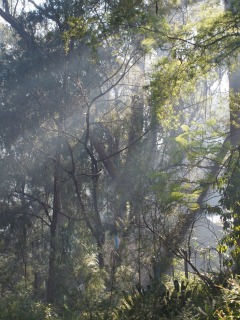
EucalyptusForestMany years ago I was driving along a dirt road in rural Zimbabwe.

We had been following a game fence for several miles, a formidable veldspan barrier between a tired looking patchwork of withered maize fields, goats, and clusters of rondavels out the passenger window, and the intact open woodland of a game reserve on the driver’s side.

Dirt roads allow plenty of time to take in the scenery and I couldn’t help but notice how one of my fellow passengers, a former student recently appointed to the wildlife department as a trainee scout, was so captivated by it. Not the savanna with its prospects of a kudu bull framed by an acacia thicket, an elephant ambling along ready to tug at the sweetest smelling grass tussock, or maybe even a leopard draped across the bow of a marula tree; no he watched with great intent the farmland.

“Which do you like best,” I asked him, “the savanna or the lands?” He looked back across at me with eyes wide, forehead furrowed and cheeks raised and said nothing. He turned back to his left to look out of the window and said softly “the lands”.

It was not the only time during a decade in Africa, that included the great fortune of visits to half a dozen countries, where the locals made it very clear how important agricultural land was to their very soul. Fields and pastures are, after all, the source of sustenance to us all and a place of protection and community. Human modification of the wild and dangerous savanna into safer and more comfortable countryside is the achievement that founded our ongoing numerical and lifestyle success.

In the west we sometimes pretend that the wild mountains, forests and windswept moors are our places of true beauty, but actually we too have quite the soft spot for farmland. Countryside would end up as a more popular choice for most than wilderness. Even the words themselves evoke opposites: cozy comfort aside inglenook fireplaces with a slice of apple pie, or gray skies, damp smells and wind that howls.

Given these deep and innate responses it’s no surprise that there is a conflict over what to do with wild areas. Should we set some aside and then keep out of them to be what they are as unfettered cauldrons for nature? Or should we designate them and, with a calming hand, mollify all that that wildness? After all we are under more pressure that ever to make every hectare of the land productive and available to yield fuel and raw materials for our voracious economic engines.

Australia is slipping into the midst of this conundrum.

After many decades of increasing environmental protection with laws set to slow or stop landscape modification, restrict pollution, and set aside close to 7% of the land [529,380 km2] as conservation areas, change is afoot. State governments in Victoria, Queensland, and NSW are variously allowing areas designated as national parks to be used by recreational hunters, mineral prospectors, graziers and even foresters.

Whatever your politics, hunting, livestock grazing, digging big holes and cutting down trees do seem rather odd activities to allow within a national park. Remember that the majority of these areas are either rugged and remote [part of their initial charm] or unproductive for all the usual commercial things we like to do. Allowing them environmental value seems to make perfect sense.

There is also the important ecological reality that once an area of land is grazed by livestock, or cleared, or a road cut through it, or big holes dug into it, then it will never again be as it was. Our modifications are irreversible.

We can [and should] restore landscape after the effects of our worst excesses but, by definition, we cannot return a landscape to pristine wilderness. All we can do is set areas aside for nature to be and preferably areas that we have not messed up too much already.

Recognition of environmental value, so that each set aside area has meaning, is a really smart thing to do.

Yet in doing so we are at odds with our instinct for the safe place that is productive. We all want to look to the left of the dusty road at the brown stalks of the harvested mealies just as the young wildlife scout did, because at core we are all control freaks. We are desperate to keep the nastiness of nature at bay and make the land safe and productive for our families — something inside says that that wild wood must be tamed. Let’s send in the guns, the herders and the chainsaws.

Only we are better than this. Surely there is enough in us to recognize that we do not have to be afraid of lions or wolves anymore and we can let some small proportion of the planet be close to what it was before we swarmed across it.

And surely we don’t have to go back to the trenches of environmental warfare where passion to protect and equal passion to exploit creates sides that throw dirty grenades at each other and the only winner is the peddler of vitriol.

For goodness sake let a national park be a national park.

Sounds Crazy #3 | Baby bonus

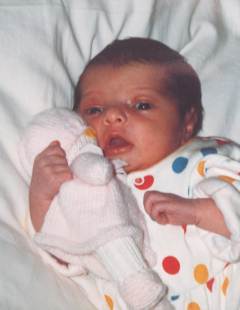
Newborn babyEvery hour of every day there are enough babies born to ensure that the global human population grows by 8,000 souls. In a week there are newborns enough to use up half a million disposable diapers a day. Human instinct to make more is a strong as ever. The net result is that we are not short of people.

Now lets switch the focus to one country, a developed one.

Around 22.6 million people call Australia home. Many of these people were born elsewhere or are the children of immigrants. Indeed Australia has a diverse populace and is justly proud of its multicultural tolerance. Most inner city primary schools can claim 20 or more first languages among their students, the result of a liberal immigration policy that has seen more than 7 million people arrive from all around the world since 1945.

Current immigration is around 180,000 per year. This rate ensures that the population grows and labour is available for economic activity.

Devotees of the economic growth gods would say this population growth is essential because people buy goods and services. It is hard to keep the economy moving when everyone has a house full of white goods. A growing population maintains demand for houses and fridges.

But if it is people that you want then there are many more around the world itching for a visa to enter Australia, many more than are granted permission. Some of them can’t wait and try to access the back door.

Most Australians see themselves as egalitarian, believing that people are people, apologizing for past intolerance of indigenous peoples, accepting of modern differences and building a society from people of many cultural backgrounds. And given a history of immigration and multiculturalism would accept the logic of immigration at rates sufficient to support economic growth

But here is the crazy thing. Government policy since 2002 has been to pay Australians to have babies.

It’s called the baby bonus and gives parents $5,000 per eligible child paid in 13 fortnightly instalments.

Why encourage, at significant cost to the taxpayer, more babies when we have so many already?

I wonder what you think the real reason is?

The heart of the matter

This article was written back in 2010 and was published online on The Climate Spectator. Nearly three years on it still makes fascinating reading as the rhetoric ramps up ahead of the federal election.

rocky shore NSWRecently the NSW Natural Resources Commissioner, Dr John Williams, hosted a workshop in Canberra on resilience thinking that was attended by a platoon of scientists, agency staffers and consultants, all concerned about the environment.

In his opening remarks, the Commissioner urged the participants to consider a simple enough question: What matters most?

A ripple went around the room as things that matter jostled for space in everyone’s head. No doubt thoughts of happiness, love, friendship, the mortgage and a few thoughts we don’t usually admit to arrived, and it was clear that there was not just one thought. The one thing that mattered did not appear instantly to everyone.

Caught as we are in the policy vacuum on climate change, with backflips and peculiar ideological positions to frustrate us, it might be useful to ask the same question of the climate change debate: What matters most?

Those representing heavy emitters will cry that exposure, unnecessary liability and uncertainty matter. Few of us like threats to business as usual. However, some exposed businesses have used climate change as an opportunity. We have all been offered the option to offset a flight or visit a carbon neutral office, where the most important thing is to be seen to be doing something good. Catastrophe can make for great PR, and so matters most, but for very different reasons.

Unless you install roofing insulation, climate change is of little consequence to small business. There is not much beyond the upward creep in the quarterly energy bill to keep your attention away from more pressing issues of cashflow, customers and the late arrival of a key staffer.

A couple of years ago, the general public in Australia thought climate change itself mattered most. They even elected a new government with a Prime Minister who claimed it was “the biggest moral challenge of our time”. Today polling suggests the majority see climate change as just another opportunity for politicians to renege on a promise. And a third of them think we should not pay a cent to fix it.

Climate scientists, at least those gathered under the banner of the IPCC, reached a consensus that greenhouse gas emissions matter most. Concentrations of gases that absorb reflected radiation, the atmospheric blanket that makes life as we understand it possible, were the key regulators of climate. Human activity was upsetting the delicate balance of greenhouse gas composition and we needed to stop that or risk catastrophic warming.

Emissions matter most because they lead to warming that puts more energy into the cyclical systems of atmosphere and ocean, changing the pattern of circulation, making it wetter, drier, and perhaps more stormy on an increasingly voluminous ocean. In short, having some very specific local climate effects.

The diplomats at the UNFCCC thought this mattered too, but not as much as the necessary diplomacy. So they negotiated at length to agree that net emission reductions matter, but that we need to negotiate some more to agree on the reduction targets and how to achieve them. Clearly, among the policy makers, it is debate that matters most.

Ask residents on the beach front at Byron Bay the question and it’s all about saving their homes from storms. They may not even know that warming will raise sea levels and may make some storm surges more acute, for it has always mattered that the ocean was only a wave away from your beachfront retreat. Save a thought for the 200 million citizens of Bangladesh on the Ganges delta who don’t even know that sea level rise matters most to them.

Irrigators along the Murray River in NSW who, despite having a legal license to extract water, have not seen any reach them for a long time, have another answer. What matters most to them is the real prospect of losing their livelihood altogether.

Clearly, there are as many things that matter most about climate change as if we had asked the question without the qualifier. Climate change is a threat and an opportunity, a challenge and a risk. For some it is real, but for most of us it is not the most important thought in our heads. So perhaps what matters most is not climate change at all.

Perhaps we have missed the real risk, the real challenge that we face, and the hint of what that is comes from all these specific concerns. What matters most is that we have the capacity to adapt and transform to a changing world.

It is critical that we give ourselves the flexibility to make our food production more efficient, ensure our environments will deliver all the services we take for granted and that our economic and social structures remain viable as they transition.

It also matters that we act on that capacity now, for the world is changing rapidly. The shifting climate just makes some of the inevitable the changes more acute and immediate. None of this should be a surprise, given that there are now close to seven billion souls trying to fix what matters most to them.

———

Here in April 2013 I am not sure if the timelessness of the sentiment in this article is what matters most.

Perhaps we should get our arses in gear.
Protecting Mother Nature

“We must protect mother nature from our worst excesses” is the headline of an article in the Enquirer section of The Weekend Australian this week.

The tagline “We can raise our living standards without destroying the natural world” introduces an opinion piece about growing human numbers and our deepening psychological motivation to keep up with the Joneses. Two things that are leaving us with stress and putting strain on the environment. And yet the ”wonderland of nature” is still there to us inspire the spirit. Natural glories abound that should garner our respect and “a determination to protect Mother Earth from our worst excesses.”

All good stuff you would think.

There are posts a plenty on this blog and by many thousands of other bloggers saying pretty much the same thing. Hey, it is even the main tenet of my latest book Missing Something.

_

Missing Something | get your print on demand copy from Amazon or download a paperless version Missing Something Kindle Edition.

_

So why mention this piece from the sunday paper? Well, the curious thing is that the article is attributed to Craig Emerson, the federal Minister for Trade and Competitiveness in the struggling Labour government.

Now if the juxtaposition of topic and source doesn’t make you smile, then it is worth remembering that the newspaper is as brown as it gets [being owned by News Limited is a bit of a give away] and is always sticking the knife into anything with a green hue.

Clearly the editor was having a laugh and providing a great gotcha opportunity to catch the hapless minister sometime later in the election year.

It is shameful that the sordid media cycle and political agendas do this to such important ideas. We do need to be more mindful of nature, more concerned about our exploitation of natural resources, and even to take time out to feel the wonder for ourselves.

What the Minister did, apart from being suckered, was miss the opportunity. It is not enough to say that there are now very many of us putting the environment under pressure, we have to confess to our dysfunctional desire to exploit and find the emotional fortitude to think before we act.

Maybe my lesson was to enjoy the chuckle I had at reading a green rant from a trade minister and leave it at that.

NEW BOOK | NEW BOOK | NEW BOOK | NEW BOOK | NEW BOOK | NEW BOOK | NEW BOOK

It is true, I do have a new book that is all about how we perceive natural resources and those wonders of nature.

Check out a description here or better still order a print-on-demand copy of Missing Something from Amazon or download the Amazon Kindle edition of Missing Something right now.