Sounds Crazy #3 | Baby bonus

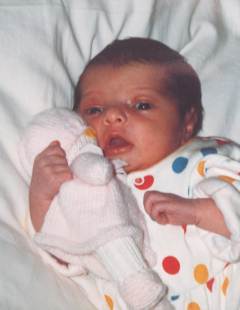
Newborn babyEvery hour of every day there are enough babies born to ensure that the global human population grows by 8,000 souls. In a week there are newborns enough to use up half a million disposable diapers a day. Human instinct to make more is a strong as ever. The net result is that we are not short of people.

Now lets switch the focus to one country, a developed one.

Around 22.6 million people call Australia home. Many of these people were born elsewhere or are the children of immigrants. Indeed Australia has a diverse populace and is justly proud of its multicultural tolerance. Most inner city primary schools can claim 20 or more first languages among their students, the result of a liberal immigration policy that has seen more than 7 million people arrive from all around the world since 1945.

Current immigration is around 180,000 per year. This rate ensures that the population grows and labour is available for economic activity.

Devotees of the economic growth gods would say this population growth is essential because people buy goods and services. It is hard to keep the economy moving when everyone has a house full of white goods. A growing population maintains demand for houses and fridges.

But if it is people that you want then there are many more around the world itching for a visa to enter Australia, many more than are granted permission. Some of them can’t wait and try to access the back door.

Most Australians see themselves as egalitarian, believing that people are people, apologizing for past intolerance of indigenous peoples, accepting of modern differences and building a society from people of many cultural backgrounds. And given a history of immigration and multiculturalism would accept the logic of immigration at rates sufficient to support economic growth

But here is the crazy thing. Government policy since 2002 has been to pay Australians to have babies.

It’s called the baby bonus and gives parents $5,000 per eligible child paid in 13 fortnightly instalments.

Why encourage, at significant cost to the taxpayer, more babies when we have so many already?

I wonder what you think the real reason is?

Sounds crazy #2 | Waiting for the road to dry out

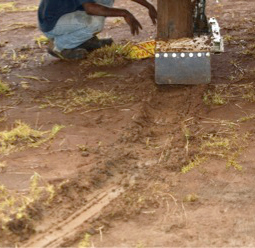
wheel-stuck-in-mudIn the game parks of Africa the roads are often impassable after rain thanks to mud that appears in an instant when water is added to the deep vertisols. Not even a land cruiser can move through the thick, clingy goo. Game drives are suspended until the road dries out.

If vehicles do drive on the wet road before the soil is hard enough, deep ruts form that destroy the road for future use.

After a major flood a similar problem applies to paved roads. Water ponds, seep beneath the tarmac and in places the firm part now sits on a mushy underbelly.

It makes sense to let roads dry out and for potholes and cracks to be repaired before traffic tries again to pass along them.

Only what if transport is the key to a rural economy? The trucks must get moving again and quickly, or else the economy will suffer.

Woe betides a local politician who suggests that the trucks wait a day or two. Political expediency has the trucks moving as soon as the drivers can each the cab to turn on the ignition. They then crunch up and down the roads hugely multiplying the flood damage.

It would be far cheaper to compensate local businesses for a few days lost custom than it will be to repair the roads that have just been given extra damage. Instead we get those trucks moving right away.

Sounds crazy — but it is true.

Responsibility

At what point are we accountable for what we know?

Consider the recent tsunami in Japan. Anyone in one of those coastal towns who knew that the wave was coming would have warned whoever they could. And many did. There are stories of great heroism by fire servicemen, emergency workers and ordinary citizens staying in danger themselves as they encouraged people to reach higher ground.

Anyone who had the opportunity to raise the alarm but failed to use it would feel guilty for the rest of their lives.

Earthquakes and tsunami happen in Japan. This inevitability forces planners to carefully consider where buildings must go in relation to this known risk. Engineers must also put their expertise into building construction sufficient to withstand shocks from shifting ground and walls of water.

Should these precautions for a foreseen event follow similar rules to those when danger is real and present? Applying a planning rule or choosing a structural material does not require heroism, but there might be a similar sense of responsibility around the decisions made in these professions.

Sydney coastline

Prime real estate in coastal towns is where there is an ocean view.

Planners who zone the coastal fringe as green space or tsunami protection zones would not be popular. Developers would soon find an alternative to an engineer who insists on the super safe construction options for these are almost always expensive.

In the political and economic realities of a modern world, developers will leverage many a weight onto hapless planners for the profit is in those plots with an ocean view. Perhaps these decision makers need courage too, only for, them, it will be much harder than in the adrenaline-fueled heat of an emergency.

What about courage for decisions on climate change? We now know that there will be changes to the intensity, frequency and timing of weather events – the altered likelihood of extremes and long-term shifts in the averages. We can foresee these climate change effects even though it is not a real and present danger just yet.

It is, however, time to plan for sea level rise, extreme weather, drought, heat waves and shifts in seasonality that are the likely effects with significance for livelihoods.

At the moment we are dodging this accountability.

It would be sensible to put climate change scenarios into strategic and local planning tools and have planners understand why climate change effects should be considered in their planning horizon.

Building design already has the smarts for energy efficiency, structural integrity and resistance to extremes. All the engineers need to do is favour these options and set their skills and experience to figuring out even better solutions. The planners can support them with compliance requirements that assist against the pull of market forces that will always favour the cheaper alternatives.

There is a difference in these examples of required courage and personal responsibility. Decisions made in the face of danger are instinctual. When danger is at some unknown point in the future, we have time to think.  We rely less on instinct and more on reasoning and allow ourselves some latitude. We may respond to the pressure of compromise. No need to worry, it’s not happening now.

Without immediacy there is no adrenaline required, we can relax into the comfort of busy work and allow the process of decision making to take over. Soon it is the meetings, hearings, forms to be filled and documents to be filed that allow us to forget that there was actually an important, responsible choice to be made.

When buried in the process it is easy to forget that there might be some responsibility to make the call and some accountability for it.

The heart of the matter

This article was written back in 2010 and was published online on The Climate Spectator. Nearly three years on it still makes fascinating reading as the rhetoric ramps up ahead of the federal election.

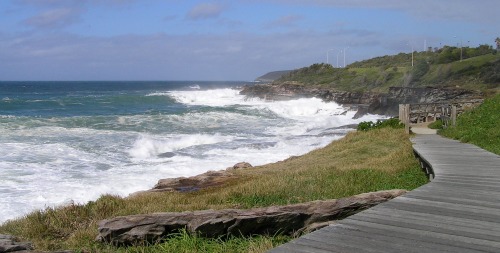
rocky shore NSWRecently the NSW Natural Resources Commissioner, Dr John Williams, hosted a workshop in Canberra on resilience thinking that was attended by a platoon of scientists, agency staffers and consultants, all concerned about the environment.

In his opening remarks, the Commissioner urged the participants to consider a simple enough question: What matters most?

A ripple went around the room as things that matter jostled for space in everyone’s head. No doubt thoughts of happiness, love, friendship, the mortgage and a few thoughts we don’t usually admit to arrived, and it was clear that there was not just one thought. The one thing that mattered did not appear instantly to everyone.

Caught as we are in the policy vacuum on climate change, with backflips and peculiar ideological positions to frustrate us, it might be useful to ask the same question of the climate change debate: What matters most?

Those representing heavy emitters will cry that exposure, unnecessary liability and uncertainty matter. Few of us like threats to business as usual. However, some exposed businesses have used climate change as an opportunity. We have all been offered the option to offset a flight or visit a carbon neutral office, where the most important thing is to be seen to be doing something good. Catastrophe can make for great PR, and so matters most, but for very different reasons.

Unless you install roofing insulation, climate change is of little consequence to small business. There is not much beyond the upward creep in the quarterly energy bill to keep your attention away from more pressing issues of cashflow, customers and the late arrival of a key staffer.

A couple of years ago, the general public in Australia thought climate change itself mattered most. They even elected a new government with a Prime Minister who claimed it was “the biggest moral challenge of our time”. Today polling suggests the majority see climate change as just another opportunity for politicians to renege on a promise. And a third of them think we should not pay a cent to fix it.

Climate scientists, at least those gathered under the banner of the IPCC, reached a consensus that greenhouse gas emissions matter most. Concentrations of gases that absorb reflected radiation, the atmospheric blanket that makes life as we understand it possible, were the key regulators of climate. Human activity was upsetting the delicate balance of greenhouse gas composition and we needed to stop that or risk catastrophic warming.

Emissions matter most because they lead to warming that puts more energy into the cyclical systems of atmosphere and ocean, changing the pattern of circulation, making it wetter, drier, and perhaps more stormy on an increasingly voluminous ocean. In short, having some very specific local climate effects.

The diplomats at the UNFCCC thought this mattered too, but not as much as the necessary diplomacy. So they negotiated at length to agree that net emission reductions matter, but that we need to negotiate some more to agree on the reduction targets and how to achieve them. Clearly, among the policy makers, it is debate that matters most.

Ask residents on the beach front at Byron Bay the question and it’s all about saving their homes from storms. They may not even know that warming will raise sea levels and may make some storm surges more acute, for it has always mattered that the ocean was only a wave away from your beachfront retreat. Save a thought for the 200 million citizens of Bangladesh on the Ganges delta who don’t even know that sea level rise matters most to them.

Irrigators along the Murray River in NSW who, despite having a legal license to extract water, have not seen any reach them for a long time, have another answer. What matters most to them is the real prospect of losing their livelihood altogether.

Clearly, there are as many things that matter most about climate change as if we had asked the question without the qualifier. Climate change is a threat and an opportunity, a challenge and a risk. For some it is real, but for most of us it is not the most important thought in our heads. So perhaps what matters most is not climate change at all.

Perhaps we have missed the real risk, the real challenge that we face, and the hint of what that is comes from all these specific concerns. What matters most is that we have the capacity to adapt and transform to a changing world.

It is critical that we give ourselves the flexibility to make our food production more efficient, ensure our environments will deliver all the services we take for granted and that our economic and social structures remain viable as they transition.

It also matters that we act on that capacity now, for the world is changing rapidly. The shifting climate just makes some of the inevitable the changes more acute and immediate. None of this should be a surprise, given that there are now close to seven billion souls trying to fix what matters most to them.

———

Here in April 2013 I am not sure if the timelessness of the sentiment in this article is what matters most.

Perhaps we should get our arses in gear.
TED | Alan Savory

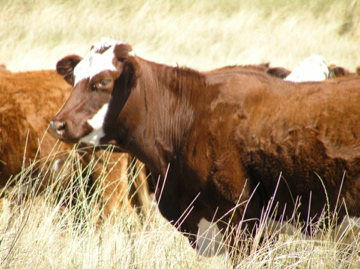
CattleTED lectures are a neat idea. Somehow they have managed to legitimise thinking outside the box and I suspect we don’t fully appreciate how important this is.

Most ideas that stick come from our current paradigms for anything really new must be pretty special to succeed in a society dominated by commerce and naturally conservative mind-set. So ‘good on ya’  TED.

About a decade ago I met Alan Savory on one of his trips to Australia to promote his ideas on holistic management. It was an interesting encounter [for me at least] that took me back to my time in Zimbabwe in the late 1980’s and then to thoughts of what it must have been like to both wander through the bush and the corridors of parliament in the time leading up to Zimbabwean independence in 1980 as Alan Savory had done.

He claims in his book that it was a combination of his science training, days on end tracking in the bush, and his time in politics that brought him to understand the importance of intensive, timed grazing by larger herds for the health of our grazing lands. Now he has extended his idea as a solution to two huge global issues: desertification and climate change.

Check out his TED lecture, it starts slowly but is worth persisting to the punch line.

http://on.ted.com/Savory

The elephant in the bathroom may have farted

elephant02Well it would seem that somebody close to the policy makers might have noticed the elephant in the bathroom.

This week an article in the Financial Review talked of a carbon tax budget hole that could be $4 billion deep thanks to a carbon price that might not continue to rise after the fixed price period after all.

Blind Freddie can’t help but chuckle and the elephant’s stomach rumbles with contentment.

It seems that there has been some new modeling of the carbon price beyond the fixed price period on behalf of Australia’s Climate Change Authority. The numbers suggest a “fall from July 2015 to $10.72 a tonne”.

This should be no surprise given the current European market prices are hovering around $5 tCO2e — this difference from $23 per tCO2e and rising to the reality of current market price is the elephant standing quietly next to the bassinette.

Now if you are a government that has been struggling to get the balance sheet back in the black because it was one of the core things you promised to do, then $4 billion less revenue is a problem. Especially given that the carbon price policy was hugely unpopular in the first place and will continue to give you trouble in an election year.

If it was just a revenue shortfall [$10 instead of $23+ per tCO2e] that probably wouldn’t be too bad. Only the revenue is already either spent or committed, mainly to ease the pain for exposed industries and for consumers, making a market price dip in 2015 a double whammy.

Awkward for the Australian government but stayers among carbon traders in Europe are not too worried. The say it is just what markets do, they will show price volatility around long-term trends. And just now the price is low. Later it will rise again, not least because this is a regulated market designed specifically to manipulate credit supply to raise the price and reduce demand. Like all markets, success comes from the long play.

Then there is another thing that the elephant symbolizes.

Remember that the carbon price is for a permit to emit and fewer permits purchased mean fewer carbon emissions. This was the policy objective: to reduce emissions of greenhouse gases by making it more expensive to emit than the alternatives.

And as President Obama brings action on climate change to the State of the Union address, it will be hard to ditch the policy now. So here are a couple of options given we can see the elephant.

Ostrich option | Bury the report or, if the electorate cotton on, spin it like a fury.

After all 2015 is a long way off. There is plenty of time for anything to happen, perhaps even something positive. Remind yourself of the positivity of the ballsy carbon traders and wait. In the meantime, do whatever is possible to make the whole thing go away.

Be a honey badger | take hold of the policy, believe in it and shake it hard.

The idea of a carbon price was that it should deliver behavior change and make Australia less carbon intensive.  So embrace that and with the tenacity of a honey badger stick with it. Allow an aggressive permit allocation limit, ease the coupling to the EU carbon market by changing the proportion of credits emitters can source from overseas and explain why to consumers. There is no reason that the domestic market cannot have a higher carbon price than elsewhere other than the fear of ceding competitive advantage.

In short, show leadership.

Now there is a thing.

Dangerously quiet

King Parrot, NSWIt has been 23 months since the NSW Labour government left office after more than 16 years in power.

Normally when a left leaning administration is replaced by a right leaning one the inevitable shift in attitude to nature and natural resources would galvanize the environmental movement.

When hard won conservation legislation, planning rules and funding for environmental management are chipped away there might be an objection, some resistance, or at least some verbal argument. Only there has been very little noise.

No great shouts against the inching away from protection — not even allowing shooting in national parks seemed to get a reaction.

Only the nationally significant issue of coal seam gas, particularly how it will be extracted and the possible impact on farmers, seems to have stirred the pot.

Regular readers will know that alloporus is not overtly green — a regular guy who owns a car, takes plane rides, watches a plasma TV and wrote a book called “Awkward news for Greenies” has little moral ground to claim great environmental advocacy. Yet this quiet is eerie — makes you wonder.

Is it the calm before the storm, the tirade that must hit when the environment is no longer considered?

Or is it something else? Perhaps there is no energy left. It could be that the era of loud advocacy has passed. Maybe the malaise of personal entitlement has swept across us all, even the card-carrying activists.

If it has then we have a problem. Whilst screaming from greenies is about as welcome as a crying baby in the quiet carriage of the commuter train, it performs a vital function.

It keeps the b—-ds honest

And when all that goes quiet it is dangerous for us all.

€0.40 per tCO2e | the elephant in the bathroom

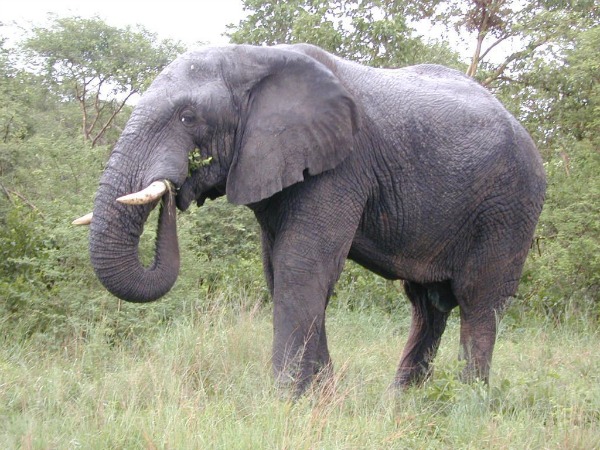
Elephant-01I wonder what it would be like if there was an elephant in the bathroom given a  mature female African elephant weighs 2,000+ kg, stands over 2m at the shoulder and will drop 100 kg of dung in a day.

She is here folks, right here in the bathroom, the smallest room in the house. And she is so big that she could not hide even in her Majesties powder room.

€0.40 per tCO2e

There she is, wafting her trunk gently from side to side, chewing quietly on some acacia bark.

€0.40 per tCO2e

Can you see her yet? Did you hear her stomach rumble?

€0.40 per tCO2e

Oh yes, there she is. The market mechanism designed to make alternative energy sources more attractive by making greenhouse gas emissions expensive.

Remember, emissions are permitted but only so many of them and you need to buy a permit for some or all of them. These permits cost you money. You can buy offsets against those permits from energy efficient projects, even from projects that reduce emissions from land management, and these would be cheaper than the permits and so create an opportunity for trade.

Only to achieve the outcome of overall emission reduction the offsets cannot be too cheap, otherwise what is the incentive to change your emission profile? That, after all, is an expensive thing to do.

€0.40 per tCO2e

If you would like to read about how not to see this elephant, for after all an elephant in the bathroom makes taking a shower a challenge, try here

Time to save the global carbon markets

Obama wins

President Obama is returned to office, quite comfortably in the end; only he looked anything but comfortable.

The oratory in the Presidents victory speech was familiar, right down to the repetition of phrases and anecdotes that have worked well for him many times before. Only they seemed out of place and at odds with his countenance. That slim youthfulness wears the strains of office and endless campaigning easily, but there was no joy in him. It felt like the passion had gone, drained away by four years of political reality.

Obama couldn’t arouse the faithful with a “let’s finish what we started” message because not much has started and what was finished [Obamacare] turned out not to be as popular as it should have been. Best he could do through the first term was to hose down fires with no surety that they would go out [jobs, deficit, war].

You could see it all  in his speech. All the issues that he really wanted to speak about truthfully but couldn’t mention replaced with things he had to say but only half believed.

Nothing about reigning in the banks and the profit driven end of town.

Nothing about deficit being debt and that debt can readily become living beyond your means.

Nothing about how war might start out as an economic stimulus but over time is crippling to both treasury and psyche.

Nothing to say about the idea that incomes may not always need to rise for voters to be happy.

Obama did say thank you because he is a polite man and was clearly grateful for avoiding failure. He didn’t manage to inspire hope and didn’t look like he was invigorated to start anew. And this is a pity because the only way to tackle those unmentionables is head on making sure to bring the people with you.

There is still a chance because hope never dies, even if in Obama it seems to have been drained and jaded by the magnitude of the task.

Leadership really is a tough gig in a modern world of individual entitlement.

Because we can

Neil Armstrong, the first man to put a space boot and plant a flag on the moon passed away a couple of weeks ago. Many around the world gave a mental nod in remembrance and respect, and rightly so.

Notable for not cashing in on his deserved fame, Armstrong was a modest man who achieved great things. When you realize that the team that put him on the moon did it on less computer grunt than you have in your smartphone, getting to the moon and back was a display of remarkable courage and ingenuity.

One of the media eulogies to Armstrong played part of a speech by President Kennedy made around the time of the space program. There was great passion and determination in the President’s voice that said we will go to the moon. And we will go there simply because we can. Nothing about technology advancement, commercial spinoffs or even the political capital that such an undertaking would generate. It was just a big, audacious goal.

Of course there was political mileage to be had in a time of cold war competition with the Soviets. It was also a time when the nascent power of the capitalist system that America believed was the only way forward, needed some iconic acts to further cement its worth.

Only President Kennedy sounded pure in his desire. We will go to the moon because we can. It was an empowering position, one that allowed Armstrong and the brave folk that followed to show their courage and tenacity to the world. And in Armstrong’s case made great by his manner and modesty.

I suspect that as a species we need this kind of thing. Our brains have evolved to handle complexity and we are always on the lookout for something big to fix. Only lately it has been more about drama that dreams.

What chance a modern day political leader making a Kennedy style speech? Miniscule I suspect. Just think, a president or prime minister leaving on the table the specific issues of the day to imagine something way beyond the mundane; something that inspires us to think, even for a moment, about more than ourselves. Hard isn’t it?

Maybe modern leaders do not understand that people like a collective ambition. We warm to big possibilities that take us further than our personal goals. We actually like the idea that there is something more than our own desire for a house with a white picket fence.

Or maybe the world has changed so much that audacious goals that have a collective outcome really are now out of reach. People found it easy enough to believe Kennedy. Today the hugeness of just keeping the global economy alive seems audacious as economies teeter and the global population grows. A leader with ideas not focused squarely on the drama receives short shrift.

But we need dreams too. And not just those that say we can fix global warming, end poverty and provide everyone with quality healthcare. We need audacity.

What is the next “because we can”?