Away team

StarTrekPhotonTorpedoThe instant a photon torpedo rents the hull of the USS Enterprise, the explosion ejects hapless crew members into the vacuum of space. Red and blue arms spiral over black booted legs into the ether.

It is always a haunting image that mixes death with vast emptiness.

And yet there are worse ways to go. Being hit by a bus or the ravages of a carcinoma seem much nastier.

Imagine the same scene on the Enterprise in super slow motion. In this version nano-seconds become months or even years. Now the torpedo is visible. It takes forever to deliver the inevitable, the fusilage opens without force and the air feels still rather than explodes. It takes a long while for the expression on the faces to change and the reality of consignment to cold emptiness doesn’t seem sink in at all.

You see we  respond to real and present danger with fight, flight or freeze [the last one being a recently discovered ability of our brainstem]. These core instincts trigger when the scene plays in real-time, but slow it down and we just don’t feel the same. Our brain just says ‘get on with it already’ and finds something else to think about.

Now imagine that the developed world is the USS Enterprise. It has been hit by a photon torpedo. Disabled and defenseless, its contents fly into the depths of space. Only this is happening in super slow motion. So slowly that nobody has the attention span to notice. The crew are still blindly going about their business as usual.

We don’t see that there is no leadership, no options or ideas to deal with the situation, and no James T Kirk to save the day. It is all happening so slowly that there is no drama in it and nothing to hold our attention.

It is as though Kirk, Spock, McCoy, Uhura, Sulu and all the other members of the flight deck, right down to the unknown ensign, have all gone on the away team. The only ones left on the bridge are nameless crewmen who are ultimately anonymous and dispensable making ready for their cartwheeling exit.

We remember Lincoln, Kennedy, Churchill and their ilk because they were leaders. Few will remember modern politicians for they behave like the dispensable extras. Nothing is expected of them.

Our real problem is that we cannot speed up our scene. It is designed to play out slowly, far slower than our instincts can detect. Even the moderating effects of the limbic and frontal cortex of our brains that have helped us to slow things down, to plan and to think can’t see the rent coming. We cannot see the consequences of leadership loss ejecting us into the true emptiness of the universe.

And for this we must be eternally grateful. For if we knew what was coming it would be chaos as we are overtaken by fear. At least without leadership we can stay blissfully ignorant.

Thank goodness Kirk are still on an away team.
Fun with flags

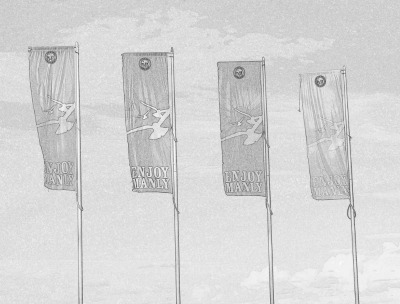
fun with flagsWould Nick Xenophon, the independent senator for South Australia, be in favour of scrapping the market economy? Perhaps he is.

Recently he teamed up with DLP senator for Victoria John Madigan to decry the deplorable situation that the Australian flag flying over commonwealth buildings might not be made in Australia. The senators are to introduce legislation to the Australian parliament that mandates all flags flown above government buildings be wholly produced in Australia.

But what if flags made in China are better quality and cheaper?

In a global economy it is smart to find the best value for money, not just because value makes sense, but because you also want the global economy to find value for money in Australian coal, iron ore, beef cattle, financial expertise and a whole raft of other goods and services. Or not.

Maybe instead we should be parochial and let everyone else buy globally. After all we have no need for a global economy purring along to everyone’s benefit thanks to buying and selling.

But hold on, fans of Big Bang Theory know there is something in the flag issue.

I reckon we should get Dr Sheldon Cooper to stand for election to the Australian parliament. He’s so popular that he’d be a shoe in and then we could get some real fun with flags.

And then I thought…

That the ABC radio news reported this nonsense is amazing; that I wrote a post about it is equally bizarre. That elected leaders don’t have better things to do with their time is a real worry.


Barry O’Farrell resigns as NSW premier

So there we have it.

After 7 years as leader of the opposition waiting for his tilt at the top job, Barry O’Farrell lasted three years as premier. Forced to resign for misleading the Independent Commission Against Corruption because he obviously did receive a $3,000 bottle of wine as a ‘gift’ after all.

This is not what usually happens. In politics there are no lies, there is just being economical with the truth. Politicians usually spout so much waffle and fluff their comments can be cut down to one word without loss of meaning. Consequently a host of dodgy doings and ‘mistakes’ can be erased, buried or simply forgotten.

So why did he resign? Many a politician of every hue has survived much worse.

Clearly it is not about the wine. Or even that he claimed not to have received it. It is about a system that is the epitome of not what but who you know.

We all walk around blinkered thinking that the world is meritorious. We believe that the best athletes play professional sport for our team, the best singers are the ones we download, the best minds are employed to engineer better lifestyles for us, and that the best organisers run our commerce.

We also believe that we elect the best politicians to sit in parliament and make the laws that we live by — yes, believe it or not, politicians are elected to make the laws that we are expected to live by. Not only that, but we believe they do the right thing in selecting the help they need to run things.

Well they don’t.

Barry resigned because he stuffed up. And presumably because he is an honest sort of bloke, felt that the stuff up was irretrievable. Except that by resigning he also took the spotlight off the truth of the matter. The political system is about who and not what you know. People get the job and companies get the tender because they are known. And sometimes to get known you need to send out expensive bottles of wine. It is the way of things. It is not necessarily corrupt but it always comes close.

The premier resigned because he nearly exposed the system for what it is and always has been… dodgy.

Sounds crazy series summary #1

Well in a blink we have reached double figures in the Alloporus ‘Sounds Crazy’ series and, as the headlines suggest, we have covered wild craziness territory.

There is plenty of lunacy out there, especially in the unfathomable worlds of policy, planning and bureaucracy.

The series could run for many more episodes without the need to hire expensive Hollywood writers. This in itself is odd. It’s crazy that we are so crazy.

It got me thinking about why.

I get the human need to be busy and that this overrides any logic of what we are busy at. Add the need to be seen to be busy and we can explain away many a craziness. In the extreme we have the lap dog ‘being seen’ in a $300 Louis Vuitton collar as Monsieur Vuitton laughs all the way to the bank.

I also understand the fear that drives illogical policies that ensure there will be enough people to buy white goods [baby bonus, policy choice] and puts business opportunity above all else [Waiting for the road to dry out, Where to build a house]. The economic growth spiral is as consuming as a black hole and we will struggle to break free of its gravitational pull so long as we keep reproducing at 9,000 an hour.

Reluctantly I understand the fear that drives obsession with human safety [Hidden hazards in the back yard]. Survival is a base instinct after all.

I even accept ostrich behavior [Wild planet] because sometimes we need denial as a handy way to make things go away. We are far more courageous when we pretend there are no sharks in the water.

Then there is the inertia that emerges when we create institutions and the pedantry that they generate [Count your beans].

Only now my tolerance is stretched.

I get the logic of becoming stuck just because there are more than a handful of people involved. This makes sense for force of personality can only hold so much sway. It takes a big ego or considerable oratory skill to sway the crowd.  But this constraint of and by the many should not be an excuse. Some of the craziness of institutions is the craziest of all.

It seems that craziness is in part inevitable [because we all have fear and cannot do without institutions] and in part our choice. We seem to want to be ‘a bit nuts’ — and not just for some light relief — for some part of us may want it.

The latest Alloporus website adventure is Ask Alloporus where environmental issues are explained [including some of the crazy ones]. Most pages on the site conclude with some ‘pragmatology’, our attempt to both invent a new word and provide some pragmatic understanding of the environmental issue.

Yet even this sounds crazy. Why should we expect that some pragmatism can help the craziness go away?

Here are the links to the Sounds Crazy series to date…

  1. Where to build a house
  2. Waiting for the road to dry out
  3. Baby bonus
  4. Logging of native forests
  5. Carbon price forecasts
  6. Policy choice
  7. Hidden hazards in the backyard
  8. Wild Planet: North America
  9. Bandwidth
  10. Pest control means getting on with it

Sounds Crazy #9 | Bandwidth

Back in my academic days we were not allowed to spend any University money on coffee and tea. I would ask politely why I couldn’t create a more convivial workplace by providing free beverages for my postgrad students and research assistants only to be told it was not allowed. Even in the department tearoom there was an honesty box to cover the cost of the milk.

I never understood this and used to think it was just the system being stingy. And being me, I railed, often taking my team out for coffee even though we had a perfectly suitable coffee room next to the labs. The first thing that happened when I converted our research into a company was the purchase of a kettle followed swiftly by a water cooler.

What upset me back then was the assumption that productivity was all about the number of hours at the desk and how expertly one counted beans. It obviously had nothing to do with how happy people were at work.

Research is repetitive stuff. In our case there were many hours of routine sample processing every day. This meant taking regular breaks was essential to our sanity. The irony is that these days we would be instructed by the OH&S officer to stop peering down the microscope and go to yoga class — but I digress.

What got my goat recently was a report on the front page of the weekend paper telling us that the new Australian prime minister has decreed that all travel by politicians and Federal bureaucrats must have permission.

Mr Abbot requires that government ministers sign off on travel requests from civil servants and that he himself must agree to any travel that costs more than $50,000.

Now I don’t know about you, but I always thought that members of parliament and the senior staff that support their efforts were there to develop, debate, design and implement public policy.

Instead Mr Abbot wants them to be travel agents.

I would rather have the finite daily energy allocation to the brains of national leaders and their staff to be used furthering the public good.

I want them thinking about policy and figuring out the endless machinations of delivering it effectively. Not wasting valuable mental bandwidth as travel police.

Next they will be buying their own coffee.

Sounds crazy because it is.

That’s Africa

Okavango Africa.jpgLast Wednesday night I tuned in to the ABC News24 coverage of the memorial service for Nelson Mandela expecting somber reverence or perhaps the kind of party that only Africans can do.

I should have known it would be something else.

The start was delayed by the requirement for every dignitary to make his or her own special entrance aided by typically inept African organizing but, conveniently, heavy rain could take the blame.

And nobody seemed to mind.

Filling in the airtime was anther matter. The ABC wheeled in a former activist who had struggled against the apartheid regime and then escaped [long before Mandela was released] to become an Australian citizen.

Unfortunately he was sadly bitter. His deep hurt and anger had travelled with him and he still had it in spades. His comments ran as though the oppressors were still oppressing and Nelson Mandela had not existed.  This attitude of hatred and recrimination was exactly what Mandela knew he had to diffuse. The miracle was that through courage and compassion he did it for a nation, but sadly not for this exile.

Quickly we abandoned the ABC and its disrespectful commentator and streamed the coverage.

You had to laugh out loud at the antics.

There were the random guys in the foyer as the dignitaries arrived. These are the traditional ‘hangers around’ that are everywhere in Africa, who obviously had nothing to do but hang around. Presumably they had security clearance… presumably.

There was an extraordinary performance by a gospel cum rap singer trying desperately to energise the crowd to God by being energetic himself. As his antics became more and more exuberant another random guy assigned to hold an umbrella over the singer was finding it more and more difficult to complete his assigned task. He was stoic and hugely comical as he did his best.

Then there was the huge amusement of Ban Ki Moon claiming the applause of another African dignitary as the latter ascended the stage to be embarrassingly ignored by the UN Secretary General.

President Obama showed how to calm the restless crowd with an impassioned speech that closed in on the truth of what Mandela gave us. Cleverly he still managed a sly dig at the current crop of African leaders who cannot hold a candle anywhere near the father of the nation. Only he spoilt it later by helping the Danish PM take a selfie — and we thought only Kevin Rudd did that.

And there were the boos for President Jacob Zuma. Not, as I thought at the time, because there was politics even at the memorial service for one of the world’s greatest, but because he had not made the day a public holiday. Fair enough, he deserves a slap for that.

Then we ran out of steam and let the remaining hours of the ceremony go.

The bit we watched was classic Africa, full of cheer, cheek and irreverence layered over famously sloppy organization. It rained and was obviously cold, went on for hours, and still the people danced to celebrate a great life.

I reckon Madiba was watching all the antics as proud as punch with his famous smile lighting up the heavens.

Shed a tear

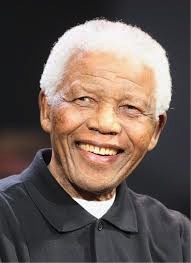
NelsonMandelaEveryone has written a eulogy for Nelson Mandela, I unashamedly shed a tear.

I knew that he would pass away as we all must, but I did not expect to feel his passing as though he was my own kin. Sadness, loss, grief and loneliness boil away in my soul as though I had lost my best friend.

Yes he was a hero of mine.

And yes I lived in southern Africa during the decade that straddled his extraordinary transition from prisoner to democratically elected president.

And yes I experienced the palpable change in everyone on his release — it was heady to live through history.

And yes, I could not believe that any one man could be so courageous and so compassionate at the same time, or hold on to both for so long. I still can’t. It was a miracle.

And because in worldly terms he was no saint he should be remembered as one.

All of this I know and many millions more will glimpse these things as the world pays its respects to greatness and genius.

But it does not fully explain my upset.

Somehow nerves have been gripped and emotion seared by the passing of a man I never met on a continent an ocean away. And I think it is the combination of courage and compassion that I lament. Mandela held up for all to see this essence of true leadership that is so despairingly rare. And now he is gone.

I feel the loss deeply. For right now it is leadership that we so desperately need.

No doubt my emotions will settle in time and maybe words will come that might help others understand his greatness, for hope will linger in his remembrance.

Just now it is hard not to weep uncontrollably for Madiba.

Soil carbon | What we think

I wonder what went through Steve Jobs mind just after the image of the iPad came into it?

Perhaps it was an original idea that formed in a flash of inspiration from the ether — the sort of thing that happens to imaginative types.

Or it could have been a steady accumulation of images, ideas and bits of less elegant technology that came at him from all and sundry that suddenly coalesced into something elegant.

Maybe it arrived as he peered over the shoulder of an Apple designer.

No doubt Wikipedia or the upcoming biopic knows the answer to what the origins were, but we can only speculate as to what he was actually thinking.

It was probably something like…

Hey, I’m really onto something here. Finally a device that everyone will want to have and fits our brand so well our competitors will just have to make copies. And hey, there’s big bucks in it.

You can bet he wasn’t thinking…

Oh boy, I have seen this all before. Crazy how it takes so long to get good ideas to stick, I mean I dreamt this little design up years ago. It will cost so much to develop that I can’t see anyone wanting to buy one from a store or even eBay — that is if the hardware people can even make the thing.

I reckon a big part of the reason Mr Jobs enjoyed so much success is that he didn’t ever think the glass was half empty.

And I don’t mean this in the ‘ra, ra, ra’ kind of can do attitude that Americans are so prone. I get the feeling that his was more a sense of knowing when the idea is right and that it would work.

Recently I attended an ‘Agriculture, Soil Health and Climate Change Forum’

organized jointly by the United States Study Centre, University of Sydney and the DIICCSRT [the Australian federal government department of many acronyms that includes the bureaucrats responsible for implementing climate change policy]. There were 80+ people present who all had more than a passing interest in promoting soil health. Some were just crazy passionate about it… and good on them.

Soil heath is a timely and critical topic. In many ways it is a ‘Jobsesque’ idea being simple, elegant, functional and ultimately something that we cannot live without. A global population that will rattle around 10 billion for at least half a century will go hungry if we stick with the current paradigm of soil as a place to put plant roots and inorganic fertilizer. The biology of soil is what gives its potential to sustain and provide, and whilst we do not fully understand why, managing for soil biology is the agricultural equivalent of an iPad.

So it was depressing [a carefully chosen word] to listen to an apologetic speech outlining how DIICCSRT, who as part of their atmospheric responsibilities also deliver the Carbon Farming Initiative, have failed to get soil carbon management onto its list of CFI offsets.

It wasn’t that there are technical challenges to soil carbon accounting for everyone knows there are. They are as fundamental as decisions to measure or model or even to go with simple activity reporting. They also involve gathering in uncertainty about what agricultural management does to soil carbon stocks [although here I believe we know more than we realize].

It wasn’t even that it has taken so long. We all knew it would.

What was so depressing was that the glass was half empty… and oh so hard to fill

Whatever Steve Jobs thought when the iPad first registered in his mind, you can be sure it was hugely positive.

Luckily the tone of the soils workshop was rescued thanks to a presentation from an overseas guest from the research arm of the US Department of Agriculture. His was a glass ready to be filled. He knew we had a problem with soil and that it was a big one. He knew that it was going to be hard to convince his research staff that they didn’t yet have all the answers and that the solutions would probably come from left field, possibly even from the ‘snake oil’ salesmen. It was going to be about going where we might not be wholly sure of ourselves because that was where the answers would be found.

He didn’t quite say, “boldly go”, but that was what he meant. I was hugely enthused.

It could be argued that we need both of these opposing attitudes to challenges. We need the naysayers to keep out feet on the ground and we need the ‘gung ho’ types so we can keep putting one foot in front of the other.

I think that we don’t yet know how to get the balance right and, in Australia at least, we are stuck. When it comes to environmental policy we have become paralyzed, exquisitely versed in stalling tactics and so fearful of innovation that we fear it like the devil. This is not good and may well be our undoing.

Mr Jobs would have shaken his head.

Spillage

The ghost of Abraham Maslov would be having a chuckle right now, or maybe a wry smile at a spectacular confirmation of his hierarchy of needs theory played out in Australian politics. Elected members of the Australian Labour Party so frightened for their psychological health at the prospect of losing their jobs, last night rolled the first woman prime minister in favour of the previous prime minister they rolled when they were feeling a bit more secure.

The short version of events is that Kevin Rudd was elected prime minister in 2007 on a majority. His colleagues deposed him in 2010 in favour of Julia Gillard who, despite starting with a healthy lead in the polls, returned after the 2010 election to lead a minority government in a hung parliament. She and the party fell so far behind in popularity that all seemed lost. The upcoming election would see a wipeout so severe that it would hand power the opposition for several terms. So, almost at the eleventh hour, the party spilled her out to put Kevin Rudd back in. And yes it is farcical — you are probably surprised that it’s not in the alloporus “sounds crazy” series.

Only Dr Maslov has a perfectly sensible explanation. We all fill the safety and security buckets of our emotional hierarchy before the self-actualization one that holds morality, lack of prejudice and acceptance of facts. When the position is precarious self-preservation automatically sets in. We allow ourselves to put aside what, in the good times, we espoused. We do what it takes to save the ship from sinking.

Clearly some of the motivation behind changing the collective mind on who should be in charge [again] came from the need of individuals to survive, to keep their jobs. No doubt this was part of it. Except that we heard many times in the brief lead up to the leadership spill that it was “in the best interests of the party” and “the best interests of the nation”.

Obviously the party benefits if it goes into damage limitation to maybe reduce the margin of defeat at the election or even have an outside chance of a win. Loose by a few seats and recovery can be swift. Loose many and history tells you that it will take many election cycles before those seats are recovered. So if it has to lose, the party benefits by limiting the margin of defeat.

But why does the nation benefit? Well the conventional wisdom is that in party democracies, good government requires a strong opposition and that usually means a two party system. The public gets to pick one of two options — one to govern and the other to ‘keep the bastards honest”.

Sounds sensible enough. Only the smell of self-preservation in this argument is strong. In the long run the two party option favours both parties — check out the hilarious Spitting Image skit below where the Margaret Thatcher and Neil Kinnock puppets explain the logic.

The two party system can work if the process of ‘keeping honest’ produces innovation, new ideas and ideologies that match the circumstances of the day. The parties evolve with the times.

The spillage Australians witnessed last night was because this did not happen. Going back to the future was the consequence of a failure to evolve to cope with the needs of the day. The incumbent and her cabinet did not deliver enough policies that worked for the majority of people. And even when policies did work the government failed to communicate the benefits. They lost the trust of enough of the electorate to suggest a massive election loss and with no more time to get it right the party decided change was the only option they had.

Failure can often look chaotic. It became bizarre because Kevin Rudd was still around to get his old job back and that in itself is telling. If he really was a bad prime minister who dithered, back-flipped and regularly lost the plot with his staff and colleagues, then giving him another go confirms the desperation.

What might send us all cascading down the hierarchy of needs though is that Rudd was still the best option in a two party system.


Leadership still sucks

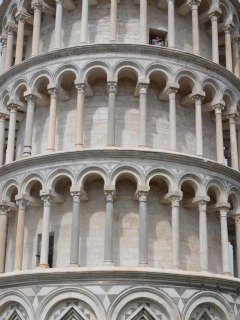
Leaning_Tower_PisaThe 100th post on alloporus was posted 8 months ago. That mini-review managed to reduce most of the previous content down to a couple of words “leadership sucks”.

And if you live in Australia then you would probably agree without reservation, whatever your political persuasion. We have an imploding Federal government with an opposition that just has to sit and watch it happen, whilst at state level there is a steady unpicking of legislation to turn the world brown.

Australia is even losing the plot in sport where in one code it is fine to punch the opponent in the biggest game of the season and in another a punch that missed is described as ‘despicable’

Ah, leadership, wherefore art thou.

As though in some kind of zombie state most folk seem to be ignoring it all. Perhaps it might go away. Just keep on selling the coal to the Chinese and we can carry on being rudderless [no pun intended].

Public lethargy is everywhere, spread as a thin veneer over stronger feelings of fear and woe, suggesting that leadership still sucks.

Only in the 100th post I also made a commitment to be more positive. Well that was a promise easily made and hard to keep.

It would seem that 5 decades of exposure to the human condition has allowed negativity to seep right through to my core. No matter the sunny disposition, gratefulness, the knowledge of blessings, and awareness of the privilege I enjoy — most of the latest alloporus blog posts are still glass half empty.

Not even the clever work of Plummer showing that despite our growing numbers the grand scheme of things is getting better has made me feel chipper.

It could be that I am wired to get upset and then depressed at all the craziness. I mean do we really need to know the sex of Kim Kardashian’s baby when we don’t know where most of our food comes from?

Less depressing would be the idea that this preoccupation with the inane and a requirement for drama is hard wired in us all and, more importantly, was necessary for our success.

There is obvious survival value in being obsessed with the immediate and the mundane for out on the savanna there were mundane things that could eat you or make you sick. Any hunter-gatherer who sent her mind gazing too far into the future went hungry or lost her child to an opportunistic leopard.

The addiction to stress is less easy to justify away unless we see it as a by-product of a requirement for drama. Argument does bring us awake, sets our adrenaline to work and makes us ready to fight or flee. In other words, drama was probably a basic requirement for successful savanna life.

Modernity provides us with every opportunity to latch onto drama and be in that alert state; only we have very little real need for it. Now drama is of our own making. These days we don’t find ourselves risking a drink from the crocodile infested rivers but we still like the feeling such risk brings.

I guess what all this justification talk becomes is a soothing of sorts. I do feel better posting rants when I accept that drama, argument and disagreement are a natural part of me, part of us all. The ego has to be thanked for getting us this far

What is still challenging is how to shift through to the positives. Not the ‘ra, ra, ra, yes we can’ positivity that is just another way of priming the body to act. I mean the real positives that come from truth.

For the moment these are harder to write about.