Sounds crazy #7 | Hidden hazards in the backyard

produce-01This ‘sounds crazy’ is an absolute ripper.

This bottom column headline and grab appeared on the front page of the weekend Sydney Morning Herald this week…

Hidden hazards in the backyard — Families are unwittingly exposing their children to the risk of sickness and even brain damage from lead hidden in backyard soil and paint… 

Fair enough. No doubt there is many an older inner city property that has not been renovated since the time lead was in most paint stock and some of that old stuff is peeling away and ending up in garden soil across the suburb.

Any city dweller knows that cities are not exactly pristine. The air is heavy with particulates from brake dust to builders waste and on a rainy day it washes all over your shoes. It comes with the territory.

The grab continued…

Lead experts fear the trend towards home vegetable patches and community and verge vegetable gardens is also putting children at risk.   

So at a time when all our electronic conveniences have deprived our youth of knowing anything about life giving soil, we must put the fear of god into those with the umph and initiative to get back to sharing produce they have tended.

Thousands of generations of good folk grew vegetables in their backyards. They planted, watered and cared for their crops and then fed their families wholesome fresh food. The extra they exchanged with their neighbors or sold at a local market helping to create the very essence of community that is so central to our wellbeing.

And they did this even when cars were spitting out lead, when the pipes were made of lead and when DDT was the pesticide of choice.

Did those dangers stop them? Not at all, they prospered and went ahead to multiply by the millions. So much so that today we need to double global food production in the next 30 years just to keep up with demand and will need every square foot of productive space we can find.

All I can say is shame on those ‘experts’, university academics with a career to build, and shame on the media for printing such fear mongering [and this time you can’t even blame Rupert].

For heavens sake, growing veggies in the backyard is a good news story.

I just wish the possums would stop eating mine.

Present moment awareness

confused confucius questionsAll the new age gurus that have managed to score a publishing deal tell us that most of our emotional troubles come from the twin fears of anxiety over the future and holding on to the past.

Somewhat surprisingly they are all pretty consistent in this message. This could be because they all borrowed it from the same old sage who sat and mused for a while under a fig tree, or it could be because there is truth in it.

They are also pretty consistent in their suggestions for solutions. Live in the present, the now, for that is all there is. Cultivate present moment awareness and all will be well. You will still feel all the same fears only they will have their place and so cause far less emotional pain, and, ultimately, should enlightenment come, no pain at all.

The books that now clutter the self-help shelves are mostly about the myriad tactics to achieve this awareness. They include  the tried and tested yoga, meditation and four agreements, to any number of whacky options with products peddled via websites in Kazakhstan.

So here is a question. If all we need to do is live in the now. Indeed, if all that is possible is the now, aren’t we already in it?

If so, and contrary to the observations you can make on any commuter train carriage, we are all walking around in a state of enlightenment with no need for a broom in a mountain monastery.

This is the kind of renaissance logic you might expect from Alloporus, all scientific and rational without even a piquant of metaphysics. Except it might be worth a thought.

We all walk around in the now — we have to for there is nothing else. And yet we also perambulate in blissful ignorance of most things that will actually influence the future we fear.

The conundrum that faces us is the requirement to leave the now so as to consider and prepare ourselves for the future. How else would be able to arrest the current erosion of natural capital, avert conflict over scarce resources, and, more fundamentally, even become aware that such risks assail us?

Leave the now so as to be in the now when it arrives in the future.

It is all mind bending trickery that explains why the packed shelves of guru wisdom have nothing much to say about the environment.

A guru of our own

By the way, Alloporus has searched far and wide under many a fig tree to find a guru worth sharing with its loyal readers. After many miles, many false alarms, pretenders and brushes with dodgy acolytes, finally we have a guru worth quoting.

Confused Confucius is its gender-neutral name.

This wise one has yet to sell out to the publishing world proudly posting regular pearls of wisdom from and to the universe for free on Confused Confucius.

Whilst this acceptance of social media is surprising in a sage, more so is that ConCon is not afraid to leave the now and speculate on our environmental future.

Check it out | Confused Confucius

Slow, slow, quick, quick

It was 1987 at the end of the dry season, 26 years ago almost to the day that I first visited a non-descript patch of miombo woodland near Marondera on the Highveld of Zimbabwe.

Scattered amongst the mature Brachestegia and Julbernardia trees were many wooden boxes all set on stilts ready and waiting to catch anything that fell from above. On the woodland floor beneath the cathedral canopy were mesh bags containing known volumes of leaf litter steadily decomposing, some with and some without the attentions of termites, ants and their tiny critter cousins. Everywhere there were small plastic flags of pink and yellow popping up from the lichen covered soil like daffodils in spring.

As a bushy tailed postdoctoral fellow my job was to take all this in. I then had to figure out how to make reliable counts of all the soil animals in this small patch of savannah and, for good measure, in the adjacent maize field.  Over the coming months many a sweaty day went by digging through that sandy Marondera soil but also much joy when sometime later the results were published in a peer-reviewed journal. The paper entitled ‘Abundance, biomass and diversity of soil macrofauna in savanna woodland and associated managed habitats’ was published in Pedobiologia [a journal title that sounds a bit dodgy but is actually quite legit as pedon is the Greek word for soil] and provided much academic satisfaction and a handy unit of kudos.

CO2 enrichment Cumberland Plain WoodlandEarlier this week I visited a rather similar patch of woodland. Only this time it was in Australia just 30 minutes drive from home where a parcel of Cumberland Plain woodland owned by the University of Western Sydney had been similarly commandeered for scientific research.

The litter traps and mesh bags were all present along with the ubiquitous daffodil like flags. The major difference was that there were also vast steel cages that formed circular sampling plots around clusters of trees designed expertly and with considerable precision to enhance the carbon dioxide levels throughout the vegetation. Once I forced myself to ignore the $40 million outlay for the infrastructure and the $1.5 million per year just to supply the extra carbon dioxide, it was a real back to the future experience. All that was missing was the soothing aroma from the tannins as they volatilize from the floor of the African bush.

Aside from the complex technology and infrastructure to enhance CO2 levels it felt like not much had changed. Today’s researchers were sampling the soil biology in pretty much the same way.  The challenges of understanding the complex biology that goes on under our feet were still there and no amount of high-tech wizardry had yet helped to break us out of the sampling constraints.

We like to think of research as being at the cutting-edge. It is after all where we find out solutions to our problems and create greater understanding that can be used to improve our lives.

Certainly since 1987 there have been major advances in a whole range of fields — back then the iPad or even the mobile phone were not even imagined let alone in use by everyone. What I took away from my déjà vu visit the notion that even when well resourced, progress is not a given.  Advances are just as likely to be patchy or steady and rarely come in spurts.

Back in 1987 the idea that soil could be defined as much by its biology as its structure was an exciting ‘new’ thing. There were a host of applications from understanding the basics of how natural systems functions to practical advances for agriculture and forestry.

Interestingly it is still a ‘new’ thing. Progress has trundled rather than sprinted along. Somehow all those benefits of understanding and managing soil biology failed to reach the farm gate [perhaps because it was easier to throw in some fertilizer].

Fortunately there is a new generation of the bright and bushy tailed. Only this time I suspect there really will be serious attention outside the close world of academia. We cannot achieve the push toward the next doubling of agricultural production that demand projections say we will need by 2030 without a hefty input from soil biology, not least because we are reaching the limits of yield benefit from fertilizer application.

So more power to those modern pioneers pumping CO2 into Cumberland Plain woodland and to their research colleagues around the world and let’s hope we can get a foxtrot happening.

Here are the citations

Dangerfield J.M. (1990) Abundance, biomass and diversity of soil macrofauna in savanna woodland and associated managed habitats. Pedobiologia 34: 141—151

Dangerfield J.M. (1990) The distribution and abundance of Cubitermes sankurensis (Wassmann)(Isoptera; Termitidae) within a miombo woodland site in Zimbabwe. African Journal of Ecology 28: 15—20

Soil carbon | What we think

I wonder what went through Steve Jobs mind just after the image of the iPad came into it?

Perhaps it was an original idea that formed in a flash of inspiration from the ether — the sort of thing that happens to imaginative types.

Or it could have been a steady accumulation of images, ideas and bits of less elegant technology that came at him from all and sundry that suddenly coalesced into something elegant.

Maybe it arrived as he peered over the shoulder of an Apple designer.

No doubt Wikipedia or the upcoming biopic knows the answer to what the origins were, but we can only speculate as to what he was actually thinking.

It was probably something like…

Hey, I’m really onto something here. Finally a device that everyone will want to have and fits our brand so well our competitors will just have to make copies. And hey, there’s big bucks in it.

You can bet he wasn’t thinking…

Oh boy, I have seen this all before. Crazy how it takes so long to get good ideas to stick, I mean I dreamt this little design up years ago. It will cost so much to develop that I can’t see anyone wanting to buy one from a store or even eBay — that is if the hardware people can even make the thing.

I reckon a big part of the reason Mr Jobs enjoyed so much success is that he didn’t ever think the glass was half empty.

And I don’t mean this in the ‘ra, ra, ra’ kind of can do attitude that Americans are so prone. I get the feeling that his was more a sense of knowing when the idea is right and that it would work.

Recently I attended an ‘Agriculture, Soil Health and Climate Change Forum’

organized jointly by the United States Study Centre, University of Sydney and the DIICCSRT [the Australian federal government department of many acronyms that includes the bureaucrats responsible for implementing climate change policy]. There were 80+ people present who all had more than a passing interest in promoting soil health. Some were just crazy passionate about it… and good on them.

Soil heath is a timely and critical topic. In many ways it is a ‘Jobsesque’ idea being simple, elegant, functional and ultimately something that we cannot live without. A global population that will rattle around 10 billion for at least half a century will go hungry if we stick with the current paradigm of soil as a place to put plant roots and inorganic fertilizer. The biology of soil is what gives its potential to sustain and provide, and whilst we do not fully understand why, managing for soil biology is the agricultural equivalent of an iPad.

So it was depressing [a carefully chosen word] to listen to an apologetic speech outlining how DIICCSRT, who as part of their atmospheric responsibilities also deliver the Carbon Farming Initiative, have failed to get soil carbon management onto its list of CFI offsets.

It wasn’t that there are technical challenges to soil carbon accounting for everyone knows there are. They are as fundamental as decisions to measure or model or even to go with simple activity reporting. They also involve gathering in uncertainty about what agricultural management does to soil carbon stocks [although here I believe we know more than we realize].

It wasn’t even that it has taken so long. We all knew it would.

What was so depressing was that the glass was half empty… and oh so hard to fill

Whatever Steve Jobs thought when the iPad first registered in his mind, you can be sure it was hugely positive.

Luckily the tone of the soils workshop was rescued thanks to a presentation from an overseas guest from the research arm of the US Department of Agriculture. His was a glass ready to be filled. He knew we had a problem with soil and that it was a big one. He knew that it was going to be hard to convince his research staff that they didn’t yet have all the answers and that the solutions would probably come from left field, possibly even from the ‘snake oil’ salesmen. It was going to be about going where we might not be wholly sure of ourselves because that was where the answers would be found.

He didn’t quite say, “boldly go”, but that was what he meant. I was hugely enthused.

It could be argued that we need both of these opposing attitudes to challenges. We need the naysayers to keep out feet on the ground and we need the ‘gung ho’ types so we can keep putting one foot in front of the other.

I think that we don’t yet know how to get the balance right and, in Australia at least, we are stuck. When it comes to environmental policy we have become paralyzed, exquisitely versed in stalling tactics and so fearful of innovation that we fear it like the devil. This is not good and may well be our undoing.

Mr Jobs would have shaken his head.

Farming not fracking

land-clearing-farmingStrolling through the village, as you do on a sunny winter’s Saturday morning, is a real treat.  It is a privilege just to take in the bustle of folk going about their weekend business — buying the paper, greeting a neighbor or settling down for coffee with friends serenaded by a teenager with a guitar and dreams of fame and fortune from his songs. This is why we are so fond of community.

Abruptly my reverie was rudely broken.

“No thank you,” I said to a brusque individual who ambushed me from behind the ‘vote green’ placards that were cluttering the pavement. The pamphlet purveyor was most indignant at my refusal and gave me the death stare. If that had happened in the playground it would have been called bullying.

I strolled on by and observed both the wave of annoyance that passed over me, and the slogan on one of the placards that read ‘ farming not fracking’.

For the uninitiated fracking is the controversial process of getting gas from coal seams by injecting fluid into deep rock layers to fracture them. This releases the pressure that holds onto the gas. Once free the gas can be piped to the surface. It is similar physics that happens when the seal is broken on a soda bottle and bubbles start to rise.

The Greens are on to fracking because it is another nasty resource exploitation process that results in burning of yet more fossil fuels, risks pollution of groundwater or local subsidence, and worst of all, will displace farmers from the land. Not all land, but the land gas companies might buy to exploit the gas reserves beneath the paddocks.

No matter that in greenhouse gas terms natural gas is cleaner than the coal that will be burnt instead to meet growing energy demand, that boreholes have always coexist with farming, and that legislation already prevents anything nasty being used as the lubricant.

As a slogan ‘farming not fracking’ is just silly. It is not even the issue.

Deliver it with a ‘holier than thou’ look on your face and even your supporters will cringe. Everyone else will tell you to take a hike, probably far less politely.

How about this instead?

We don’t like fracking or exploitation of coal seam gas so we have come up with this solution.

The energy that would have come from gas can be generated from alternative sources [solar, wind, wave, geothermal] plus some savings from improved energy efficiency. Both initiatives could be resourced from a small but compulsory ‘no fracking’ investment of say $500 from every household in the country — this one-off payment from everyone  would raise roughly $4 billion.

The return on investment is twofold. Cheap energy in the long run as alternative sources would get over the commercial hump and there will be environmental benefits from avoiding pollution risk. Plus, there would be lower greenhouse gas emissions from the soon to be necessary shift to alternative energy sources again saving money on transition costs.

All this for the annual expenditure to households of one weekly coffee and cake in the village.

The pamphleteer would probably look at me aghast and blurt out, “You mean to ask people to give up their Saturday morning coffee and cake, what are you thinking?”

Then he would spontaneously take up the chant “farming not fracking, farming not fracking…”

And no doubt the young songwriter could weave it all into a lyric.

Environmental value | perception is everything

Not a HyundaiSuppose for a moment you are in the market for a new car, a nice sporty hatchback to help you ease into mid-life.

And what if, due to some bizarre rift in the fabric of reality, I told you that for one week only a Mercedes and a Hyundai were the same bargain price. You could snap up either a zippy, sexy and undoubtedly metallic new Mercedes or equally zippy and metallic Hyundai for $20 grand.

What make would you choose?

It would be the Mercedes of course — and why not? The Merc has prestige written all over the badge on the bonnet.

As it happens and despite similar specs on performance, size and reliability, there is roughly $15k difference in the retail price in Australia between a standard Hyundai and the bottom of range Mercedes hatch.

In the real world without rifts where most folk are budget conscious it is no surprise that more Hyundai units are sold. And yet there are still enough people who value the Mercedes enough to fork out the extra cash — almost twice the amount to do essentially the same job.

Perception of value is obviously a powerful force.

The extreme of this for me is the handbag. Its functionality is always that same. Sure its looks vary from brand to brand but enough for the name on the clip to mean a handbag could retail for $50 or $5,000? Bizarre.

Here is another example.

Suppose you are accused of a crime that you did not commit. It’s a complex fraud charge and the police arrest you. Right away you call the best lawyer you can afford for even though you are innocent you know it will need the $500 per hour worth of expertise to prove it. Naturally as you are innocent and the judge agrees, the court awards you damages and you recoup all your expenses.

My point though is that at the time you gladly pay what it takes. In that circumstance of false accusation there is plenty of value in that $500 an hour.

Perception of value is also a highly contextual and personal thing. This is just as well. Individual preference for value helps create much of the complexity and variety in our society and we are the better for it. If you have the means and derive sufficient pleasure from a $5,000 handbag, go for your life [although part of me can’t get past the reality that $5,000 is roughly what it costs to keep 7 Ugandan children in school for a year].

So we come to environmental value and the same rule applies: perception is everything.

In western economies the majority of people who live on and off the land value it because it provides their livelihood. A paddock is a sheep factory and a field a grain production unit where primary production is harnessed to deliver goods for sale.

Of course there is some heritage, love of the great outdoors, feelings of wellbeing and social good that comes from growing food but ultimately it is about the production and sale of a commodity. And this production value is reflected in the price of goods and the production potential that is reflected in land value of rural properties.

Except that the end buyer of the goods, the consumer, never sees the paddock. She only sees the produce and the price sticker in the supermarket. The value to her is in what she can get to feed her family for her weekly budget, or in this metrosexual age, his weekly shopping budget.

The retailer does not see the paddock either. He [or she] just negotiates a wholesale farm gate price or better still enlists a supplier to do all that dealing. These business people see value in cost reduction and the ability to bargain down. And they use the powerful levers of volume and distribution to achieve the best price.

Their perception of environmental value is profit and we are grateful that they focus on it. Without this system of wholesale production and efficient retail we would have far less money to spend at the movies.

We could say that in this scheme of producing, buying and selling produce environmental value does not exist. The value is in the goods that we manipulate the environment to produce.

‘Ah but…’ I hear you shout. We do value the environment for itself. Why else would we have national parks, laws to prevent clearing and pollution and whole bureaucracies assembled to manage all our development activities?

Well yes, there are some picturesque, relaxing or wild patches of the environment that we ‘value’ and sometimes pay good money to visit. There are also places of cultural significance that mean a great deal to us. And yes, we have planning in place to allocate and sometimes restrict activities to preserve and maintain areas that we hold dear.

But, and it’s a Kardashian sized butt, these are not direct, back pocket values.

We ‘value’ conservation, wilderness, cultural heritage and are prepared to forego some development to retain it — an opportunity cost that we collectively wear — and yet we rarely ever feel that we have actually paid money for this. Nor I would suggest would we pay directly if pushed.

Back in the day in a lecture I gave to my biodiversity class, I asked the students what they would be prepared to pay to know that elephants still existed in the wild in Africa [the technical term is ‘existence value’]. What from their wallets or purses would they prepared to give, right there and then? $5, maybe $10 they said, with concern on their faces.  That was until I actually went round with a hat as though moving through the church pews and tested their commitment. None were actually able to part with their cash.


Radical suggestion

So here is a radical suggestion.

In our modern, city orientated system for living, there is no environmental value beyond a small suite of goods and services what we are prepared to pay for. No fiscal value to what the environment gives beyond what we can buy and sell because we have no system beyond cash to detect value and without cash our valuation senses have become numb.

If true I would say that this is not a failure of economics or even an unhealthy preoccupation with profit. It is actually a failure of perception. We simply do not know that we have a debt to the environment. We are not aware that we have been and continue to mine its resources without accounting the full cost.

No one has put in the marketing dollars to create the brand ‘environment’ equivalent to the Mercedes logo stamped onto the bonnet. Not surprisingly most people do not see the environmental value and happily continue to purchase the goods at bargain prices.

Even though we know that we are degrading soils, wasting almost half the food we produce and sending valuable resources to landfill, none of these things matter at the checkout. There will be few folk willing enough to buy the $4 net of sustainably produced onions when there is a net of equally good looking onions in the same isle at $1 because our perception of value is right there in the store. It happens as we compare the price per kilo to what is in our back pockets. We find it hard to make purchasing decisions on values that are distant and intractable.


A challenge

Here is a challenge for you.

Every time you make a purchase of anything from a tomato to a television, force yourself to consider the environmental value in the goods that you are about to buy.

Do not use these thoughts to make yourself feel guilty, go ahead and buy anyway, but do have a thought for what happened in or to the environment to make your purchase possible.

 

Carbon farming | when to rant and rave

carbon farming farmland

The other day I received an invitation from the Australian government’s Department of Industry, Innovation, Climate Change, Science, Research and Tertiary Education to a forum with the Domestic Offsets Integrity Committee (the DOIC). This is the committee that approves carbon accounting methodologies for the Carbon Farming Initiative (CFI) scheme that was touted as providing Australian farmers with the opportunity to earn carbon credits from land management change.

The invite was keen to point out that “there are now 16 methodologies available for farmers and landholders to undertake carbon offsets projects” and that “The CFI is a ground-breaking scheme offering Australian farmers and landholders the opportunity to earn carbon credits while potentially achieving environmental and productivity benefits”.

What to do?

My first rational thought was not to go. Why should I spend my own funds and contribute to greenhouse gas emissions by travelling from Sydney to Melbourne to attend a 2 hour discussion on a policy that so far has delivered nothing that a farmer could actually use. The 16 approvals to date are for methodologies related to capture of landfill gas [that most landfills had the infrastructure to do anyway], various approaches to growing trees that you cannot cut down, and avoided emissions from a few specialist activities such as piggeries. These have nothing to do with the bulk of real-world farming practices.

My instinct, however, was to attend and at some point in the proceedings stand up and bellow at the top of my lungs a string of obscenities to vent my frustration at what has been a slow and hugely inefficient process of bureaucratic numbness — not to mention the unnecessary reinvention of a wheel already fashioned by international carbon offset schemes.

Unfortunately such actions would only give me temporary relief and would be be swiftly followed by long-term personal damage. Even writing down my thoughts in this post is probably not very smart.

So instead of the rage filled rant, I will reply to the invitation politely saying, “unfortunately I am unable to attend”.

It is worth looking more closely at my frustration [and maybe at my copout].

The frustration

I have never been wholly convinced by the global approach to climate change policy.

I accept that 7 billion humans plus 10,000 years of agriculture and 200 years of global commerce have had an impact on the climate system and I know that we need to take some action.

What has always troubled me is the premise of the chosen policy that we can actually fix the damage we have caused simply by reversing our actions. As I have blogged before, King Canute really had a better chance.  That we can take an engineering solution as naive as emission reduction to a problem of this magnitude seems to be a scandalous inflation of our capability.

Does it also mean we going to fix Milankovich cycles by tweaking the tilt of the planet or take on the variation in the solar wind [both major climate drivers]? Craziness.

That said, emission reduction is prudent for two key reasons: 1) it will help economies transition away from fossil fuel energy sources to sources that are cleaner and less likely to run out and 2) in the short run will help make business more efficient. Both of these are important outcomes that have little to do with the climate.

What is missing from the policy is an understanding of the need to adapt to climate change particularly in the way we manage landscapes. Yes indeed, the very landscapes that supply almost all the food and water for all those people.

So for the CFI not to have methodologies that give farmers an opportunity to sequester carbon into soil, to rehabilitate vegetation in grazing lands, and to obtain co-benefits from more sustainable land management practices is a huge failing of the policy. And not least because these actions will also deliver adaptation as the climate changes.

So carbon, and by extension the CFI, is really about creating more sustainable and resilient landscapes and helping farmers leave behind unproductive practices  – and by the way, there is the potential for around 100,000,000 tCO2e per annum on the positive side of the national carbon account.

What is more, should carbon permit price track the international markets and come in below $10 tCO2e, land management practices that deliver carbon sequestration into vegetation and soil as well as avoiding emissions may still be cost-effective. Most land management activities sit towards the left of most cost-abatement curves and so are cheaper per ton of abatement than many of the engineering solutions.

The cop out

So why did I choose not to accept the invitation when it provided a great opportunity to scream and shout?

There is an element of shooting the messenger. Public servants are there to deliver the policy frame not necessarily to create it. It is likely that there are higher political forces that have chosen to slow down policy delivery and to steer away from the farming sector, higher than those charged with delivery.

Attending only to have a shout at the wrong people makes no sense.

There is also a feeling that attending would both validate a process that I do not agree and have little impact, particularly as providing feedback seems to have had little effect in the past. The system is still slow, lacks focus, and technical clarity.

An example from the many challenges faced by methodology developers is that the positive list cannot actually be a list of activities to take care of additionality if each methodology has to prove the validity of an activity already on the list. That negates the whole concept of a positive list approach [one tried and rejected by other schemes] seems to fall on deaf ears.

Ultimately though, I have folded and chosen not to point out the faults but to stay silent.

This does not make me feel any better.

Postscript

Whilst I was drafting this post I received n update from one of the major laws firms with an interest in the carbon market. Their take on the status of the CFI is quite contrary to mine — it seems that everything is dandy. In fact they must be drinking out of a glass so half full it’s overflowing.

If only I still had the energy to talk it up.

Environmental values | A national park should be a national park

EucalyptusForestMany years ago I was driving along a dirt road in rural Zimbabwe.

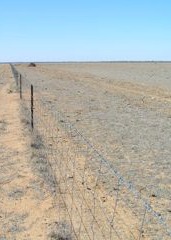
We had been following a game fence for several miles, a formidable veldspan barrier between a tired looking patchwork of withered maize fields, goats, and clusters of rondavels out the passenger window, and the intact open woodland of a game reserve on the driver’s side.

Dirt roads allow plenty of time to take in the scenery and I couldn’t help but notice how one of my fellow passengers, a former student recently appointed to the wildlife department as a trainee scout, was so captivated by it. Not the savanna with its prospects of a kudu bull framed by an acacia thicket, an elephant ambling along ready to tug at the sweetest smelling grass tussock, or maybe even a leopard draped across the bow of a marula tree; no he watched with great intent the farmland.

“Which do you like best,” I asked him, “the savanna or the lands?” He looked back across at me with eyes wide, forehead furrowed and cheeks raised and said nothing. He turned back to his left to look out of the window and said softly “the lands”.

It was not the only time during a decade in Africa, that included the great fortune of visits to half a dozen countries, where the locals made it very clear how important agricultural land was to their very soul. Fields and pastures are, after all, the source of sustenance to us all and a place of protection and community. Human modification of the wild and dangerous savanna into safer and more comfortable countryside is the achievement that founded our ongoing numerical and lifestyle success.

In the west we sometimes pretend that the wild mountains, forests and windswept moors are our places of true beauty, but actually we too have quite the soft spot for farmland. Countryside would end up as a more popular choice for most than wilderness. Even the words themselves evoke opposites: cozy comfort aside inglenook fireplaces with a slice of apple pie, or gray skies, damp smells and wind that howls.

Given these deep and innate responses it’s no surprise that there is a conflict over what to do with wild areas. Should we set some aside and then keep out of them to be what they are as unfettered cauldrons for nature? Or should we designate them and, with a calming hand, mollify all that that wildness? After all we are under more pressure that ever to make every hectare of the land productive and available to yield fuel and raw materials for our voracious economic engines.

Australia is slipping into the midst of this conundrum.

After many decades of increasing environmental protection with laws set to slow or stop landscape modification, restrict pollution, and set aside close to 7% of the land [529,380 km2] as conservation areas, change is afoot. State governments in Victoria, Queensland, and NSW are variously allowing areas designated as national parks to be used by recreational hunters, mineral prospectors, graziers and even foresters.

Whatever your politics, hunting, livestock grazing, digging big holes and cutting down trees do seem rather odd activities to allow within a national park. Remember that the majority of these areas are either rugged and remote [part of their initial charm] or unproductive for all the usual commercial things we like to do. Allowing them environmental value seems to make perfect sense.

There is also the important ecological reality that once an area of land is grazed by livestock, or cleared, or a road cut through it, or big holes dug into it, then it will never again be as it was. Our modifications are irreversible.

We can [and should] restore landscape after the effects of our worst excesses but, by definition, we cannot return a landscape to pristine wilderness. All we can do is set areas aside for nature to be and preferably areas that we have not messed up too much already.

Recognition of environmental value, so that each set aside area has meaning, is a really smart thing to do.

Yet in doing so we are at odds with our instinct for the safe place that is productive. We all want to look to the left of the dusty road at the brown stalks of the harvested mealies just as the young wildlife scout did, because at core we are all control freaks. We are desperate to keep the nastiness of nature at bay and make the land safe and productive for our families — something inside says that that wild wood must be tamed. Let’s send in the guns, the herders and the chainsaws.

Only we are better than this. Surely there is enough in us to recognize that we do not have to be afraid of lions or wolves anymore and we can let some small proportion of the planet be close to what it was before we swarmed across it.

And surely we don’t have to go back to the trenches of environmental warfare where passion to protect and equal passion to exploit creates sides that throw dirty grenades at each other and the only winner is the peddler of vitriol.

For goodness sake let a national park be a national park.

97% said their cats prefer it

Its official, 97% of peer-reviewed science papers, that expressed a preference, agree that climate change is caused by human activity.

Academics have surveyed nearly 12,000 academic papers penned by 29,000 scientists. There were 4,000-plus papers that took a position on the causes of climate change and less than 100 of these disputed the scientific consensus that climate change is the result of human activity.

Here is what the lead author had to say about the survey

Call me a cynic but all I could think about was the “8 out of 10 owners who expressed a preference said their cats preferred it” Whiskers ad and how I didn’t believe that either.

And later I imagined what it was like back in the day when every intellectual believed that the earth was flat until some crazy dude decided to sail all the way around it.

And later still I decided that it really is missing the point because it does not matter what the cause is, it is the effects we have to worry about.


Sounds crazy #4 | Logging of native forests

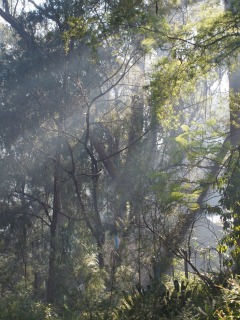
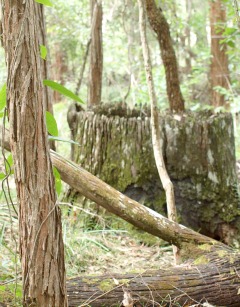
Logged forest NSWIt is wise not to believe everything you read in the newspapers. Most of the time the stories are, at best, economical with the truth, spun faster than a flywheel, and sensationalized out of all recognition.

This week though I was taken by the “Hatchet job on native forest logging” headline in the Sun-Herald [18 May 2013].

The report claimed that the recently privatized Forestry Corporation of NSW was making an $8 million loss on revenue of $111 million from logging of native forest across NSW — equivalent to a $671 loss per hectare of trees cut.

If it is true that logging of native forest makes a financial loss then to continue such a destructive practice that was never fully able to account true environmental costs is madness. It would be stupidity that borders on negligence

The piece notes that plantation forestry is profitable [$32 million in 2010/11] and implied that the plantation estate effectively subsidizes the harvest of native forest.

Clearly the story is never just about profit. There are jobs at stake, impacts on rural economies to consider if production stopped, and significant flow on effects to the supply chain. Consumers would still want timber. Suppliers are likely to source their hardwood timber from overseas where controls of logging practices may not be as tight as they are in Australia.

And yet, operating the logging of native forest at a financial loss really does sound crazy.