Joel

Joel


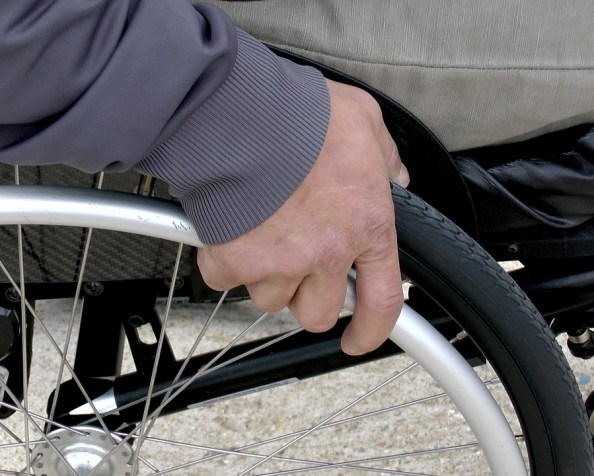
Joel has been in a wheelchair all his life. He is 32 years old and his parents have looked after him since he was born. They are worn out.

It is impossible to know how they feel about Joel.

He is their son who requires their attention for just about everything he does. They have been there for 11,680 days of dressing, showering and bowel movements. Between these days they didn’t sleep through on half the nights.

This is not a normal life.

Joel not only has physical disabilities he has mental issues too.

He couldn’t learn to speak and, according to numerous psych analyses, is not aware of where or who he is. Yet he seems to know what he likes and he gets scared and upset, even if very few people can tell the difference. The best care can see Joel comfortable and safe but no one knows if he is content.

Who speaks for Joel?

He is of legal age with an identity yet he cannot sign or speak his own name. He thinks for there are responses to likes and dislikes but no obvious capacity to discern. His smiles and cries and shouts are unfathomable to all but his parents and his sister. Often even they are not sure what he wants or what he means.

Those with a normal life cannot know how Joel feels or thinks.

His parents want to speak for Joel. They have provided his care, sacrificed much to be there for him and know him better than anyone, perhaps more than Joel knows himself. In the world of the rational they could, perhaps should, be his voice and decide what is best.

It just happens that Joel is aware of his sexuality. Whatever wiring his brain missed it developed the signals for procreation. He cannot speak his desires but   Joel obviously likes girls, especially the good-looking ones.

His parents see this. On occasion, it embarrasses them.

Only they believe sex is reserved for marriage and they cannot see Joel being married to anyone. It is silly to even think of it.

They do not even consider that Joel might want to have sex. Nor do they see that this fundamental human experience is what Joel the person might desire and even deserve.

However kind and dedicated they are, on the matter of sex Joel’s parents are clouded by their own preconceptions. They cannot truly speak for him.

It is likely that Joel will be denied any sexual encounters his whole life. His parents have a right to their worldview and are unlikely to change what they think about sex before marriage. They are also unlikely to change their devotion to Joel and his care.

There is an inevitable compromise in meeting Joel’s dependency. At some level, the caregiver decides and Joel must lose his voice.

It is a truly wicked conundrum.


Born again

Sometimes I wish for a flash of bright light and a sudden awakening of the soul.

It would be such a relief to be born again.

In an instant all the reality of the world would fall away into the arms of blind faith.

So far I remain far too cynical for a sortie down the road to Damascus but the prospect has immense appeal. It is not the redemption that promises rewards. Not even the ability to reset the moral clock at the end of each day with a few choice prayers for forgiveness. It is the prospect of abdication.

Just think…

No more thinking.

No more need to sift the evidence and no matter how it’s diced, find that it scares you shitless.

No more worry about how on earth the global system persists when really it should have already collapsed under the weight of human need and greed.

No more moral dilemmas because good and evil takes care of that.

Oh the bliss.

Pass me the hymnbook.

Fear or morality

I recently watched a documentary on the rise of ISIS.

It was shocking. The graphic footage of bloodlust was visceral and brutal.

How can a man place a gun to the back of the head of another bound and helpless in the dirt, and pull the trigger? How could he? He is a human being and I am a human being.

Instant fear.

Not for the prospect of being the victim but for being the perpetrator. There but for the grace of god anyone goes.

Fear that such moral depravity is possible, that we are capable of inflicting such pain on ourselves. For the pain is held by the living not the helpless victim. His is, at least, short-lived.

This horror is not to make people scared. Instead this was domination through callous and morally bankrupt behaviours.

But it was scary to see what a man is capable of doing to a countryman who follows the same religion, just not the right variety.

These killings are Illegal acts under any civilised legal code even those that apply when countries are at war. Killing in cold blood is and always should be criminal however it might be dressed.

And yet what to do about it presents a huge moral challenge.

Standing back and pretending it is only an internal problem condemns the victims and effectively condones the actions. Stepping in with guns blazing did not work the first (or the second) time, so who can say it would this time.

Military aircraft are something of a compromise at least strategically and politically. I am not sure where it leaves our morals for how far from the gun to the back of the head is the red button that releases the air to ground missile?

The most worrying of all was footage of ISIS flags flying atop American tanks and armoured vehicles so brand spanking new they didn’t have a scratch — hardware acquired when the Iraqi army forces were overrun. Now the bloodshed is aided by equipment sold for profit.

No matter how they were acquired, that is moral depravity too.

So next time the media try to frighten you with the prospects of terrorism in your hometown or the government comes across so proud to make a big deal of apprehending a handful of alleged recruits at the airport, have a think.

Just imagine an American tank rolling through a conquered city draped in a black flag.

This is the real deal and I don’t know if we are up to tackling it.

Subsistence

Lately Conservation International have been asking us all to adopt greater personal responsibility toward nature, because mother nature couldn’t care less about us.

Here is their logic


Fair enough. After all there is evidence for this argument. The previous five mass extinctions saw nature come back bigger and more diverse than before. And in time she will again after the current human-induced one.

Meantime there is a snag in the present.

Around half the people on earth grow most of their own food. These are not the new age Nancy types jumping off the grid or the allotment owners escaping their nagging spouses. We are talking about real life people from Bengal to Benin who have few job opportunities, little money, and no choice but to live off the land.

And today there are over 3 billion of them. That’s more than the entire human population in 1950.

These resourceful people perform miracles on tiny parcels of land. Yams, cassava, peanuts, plantains, rice and the like are tended with the care that comes from nurturing your future dinner. Multiple crops are rotated and intermingled to make the most of the soil reserves and to thwart pests and pathogens.

In some places this form of production is fairly secure. It rains enough onto soils that can give and retain nutrients. And with care families can survive on tiny parcels of land for a long time, often for many generations.

Elsewhere no amount of care can prevent soil depletion. And without money for inputs yields decline or become unreliable. Eventually the soil is exhausted and the farmer has to move to pastures new. This is shifting agriculture and it requires an important thing. It needs land.

If your soil is depleted and fails to grow enough food for your family what choice do you have but to move on.

Many move to the cities or send their youngsters in search of a fiscal solution so no surprise that urban populations are expanding. Even a modern city like Sydney is growing at 2,000 people per week. Meantime Lagos, Nigeria has reached 21 million.

Those left behind must either wait for newly urbanised family members to send funds or find a new patch of land to grow some food.

And this is where the Conservation International message of personal responsibility hits a snag. If half the people in the world will need new land sometime soon they will try to find it no matter how much they want to be kind to nature. None can be expected to curl up on their depleted land and sacrifice themselves.

A billion or more people practice shifting agriculture because they have no choice. Starvation is their alternative. Instead they turn to mother nature. They eat from another piece of cleared forest.

The guilt trip of personal responsibility is meaningless when your stomach is empty and your child is malnourished.


Eavesdropping

coffee-cakeHumans really are bizarre creatures. No other animal can be this smart and this blissfully unaware, whilst straining every sinew to be both.

If you get the chance, hang out in a CBD coffee shop for an hour or so.

It will be easy to tap away at your blog posts whilst eavesdropping unnoticed on the conversations of the business types at adjacent tables. You will hear some wonderful stuff.

There is the youngster with a tight haircut and equally tight pants trying to convince the senior exec that there really is something in the deal with the Saudis.

On an adjacent table a female IT consultant is negotiated out of a decent deal by a hard nosed CEO who took patronising to dizzying heights. “Perhaps you can just offer us a fixed price because, you know, when service providers give us an hourly rate price range they always charge at the high end” he suggests without a hint of a facial expression.

Another upwardly mobile CEO, not quite able to pull off the tight pants, holds forth with a real estate agent hoping to sell some office space. After half an hour of grand ideas and growth about to touch the stars, the deal is done for space only slightly larger than a shoebox. The agent is visibly deflated.

Then there is the pretty young woman on the phone to a guy who couldn’t quite make it for lunch. That was sad.

And just to prove I am not the only practitioner of the eavesdropping art, I was astounded to be interrupted in my own sinew stretching pitch to a VC by a lady on the adjacent table who had listened in and just had to tell us what she knew about our idea. That, of course, is breaking every bit of eavesdrop etiquette.

What an hour of surreptitious listening will tell you is that business people are pretty smart. They know a lot about what they do and how to get their own way.

And it will also tell you that people have no idea of anything outside their bubble. They don’t see the end of their own nose let alone the one on the person opposite.

It is quite a skill actually. To be so unaware requires true devotion to your own head. These practitioners of unawareness must live in blissful isolation lest they notice something off message. It is remarkable.

Eavesdropping can be a lot of fun. Choose a coffee shop frequented by the suited and give it a try some time. Nobody will notice you doing it.

What I learned lately about… courage


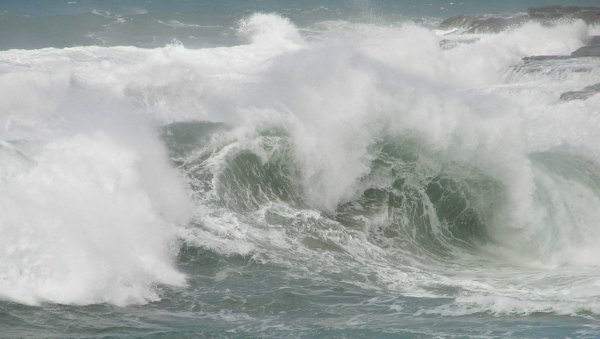
stormy seaCourage is priceless

First of all I am not talking about the winning of a Victoria Cross. For me that is bravery, you either have that or not as it emerges unbidden in extremes. Nobody really knows if they are brave until they face a clear danger head on.

Courage is subtler.

We need it every day, sometimes only in small amounts as it fuels the success and enjoyment of our days. Courage is what gets us out of bed and allows us to engage with the world and each other. It lets us believe in good and cope with bad.

Without it we would all be lost.

What I learned lately about… cooking

pavlovaAnybody could cook but not many can.

The other day I threw together a green vegetable curry and it tasted pretty good. I winged it from what was left in the fridge, a can of coconut milk and the dregs from a jar of curry paste. It helped that we had a lime, some cane sugar cubes, long green chilli and plenty of fresh coriander.

Also this week I diligently followed a recipe for lemon rice that went beautifully with some left over chicken that the real cook in the house made the day before.

And now I think I know who can cook.

It is anyone with their mind in and on the food.

Recognising what we know

There is a very funny scene in an episode of the Big Bang Theory where Penny asks Sheldon and Leonard trivia questions about famous American rock bands. Needless to say they are clueless. Not even Sheldon’s eidetic memory could rescue him. Penny’s infamous smirk was never funnier.

So now, do you know what this is?

equation

Don’t worry. A thousand people chosen at random from the population probably wouldn’t know either.

Most folk would be able to tell you that it was ‘some science shit’ and a few of them might know it was an equation for something.

Just one or two would recognise the mathematical notation for the third law of thermodynamics that states all processes cease as temperature approaches absolute zero.

But if more than two out of 1,000 people knew this you would suspect that the sampling was far from random. Perhaps it took place in the coffee break of a theoretical physics congress attended by Dr Coopers.

Now, of course, if you did sample 1,000 delegates from said congress, not all of them would recognise the equation. But I digress from my main point, which is this…

Each of us can only know a tiny fraction of what is known.

Even the eidetic can only remember what they have seen or heard. And for those of us who forget all the time, then our fraction can be small indeed.

The curious thing is that rather than get to know a little about a lot, people specialise. Either by choice or just as a default from our experiences we focus. After a while we all know quite a lot about something.

There are people who know more than seems possible about the cutting tolerances of a lathe or the rules that govern a financial balance sheet. There will be someone who can recite by heart the poems of Keats and someone else who can quote the test batting averages of all players in the current Indian cricket squad and then proceed to tell you why many of them should never have been selected.

This accumulation of specific knowledge is very useful. It gives us great depth in technical and practical matters. How else would an accounting firm provide services or repairs be made to a faulty MRI scanner? Not to mention brewing a decent coffee.

We need people who know the details.

What has struck me of late is just how specialised we have become and how little this means we know when presented with material outside our expertise. Just like Sheldon and Leonard, we are easily at a loss.

And yet we also take for grated what we know.

Because I have been in the guts of ecological science in research, teaching and my consulting practice for far too long, I take scientific knowledge for granted. For example, I can easily see the link between grazing management and soil carbon — graze too hard and soil carbon declines — and the net environmental benefits of changes to grazing practices that stop or even reverse that soil carbon decline.

What I can’t do is assume that a specialist in financial assurance will see or believe that such a link exists. She needs evidence. And as the language and logic flow falls outside her expertise she will need some persuading.

This is usually not a problem because ecology and accounting speak happening in the same room is about as rare as a female financial specialist. Except that they are about to collide.

The next decades will require that food production doubles or a lot of people will go hungry. Hungry people are not easily or righty ignored and the only way to feed them will be to invest in more efficient food production, distribution and storage systems.

It will be a time for specialisms to be recognised and respected. Times approach when the lion will lie down with the lamb… and come to some agreement.

This will only happen if expertise and depth of knowledge is respected. If we have to spend all the time convincing each other we actually know stuff then the solution will slip away.

So be grateful that someone among the 1,000 knows the formula for the third law of thermodynamics and don’t dismiss her for being odd.

It will be smarter to listen to she has to say.

Your last 100 days

masterpiece-detailThe end of your world is nigh.

You are told by God, a noted and reliable source, that in 100 days it all ends for you. Your mortal coil will burn out. You become the rarest of individuals who knows exactly when it will all be over.

What would you do with 100 days if they were all you had left?

Perhaps sell the house and tick off as many bucket list items as you can in the time, spiced up with liberal quantities of gay abandon.

You might reconnect with family and friends splurging out on dinner parties twice a week being sure to get the caterers in.

The grudges and prejudices that have dogged you for decades might be melted away as you spend your last 100 days on a mountaintop sweeping up leaves.

You might choose to ignore God’s 100-day deadline claiming a ruse and believe that you actually had a lot more time.

Clearly there will be as many ways to fill the last 100 days as there are people to fill them.

The most common theme among the disparate choices will be to do more or less the same as you always do. You will text, tweet, post and play Candy Crush. You will watch hours of crime dramas and cooking shows on TV. You will complain and argue, laugh and sing. Because these are the things that you do now when you have an unknown amount of time left. They are warm and familiar things that we all choose to do everyday.

And the thing is that you choose to do them. On the train to work, in the evening after dinner, at the weekends, in the 72 hours of the week you are not sleeping or working.

Yes, you choose to do them.

Think about it.

5 truths about happiness

natureAre you happy? Yes you are. Of course you are and why wouldn’t you be? You have the Internet.

At you fingertips is the portal to salves for all ailments, stimulation of all kinds, and even connection to a million Facebook friends. You have to be happy.

No, you’re not happy you say. Not even among the multitude of online joys?

Perhaps today you are sad, the necessary down day to balance he many ups. Everyone has them. Those days when no amount of downloadable bandwidth can shift the blues — not even a pirated episode of ‘Housewives of Toowoomba’.

And this is as it should be for happiness is transient. It cannot be permanent — not even when the government measures gross domestic happiness, as happens in Bhutan. Feeling sad sometimes is a necessity in our natural volatility of mood and feeling.

Perhaps we have to accept a few home truths about happiness. Here are 5 to start with:

#1 Happiness is transient

It comes to visit but never for too long, but we are fortunate because

#2 Happiness is present everywhere and in almost everything however torrid

Because it resides within us and all we have to do is express it, and yet

#3 Happiness elusive and slippery for most of us

and is smothered by our fear and this means that

#4 Happiness easier to find when you don’t look for it

because what that does is to calm the fear and allow more frequent expression of all emotions, and when all is done we find that

#5 Happiness is not life’s holy grail

Contentment.

Now that is something else altogether.