Easy or not

Meercat taking it easyIn his book ‘Hot, flat and crowded’ Thomas L. Friedman rails against the glorification of easy. His main complaint is that anything we do to support ourselves in an increasingly hot and crowded world is not going to be easy. And those who say there is an easy way are just kidding themselves.

Humans are notoriously hard to motivate without some form of reward. Most of what we need to do to keep producing natural resources and accommodate climate change when there are so many of us will require some sacrifice. The only reward will be the hope that we have done the right thing. Saying it will be easy is at best naive and at worst irresponsible.

To illustrate his point Friedman quotes Michael Maniates of Allegheny College.

Maniates makes the following assertions about what we ask of ourselves and one another:

  • we should look for easy, cost-effective things to do in our private lives as consumers because
  • if we all do them the cumulative effect will be a safe planet, because
  • by nature, we aren’t terribly interested in doing anything that isn’t private, individualistic, cost-effective and, above all, easy.

I reckon Maniates is on the money.

In default mode we are lazy. We would rather not sacrifice but if we have to then please can we do it from the couch. Please do not ask us to actively sacrifice.

Friedman’s frustration is understandable because it was this lazy default mode that has seen us consume with abandon and take ourselves to the edge of the resource use precipice.

In his book ‘Thinking, fast and slow’ Daniel Kahneman even has an explanation for why lazy is the default.

Cognitive research seems to be telling us that we think in a couple of different ways. We intuit most things. This action is easy and fast and works well for the bulk of our everyday decisions.

Only our intuition is not very good at complex thought, especially where we need to analyse for or calculate a result. For this we have to engage the thinking brain. The only problem is that this type of thinking takes work – real physical work apparently – and we find it difficult.

Our environmental challenges are very new and not in the default program. Our intuition has evolved for us to know that food, water and shelter are either here now, or just around the corner. We are not used to thinking about where these things are going to come from; yet we are forced more and more to think analytically about the basics. Indeed we have to think twice: first to tell us that we have a problem and second to figure out some solutions.

Friedman suggests it is irresponsible to say that our environmental challenges are easy to solve when, in fact, they are hard. Potentially more challenging than the problems themselves is that we prefer to solve things in our default mode. We prefer to intuit answers because it is a lot easier that way. Thinking is just too hard.

Take a moment to recall your experiences in the workplace or at home. Ask yourself what proportion of your time and that of your colleagues and family members is spent in default mode

Yep, we prefer not to have to think hard. No surprise that we glorify easy.

Only there is a reason why talking up easy is so common. My guess is that any call to think hard about anything will fall on deaf ears.
Leaders not heroes

Leadership is hard to define, not easy to learn and is, perhaps, only gifted.

True leaders inspire us and we trust them. We listen to what they say and we accept what they decide. This is because leaders do and say things that make us feel good about ourselves. And what they do we believe in, often without need of explanation or a spelling out of logic.

Heroes are a little different. They motivate us because they are admirable. They do what we would like to do. We can imagine ourselves slaying the dragon and winning the adoration of the damsel or, if you prefer, as a heroine beating up the patriarchy to create equality and emancipation. Our heroes actually do these things. Heroism generally requires conflict.

In our modern ritualized world, our heroes do our fighting for us or they act bravely in the face of danger. Leaders can do these heroic things for they too have courage. Only they do them without having to fight.

Leaders show the way forward as not only the logical but the truthful path. They do this instinctively; picking their way with ease through the complexity of options to choose those that really make sense. They can slay the dragon if needs must, only they will more likely convince it to live happily on the top of the mountain.
They also have vision. A clear notion of what the future looks like that is not an idealized utopia but achievable and likely futures. And leaders are not afraid to explain the future to followers and skeptics alike. The dragon will live on the mountain and will not visit the valley unless invited.

And there is one more critical element that sets leaders apart from both heroes and mere mortals: they can combine fearless vision with timing. They know instinctively how to act and when to act to achieve the desired outcome. Heroes are presented with their opportunity and instinctively move to the front of the cowering throng sword in hand. Leaders anticipate the dragon’s arrival and go outside the village to engage the foe on neutral ground.
It takes courage, smarts and conviction to be a leader. It also needs a certain lightness of hand (and word) dispensed with ease and grace. And wisdom helps, preferably born of experience, or where time has yet to allow for this, then from instinct.

There have always been leaders who have most of these things and these people have become important in our societies. You could probably name your own favorite. And if we did a survey of favorites, the majority of the many leaders that people would chose to name as inspirational come from the past. Many favorites will be historical, a few will be modern, but hardly any will be in public office. Bar the notable exception of a few charismatic entrepreneurs, our current leaders do little to inspire us. This is especially true in politics.

And then there is one final, and perhaps the most critical, quality of leaders, one that seems to be missing from all modern political leaders. That is the ability to realize that leadership is not about them, even though they must be strong, stand out and even be heroic. Leadership is actually about the outcome, the means proposed to get there and the timing of the actions. So true leaders must have humility. The quality of knowing that it is just a channel that they present to the people who look to them.

People follow what they intuitively know to be right. All they need is for it to be presented. Sometimes we are conned. A few infamous historical leaders have taken their people down horror roads through force of rhetoric and oratory but have all fallen when the truth came out. When it became clear they lacked humility they were ousted. It sometimes took a great effort but they did not survive any more than the pathways they proposed.

So in the end leadership cannot be about being heroic because actually we lead ourselves. All that leaders really do is show us the way. Outcomes happen as each one of us as individuals take responsibility.

Mental musings on leadership might help a little. The real issue is what the future holds and who will lead us to it.

In our children’s lifetimes we will reach 9 billion souls, oil will be $200 a barrel making alternative energy an economic imperative, agricultural soils will show the symptoms of overuse and we will have to wrestle with the consequences of land, water and food shortages. These things will happen with or without climate change and we will want wise heads to lead us through the challenges with confidence and surety.

Can we expect this from our political elite? Yes we can. Indeed we should demand it.

We should ask for courage, smarts, timing and, most of all, humility.

What we eat

The other day I had a conversation with a friend that came to a conclusion. We decided that the environmental issues of biodiversity and climate change would be transient and replaced in the public consciousness by food security and the consequences of oil at $200 a barrel.

My point, conceded, was that food and the price of oil will stick until we find viable, safe and long-term alternatives to our current food production systems and energy sources.

We talked over an obvious and probably necessary option to improve food security, which is to eat less meat.

Animal protein requires many more times the space and water to produce than plant protein thanks to a simple and inevitable consequence of thermodynamics. Animals convert plants to protein at roughly 10% efficiency however good the farmer is at his husbandry. When both space and water become scarce it makes sense to eat the plant that is equally nutritious to us than. It would be easy enough to increase the proportion of plant protein in our diets.

Despite the logic being so obvious, my knee-jerk response to the suggestion that we could alter our diets and even grow some of these fruit and vegetables at or closer to home was:

“In whose lifetime?”

Maybe it was the cynic in me, that nasty resident who has become more cranky and vocal as the years pass, or knowledge of what has gone before that made me so negative.

Quite rightly my friend did not concede.

The exchange reminded me of two articles I read a year ago that did give me some justification.

The first was on the flip side of the food security argument saying that some foods such a meat and fish should be eaten in moderation because there is an environmental cost to their consumption.

The second described the outrage people would feel at being told they must go against all the advice of the nutritionists and eat less fish and lean meat. These foods are good for our health. The article then went on to claim that the environment is free and bountiful so what is all the fuss about.

The ‘but it’s healthy’ argument will be strong and will kick back against rising prices when meat and fish become scarce. It is the kind of entitlement logic we have come to expect in modern societies.

In the end though we will learn some tasty preparation of vegetables, eat meat only occasionally, and curb our sweet tooth because most of us will not be able to afford anything else. And, of course, we will also become healthier.

It has already happened in Cuba where the drastic reduction in oil imports when the Soviet Union broke up forced the population to grow food locally. The diet of urban Cubans shifted to include more beans, pulses and vegetables. A big chunk of the produce is grown organically but intensively in urban farms.

It can be done. Maybe even in our lifetime.


Truth

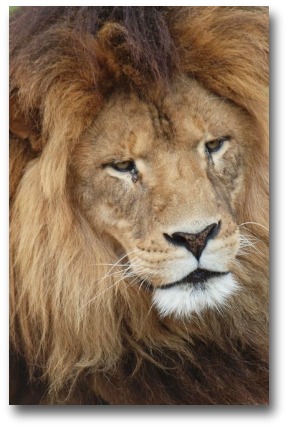
I took this photo on a recent visit to Mogo Zoo on the south coast of NSW.

Although small, the zoo is a neat and well-run establishment that boasts, among a number of interesting exhibits, a pride of white lions bred from individuals with a rare mutation that occurs on occasion in and around the Kruger National Park in South Africa.

Clearly the photo is not of a lion but an advertisement for a zoo experience. For $200 you can spend some time petting a serval (Leptailurus serval), an equally magnificent African cat similar, if somewhat larger and with longer legs, than the domestic variety. Servals are relatively common and widespread in sub-Saharan Africa and specialize in pouncing on rodents in the long grass of the savannas.

And here I have to admit to a huge contradiction in my head, for I have had the privilege of seeing serval in the wild. When in their element they are just as magnificent as any of their bigger cousins.

It was easy to conjure from memory the image of the cat in the grass lit by the orange glow of the sunrise, standing alert with an indescribable sense of belonging.

So my gut response to the advert was that no amount of enclosure landscaping or attention to the visitor experience could come close to the truth of seeing these animals where they should be.

Then I saw the look on the visitors face.

I realized that you do not need to go to Africa to find the truth.

Funny that.

Thinking

Do we think enough or too much? It’s an interesting question with chalk or cheese answers depending on where you try to find them.

According to Parnell McGuiness writing in the Sydney Morning Herald we are not thinking enough because our breakneck media cycle and the domination of the lobbyist has eroded true thoughtfulness on the big issues. Immediacy and a need to be right have reduced the extent to which we really explore a challenge and so we have become stuck in a narrow range of options. Discussion has been reduced to argument and no one seems able or confident enough to subject their view to serious interrogation.

I must say I have to agree. Our serious media reports more on style than substance from our leaders, although to be fair, this is because there is so little substance to discuss. The intellect is there. It cannot be that so many highly educated individuals cannot figure things out or engage in the necessary debate on issues that are difficult to resolve. Yet it is hard to find that debate. Instead we are given the extremes of opinion without the logic flow that led the proponents to their definite conclusion.

McGuiness suggests a return to true open-ended questions such as ‘What is happiness?’ As opposed to the already constrained “Can we be happy in a capitalist society?” Implying that we have become too constrained in our thinking for thinking to be effective. She has a point. And her solution is that we create more fertile thinking places and get to it.

Then there are the new age types who tell us that we think too much. We live in a mental fog created by our thinking brain that makes it very hard to see the truth. Constant brain chatter has made us fearful of the future and a slave to all our past psychological damage. If we could only stop all that noise and intuit then we would know instinctively what must be done.

This spiritual solution, that is hardly new having been around in various guises for millennia, is to take up meditation, yoga and gentle walks in the countryside or any activity that will help our chatterbox brains take a breather. In short, think less.

So are we not thinking enough or are we thinking too much?

Well there is definitely too much chatter going on in our heads. We are far too easily distracted by the inane, argumentative and opinionated. And what is it with the thousands of TV dramas in which there is either murder, infidelity, corruption or, preferably, all three. Our minds are so stimulated that it is no surprise they are manic.

So yes, we think too much. And we could all do with some quiet and quieting time.

Only then we need to re-engage our thinking minds with the wisdom we will find in those quiet moments. We need our brains to help make intuition real because reality requires practical solutions. And they need some thought.

So maybe we each need a week of Vipassana meditation followed by a workshop at the nearest think tank. I wonder what kind of solution that would produce.

M

You can find the original essay on open-ended thinking by Parnel McGuiness in the latest issue of Binge Thinking

The Greens need a new name

This picture is of a white rhinoceros, Ceratotherium simum.

The species nearly became extinct in the 1980’s but was saved by a concerted and dedicated effort of translocation, breeding, reintroduction and protection.

When you are next to one of these creatures you know that a world without Ceratotherium simum would be a lesser place.

Saving both the iconic and the less well-known but equally important species that make up biodiversity will require more heroic action and a fundamental shift in perception. We will all need to understand that there are consequences of resource use by 7 billion humans and that if we want to keep rhinos, even as semi-wild species, then we must pay attention to those consequences.

We will all need to be green.

And this will happen. When it does we won’t think of recycling, energy efficiency, consuming only what we need, rambling in wild places because they will all be completely normal. Green will not be some funky fringe activity, it will be the solid mainstream.

There will not be green, only normal.

As Hot, Flat and Crowded author Thomas L Friedman says

“(The) sign that we are succeeding will be when the term ‘green’ blessedly disappears. (Because) when green is the standard, not an option, you’ll know that we’re having a green revolution and not just a green party.”   

In anticipation of this critical event the Australian Greens might consider a name change. How about ‘The Progress Party’? Or maybe, ‘The New Whigs’?

No doubt there are far better suggestions.

Only the point is serious. There is an opportunity right now for new political leadership, for a party to emerge that understands that green and brown will be replaced by another colour; purple perhaps

A colour that can meld all the conservation and preservation ethos of green with the production and wealth creation necessity of brown to create a colour that represents an economic system that supports for now and the long term.

It is a shame that word purple has too many syllables to be marketable, for it is the colour of wisdom.

Problems for the environment

Here is an interesting thing. Over time, each and every corner of the planet has experienced just about every extreme of environmental condition.

Any given place on the earth will have been really hot, freezing cold, wet, dry, flooded, parched, ravaged by fire, hit by tsunami or earthquake, bathed in toxic gases from volcanic activity and seen the effects of meteorite strikes large enough to send gigatons of dust into the jet stream. It has all happened.

The only thing needed for all of these events to occur in any one place is a very, very long period of time. So long that, although we can write down the length of time in numbers, it is beyond our human perception.

One million years is a yawn in evolutionary time and a blink in geological time.

Certainly when impacts occur, there is a change to the way the environment works. Ecological processes may speed up, slow or shut down for a while and many species may be lost until others arrive more suited to the new conditions.  But over time a new pattern emerges and life continues. No matter the severity or extent of change, disturbance and impact, planet earth has absorbed it and kicked on.

Even when the disturbance is extreme, such as a volcanic eruption sufficient to put the landscape under two feet of caustic ash, there is a period of apparent sterility until rain and the arrival of microbes start to turn the ash layer into something tolerable for bigger organisms. In a few hundred years, a little longer if the climate is cold, the process of succession will return a green mantle to the landscape.

So for the environment, there is no such thing as a problem, only change.

Not only is there change, but change is normal.

Enter Homo sapiens, modern humans, us. Initially we were of minimal consequence to this overall pattern of change. We started out with just a few million individuals spread far and wide in small groups in sync with the grand scheme of predator and prey on the savannas. This arrangement persisted for just shy of a million years, and then, all of a sudden, we figured out novel ways to appropriate resources – lots of them.

In an evolutionary blink we entered an exponential phase of population growth and migrated to all continents. Today we number 7 billion souls, with an additional 8,000 net added every hour (1.3 million per week). Together we appropriate over 40% of the global primary production, modify landscapes everywhere and have even started to change concentrations of atmospheric gases. If Homo sapiens were a species of insect or rodent the description would be ‘plague proportions’.

Still this is not a problem for the environment.

Voracious herbivores have come and gone before.  Appropriation of resources by one species simply leaves less carbon to fuel other species and most plagues pass. For the environment, a plague is just another source of change.

Not so for us. We see change as a problem, a big one if it means that our means of production are compromised, or worse, our primary needs for food, water and shelter might not be met.

Unlike the environment, we have an awareness of self that makes us worry about change. We alter the environment to best produce resources for us and then we want it to stay in that modified state, steadily delivering the resources we require. Except that the very modifications we induce are a driver of change to the ecological processes that support primary production. They are disturbances as severe and widespread as any other.

Not only do we disturb; we have developed a system that allows a handful of us to supply the primary resources for everyone else in return for cash. This has too many consequences to describe here but it means that most of us can bunch up and live far away from the sources of our food and water. We then use energy to move these resources, and ourselves about the place.

As the modified system of production is efficient (initially at least) most of us have time to consider, manufacture and acquire goods that supply our secondary needs – we acquire lots of stuff. These goods use up materials that we have found in the landscape and under the earth. We extract and transform natural resources and further modify the landscape generating by-products as we go.

Even when this goes on for 7 billion humans scrambling for food, water, shelter and wants, the environment does not see this as a problem. It is merely another novel disturbance akin to a meteorite the size of a city crashing into the desert. This is bad news for humans and their needs for food and water but just another bout of disturbance and change for the environment. It will shrug and go on just as it has through deep ice ages, big meteorite impacts and a host of other disturbances that are just the way of things.

So what if there is a mass extinction? This has happened half a dozen times before and over time biodiversity has come back stronger. It will do it again, only maybe not with quite the array of mammal species we have now.

Pretending that the environment has a problem is a deflection. In the long run there are no problems for the environment, only problems for us.

More on forest loss

A good friend of mine Alex Nimz who has been devoting his considerable intellect and energies into the development of REDD+ projects in Asia made an interesting observation on my Forest loss post.

Alex suggests that when the western economies converted their forests to agriculture, the products were distributed locally, and economic benefits from agriculture were also kept locally. In many countries were REDD+ is being trialled, the capacity for agriculture development is imported, would-be agriculture products are exported, and most of the economic benefits flow back overseas to the investors in the projects. Consequently from the perspective of a customary landowner of primary rainforest, the opportunity cost of REDD+ is quite low because clearing and development of agriculture does not represent a great economic opportunity locally. Instead the REDD+ opportunity allows them to participate in stewardship and other activities that match their existing capacities.

I agree with this analysis. If the locals take the agriculture development route in the modern world of international markets, not enough of the production stays to stimulate a local economy. Only for me this doubles the twist because I am not sure that locals perceive the opportunity cost as low.

Ask an African from the village if he wants a mobile phone, a BMW and sharp clothes and he says, yes please. In other words I suspect there is an innate human urge to have more, wherever you come from and at whatever level in the economic game you start.

And a forest converted to agriculture would always seem like a start.

Forest loss

Forest clearing for agriculture, Papua New GuineaThere is a curious twist in the ongoing debate over the protection of tropical forest.

In the west we say that we are worried by the rate of deforestation that is equivalent to an area twice the size of Tasmania every year or an area the size of Sydney every two days. And we are becoming more concerned when we hear that this deforestation, the cutting and burning of carbon stores, makes up around 13% of global greenhouse gas emissions from human activity.

No matter that many of the trees end up providing us with furniture or paper and the cleared land grows cows for our wrapped up burgers.

In an attempt to slow the rates of both legal and illegal logging, the west is talking up various financial incentives to reduce the rates of deforestation in the tropics. There have been stewardship payments before but this time we are proposing making payments for the carbon that stays in the forest if trees are not cut, an avoided emission.

Several labels have been used to describe this incentive for forest protection. It started as RED, reduced emissions from deforestation. Then a second ‘D’ was added to capture situations when forests are degraded but not felled. And now a ‘+’ has been included to cover the social and economic implications of both deforestation and the incentive mechanism.

So we now have the inclusive REDD+.

The idea is simple enough. An estimate is made of the carbon emissions that would happen if a forest were cut down completely and/or degraded as a result of timber harvest. A detailed set of carbon accounting rules and information on the forest is used to determine the amount of avoided emissions that would accrue from keeping the forest intact. Once the amount of avoided emissions is verified carbon credits can be issued and sold on international carbon markets for areas where the forest is protected. Those with a need for carbon credits and pay the market price for each ton of carbon dioxide to whomever is responsible for keeping the forest intact.

At first glance it seems like a great deal. Local peoples get paid to keep their forests standing and greenhouse gas emitters get to pay to offset their negative effects on the atmosphere.

And where these payments flow and are equal to or greater than the value that would accrue from clearing and cultivating their land, it will seem like a good deal for everyone.

Carbon emitters in the west pay real dollars to resource owners in developing countries to keep the trees standing.

Recall, however, what happened in the industrialised countries where just about everywhere land was cleared of forest for agriculture. Less than 3% of Western Europe still has natural forest, down from over 80% before agriculture. In the US where there are large tracts of inaccessible land unsuitable for agriculture where forests are still intact, some 40% of the forests in southern and northern states were cut down during the 1800’s.

Agriculture in these places was hugely successful. Crops were grown and sold each and every year that created wealth and with it innovation, industry and more wealth. Then that wealth created finance that generated even more wealth with lifestyles to match.

So with REDD+ actually we are asking that for modest payments spread out over a few decades and spurning the opportunities of the repeat revenue from agriculture, owners of tropical forests will forego the route to opportunity and wealth that, so far, is the only one we know works.

I wonder how many of us who already live in affluence would take that deal?

Not many is my guess. And yet conservative management of tropical forest remains is a critically important task. It is just that we must find an alternative development pathway to mobile phones, plasma TVs, education and health care that is both equitable and reliable.

At some point we must understand that we cannot be so numerous and still try to solve problems on the cheap.