 The desert bakes the feet of the brave warrior even in the shade of the acacia. A waft of thick air brings a strange scent, somehow fresh and made of vibrant colour. Our warrior turns toward the smell and an urge comes to stride out. Instinct draws feet forward ever faster as clean air banishes the torpor of heat. So powerful is this cleansing that he runs towards the breeze. As beads become rivulets down his temples he reaches the edge of a cliff and is amazed at what he sees, an azure vista full of promise and opportunity. Fatally he stops to think. The view is too much. It calls and repels in equal measure, pregnant with the opportunity of pastures new and yet is far away. His breath hurts and his legs stiffen in fear of further exertion. He thinks again and returns to the safety of the scalded earth.
Jobless
 In the modern world people need jobs. Employment gives us a source of income so that we can pay bills, make a home and bring up kids. We take this as both fact and inevitable, for most of us will be short a lottery win or, lamentably, independent means
It was not always like this.
For our recent ancestors [all of those humans who lived before the invention of agriculture some 10,000 years ago] it was enough to find food, water and shelter on the back of your own effort.
People hunted and gathered with their time as they sourced from nature what was needed. They lived in groups to share out the workload, spread the risk of bringing up the kids, and protect the best gathering patches, but in the end they ate what they found.
No doubt there were roles within these groups but no jobs.
We assume that the employer worker story — the perennial struggle between capital and labor — began much later and in the scheme of things very recently. Paid work probably began in earnest around the time agriculture which would mean that 190,000 years had past where anatomically modern humans had existed without a salary.
Today everyone in the western [and increasingly the eastern] world has the notion of a job and we assume that most covet one. People know the difference between employer and employee even if they may not fully understand the mobilization of capital. Except that half the people alive today find their ‘jobs’ in subsistence agriculture where all their time is taken up growing food for themselves and their family.
In many ways half the world’s people are closer to the joblessness of our ancestors, tending and gathering from their kitchen gardens, paddies and maize fields. The other half could not imagine life was possible without work. How else would the rent get paid?
Idea for healthy thinking
Do you think it is possible in mature economies to return to such joblessness or roles without jobs?
I wonder?
It is hard to imagine that we could give up our competitive natures. Money and our desire to compete for ever more of it satisfies that need without resorting to its obvious alternative of beating each other up.
After all those hunter-gatherers did more than hunt wildlife with their spears and arrows.
Inspiration
 Have you ever stared at a blank page and wondered how on earth you will ever fill it with words? Yes, it has happened to us all. Maybe it was a long time ago in the exam hall, or perhaps more recently in front of the computer as the icy cold keyboard repels your fingertips.
And yet blank pages usually end up stuffed with words. Often it is drivel, but the empty screen is patterned soon enough. Somehow we find something to say.
It is amazing how this happens. We dip into the recesses of our synapses and an idea pops into being followed by words in some logical sequence to describe the thought. Blank is transformed because our brains conjure up meaning from somewhere.
Neuroscientists claim, as they populate their own blank pages, that this learned process is all about higher brain functions communicating with the more ancient limbic system in ways unique to humans. Something about our frontal cortex physically enveloping the base of the brain.
As maybe, only this inevitable mechanistic explanation sounds like an apology. Why not admit that we have no idea just how staring at a blank page can yield nothing, or a page of drivel, or on those very rare occasions a masterpiece.
There was a blank page before Shakespeare came up with “Shall I compare thee to a summer’s day?” Enough said.
After many decades trying to fill pages and screens with drivel from technical reports to blog posts, I believe that the inspiration that finds the idea and sets the words in motion is with us all the time. A portal if you like that can connect us to all the ideas in the universe. Only we constantly forget where it is and how to open it.
If we are tenacious or stubborn we find tricks to get around this amnesia. Reading related material, preferably of poor quality, often opens the portal for me, as does a tedious conference presentation. Something ego related happens when exposed to someone else’s drivel. It fires up my competitive instinct.
“You see,” says the neuroscientist. “It’s all about the limbic system.”
Touché
Another trick I use is to find a place to write. A spot where there is nothing else to do or has been done other than fill the blank page. The first draft of ‘Fences’ an as yet unpublished novel was written long hand on the train. By the way if anyone wants to read a ripping yarn about Jacob Morafe’s adventures as an African game ranger, let me know. Someone has to be the first to read a future bestseller. It could be you.
But I digress. Any actions taken to help fill the page are just triggers to achieve the portal and you will have yours. It is the mystery of the muse.
And there you go. Before you know it another 500-word post has appeared on a blank page. Drivel or not, it is as much a necessity for those afflicted with the writing curse as the limbic system was for our early survival.
Idea for healthy thinking
Here’s a thing.
Is this portal, the mythical link to the inspirational power of the universe, just the moment when we connect with each other?
Drivel or masterpiece is only known by how much it connects with other people. Somehow the masterpieces resonate.
I like this idea. Wouldn’t it be amazing if this were to permeate all the fluff that fill screens and clogs printers every day. So instead of just covering up the white space of the page, we waited for the good stuff.
“Nice thought Mark, but tell that to the limbic system.”
Happy thinking.
Away team
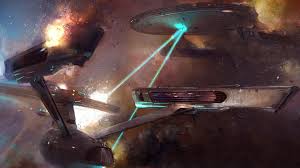 The instant a photon torpedo rents the hull of the USS Enterprise, the explosion ejects hapless crew members into the vacuum of space. Red and blue arms spiral over black booted legs into the ether.
It is always a haunting image that mixes death with vast emptiness.
And yet there are worse ways to go. Being hit by a bus or the ravages of a carcinoma seem much nastier.
Imagine the same scene on the Enterprise in super slow motion. In this version nano-seconds become months or even years. Now the torpedo is visible. It takes forever to deliver the inevitable, the fusilage opens without force and the air feels still rather than explodes. It takes a long while for the expression on the faces to change and the reality of consignment to cold emptiness doesn’t seem sink in at all.
You see we respond to real and present danger with fight, flight or freeze [the last one being a recently discovered ability of our brainstem]. These core instincts trigger when the scene plays in real-time, but slow it down and we just don’t feel the same. Our brain just says ‘get on with it already’ and finds something else to think about.
Now imagine that the developed world is the USS Enterprise. It has been hit by a photon torpedo. Disabled and defenseless, its contents fly into the depths of space. Only this is happening in super slow motion. So slowly that nobody has the attention span to notice. The crew are still blindly going about their business as usual.
We don’t see that there is no leadership, no options or ideas to deal with the situation, and no James T Kirk to save the day. It is all happening so slowly that there is no drama in it and nothing to hold our attention.
It is as though Kirk, Spock, McCoy, Uhura, Sulu and all the other members of the flight deck, right down to the unknown ensign, have all gone on the away team. The only ones left on the bridge are nameless crewmen who are ultimately anonymous and dispensable making ready for their cartwheeling exit.
We remember Lincoln, Kennedy, Churchill and their ilk because they were leaders. Few will remember modern politicians for they behave like the dispensable extras. Nothing is expected of them.
Our real problem is that we cannot speed up our scene. It is designed to play out slowly, far slower than our instincts can detect. Even the moderating effects of the limbic and frontal cortex of our brains that have helped us to slow things down, to plan and to think can’t see the rent coming. We cannot see the consequences of leadership loss ejecting us into the true emptiness of the universe.
And for this we must be eternally grateful. For if we knew what was coming it would be chaos as we are overtaken by fear. At least without leadership we can stay blissfully ignorant.
Thank goodness Kirk are still on an away team.
Inspiration
 Have you ever stared at a blank page and wondered how on earth you will ever fill it with words? Yes, it has happened to us all. Maybe it was a long time ago in the exam hall, or perhaps more recently in front of the computer as the icy cold keyboard repels your fingertips.
And yet blank pages are usually filled. Often with drivel, but the empty screen fills soon enough. Somehow we find something to say.
It is amazing how this happens. We dip into the recesses of our synapses and on an idea pops into being followed by words in some logical sequence to describe the thought. Blank transforms because our brains conjure up some meaning from somewhere.
Neuroscientists claim, as they feel their own blank pages, that this learned process is all about higher brain functions communicating with the more ancient limbic system in ways unique to humans. Something about our frontal cortex physically enveloping the base of the brain.
As maybe; only this time the inevitable mechanistic explanation sounds like an apology. Why not admit that we have no idea just how staring at a blank page can yield nothing, or a page of drivel, or on those very rare occasions a masterpiece.
There was a blank page before Shakespeare came up with “Shall I compare thee to a summer’s day?” Enough said.
After many decades trying to fill blank pages with drivel from technical reports to blog posts, I believe that the inspiration that finds the idea and sets the words in motion is with us all the time. A portal if you like that can connect us to all the ideas in the universe. Only we constantly forget where it is and how to open it.
Inevitably we find tricks to get around this amnesia. Reading related material, preferably of poor quality, often opens the portal for me, as does a tedious conference presentation. Something ego related happens when exposed to someone else’s drivel. It fires up my competitive instinct.
“You see,” says the neuroscientist. “It’s all about the limbic system.”
Touché.
Another trick I use, along with ignoring smartarses, is to find a place to write. A spot where there is nothing else to do or has been done other than fill the blank page. The first draft of ‘Fences’ an as yet unpublished novel was written long hand on the train. By the way if anyone wants to read a ripping yarn about Jacob Morafe’s adventures as an African game ranger, let me know. Someone has to be the first to read a future bestseller. It could be you.
But I digress. Any actions taken to help fill the page are just triggers to achieve the portal and you will have yours. It is the mystery of the muse.
And there you go. Before you know it another 500-word post has appeared on a blank page. Drivel or not, it is as much a necessity for those afflicted with the writing curse as the limbic system was for our early survival.
idea for healthy thinking
Is this portal, the mythical link to the inspirational power of the universe, just the moment when we connect with each other?
Drivel or masterpiece is only known by how much it connects with other people. Somehow the masterpieces resonate.
I like this idea. Wouldn’t it be amazing if this were to permeate all the fluff that fill screens and clogs printers every day. So instead of just covering up the white space of the page, we waited for the good stuff.
“Nice thought Mark, but tell that to the limbic system.”
Happy thinking.
Fun with flags
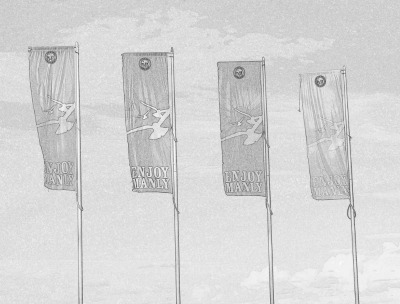 Would Nick Xenophon, the independent senator for South Australia, be in favour of scrapping the market economy? Perhaps he is.
Recently he teamed up with DLP senator for Victoria John Madigan to decry the deplorable situation that the Australian flag flying over commonwealth buildings might not be made in Australia. The senators are to introduce legislation to the Australian parliament that mandates all flags flown above government buildings be wholly produced in Australia.
But what if flags made in China are better quality and cheaper?
In a global economy it is smart to find the best value for money, not just because value makes sense, but because you also want the global economy to find value for money in Australian coal, iron ore, beef cattle, financial expertise and a whole raft of other goods and services. Or not.
Maybe instead we should be parochial and let everyone else buy globally. After all we have no need for a global economy purring along to everyone’s benefit thanks to buying and selling.
But hold on, fans of Big Bang Theory know there is something in the flag issue.
I reckon we should get Dr Sheldon Cooper to stand for election to the Australian parliament. He’s so popular that he’d be a shoe in and then we could get some real fun with flags.
And then I thought…
That the ABC radio news reported this nonsense is amazing; that I wrote a post about it is equally bizarre. That elected leaders don’t have better things to do with their time is a real worry.
Both sides of the coin
We are told that the universe is fond of opposites: black and white, ying and yang, United and City. And this week gave us a cracker.
In the UK the supermarket chain Asda had its corporate responsibility director come out with a climate change adaptation solution. He said “Businesses and other stakeholders in the food sector need to work with farmers and suppliers on water-related activities to ensure current and future demand for produce is met and to reduce their risk to supply-chain disruption.” Good PR speak as you might expect, only he went on to say, “We launched a water-trickle scheme for celery growers in Spain that provided a water-spray kit to farmers with the aim of ensuring a secure supply of product to our stores.”
Asda justified this largess because they believed that global food prices and supply would be affected by “dire droughts” around the world. Not to mention the floods in the UK.
In other words the retailer realized that farmers are critical to their business and although this sounds like a no brainer to a supermarket, it is surprising how modern complexity of the commodity markets makes it easy for them to forget.
And so on to the other side of the coin.
Coles, a similar sized food retailer in Australia, asked its suppliers for cash payments. Yes, they just went out and asked suppliers to pay for the privilege of having their commodities sold in Coles stores. Nominally these payments were to “to help pay for what it claimed was improvements to the supermarket’s supply chain”.
The competition watchdog got wind of this cheek and got upset. According to court documents Coles had a $30 million target from their supplies and had penned sales scripts to help their staff get on with it. We will wait and see if they get more than a wrist slap.
Now we could accept that the universe will always throw out some bad with the good on the celestial wind and let it land where it will. Apply this karmic logic to food supply in a commercial world and for every company with a vision there will be another out for a buck. Coles were just not in touch with the good bit.
Except that the world is looking at a doubling of food production by 2050 and I am not sure what the celestial balance makes of that.
Lost post | big challenges for carbon offsets
This is a lost post that languished as an unpublished draft for over a year. As with most things with any resemblance to climate change policy the comment remains relevant a year later…
The ‘elephant in the bathroom may have farted’ post tells us that the possibility we all knew was there — that market forces can go in both directions — now seems likely for the Australian carbon market.
At the end of the fixed price period in 2015, the carbon price in Australia may well be considerably less than $24. The new estimate is $10 per tCO2e, a shortfall that would deliver a $4 billion budget ouch on forward projections for the government.
Late last year the Australian government decided to remove the collar on the carbon price originally proposed for the 2015-18 period, presumably to allow alignment with the EU carbon market. It also allowes Australian companies to buy up to 50% of their permit requirement from international credits. This means that the domestic carbon price is more likely to track international markets, hence the potential permit price of $10 at the end of the fixed price period in 2015.
Not quite what is supposed to happen if the policy is to work, not least for the nascent offset market.
Here are three big consequences of $10 tCO2e for carbon offsets.
Big consequence #1 — few offset activities are viable at $9/tCO2e
When the permit price is low, then carbon credit prices will be lower still, around 10-15% usually. This makes sense because why go to the trouble of buying an offset credit if it is the same price as a permit? The only time you might is when you have some desire to commit a random act of kindness or to get PR advantage from the co-benefits that offset credits can bring. So usually credits are cheaper than permits.
Reminder of what offset credits are all about — short version is that credits can be generated from activities that abate, reduce emissions or sequester carbon into the landscape [e.g. capturing and burning landfill gas, growing trees on degraded land, managing manure from piggeries] so long as the activity complies with a several important carbon accounting rules
A $9 carbon credit will severely limit the number of offset activities that can be financially viable whilst still complying with all the rules.
In energy, infrastructure, waste and land based carbon projects it will be very hard to cover activity, transaction and opportunity costs of project implementation from a $9 tCO2e return.
Big consequence #2 — revenue from offsets do not go to Treasury
When projected revenue is halved the last thing a government would want is for emitters to buy offset credits instead of permits. Large-scale emitters will act rationally and buy offsets if they are cheaper only this money goes to the offset provider and not treasury. This makes the fiscal hole deeper.
There is also the significant risk that too many offsets could further deflate the price by increasing supply. This was probably the main, but rarely stated, reason for why REDD [reduced emissions from degradation and deforestation] mechanisms that generate credits from protection of tropical forests have not been embraced — too much credit volume further depresses the carbon price.
So we can expect government to be much less enthusiastic about offset credits, at least the complaint kind that can be exchanged for permits. They will, of course, continue to promote and talk up voluntary offset credits, the ones you might buy to offset a flight or a company might purchase in order to be carbon neutral.
It should be no surprise that, despite the fanfare, Australia’s domestic offset scheme called the CFI is taking a very long time to get going.
Big consequence #3 — not enough pain to change behaviour
Remember that the climate change policy that puts a price on carbon was all about reducing greenhouse gas emissions from human activities by making it increasingly more expensive for emitters to carry on emitting under business as usual. Create sufficient pain in the hip pocket and there will be a change in behavior.
Emitters will become more efficient, saving energy themselves, or pass the price on to consumers who will become more frugal. If it the price continues to rise and efficiency gains are exhausted then it pays to make more substantial shifts in behavior, mostly toward alternative energy sources.
At $9 tCO2e for an offset there is not enough pain to make the change.
May 2014 Postscript
See what I mean? A year on and offsets are still a pipe dream for all but a very few activities such as landfill gas capture that was already there anyway [so much for additionality].
And sometimes glacial pace of progress helps people forget the problem the policy was supposed to address.
Not good enough I say.
It will take hundreds of Al Gores or millions of ‘little people’ to overcome the political inertia on climate change

Journalist Darren Samuelsohn has quoted me in a question he put to the former Vice-President of the United States, Al Gore in a rare two-hour interview for Politico magazine.
Politico Magazine: During the “24-hour project” [a Gore-led October 2013 effort to raise awareness about climate change], there were a lot of critics who said it didn’t get the right message out, that you weren’t the best messenger, either. There was one response in particular that summed it up that came from Mike Shanahan, from the International Institute for the Environment and Development: “Climate change needs a Gandhi or a Martin Luther King or a Mandela and Al Gore is none of those.” What do you say when critics note that Al Gore as a person polarizes half the country; you need someone different to lead the cause?
Al Gore: It’s not about me. And I’ve never tried to…
View original post 420 more words
Barry O’Farrell resigns as NSW premier
So there we have it.
After 7 years as leader of the opposition waiting for his tilt at the top job, Barry O’Farrell lasted three years as premier. Forced to resign for misleading the Independent Commission Against Corruption because he obviously did receive a $3,000 bottle of wine as a ‘gift’ after all.
This is not what usually happens. In politics there are no lies, there is just being economical with the truth. Politicians usually spout so much waffle and fluff their comments can be cut down to one word without loss of meaning. Consequently a host of dodgy doings and ‘mistakes’ can be erased, buried or simply forgotten.
So why did he resign? Many a politician of every hue has survived much worse.
Clearly it is not about the wine. Or even that he claimed not to have received it. It is about a system that is the epitome of not what but who you know.
We all walk around blinkered thinking that the world is meritorious. We believe that the best athletes play professional sport for our team, the best singers are the ones we download, the best minds are employed to engineer better lifestyles for us, and that the best organisers run our commerce.
We also believe that we elect the best politicians to sit in parliament and make the laws that we live by — yes, believe it or not, politicians are elected to make the laws that we are expected to live by. Not only that, but we believe they do the right thing in selecting the help they need to run things.
Well they don’t.
Barry resigned because he stuffed up. And presumably because he is an honest sort of bloke, felt that the stuff up was irretrievable. Except that by resigning he also took the spotlight off the truth of the matter. The political system is about who and not what you know. People get the job and companies get the tender because they are known. And sometimes to get known you need to send out expensive bottles of wine. It is the way of things. It is not necessarily corrupt but it always comes close.
The premier resigned because he nearly exposed the system for what it is and always has been… dodgy.
 Alloporus