Lex parsimoniae

William-of-OckhamMore than 600 years ago William of Ockham is credited with inventing lex parsimonae, the law of parsimony. We know it as Ockham’s razor, the principle that where there are several hypotheses that predict equally well, the one with the fewest assumptions should be selected.

It serves as a useful rule because fewer assumptions mean less complex solutions and these are often preferable even when they make less reliable predictions.

You will also know the modern variant KISS — keep it simple stupid — that is wielded to stop us from wandering off to the never never lands of technical, logical and, dare I say, emotional complexity that so many of us find appealing.

I often wonder what William of Ockham who lived the life of a Franciscan friar in a time when witches were burnt and the life expectancy was closer to 30 than 50 would make of mobile phone neck.

What hypothesis might he have put forward to explain the epidemic of downward eyes and squashed chins? Prayer perhaps, certainly a simple explanation with few assumptions and a good fit to the behaviours of his day.

Collective deference would be an option, a mass display of respect to an unseen deity or perhaps in anticipation of a papal visit.

A sudden collective and consuming sadness from the realization that life was indeed hard and without hope of ripe old age.

It is impossible that he would have chosen the hypothesis that people are staring at a device that invisibly connects them to candy crush and tweets with such a force that they can no longer see the sky.

Clearly the razor must have context.

It works for the assumption set that is available at the time. In other words it is dependent on what is known. Friar Ockham had no idea that everyone would carry a mobile device or that they would be addicted to it to the exclusion of all others.

It remains true that the simplest explanation is usually correct. What is good to remember is that the truth, however simple, may not yet be known.
 

5 truths about happiness

natureAre you happy? Yes you are. Of course you are and why wouldn’t you be? You have the Internet.

At you fingertips is the portal to salves for all ailments, stimulation of all kinds, and even connection to a million Facebook friends. You have to be happy.

No, you’re not happy you say. Not even among the multitude of online joys?

Perhaps today you are sad, the necessary down day to balance he many ups. Everyone has them. Those days when no amount of downloadable bandwidth can shift the blues — not even a pirated episode of ‘Housewives of Toowoomba’.

And this is as it should be for happiness is transient. It cannot be permanent — not even when the government measures gross domestic happiness, as happens in Bhutan. Feeling sad sometimes is a necessity in our natural volatility of mood and feeling.

Perhaps we have to accept a few home truths about happiness. Here are 5 to start with:

#1 Happiness is transient

It comes to visit but never for too long, but we are fortunate because

#2 Happiness is present everywhere and in almost everything however torrid

Because it resides within us and all we have to do is express it, and yet

#3 Happiness elusive and slippery for most of us

and is smothered by our fear and this means that

#4 Happiness easier to find when you don’t look for it

because what that does is to calm the fear and allow more frequent expression of all emotions, and when all is done we find that

#5 Happiness is not life’s holy grail

Contentment.

Now that is something else altogether.

News travels fast

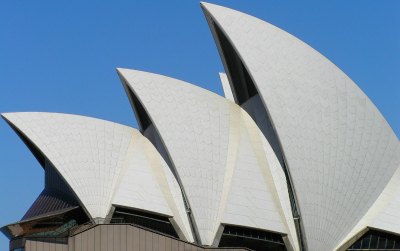
Sydney Opera HouseSome things in life are awful. Accidents can cut down anyone, even the most gifted. Illness and disability cannot discriminate. But when innocent people die from the violent act of another such as happen recently in Sydney and Paris, words fail us. We are left searching desperately for ways to console those most affected.

When the violence is intended to intimidate we also need to console ourselves. And we do. We support each other in the extreme times.

Ways are found from putting out cricket bats to pavements spontaneously full of flowers with the word spread far and wide through social media.

The good is rapidly mobilised to cancel out the bad.

Today everyone knows about the extreme events as they happen. We are so in touch that we feel close, almost part of the unfolding scene. Before long we are posting and commenting our thoughts and feelings. It is like a fire blanket thrown to suppress the flames.

And it works.

The recent siege in Sydney was a terrorist act but not about organised terrorism. The authorities figured this out quickly and refused to lay blame until they had more evidence. Experts came onto the television news and said the same thing reminding us that it is never smart to make assumptions. And so it was, for the perpetrator was not representing anyone but a disturbed self.

So when irresponsible media sensationalised for their own ends the blanket smothered them. We don’t want to assign any credit by association so those who did looked like chumps. Social media called them on their stupidity and shamed them for trying it on.

Hopefully they will learn. For today new travels fast and in crisis we are connected every which way. We can mobilise collective goodwill in the blink of a tweet and it is a powerful force.

The curious thing for a hyper-connected world is what will make the news. What will call up the soothing powers of the social blanket?

Tragic or shocking events should continue to ignite the response so long as they are local enough and not too frequent, for the blanket is likely to be fickle. The fourth of fifth coffee shop siege might not bring out the ire and goodwill. Would the public response towards ISIL be different if there had not been two major wars in Iraq already? I am not sure.

What I do know is that the issues that should awake the collective connectivity are not going to make the news; the Food & Agriculture Organisation conclusion that 40% of the world’s agricultural soils are degraded for example. Or another FAO prediction that world food production will need to double by 2050 but is currently growing at 1% per year. Do the math. We are 2% per annum shy with a declining resource base.

Forget the Sydney housing bubble. What about the average farm debt that is now over $2 million?

These diffuse and future issues will mean the blanket risks catching fire and disintegrating into ash before it is deployed.


Post comments. It can’t all make sense.


Pure genius #3 Milonga

Husbands take note. You will win many brownie points if you take your significant other to a show. The theatre is always good, a musical if that’s her thing, or, for the serious, performance dance.

Now the prospect of 90 minutes of wicked contortions is about as inspiring to us blokes as the footy is to the ladies, but wait. If the dance is the tango, the dancers seriously hot [male or female take your pick] and the music enthralling, then everyone wins.

We found such a performance in a Saddlers Wells production called Milonga, an exceptional and mesmerizing display of what the human body can create and convey.

Talent, sensuality and emotion combined into pure genius. Nice.

Here’s a snippet.

<iframe width=”560″ height=”315″ src=”https://www.youtube.com/embed/LILC2OlrJmg&#8221; frameborder=”0″ allowfullscreen>

The subtlety of risk

Driving in BotswanaMany years ago I lived in Botswana, a country with new wealth found in two large diamond mines. One benefit to the people of this windfall was a sudden increase in car ownership as anyone in regular employment could get a government backed car loan.

The car dealerships made bucket loads and road accidents skyrocketed. Alongside copious fender bending, the rate of deaths per kilometre driven rapidly became one of the highest in the world.

Although famed for its law-abiding populace, crime increased too. This included the ‘borrowing’ of vehicles for the lucrative markets for stolen cars and spare parts across the border. This meant that drive around for long enough and you would experience a ding with near certainty and pray loudly for nothing more serious.

Given these circumstances car owners who failed to take out insurance would seem negligent at best or more likely just plain dumb.

Except that premiums on comprehensive policies were exorbitant. Sensibly the government had created a third party safety net scheme using a premium charged on fuel purchases — in principle you could claim for someone else dinging you, but not theft or solitary misfortune. This combination brought out the risk appetite in car owners.

Many decided that money in the pocket was better than payment to mitigate something that might not happen and refused any commercial insurance policies. Stay lucky and you’ll be thousands better off.

Others couldn’t sleep at night knowing that if the dog failed to scare off thieves their car would be in Jo’berg by morning leaving them violated and broke. They paid the premium.

There were those that took the risk and rode their luck. And there were those that paid the premiums and were never visited in the night. For those less lucky the net benefits of insurance became apparent. Over time you would expect that more car owners would spend time on the phone with the Mumbai call centre and fork out the premiums.

I paid up of course but also remained lucky. Not even a claimable ding. A close friend chose to wing it and also avoided any car problems. Tragically and without warning he developed a tick on his face and died of a brain tumour within three months. Vale Gunther, I still miss our intellectual roughhousing.

This story is told many times over in one flavour or another. The human condition is a precarious balance of risk and opportunity that sees us trying to suck in peril and security in the same breath.

If we never took a risk the changing world would swallow us. And if we hadn’t forced some stability we wouldn’t have stayed still long enough to build culture and commerce.

So why mention this obvious requirement that we know humans have retained and exploited to the limit?

I have a hunch that we might be squeezing out the risk takers. There is no shortage of personal risk opportunity, especially for the agile. Youngsters can bungie, pill pop or train surf away youthful adrenaline. But the risk that decides on an insurance policy is different. It is subtler because it also holds some responsibility. It is framed in personal risk but there are consequences beyond me. And this more collective risk is what made us successful as a species.

The mastodon could easily trample early hunter, only there was a personal and collective benefit beyond the thrill. The first crops were sown to benefit the farmer and his family, and soon after the village. As the adrenaline fuelled courageous acts, the risk taking had a collective benefit.

I am not sure that we teach this subtlety of risk. And I am sure that we are squeezing it out of everyday life by making risk taking personal.

Post comments. It would be great to hear your ideas.


Fork in the road

Photo FOTR Gandalf Mines of MoriaIt is dark, damp and there is an eerie silence as Gandalf the Grey leads the fellowship into the Mines of Moria towards the Halls of Durin. Among the countless bends and criss-crossing paths he loses his way.

Gandalf stops at the entrance to two tunnels at a loss. Which way to go?

Must he lead into the blackness on the right or the blackness on the left? They cannot go back. The wizard must make a choice.

After a long time he decides on the one with the least noxious smell. He smiles and the fellowship quests on.

Gandalf was lucky. Not because he managed to choose correctly after using about as much logic as a coin toss, but because he had the choice to make.

It was tremendous good fortune to know that there was a fork in the road. And even though the choice was difficult and required a gamble no more sophisticated than a guess, a choice was made.

The real world can be a challenge too.

Sometimes on the freeway the voice from the satnav in the car tells me to keep right. It insists on me keeping right even though there are no exists or forks in the road. The only choice is to go straight ahead. This is especially disconcerting and feels worse than missing a real exit or a concealed entrance on a country lane.

Being told there is a fork where none exists does your head in.

When my GPS tells me to keep right when there is no right to keep it feels like have relinquished control of both outcome and process for no reason. All I can do is ignore the instruction and proceed with the only option the road offers me.

There are many stories of people who failed to ignore the sultry voice of the satnav and driven into a lake, so I suppose I did make a choice of sorts. I ignored the obvious software error.

All this is about control, that ubiquitous fundamental of the human condition. Gandalf had no idea about the correct route he made the call anyway because he had to. And even though the outcome was out of his control, the process of choosing was his to command. And like all true leaders he made the choice with conviction bringing his companions along with him.

I wonder though how many real and metaphorical forks in the road are taken without any serious choice. How often do we crawl, run or scream through life without thought for the consequences of not taking the left fork?

Clearly this cannot be retrospective. In life the forks are often once only options. Like the fellowship, the journey is forward and missed paths remain so. And just as Gandalf found, many of our own forks are a puzzle without a solution. We simply have no evidence or experience for how to decide.

Perhaps this is the point. It means that we must grasp what we do have, the process of choice. Be thankful for the ability to make a call even when we are not sure it’s the right one.

Health, wealth and happiness

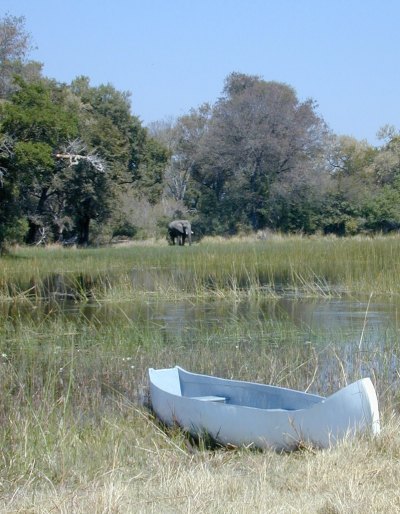
Okavango-BotswanaIn my lifetime the human population of the world has doubled and, according to the World Bank, global Gross Domestic Product has quadrupled to over $42 trillion. There are many more of us than there were and inequity remains rife but we are, on average, much wealthier. Some of us are twice as well off as folk in the less crowded days I toddled through in the early 1960’s.

Collective wealth translates to tangible benefits. For example, we live longer than we did. Mean life expectancy is well over 75 years now in most western economies thanks to better nutrition, health care and a two-thirds drop in infant mortality. Babies survive because we have better sanitation and primary health care and mothers are well nourished. And then that health care system helps us recover from sickness and keeps us going when our bodies begin to tire.

Despite the fear mongering and the real dangers in conflict hotspots around the world, on average, we are much safer than we were. Marauders, thieves and bullies still exist and yet we can mostly walk the streets and laneways more safety than our ancestors.

Then there are the material benefits. Today in the ‘west’ we shop more, consume more and enjoy a lifestyle that would be the envy of the average 1960’s family.

I can still remember the excitement of the ‘pop man’ delivering soda to Nanny Olive’s two up two down terrace in Staffordshire, a place near the heart of the engine that drove the industrial revolution. I used to take an empty bottle of soda from the wooden crate hidden in the pantry in both hands and hand it over in gleeful anticipation of a full one in return. Tell a kid today that soda should be a once a week treat and she will swear at you — just like this little tyke from the same part of the world who took the ice bucket challenge. Classic at just 2 years old.

Wherever you look today you can see people who are healthier and much wealthier than their predecessors.

I lived in Botswana for seven years in the early 1990’s. The country was booming on the back of diamonds with roads, housing, shops, schools and health care facilities springing up out of the Kalahari sand. The grandparents of the kids that were in my classes at the newly independent University of Botswana could not believe the changes. Just a few decades before the country was one of the poorest in Africa, frequently ravaged by drought and hunger.

The old folks complained of the excesses, the traffic and the loss of the old ways. But just about every Batswana today is healthier and wealthier than the elders in their family.

Or are they? After all health and wealth are relative.

Is a man with access to modern heart surgeons who reconfigure the plumbing of his arteries clogged by poor diet and lifestyle choices, healthier than the villager who dies from malaria after 40 years without an ache or pain?

Does the ability to buy a plasma TV that keeps me forever on the couch make me wealthier than the villager who spends much of his day walking through the bush to find food?

Does the extra longevity I gain from my modern health and wealth help me if I am so stressed that if I stop even for a moment my world will come crashing down?

The thing is we can never answer these questions.

We can speculate that happiness is found in the pleasure of gathering your own food as you are nurtured by nature. And that happiness exists in the closeness of village life with its allure of support from kin and kind, even if that village culture also brings genital mutilation, domestic violence and inter-tribal warfare.

Whilst we know that obesity, diabetes and cancer will not make us happy; we know that warmth, comfort, and food do. When pressed most of us would agree that the modern village has its benefits too.

And there is a hidden benefit. As a general rule healthier and wealthier people do live longer. So health and wealth give you more time to find and experience happiness.

What to do with grumpies

OLYMPUS DIGITAL CAMERAIf you are of a certain age you will be familiar with a lessening of capacities. The muscles ache a little more than they should, the hair is grey or gone and the boobs are sagging. And no, this is not sexist — just have a surreptitious gander at a few middle-aged men next time you’re about town.

For grumpies this is the time of life for reflection, a pondering of why time steals faculties. And for some it is a time of crisis.

Needless to say I plumped for crisis. What else would you expect from a wannabe writer and career risk taker? It is inevitable that once the energy of youth is spent there is little left to fuel the courage needed to absorb uncertainty. Almost overnight we want life to be simple, predictable and safe.

The time for dream chasing is replaced with rounds of golf and coffee after yoga class. But even this is not enough because the ego suddenly realises that it might not be needed if all you are going to do is relax and sip lattes. It rails at its impending redundancy and makes you feel like a failure.

Before you know it, sagging pecs are the least of your worries.

At this time in the world’s history the towns and cities of western economies are replete with people of this certain age. A quirk of demography, nutrition and the wonders of modern medicine have made it so. There are lots of folk pondering and trying to come to terms with their depleted courage.

Some of them are still in boardrooms and in parliament where they stumble onto decisions that reflect their mood and what got them there — the status quo. The time for radical risk and innovation is long passed for there is no courage left for such things. Instead the obvious is to conserve what we have by doing more of the same. After all, it worked didn’t it. At least that is what President Obama just told the State of the Union.

When you add up more of the same what you get is growth. More of everything got us here, so yet more of everything will see us through any crisis, personal or otherwise.

Does this mean we are addicted to growth? No, probably not. It means we are mentally lazy and lack courage. And these are two of the inevitable properties of a certain age. And being of that certain age myself, it freaks me out.

The obvious solution is to replace all the grumpies with newer models — energetic, courageous types with an idea or two and a spring in their step. Only this takes time for the system first makes youngsters jump through enough hoops to use up all their sprightliness. And if we fast tracked them they’d lack all the life experience that is an undeniable benefit of being a certain age.

No, the solution is this. Reenergise at least some of the grumpies with a dose of certainty. Give them permission to spend a decade at the end of their careers revisiting the ideas of their youth. Allow them to discuss way out notions and suggest possibilities without fear of persecution at the polls or on Facebook. Let them feel free to give it a go.

Who knows what will happen. It cannot be any worse that the leadership vacuum we are in.

Pure genius #2 | George Bailey

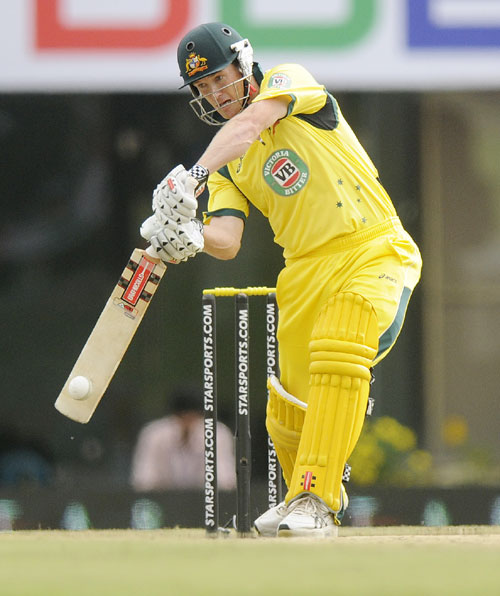
GeorgeBailey23cric4You don’t need to be a cricket tragic to get this one but it might help.

George Bailey is a professional cricketer made captain of Australia’s T20 side in 2014 and promoted to bat at six in the test team. Most pundits thought he probably wouldn’t cut it in the longer form of the game thanks to a tendency to dangle the bat outside the off stump in a rather English fashion [enough said].

So this moment of genius is as much about the circumstance as it is about the quite common event of a gifted athlete achieving near perfection in a sporting contest.

The moment was in the second T20I game against England last year. Australia had performed heroics in the field, diving and sliding their way to restricting the english to a modest total. Australia cruised in the chase thanks mainly to brisk work by Shaun Marsh [another prone to random bouts of genius] when a couple of wickets fell bringing Bailey to the crease.

A few defensive prods, some deflections and even a dangle or two outside off was as expected. Then a couple of bigger hits, one into the midst of the inebriated 10 rows back.

As the commentary team flagrantly warmed to another Australian showing the English what for, the moment came.

A packed offside field and a good length ball delivered at respectable pace, all normal enough. Except Bailey smoked the ball along the ground so fast that nobody moved until it hit the boundary rope, threading the path of the ball with precision between the fielders posted to stop that very shot.

When I was 15-year-old school kid I saw an english cricketer Derek Randall do the same thing at the Oval in London, an image I will never forget. It is such a thing of beauty when timing is combined so effortlessly with intent that the result happens before anyone can move.

Bailey did it and others do it on occasion and I thank them with spontaneous applause from the couch.

Pancakes

banana pancakes Back in the day some genetic conditioning had me realize that “he who provides will find a mate” a confused confusion if ever I heard one.

So I learnt to cook.

Not to the Masterchef skill level but enough to hopefully impress the ladies. I can remember a few horribly lame attempts in the early days — meat and two veg is never going to cut it. And then I discovered pancakes.

Now we are not talking about the sickly sweet variety that begins life as powder in plastic bottles on supermarket shelves.

These are proper pancakes with whole meal flour, eggs, a dash of milk and a layer of lightly stewed apples with just a little too much cinnamon. Topped with real maple syrup this works a treat, as my beautiful wife will attest.

After more than a decade of happy togetherness I am still grateful to the whole meal pancake.

Then a problem emerged when a year ago we made a family decision to give up eating wheat. Well almost because I challenge anyone to give up pasta made at home by an Italian.

Once in a blue moon a home-made pizza also makes it onto the dinner table but bread has gone the way of pastries and other commercial grain products. We pass on any processed foods with flour.

It is remarkable what a difference that decision has made to our health and, dare I say, wellbeing. And that is a big call from a crusty bread and jam addict.

It is also remarkable how restrictive it is being truly wheat free when out and about. I have often stared at the display cabinet in a café and failed to find anything that I could order.

But I digress. Back to pancakes.

Was it too much to also give away that small but significant token of affection? Of course it was for it is not the cooking that matters at all. It is all about the action of providing food from a loving place.

So I needed an alternative to the whole-wheat delights and found it in a fruit.

Banana pancakes

Yes, banana pancakes. They are  truly worthy and although the recipe is modest there is enough technique to demonstrate that you really do care.

  • 4 bananas [green tinged skin are ideal as you need firm flesh]
  • 2 eggs
  • 2 generous tablespoons of almond meal
  • half a teaspoon of baking powder
  • coconut oil
  • berries
  • maple syrup

Here is what you do

Add everything to a big bowl and blend with a stick mixer until you can get a lava like consistency to the mixture. There is no risk of over doing it.

While this is going on put the heat under the biggest and baddest non-stick fry pan you own. Not too much heat though. The trick to the banana pancake is long and slow for they are usually thick, more a pikelet than a pancake, and too much heat produces burnt mush.

The other secret weapon is coconut oil. You can use the spray can version but the solid stuff that comes in a jar is best

Let about half a teaspoon melt in the pan and spread it with a spatula.

Now add the pancake mixture one tablespoon at a time with space between the blobs.

They are ready to turn when a shake of the pan sees at least one of them moving.

Flip with said spatula for any attempt to impress with fry pan dexterity will end badly.

Serve on a big platter topped with berries of your choice — blueberries for the sweeter tooth and raspberries for those who prefer the tart taste.

Have plenty of real maple syrup to hand and present with two spoons. Eat directly from the platter remembering that although you are the bloke, under no circumstances eat more than half the pancakes.

This is such a winner that it may even be better than the original cinnamon-apple version.

formerly banana pancakes s

Minions will love it too.