Joel

Joel


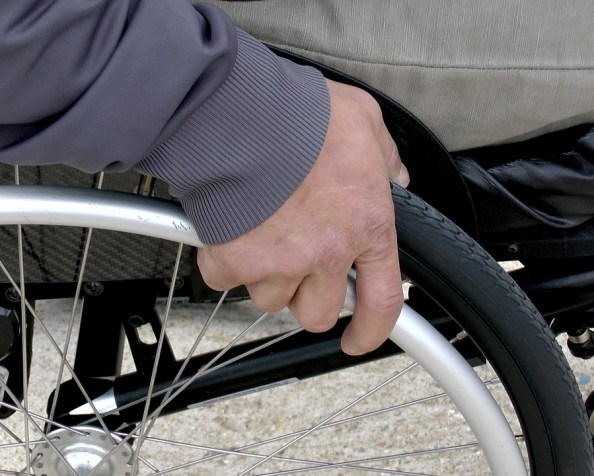
Joel has been in a wheelchair all his life. He is 32 years old and his parents have looked after him since he was born. They are worn out.

It is impossible to know how they feel about Joel.

He is their son who requires their attention for just about everything he does. They have been there for 11,680 days of dressing, showering and bowel movements. Between these days they didn’t sleep through on half the nights.

This is not a normal life.

Joel not only has physical disabilities he has mental issues too.

He couldn’t learn to speak and, according to numerous psych analyses, is not aware of where or who he is. Yet he seems to know what he likes and he gets scared and upset, even if very few people can tell the difference. The best care can see Joel comfortable and safe but no one knows if he is content.

Who speaks for Joel?

He is of legal age with an identity yet he cannot sign or speak his own name. He thinks for there are responses to likes and dislikes but no obvious capacity to discern. His smiles and cries and shouts are unfathomable to all but his parents and his sister. Often even they are not sure what he wants or what he means.

Those with a normal life cannot know how Joel feels or thinks.

His parents want to speak for Joel. They have provided his care, sacrificed much to be there for him and know him better than anyone, perhaps more than Joel knows himself. In the world of the rational they could, perhaps should, be his voice and decide what is best.

It just happens that Joel is aware of his sexuality. Whatever wiring his brain missed it developed the signals for procreation. He cannot speak his desires but   Joel obviously likes girls, especially the good-looking ones.

His parents see this. On occasion, it embarrasses them.

Only they believe sex is reserved for marriage and they cannot see Joel being married to anyone. It is silly to even think of it.

They do not even consider that Joel might want to have sex. Nor do they see that this fundamental human experience is what Joel the person might desire and even deserve.

However kind and dedicated they are, on the matter of sex Joel’s parents are clouded by their own preconceptions. They cannot truly speak for him.

It is likely that Joel will be denied any sexual encounters his whole life. His parents have a right to their worldview and are unlikely to change what they think about sex before marriage. They are also unlikely to change their devotion to Joel and his care.

There is an inevitable compromise in meeting Joel’s dependency. At some level, the caregiver decides and Joel must lose his voice.

It is a truly wicked conundrum.


Better than most

Better than most

Ask anyone about his or her level of driving ability and they will all say it is above average. This is, of course, true. When it comes to driving ability all rules of statistics become lies.

I consider myself above average. In my head, I am better than most. Not the best in the world of course. There are some people out there better than me but I like to think that I’m not the idiot merging without looking.

My problem is that this ‘better than average’ thinking applies across the board. It creates a kind of swagger, a confidence that is a boon in the modern world. Indeed if my predominant mindset was of inferiority I feel I’d be the one getting mugged. This ‘be the best or if not then better’ is so ingrained that I no longer realize what a powerful paradigm it is, until today.

This morning I awoke with exhaustion. Not the tired kind but the emotionally and physically drained feeling that screams stop, you must have a long rest.

A month of hard work, a greater than usual level of uncertainty that plagues all self-employed consultants, and a certain time of life combined in earnest. At least that would be the logical, dare I say above average, explanation. Only yesterday something happened to me.

I went for a job interview.

Yes, it was bizarre. It has been a very long time since I sat on the wrong, below average, side of the table. And I didn’t mind it at all. In fact, I quite like interviews. There is something about the required nimbleness of thought and speech that I find stimulating, enjoyable even. So the process was not a problem at all.

The generic questions were as crazy as you would expect from HR hacks with no idea of what the job entails, but the interview panel members had expert knowledge and duly nodded at my answers and laughed at my quips. Most importantly they seemed to know what they were doing.

All went well and I proceeded to a task. Apparently, a lifetime of science writing was not enough evidence of my skillset and I had to complete an on the clock summary of a 15 page brochure in words suitable for a web page in 30 minutes. Just follow the process I said to myself as I read the task description.

“Who is the web page for?” I asked without thinking, as nothing in the description hinted at the target audience.

“What message do you need to get across?” I said again without thinking even though that was not in the task description either.

I was, of course, responding to a below average set of instructions. Not particularly significant until I tell you that much of the interview I’d just completed involved several questions, answers and head nodding about the importance of getting the question right. No amount of information gathering and communication of evidence makes any sense unless you know who and what it is all for, I had said. Naturally, it is essential to iterate the Q&A to hone in on the critical needs. The panel seemed to enthusiastically agree.

In my above average head, all I was doing right now was the process I had described to unanimous agreement a few minutes before.

The chair of the interview panel stood next to me staring at the task description. He was the boss but he had no answers to my questions.

If he had said, “Just complete the task please” I would have shrugged and got on with it. After all, I was just processing out loud.

Instead, he visibly cowered, mumbled something about not knowing what was needed, and shuffled away.

“Good example of the iteration process,” I said firmly, harking back to my answer in the interview.

It was stupid I know.

A more empathic person would have recognized the body language as an expression of awkwardness, dare I say a slight inadequacy, and smiled warmly. They would have ceased questioning and simply got on with it.

Some might even have suspected a ruse and not been had by the psychoanalyst’s tricks. The task was of course designed to see how much candidates are prepared to suck up.

I did not suck anything. In one short sentence, I called it out. The walk did not match the talk and I said so — fearless and in this context reckless.

Needless to say, I did not get the job but I did learn a great deal.

I learned to never give up my better than average expectation. It can be a nuisance and at times a liability but keeping to the highest possible standards is a good thing. Trying and expecting above average is noble.

I learned that, ruse or not, you need to give people clear and precise instructions whatever the task.

I learned that you should expect that everyone who is your work superior be good at their job even though there is a chance of them being below average at it.

And I learned that in the world where statistical rules do apply, each and every day I will meet people better than average and below average at what they do. It is a fact.

So if I keep expecting the best, at least half the time I will not be disappointed.

And we’re back

And we’re back

As you know Alloporus has been down for a few months, mentally and electronically. Now, suitably rested, ‘ideas for healthy thinking’ is back.

I’m not sure what will come up in this reboot because during the break some competition for the ideas bandwidth has emerged.

Over at afterbefore we have an updated site that includes a new blog with thoughts on the future of agriculture. Feel free to add comments on our 10 big things we need for global food security.

Alloporus environmental is also getting a new site that will feature posts on natural resources and evidence. More on that one soon

Explanations of how to use evidence have continued on LinkedIn with a series of posts for the professional audience.

I’m guessing that this blog will become more commentary than content and maybe a little clogged with cross-postings.

If you get bored, there is always the archive or a binge watch on Netflix.

May the thoughts be with you

M

Hiatus

There are times in life when even great enthusiasm, intent and tenacity are not quite enough.

This is not what we are told of course. Mostly we are assured that we can. Just keep at it and your dreams will come true, whatever they may be.

No doubt this is a crucial message for the young faced with uncertainty about their personal and the global future. Otherwise it would be too easy for them to lapse into self-fulfilling failure.

Yet at a certain time of life “yes we can” rings hollow, like a huge resonating bell without a hammer to ring it. Before you realise it ‘maybe we can’t’ seems so much more plausible given a lifetime of evidence.

Rather than burden others with this negativity, Alloporus is taking a break for a while… at least six months is recommended.

A huge thanks to the kind souls who do occasional read the thoughts on this blog. It is good to know that even one person reads what was written.

Till next time.

Born again

Sometimes I wish for a flash of bright light and a sudden awakening of the soul.

It would be such a relief to be born again.

In an instant all the reality of the world would fall away into the arms of blind faith.

So far I remain far too cynical for a sortie down the road to Damascus but the prospect has immense appeal. It is not the redemption that promises rewards. Not even the ability to reset the moral clock at the end of each day with a few choice prayers for forgiveness. It is the prospect of abdication.

Just think…

No more thinking.

No more need to sift the evidence and no matter how it’s diced, find that it scares you shitless.

No more worry about how on earth the global system persists when really it should have already collapsed under the weight of human need and greed.

No more moral dilemmas because good and evil takes care of that.

Oh the bliss.

Pass me the hymnbook.

Disappointment

At the moment you realise, optimism and anticipation instantly gives way to shock and sadness. You want to punch, cry and curl up into a ball whilst spewing forth an almighty howl.

The hope you imagined is no longer possible. The prospect of wonder dashed onto the rocks. You feel cheated and sad at the same time.

Before long grief at the loss of anticipation rasps at the throat and anger erupts at hope’s sudden departure.

So much goes on that all you can feel is the knot in your stomach and a body about to burst.

You are disappointed.

Disappointment is such an ugly word, full of sharp edges and too many syllables. Somehow single syllable feelings: love, joy, sad and fear are truly simple by comparison.

Built like a saw to describe convoluted emotions it may be one of the most painful words around.

Of course there are things that are only mildly disappointing.

A poor performance by your favourite soccer team or rain on the day of the cricket can trigger the emotion to appear but never for very long. A quick rant with your mates at the referee and it passes. Such mild episodes also leave little behind.

When you feel let down on important matters then the feelings are not so easy to banish. The visceral response from your limbic system will pass as life moves you on but there is a legacy. The saw leaves emotional scars across your once smooth fabric.

Partners, true friends and family are the most acute source of these bigger events. Not when they rile or frustrate you but when your vision of them is shattered. The best person can never live up to your expectations for or of them. Soon enough they falter and you are wounded and sometimes the gash is fatal.

Disappointment.

Confidence

Blinded by the disbelief of another prime minister sworn in on the back of 54 party room votes I almost missed the real political change last week. After 5 attempts in as many years Australia has an optimist in charge.

Once the claimer of moral heights Kevin Rudd capitulated over climate policy and we realised that he could get things done for Kevin but not for everyone else, Australians have been led by negativity. Julia Gillard tried her best to be positive but the bloodied knife she carried was just too heavy for progress to prevail. Then she was knifed too.

Mr Abbott who squeaked past Mr Turnbull in 2009 by one vote to become party leader is supposed to be a nice guy. He works for charity on his time off and is loyal to a fault but every phrase he uttered in the top job came from a place of fear.

Stop can be a positive word but from Tony Abbot it was never really clear why things had to stop. They just had to. Anything that should be positive —more jobs, more growth, less deficit — came across as a justification. As if proof were always needed that the government was doing well, when they were just scared.

Then yesterday for the first time in many a year a prime minister of Australia stood up at parliamentary question time and said that the country has a great opportunity and that times are exciting for the nation. Mr Turnbull was positive. He almost led a rendition of ‘yes we can’ and it felt like he wanted to.

This is momentous.

If he can keep it going, and admittedly that is a big if, we could see some confidence return. We might actually join the many other countries with far worse economic outlooks and social challenges than Australia who are finding solutions because of a belief in the best of their people.

As a social centrist myself I would rather this breath of fresh air to have come from the left side of politics. Mr Turnbull may look trendy but he is still a brown. But the labour party are mired in their own brand of negativity that cannot hide the fact that they spend too much time playing with knives.

So instead I will take Mr Turnbull at his word for confidence has great power to do good. And we really need that.

Fear or morality

I recently watched a documentary on the rise of ISIS.

It was shocking. The graphic footage of bloodlust was visceral and brutal.

How can a man place a gun to the back of the head of another bound and helpless in the dirt, and pull the trigger? How could he? He is a human being and I am a human being.

Instant fear.

Not for the prospect of being the victim but for being the perpetrator. There but for the grace of god anyone goes.

Fear that such moral depravity is possible, that we are capable of inflicting such pain on ourselves. For the pain is held by the living not the helpless victim. His is, at least, short-lived.

This horror is not to make people scared. Instead this was domination through callous and morally bankrupt behaviours.

But it was scary to see what a man is capable of doing to a countryman who follows the same religion, just not the right variety.

These killings are Illegal acts under any civilised legal code even those that apply when countries are at war. Killing in cold blood is and always should be criminal however it might be dressed.

And yet what to do about it presents a huge moral challenge.

Standing back and pretending it is only an internal problem condemns the victims and effectively condones the actions. Stepping in with guns blazing did not work the first (or the second) time, so who can say it would this time.

Military aircraft are something of a compromise at least strategically and politically. I am not sure where it leaves our morals for how far from the gun to the back of the head is the red button that releases the air to ground missile?

The most worrying of all was footage of ISIS flags flying atop American tanks and armoured vehicles so brand spanking new they didn’t have a scratch — hardware acquired when the Iraqi army forces were overrun. Now the bloodshed is aided by equipment sold for profit.

No matter how they were acquired, that is moral depravity too.

So next time the media try to frighten you with the prospects of terrorism in your hometown or the government comes across so proud to make a big deal of apprehending a handful of alleged recruits at the airport, have a think.

Just imagine an American tank rolling through a conquered city draped in a black flag.

This is the real deal and I don’t know if we are up to tackling it.

Greenwash or not…

Check out this glossy video from Conservation International

Interesting message isn’t it.

Nature doesn’t need us folks, but we really need her. In fact we will die unless we pay attention. Nature will persist whatever we throw at her for she can adapt and evolve.

Even a nuclear holocaust would see some microbes survive and allow nature to resume her business of converting energy and nutrients into biology.

Now this is quite a shift for most conservationists. Their usual message is preservation and protection. Save the rhino, that specific one right there on the savanna, and not just rhinos in general. The admission that nature doesn’t care if there is a rhino or not is heresy.

When I mention similar things to conservationists I usually get my head bitten off — Awkward News for Greenies was not a best seller.

Just recently I pointed out to a gentleman that whilst I could agree that we are in a mass extinction event, nature sees these all the time — at least six big ones in geological history — and yet she manages to come back with more diversity than before. The current mass extinction began with more species on the planet than ever.

More significantly, nature really does not care about how many species are lost. She will meander along providing a space for evolution to work its magic and create new species to replace those that go extinct. Admittedly that takes time, but it will happen.

He was not happy at all with that.

So why would Conservation International get in some famous voices and throw a bunch of money at slick presentations of this message?

There are similar Conservation International pieces on oceans, water, soil and Robert Redford as a redwood

The message is similar in all of them. We can do what we like and nature couldn’t care less. But rape and pillage her and we are the ones in trouble.

Clearly Conservation International are trying to say it is all about us. About people and the choices we make. Watch all these pieces in sequence and you will start to feel just a little guilty, maybe a lot guilty.

That is an interesting tack. Hone in on emotions and personal integrity. Imply that it is personal responsibility, or our lack of it, that will determine our collective future.

And they are right.

Ultimately patterns of resource use, levels of pollution, biodiversity loss, and a host of specific environmental issues are the collective effect of individual decisions people make.

Only they are forgetting one crucial thing. Do we actually have a choice?

In the economic system that we live under it is very hard to choose integrity and live in the system. Go off grid and grow your own might work for some, but there is nowhere near enough space for us all to do it. Use less, buy less and only what you need is possible but again it is hard not to leave a hefty footprint even from modest consumption — take one plane ride and you have just about shot your embedded energy quotient.

And what of the billion or so people who live in poverty, they actually need more resources not less. The billion rich folk could give up a lot but the net resource use wouldn’t go down that much.

Pause for a moment and think greenwash — the talking up of an activity to claim environmental or green credentials when in reality there is none.

This message could just be the ultimate greenwash, a brilliant ruse by corporations to externalize their impacts by shifting their responsibility onto individuals. It is the customer’s fault.

Sorry Ms Roberts, I don’t buy it.