Five percent

Five percent

What is 5%?

Well apart from being a proportion, here are a few things.

  • 5% is one in twenty
  • 5% is an arbitrary threshold value considered significant in statistical analyses
  • 5% is half the current rate of GST in Australia
  • 5% is a pay rise almost worth having
  • 5% is less than the percentage increase in US military spend under the Trump administration

5% is quite the conundrum. It is not very big and yet it can be big enough to be noticed. You would not want food prices to increase by 5% but they have, roughly every two years or so in most mature economies.

You’d like a 5% pay rise over no pay rise at all but in the US rust belt, many workers have waited over a decade to get it, only for it not to really matter that much.

It seems that 5% is an awkward, niggly kind of proportion. Always a bit on the cusp of significance — one in twenty is surely just chance. Give me one in a hundred and I’m listening.

The other day a friend of mine, also a fellow science nerd, told me that 5% of the hip pocket dollar is spent on the environment.

One in twenty of the dollars in the average wallet ends up as an environmental expenditure.

Now this bald statement that could take a bit of unpacking. What’s in the hip pocket? What is the environment in this context? Would the 5% spend include food or the council waste levy or just donations to the WWF?

In most of the developed world food counts for around 8% of household spend. There is an environmental levy in my own local council but I pay that in my rates, part of my tax spend. And my hip pocket has a whole heap of unavoidable bills from utilities to the mortgage.

We could be here all day figuring it out, so let’s just say that, on average, people spend 5% of their after-tax dollar on something environmental.

That’s $5 for every $100 that arrives in their bank account, at their discretion.

So is this enough? Is it significant?

People die if they don’t eat and have access to clean water. They need somewhere safe to stay and the opportunity to build a meaningful life with some fun in it. These primary needs would use up most of the $100, most of the time.

Add in the inevitable unexpected cost when the boiler bursts, the roof leaks or a family member needs hospital care and there may rarely be 5% left over.

$5 is significant if the cost of living has already allocated the contents of your hip pocket to the necessities of life.

This is where the thought usually stops.

The cost of living is unavoidable. If it eats up all you can earn, then the environment is not even a thought.

Only think a little longer. The environment is where the food, clean water, timber for the house, sand for the mortar, clean air, space for fun, among many other key necessities comes from.

Ignore the environment and it is used up, polluted and dysfunctional for these key goods and services.

Fail to pay anything for these things and they stop.

We should be very scared that we spend only 5% for there is no point in investing in ourselves if the foundation for many of the vital things we need is eroding away beneath us.

Really poor leadership

Really poor leadership

Direct action on climate change is costing the Australian taxpayer over $2 billion to achieve around 177 million tCO2e or one years worth of abatement to meet the emission reduction target Australia presented in Paris.

A few people are being paid a lot of money (more than double the global market rate) to generate abatement while emitters continue to externalise their contribution to a warming world.

Policy that is in the interest of a few and the detriment of most is not good policy whatever your political leanings. Direct action is even worse because the government of the day is not committed to climate action at all. And instead of owning this position, they pay a sop to the voters, pretending to do something that is actually a way to line the pockets of a few.

The painful satire from Ross Gittings that sums up just how stupid modern politics has become tells us just how pathetic our political leadership is. And for once there is no mention of The Donald.

When something is really bad it does not tend to persist. This is true of really good things too because there is a regression to the mean in most things. The average eventually reasserts itself.

This will happen to our current leaders and perhaps to the current political system. Parliamentarians and those feeding off them should be worried.

Claiming coal is the answer in a record-breaking countrywide heatwave is as stupid as it looks. Everyone can see it.

Soon they will also see that many other policies, such as the ERF, are useless and unfair.

Disruption is at hand.


The lily pad puzzle

The lily pad puzzle

Imagine a small pond that has clear blue water reflecting the summer sky.

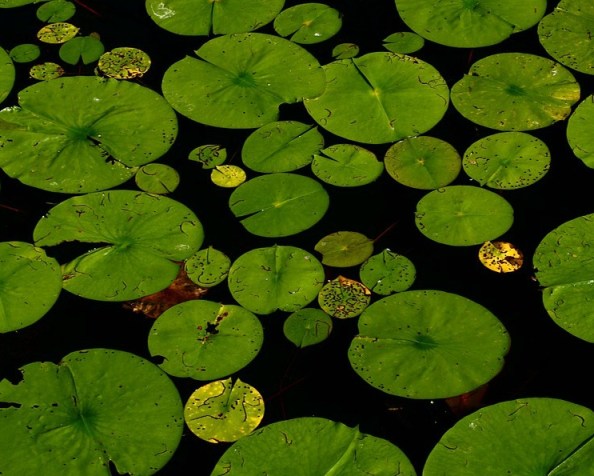
In the centre of the pond are two lily pads, the emergent leaves of an aquatic plant, floating safely on the surface of the water, curled up edges keeping the surface of the leaf dry.

On one pad is a green frog.

The frog is hard to pick out on the green of the leaf but a yellow stripe on its back gives it away.

Chance happens that a week later you pass by the same pond and stop to admire the scene. Sure enough, the frog is still there only you notice that there are now four lily pads; the number of leaves has doubled. In a week the frog has gained surface real estate.

A week later you happen to pass by the pond again and even before you spot the frog you see that there are now eight lily pads. These aquatic plants are quite prolific.

You have to go away for a while and forget the frog and his growing number of Lilypads. A few months pass. Delighted to return home you saunter by the pond again. The first thing you see is that the pond is now mostly green as half of it is covered with lily pads and rather less of the blue sky is reflected in the water.

Sure enough the frog is still sitting proud in the middle.

The puzzle question is this.

How many more weeks until the pond is completely covered with lily pads and the frog can hop to shore without getting wet?

The lily pad puzzle answer is…

One week.

When the pond is half covered with lily pads and they are doubling every week, the pond will go from being half covered to totally covered in just one week. It is the reality of doubling.

Two to four seems like nothing much. Four to eight is mostly trivial too. But when the number is large and the doubling time short, then it is a different thing.

3,500,000,000 is a large number.

It happens to be the number of people on earth in 1967 just 44 years ago. Since then the human population has doubled to 7,000,000,000 (7 billion).

Unlike the pond, we cannot make the Earth any bigger than it already is. So we must hope that should the population double again, there is space enough.

The cute animal postscript

Hans Rosling explains why the human population is unlikely to double again. There are demographics at play that will see family size decline as kids survive better in poorer countries and most of the world passes through the demographic transition.

But 12 billion people is a distinct possibility.

If this is leadership, heaven help us

If this is leadership, heaven help us

At various times I have ranted about the politics of climate change in Australia

The climate change action thing

Climate change policy – does Australia need it?

The Kardashian Index

And I am not alone. Many are tearing out what remains of their hair.

So I thought I would bring to your attention the latest from the current direct action policy option in place in Australia. This is the policy setting that hopes to achieve emission reduction targets through the purchase of greenhouse gas abatement at auctions.

At the end of 2016 the vehicle for this, the Emission Reduction Fund, had paid for 177 million tCO2e of abatement purchased across four auctions at an average price of $12 per tCO2e.

Yes, you read it right. Close to $2 billion, that is $2,000,000,000 or roughly enough to pay the annual salary of 100 cabinet ministers for over 50 years, has been spent to purchase roughly the amount of abatement needed to meet the emission reduction target Australia presented in Paris… for one year.

Let’s make this clear. Emitters of carbon are not paying for this abatement, the taxpayer is.

Now you could be generous and say that the taxpayer is really the economy, so the economy is footing the bill, but that is a very long bow. Industries that were previously under the carbon price and reducing their emissions to save money are not anymore. Instead, various activities from other players in the economy are offered to reduce emissions or to capture carbon into vegetation and the CO2e tonnage presented for sale.

The concept of ‘polluter pays’ that has been so successful in a host of situations, from cleaning up rivers to closing the hole in ozone layer, is not in play here. Polluters carry on polluting as they merrily pass on the externality to the taxpayer.

This is neither good policy nor good governance.

There is no incentive to reduce emissions across the economy only an opportunity for a few to make a fast buck if they have access to some abatement.

At current prices, $2 billion will buy you 400 million tCO2e of offset credit on the international markets, nearly 2.5 times the local option. So not only does the policy fail to incentivise prudence, it pays way over the top for mitigation.

You cannot help think that a few people are laughing all the way to the bank.

What predators do

What predators do

I have just seen a wildlife documentary where eco-tourists out whale watching in Monterey Bay had the experience of a lifetime.

They were on the water hoping to catch a glimpse of migrating grey whales, mostly mothers and calves as they journey along the coast to feeding grounds in the Arctic. Only on this particular day, and for the mother and calf they happened to be watching, the laws of nature were graphically applied.

As the tourists stared on in boats tens of meters from the migrating family a pod of killer whales arrived and began to harass, circle and ram to try and separate the calf from the mother.

This is, of course, what predators do. They predate. Usually on the individual that is easiest to catch or subdue thus giving them a meal that keeps them alive at the lowest risk to their own safety.

On the plains of Africa, lions, wild dogs and hyenas will single out the weakest of the grazing herd – why make things any harder than they already are? Chase down predators, as opposed to those that sit and wait, will benefit from making the chase as easy as possible.

The orcas were persistent. Injuries to the calf steadily accumulated and blood became visible in the water, the reality of the event dawning on the faces of the watchers. For the television audience, the narrator embellishes the visuals with “the calf was being eaten alive”.

Marine scientists, who later analysed footage of the event, observed that it was the younger orcas that took the most active roles in the attack whilst the adult animals held back. “Teaching the youngsters how to hunt”, they concluded – or perhaps leaving the dangerous work to the more agile individuals.

The scientists also concluded that this was “not usual behaviour” or “if it is what orcas do, then we have not observed it” and “maybe it was because of the high numbers of grey whales in the bay at the time”. Or maybe, like the lions, hyenas and wild dogs of Africa, predators rarely pass up an opportunity for lean times are more common than times of plenty.

Whatever the reason, the attack was a prolonged event lasting several hours.

Time enough for the storyline with a happy human ending that is so essential to the modern wildlife movie, as “against all the odds” the grey whales swam towards the shore, reached shallower water and the orcas broke off.

No-one could follow the calf to see if it survived its injuries but the looks on the faces of the tourists interviewed for the documentary left the audience in no doubt. Of course it had survived for the sake of all things decent.

The responses of the eyewitnesses were most intriguing. They went to see nature in the wild where wild things happen by definition, yet they were all shocked, not quite able to accept that wildness includes violence and death. Perhaps if the calf had died quickly and became the meal the orca pod was after the onlookers would have been more accepting of the cycle of life.

Instead, the escape and inevitable pain was, for many, too much. The people were visibly affected.

No doubt a few of them went home to enjoy a t-bone steak.

Subsistence

Lately Conservation International have been asking us all to adopt greater personal responsibility toward nature, because mother nature couldn’t care less about us.

Here is their logic


Fair enough. After all there is evidence for this argument. The previous five mass extinctions saw nature come back bigger and more diverse than before. And in time she will again after the current human-induced one.

Meantime there is a snag in the present.

Around half the people on earth grow most of their own food. These are not the new age Nancy types jumping off the grid or the allotment owners escaping their nagging spouses. We are talking about real life people from Bengal to Benin who have few job opportunities, little money, and no choice but to live off the land.

And today there are over 3 billion of them. That’s more than the entire human population in 1950.

These resourceful people perform miracles on tiny parcels of land. Yams, cassava, peanuts, plantains, rice and the like are tended with the care that comes from nurturing your future dinner. Multiple crops are rotated and intermingled to make the most of the soil reserves and to thwart pests and pathogens.

In some places this form of production is fairly secure. It rains enough onto soils that can give and retain nutrients. And with care families can survive on tiny parcels of land for a long time, often for many generations.

Elsewhere no amount of care can prevent soil depletion. And without money for inputs yields decline or become unreliable. Eventually the soil is exhausted and the farmer has to move to pastures new. This is shifting agriculture and it requires an important thing. It needs land.

If your soil is depleted and fails to grow enough food for your family what choice do you have but to move on.

Many move to the cities or send their youngsters in search of a fiscal solution so no surprise that urban populations are expanding. Even a modern city like Sydney is growing at 2,000 people per week. Meantime Lagos, Nigeria has reached 21 million.

Those left behind must either wait for newly urbanised family members to send funds or find a new patch of land to grow some food.

And this is where the Conservation International message of personal responsibility hits a snag. If half the people in the world will need new land sometime soon they will try to find it no matter how much they want to be kind to nature. None can be expected to curl up on their depleted land and sacrifice themselves.

A billion or more people practice shifting agriculture because they have no choice. Starvation is their alternative. Instead they turn to mother nature. They eat from another piece of cleared forest.

The guilt trip of personal responsibility is meaningless when your stomach is empty and your child is malnourished.


The against colour

In recent weeks I have been running around more than usual talking to people who wear suits to work. They have nice offices and meeting rooms with coffee to order brought in by waiters with Kevin on their name badge. This is all very nice if a little challenging for your caffeine intake.

The discussions have been about green bonds, a newish variant on a familiar form of fixed income investment. Along with talk of debt, security, risk and annuities, a conundrum that befuddled the starched white-collar folk was how to define green — often put as succinctly as the simple question, ‘what is green?’

Pause for a moment to ponder this situation. Here we have the business end of town asking a question that they have always managed to ignore. The very question that environmental advocates have consumed careers trying to get them to even think about asking.

There was even the suggestion that failure to answer the question might slow the process of green bond origination. Suddenly the health of the environment was important…

Surely not.

But there it was, the question they wanted answered was ‘what is green?’

Regular Alloporus readers will know that green is not my favourite colour — pastilles are more me. Green is a colour waved to claim goodness and the moral high ground and a banner to deny and repel a host of things that some people find useful — the mahogany table in the meeting room for example.

But my fundamental problem is that green is an ‘against’ colour.

Green is against logging, against clearing and against anything that damages nature. Green is against exploitation, excess and exuberance. Green is even against agriculture even though vegans still have to eat something

All this ‘against’ naturally comes with the requirement of being ‘for’ anything that is green. You have to be ‘for’ saving the koala, forests and anything indigenous. Habitat corridors are good green things and so we have to have them. The fact that evidence for the green credentials of corridors is equivocal should just be ignored.

Before I am trolled into submission for my heresy, let it be known that there is green in me beyond my many lime green t-shirts. I try to reduce, reuse and recycle and would prefer to see better use and protection of the environment.

And having been lucky enough to see them in the wild I know it would be gut-wrenchingly tragic for the black rhino to go extinct in my lifetime as seems increasingly likely. My science training reminds me that the loss of any species is irreversible. I even felt a little nauseous at some Youtube footage of bow hunting that turned up in a review piece.

Except that all this has nothing to do with the question of ‘what is green’ asked over coffee on the 14th floor. That was asked with a very different thought in mind. The question was about how to show the activity could deliver more than the required financial benefit.

On any number of levels that was weird.

The answer needed a list of benefits and ways to record and report them. This is actually how business people think. They count and they account. It would not be enough to say that green is against these things and for some others.

Of course business has no real interest in green. They are looking for the cheapest finance with the fewest strings attached. If one of those strings is green, so be it.

I wonder if the ‘against’ colour can handle that.


Other Alloporus posts on green…

Greens

Green has moved on

The greens need a new name

Can you answer these four easy questions?

factorySuppose that for an extra $5,000 on your home loan you could have unlimited electricity for all the household appliances and your electric car for the lifetime of your loan. Over the 25 years that must pass as you steadily pay the bank more than double the amount you borrowed [yes folks, it’s true] you would not have any energy bills.

Would you take the offer?

Now suppose you also own a factory that makes Halloween costumes for kids, the only one of its kind outside of China, and I said that for $20,000 you could have unlimited power day and night to run the machinery for as long as there are kids wanting lollies and parents willing to buy them scary outfits.

Would you find the money?

And now for your next car, whether you are in the market for an SUV or a hot hatch, what if you could purchase an electric version of you model of choice that had the acceleration of a Porsche, a 500km range, and cost 20% less than the petrol version?

What would you say?

It seems that Elon Musk the co-founder of the Tesla car company [among other things] knows your answers. He is building a solar-powered Gigafactory to make batteries. The plant will cover 93 ha of the Nevada desert and produce 50 GWh in annual production by 2020.

Because all it takes to realise these fantasies is the ability to capture and store sun or wind energy at a reasonable price. Reliable cheap batteries would make it happen

Here is the fourth and final question.

What would you do if you were on the board of a company and responsible for maintaining profits from a coal mine or coal-fired power station and you had the ear of the Australian prime minister?

Answers on a postcard.

What it takes to be a profitable farmer

Australian farmerA friend of mine grew up on a farm. After a career in the corporate world he is thinking of returning to the land by buying a property and running some cattle. Being very aware of the necessity for commercial viability he asked what I thought made a profitable farmer.

There is much irony in this question. I was not brought up on a farm, nor do I have any farming experience. I even fail at growing veggies in the garden as the possums eat any green things the wallabies leave behind.

But I do think about farming a lot. Not about the skills in fixing the tractor or knowing when to plough but with a bias for the big picture that determines a doubling of production from a dwindling stock of viable farmland.

Answering the question of how to be profitable, here are the first six things that came into my head…

  1. You really have to know what you are doing as the Pareto principle applies — 20% of farms deliver 80% of production
  2. Choose your property wisely — it needs to be either productive or restorable
  3. Decide if you will broker your own deals with retailers or go with aggregators
  4. Don’t always listen to your neighbours because what great-granddad did might not work today [arguably it didn’t back then] but at the same time you will need their help
  5. Climate change effects will be real but manageable given that the Australian climate is already makes agriculture a challenge
  6. Diversify, diversify, diversify

In other words, farming is a business just like any other. You need to know how to do it well to be profitable and that means efficiently matching skills to the available resources.

And it takes guts to farm. Thankfully there are many brave souls with such courage, otherwise most of us would starve or work in vain to feed the possums.

Post comments to suggest things to add [or remove] from the list.

Happy thinking.