Fear or morality

I recently watched a documentary on the rise of ISIS.

It was shocking. The graphic footage of bloodlust was visceral and brutal.

How can a man place a gun to the back of the head of another bound and helpless in the dirt, and pull the trigger? How could he? He is a human being and I am a human being.

Instant fear.

Not for the prospect of being the victim but for being the perpetrator. There but for the grace of god anyone goes.

Fear that such moral depravity is possible, that we are capable of inflicting such pain on ourselves. For the pain is held by the living not the helpless victim. His is, at least, short-lived.

This horror is not to make people scared. Instead this was domination through callous and morally bankrupt behaviours.

But it was scary to see what a man is capable of doing to a countryman who follows the same religion, just not the right variety.

These killings are Illegal acts under any civilised legal code even those that apply when countries are at war. Killing in cold blood is and always should be criminal however it might be dressed.

And yet what to do about it presents a huge moral challenge.

Standing back and pretending it is only an internal problem condemns the victims and effectively condones the actions. Stepping in with guns blazing did not work the first (or the second) time, so who can say it would this time.

Military aircraft are something of a compromise at least strategically and politically. I am not sure where it leaves our morals for how far from the gun to the back of the head is the red button that releases the air to ground missile?

The most worrying of all was footage of ISIS flags flying atop American tanks and armoured vehicles so brand spanking new they didn’t have a scratch — hardware acquired when the Iraqi army forces were overrun. Now the bloodshed is aided by equipment sold for profit.

No matter how they were acquired, that is moral depravity too.

So next time the media try to frighten you with the prospects of terrorism in your hometown or the government comes across so proud to make a big deal of apprehending a handful of alleged recruits at the airport, have a think.

Just imagine an American tank rolling through a conquered city draped in a black flag.

This is the real deal and I don’t know if we are up to tackling it.

A suggestion

There are 7 billion people in the world right now. If you make it to the end of this post it will take you a minute, time enough for another 130 more to be added.

The FAO and UN estimate that almost 800 million of these people are malnourished and hungry on a daily basis. Meanwhile over 2,100 million or so wealthy people are overweight or obese — many more in emerging economies are on their way to joining them.

It is an odd juxtaposition. A sixth of the world’s people are too thin and nearly a third are too fat. Go figure.

Recently Conservation International made a series of short films asking us all to make important choices. Do we care enough about nature to keep her sweet? If not we are in the proverbial poop.

So here is a suggestion.

What if the overweight people choose to give half their food to the thin people? Those eating to much would get massive health benefits from eating less, as would the famished who would soon be properly fed.

There are many benefits to this simple plan. The biggest is hastening the demographic transition that Hans Rosling explains is essential to avoid 7 billion becoming 12 billion. The irony of poverty is that birth rates are always high and only slow to replacement rates with wealth creation.

Admittedly death rates would fall too, increasing life expectancy. Keeping people alive means more resource use but it would at least be more evenly distributed.

So would you do it?

Would you volunteer to buy less food and have what you didn’t purchase shipped off to needy folk half way across the globe?

Numbers that tell a story

  • $70 billion agricultural investment as bank loans to farmers
  • $40 billion on warships to be built in Adelaide
  • $2 million average farm debt in Australia
  • $1 a kilo for onions

Numbers in words…

While Australians have the 15th highest per capita GDP in the world [on IMF estimates] and the 5th highest average income among OECD countries, consumers pay next to nothing for their food [around 10% of disposable income].

Ageing farmers work an average 49 hours per week and are in debt up to their eyeballs.

The bankers insure this lending against the land value and know that global demand will keep the price of prime agricultural land high enough for their shirts to be safe.

Rather than provide food security to the region the Australian government invests in warships that the Chinese navy would overrun in the time it takes to order special fried rice.

Subsistence

Lately Conservation International have been asking us all to adopt greater personal responsibility toward nature, because mother nature couldn’t care less about us.

Here is their logic


Fair enough. After all there is evidence for this argument. The previous five mass extinctions saw nature come back bigger and more diverse than before. And in time she will again after the current human-induced one.

Meantime there is a snag in the present.

Around half the people on earth grow most of their own food. These are not the new age Nancy types jumping off the grid or the allotment owners escaping their nagging spouses. We are talking about real life people from Bengal to Benin who have few job opportunities, little money, and no choice but to live off the land.

And today there are over 3 billion of them. That’s more than the entire human population in 1950.

These resourceful people perform miracles on tiny parcels of land. Yams, cassava, peanuts, plantains, rice and the like are tended with the care that comes from nurturing your future dinner. Multiple crops are rotated and intermingled to make the most of the soil reserves and to thwart pests and pathogens.

In some places this form of production is fairly secure. It rains enough onto soils that can give and retain nutrients. And with care families can survive on tiny parcels of land for a long time, often for many generations.

Elsewhere no amount of care can prevent soil depletion. And without money for inputs yields decline or become unreliable. Eventually the soil is exhausted and the farmer has to move to pastures new. This is shifting agriculture and it requires an important thing. It needs land.

If your soil is depleted and fails to grow enough food for your family what choice do you have but to move on.

Many move to the cities or send their youngsters in search of a fiscal solution so no surprise that urban populations are expanding. Even a modern city like Sydney is growing at 2,000 people per week. Meantime Lagos, Nigeria has reached 21 million.

Those left behind must either wait for newly urbanised family members to send funds or find a new patch of land to grow some food.

And this is where the Conservation International message of personal responsibility hits a snag. If half the people in the world will need new land sometime soon they will try to find it no matter how much they want to be kind to nature. None can be expected to curl up on their depleted land and sacrifice themselves.

A billion or more people practice shifting agriculture because they have no choice. Starvation is their alternative. Instead they turn to mother nature. They eat from another piece of cleared forest.

The guilt trip of personal responsibility is meaningless when your stomach is empty and your child is malnourished.


Liability of disclosure

car-wheelsTony knows something. He glanced down at the floor just before he sat in the passenger seat of his mate Joe’s car. Under the wheel was a rusty nail.

If Joe drives off there is a good chance the nail will puncture the tyre.

“Wait a sec,” Tony says jumping out of the car and removing the nail. “OK, good to go”.

Joe looks across bewildered and drives off barely registering another eccentricity of his old mate. And oblivious to the inconvenience averted.

Tony had no reason to disclose his knowledge of the nail to Joe and as Joe didn’t ask, the incident passed without consequence.

What if Tony noticed the nail but failed to act?

Suppose he sat in the seat unmoved as Joe drove the car over the nail and was forced to spend the next twenty minutes changing to the spare and cussing at the dirt advancing toward his Armani suit.

Joe puts it down to bad luck. These things happen. It didn’t even cross his mind that Tony might have seen the nail and was in a position to prevent the damage and inconvenience.

Tony gets away with what some would consider negligence. If Tony knows that harm will happen if he does nothing then he is obliged to act. Indeed he has a liability if he doesn’t.

Should his mate Joe find out that Tony knew about the nail and didn’t get off his butt to remove it, Joe is annoyed at least and more likely will clock his mate on the nose. No more free lifts for Tony.

More important than the event is the loss of trust from failing to disclose. Joe will always have a nagging doubt about Tony’s integrity.

This is a classic moral dilemma that philosophers have pondered for generations. The problem with knowing is when and what to disclose, to whom, and with what repercussions. The legal profession has dined out at the best restaurants on answers they give to the bewildered.

There are murmurs that the risks to business from a changing climate are a nail under a tyre that everyone knows is there. Directors and trustees cannot be a negligent and not act on what they know. They are liable for this knowledge and required to disclose.

Sarah Barker has written an excellent article explaining what it all means for the champions of business — directors duties in the anthropocene — that won a Sustainalytics Awards for Excellence from the PRI in 2014.

Meantime I wonder if Tony knows what failure to act might bring beyond the loss of a mate.

Shareholder value

Sydney cityscapeAre you a shareholder? It is hard not to be. If you have superannuation or a term deposit then at least some of your money is invested into business ventures on your behalf. In fact about the only way you can be totally share free is to keep all your money under the bed.

So now that you know you are a shareholder, do you know if you are getting shareholder value?

You can expect it because in most jurisdictions company directors have a legal obligation to maximise shareholder value. Indeed they can be prosecuted for failure to provide duty of care and diligence in this regard. Standard excuses such as denial, honest ignorance, paralysis from uncertainty, business as usual, and ‘we did what they did’ no longer pass muster in the courts [so I am told].

This is reassuring. The decision makers who get hold of our money are supposed to try everything they can to increase its value.

Only the truly trusting would leave it at that. Care and attention does not a dividend make.

Luckily you also have access to evidence to make your own assessment of investment value. When shares are purchased on a stock market, the buyer has information about the company she is buying into.

There is the share price, both the current and historical, that can be compared with other similar businesses.

There is the company website, press releases and, most importantly, there are the company reports. These are annual statements of how the company is governed and how it performed financially during the reporting period.

Sometimes companies will also release other reports on sustainability that say something about performance beyond the bottom line. These help claim values other than fiscal, the social and environmental performance of the firm.

Smart perusal of this information will tell you if the price you paid for the share, its current price plus any dividend, represents value now or if you might need to hold on a bit linger for the value to accrue. All good so long as the information the company releases is reliable and relevant.

Naturally there are rules that bind company directors to declare what they know and penalties applied if they don’t. This should make the evidence appraisal approach a sound way to assess value.

Many a wannabe Warren Buffet has made a mint on this evidence. Warren himself has made billions from an uncanny knack of investing in under valued stock. So with a bit of effort on your part, your shareholding can be valued and used to make a personal decision on value. Make the right buying and selling decisions and you appreciate shareholder value to yourself.

Now let’s complicate the puzzle a little.

Your superannuation is a long play. You don’t want to speculate with your retirement income so those annualised returns and the puts and short tactics of traders are not what you want. You need long-term value.

How can you determine this?

Well under the current disclosure rules this is very hard. The system is designed for short-term gain with returns to shareholders as immediate as possible. Hence value is what you get now, not what might come later.

This immediacy creates many problems. What if you want to know future value should you choose to hang on to your shares?

Historically share value goes up. At least that is what happens to the indices because, in general, as economies generate wealth over time indices of stock tend to rise. This is reassuring especially if you put your nest egg investments into many baskets.

But an index is an approximation from aggregating many stocks. Indices are poor predictors of what a given stock value especially over time.

Run out far enough and most things come and go. Remember when everyone had a Nokia? You would not have picked the trend toward smartphones from Nokia’s annual reports.

Shareholder value in the long run is guesswork, educated at best. You will never really know what that value will be.

And in the end what you value is the money you made.

TV dinners


not-a-TV-dinnerI think about far too many things.

My neurons fire at will and so often that thinking too much will be my terminal condition. It would be so nice to switch off all that chatter once and for all, but I fear that particular state of bliss is not mine.

One line of thought that began with a thought about banana pancakes [find the recipe here] led me to an especially odd food related suggestion, namely…

Has the TV dinner been a bigger destroyer of family life than the TV itself?

Along with many others I have always thought that TV watching rates — a little over 3 hours per day for the average Australian — have compromised us all. There is no time to talk over a bottomless cup of tea, to enter impassioned discussion of irrelevancies or to simply sit in each other’s company when in an average lifetime 18 years worth of daylight hours are spent in front of plasma.

The other day we sat with the kids [all now young adults but as parents we still cling on to their youth] and asked questions from Gary Poole’s book “The complete book of questions”. It was amazing how much engagement we all enjoyed as the TV wore a blank hangdog expression in the corner of the room.

It didn’t even matter that after a while the youngest son fell asleep. We all revelled in the discussion that is killed when the TV is on.

All this is well-known. We have had the research to prove that human interaction is an essential that no amount of TV can replace. And anyone brave enough to turn the TV off with more than one person in the room will confirm it to be true. The TV kills our biggest asset — the ability to communicate.

Except my question was really about the TV dinner.

In our house we have cream lounge furniture and were forced to ban eating on the couch. We also turn off the TV when dinner is served. The process of eating together without distractions is too important.

Yes, we eat together. Not only that but we eat the same food.

This is not some trendy new age thing. Everybody used to do it and Italians still do. Sharing food was critical to the bonds that kept us alive for as rather puny mammals we had little chance amidst the cut and thrust of the savanna without trust in each other.

Rather than foster that trust with talk as we share the products of our modern hunting and gathering we have let the TV dinner decide. Kids first, parents later — chips for them and something marginally more wholesome for us.

Produce is now so plentiful that it comes in pre cooked packages that only need the microwave. The dinner requires no preparation and no need for discussion. It can be warmed and consumed right there in front of the box.

The news and current affairs shows make lame substitutes for our own brains as we sit and chew our way to obese oblivion.

So here is my thought…

The TV dinner will bring on the end of the world as we know it.

Not the end of the earth, for no amount of human arrogance and negligence will bring that about, but the end of our current time of plenty.

My logic is this.

We sit and eat in front of banal reality TV where bachelors find love, cooks become chefs and big brother watches random individuals misbehave. This menu eats the time we could use to share experience and understanding, to communicate and think about issues of the day. This lost time of mental plenty will see us starve for solutions when we really need them.

Consequently, the TV dinner will bring on the end of the world as we know it because everyone will die of mental starvation.

The alternative is that we all succumb to smart phone neck.

Either way we are doomed.

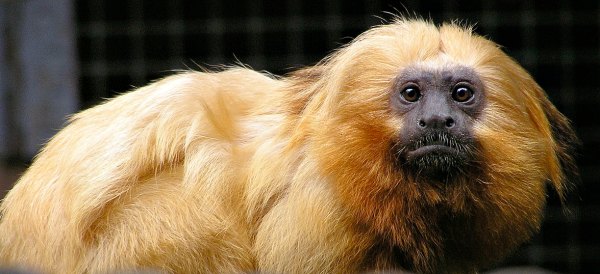
Monkeys like peanuts

Full disclosure throws up some very interesting comparisons.

For example we know that in Australia the prime minister is awarded an annual salary of $507,338

Not a bad earn. There will be allowances and the like and not too many groceries to buy thanks to endless corporate dinners and executive lunches. Certainly beats the socks off the salary of the average Australian that is $72,800 currently the 5th highest in the world.

Immediate reaction #1 — You have to be kidding, that’s far too much to pay a politician


Now we take a gander at the salaries of company CEOs. This is possible thanks to the requirement of boards to state executive remuneration in the company annual report. And there are websites that collate these numbers into accessible lists.

Turns out that the average [as in mean] salary of a top 50 business CEOs is $7,485,000 per annum. Just 15 times more than the PM.

In 2014 the pauper on the CEOs list, languishing down in 300th place on the earnings ladder, made $869,000

Immediate reaction #2 — You have to be kidding, that’s far too much to pay anyone


In what universe are the top ranking CEOs making decisions an order of magnitude more important that those of the prime minister. He was elected to look after our interests?

Turns out if you add up the salaries of PM and his cabinet ministers it comes to roughly $8.7 million — 13 CEOs earned more than this on their own.

It doesn’t make any sense. But if you, reluctantly I hope, accept that this is the world we live in where an individual is considered important enough to earn seven figures to run a company, then you get…

Immediate reaction #3 — You have to be kidding, pay peanuts get monkeys


Accumulated knowledge

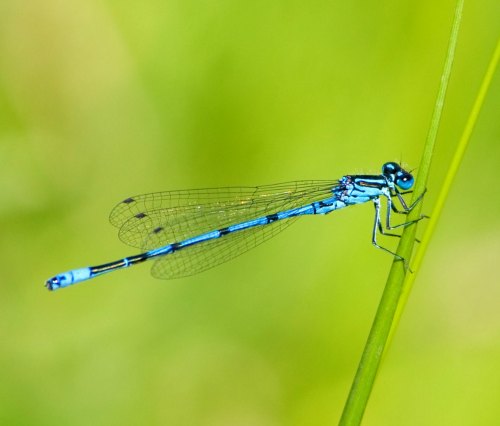
damselflyIf you wanted to read all that humanity knows about damselflies it would take you a while.

A Google scholar search on ‘biology of damselflies’ provides a list of nearly 9,000 research papers and this is just the start. Not every paper will have biology in the title, so search ‘damselflies’ and we are up to 13,000. Dig a bit more and there are over 68,000 publications containing information on damselflies and their charming cousins the dragonflies.

Suppose you really like these flying denizens of forest glades and decide to become an expert in their biology. By allocating 10 minutes to each publication — time to scan the abstract, a graphic or two and the key points of the discussion — then you would be at it for over 11,000 hours.

Make than 6 years of full-time work with no holidays.

In the good old days of the gentleman naturalist you might actually have taken on this herculean task. Your passion for damselflies would make the work a pleasure and independent wealth afforded you all the time in the world.

There was no need to produce anything from your all those hours in a wing chair by the fire. A mind brim full of detail on mating rituals, prey selection and peptide inhibitors was enough. That you could bore the pants off your dinner guests was simply a bonus.

Not so today.

Anyone afforded the luxury of 72 months with the accumulated human knowledge of damselflies would need a product at the end — a research thesis at least. And that thesis would only pass muster if it added to the already huge body of knowledge.

Your studies could not be completed in front of the fire surrounded by a library of leather bound books with the whiff of coal smoke across your nostrils. No sir.

After just a small amount of reading you would be donning a white coat and spending the rest of time in the laboratory dissecting the tiny abdomens of Diphlebia nymphoides, a pretty blue species native to eastern Australia. How else would you discover the true variability in digestive efficiency?

Only if you were really lucky would you have first donned hiking boots and trekked to the streams and creeks with a butterfly net to catch a few specimens for your analysis.

Even when the body of knowledge is vast our job is to add to it. Human endeavour is all about adding to the pile. We are addicted to making things bigger and better.

And boy is this mountain of human knowledge growing. The 869 papers on damselflies published in 2014 is double the number published in the entire decade of the 1970s.

Clearly damselflies are not central to any of the many economic or social challenges of our times. At best research might provide some details on how to avoid their extinction. So why do it beyond bald curiosity passed down the generations?

The reason for the burgeoning knowledge is simple. There are many more people than there used to be.

More people means there is more education, more universities with science faculties, and more students in attendance. The law of large numbers does the rest. Even the most esoteric topics will have more people interested in them than in the past.

So the body of knowledge grows, even for damselflies.

Pause for a moment to consider what this process of knowledge creation means. It is nearly impossible for any one person to have read everything we know about damselflies. Even if they were given a decade in the drawing room they might not get to all of it.

We have a searchable repository of the knowledge in the cloud that makes it easy to find specific facts. This is fine if you are already an expert and know what you are looking for.

But most people simply wouldn’t look. And if nobody spends any time in the winged armchair only the cloud will have the accumulated knowledge.

Et tu Brute

Caesar‘You, too, Brutus’, said Caesar forlorn with sadness and perhaps a hint of incredulity across his brow at the moment of his agonised death. At least that is what Shakespeare decided were the last words of the most famous victim of murder for political gain.

I have just watched all three episodes of The Killing Season on iView — all 234 minutes in one sitting. It was an excellent piece of historical journalism by the ABCs Sara Ferguson that through interviews with key players lays bare the extraordinary events in Australian Federal politics from 2007 to 2012. There were four prime ministers, two elections and an open disregard for the best interests of the country. Easily the modern equivalent of murder for political gain.

Specifically it’s how a political party can trash itself from within. More worryingly it shows a triumph of ego over integrity that destroyed the public’s faith in political process.

Watch it. Pay special attention to body language and facial expressions. Some feelings are hard to hide even for the professional spin artists.

But this post is not about that sorry saga at all. It is about an opinion piece by Eleanor Gordon-Smith, a writer and radio producer who teaches philosophy and ethics at the University of Sydney.

Gordon-Smith claims that the violent words ‘assassin’, ‘midnight door knock’, ‘execution’ and the like have no place in rational journalism. Nice try but a hollow attempt to dilute the message.

I am sorry. No one can airbrush this blemish. The Australian Labour Party destroyed its integrity and that of the political process in not one, but two ‘coup de grace’. Luckily no daggers were required to achieve the ends — a leader replaced by another that the people did not vote for — but the result was the same.

That labour supporters resort to such pathetic excuses is actually more worrying still. It suggests that despite being shown the truth they still fail to accept that their internal systems were flawed. Systems so dysfunctional that individuals without a mandate and not much more than inflated egos could bring down prime ministers. The labour party should say sorry to us for such irresponsible behaviour.

Instead of clutching at a semantic straw they should fess up, preferably with a resounding commitment not to do it again. And, should the party govern again, it will promise to put the best interest of the country before any petty internal squabbling.

While all this was going on the political right weighed in with dirty politics of their own. They trash talked and played every card they had, including aligning with the kinds of extreme views that they now claim to despise. They too came out of this period smelling bad — like opportunists without a moral compass.

Caesar did not expect that his friend Brutus would desert him, but he did.

In modern times the political dagger is no less lethal because it destroys far more than political careers. It bleeds away our faith in democracy.