Greenwash or not…

Check out this glossy video from Conservation International

Interesting message isn’t it.

Nature doesn’t need us folks, but we really need her. In fact we will die unless we pay attention. Nature will persist whatever we throw at her for she can adapt and evolve.

Even a nuclear holocaust would see some microbes survive and allow nature to resume her business of converting energy and nutrients into biology.

Now this is quite a shift for most conservationists. Their usual message is preservation and protection. Save the rhino, that specific one right there on the savanna, and not just rhinos in general. The admission that nature doesn’t care if there is a rhino or not is heresy.

When I mention similar things to conservationists I usually get my head bitten off — Awkward News for Greenies was not a best seller.

Just recently I pointed out to a gentleman that whilst I could agree that we are in a mass extinction event, nature sees these all the time — at least six big ones in geological history — and yet she manages to come back with more diversity than before. The current mass extinction began with more species on the planet than ever.

More significantly, nature really does not care about how many species are lost. She will meander along providing a space for evolution to work its magic and create new species to replace those that go extinct. Admittedly that takes time, but it will happen.

He was not happy at all with that.

So why would Conservation International get in some famous voices and throw a bunch of money at slick presentations of this message?

There are similar Conservation International pieces on oceans, water, soil and Robert Redford as a redwood

The message is similar in all of them. We can do what we like and nature couldn’t care less. But rape and pillage her and we are the ones in trouble.

Clearly Conservation International are trying to say it is all about us. About people and the choices we make. Watch all these pieces in sequence and you will start to feel just a little guilty, maybe a lot guilty.

That is an interesting tack. Hone in on emotions and personal integrity. Imply that it is personal responsibility, or our lack of it, that will determine our collective future.

And they are right.

Ultimately patterns of resource use, levels of pollution, biodiversity loss, and a host of specific environmental issues are the collective effect of individual decisions people make.

Only they are forgetting one crucial thing. Do we actually have a choice?

In the economic system that we live under it is very hard to choose integrity and live in the system. Go off grid and grow your own might work for some, but there is nowhere near enough space for us all to do it. Use less, buy less and only what you need is possible but again it is hard not to leave a hefty footprint even from modest consumption — take one plane ride and you have just about shot your embedded energy quotient.

And what of the billion or so people who live in poverty, they actually need more resources not less. The billion rich folk could give up a lot but the net resource use wouldn’t go down that much.

Pause for a moment and think greenwash — the talking up of an activity to claim environmental or green credentials when in reality there is none.

This message could just be the ultimate greenwash, a brilliant ruse by corporations to externalize their impacts by shifting their responsibility onto individuals. It is the customer’s fault.

Sorry Ms Roberts, I don’t buy it.

Numbers that tell a story

  • $70 billion agricultural investment as bank loans to farmers
  • $40 billion on warships to be built in Adelaide
  • $2 million average farm debt in Australia
  • $1 a kilo for onions

Numbers in words…

While Australians have the 15th highest per capita GDP in the world [on IMF estimates] and the 5th highest average income among OECD countries, consumers pay next to nothing for their food [around 10% of disposable income].

Ageing farmers work an average 49 hours per week and are in debt up to their eyeballs.

The bankers insure this lending against the land value and know that global demand will keep the price of prime agricultural land high enough for their shirts to be safe.

Rather than provide food security to the region the Australian government invests in warships that the Chinese navy would overrun in the time it takes to order special fried rice.

Subsistence

Lately Conservation International have been asking us all to adopt greater personal responsibility toward nature, because mother nature couldn’t care less about us.

Here is their logic


Fair enough. After all there is evidence for this argument. The previous five mass extinctions saw nature come back bigger and more diverse than before. And in time she will again after the current human-induced one.

Meantime there is a snag in the present.

Around half the people on earth grow most of their own food. These are not the new age Nancy types jumping off the grid or the allotment owners escaping their nagging spouses. We are talking about real life people from Bengal to Benin who have few job opportunities, little money, and no choice but to live off the land.

And today there are over 3 billion of them. That’s more than the entire human population in 1950.

These resourceful people perform miracles on tiny parcels of land. Yams, cassava, peanuts, plantains, rice and the like are tended with the care that comes from nurturing your future dinner. Multiple crops are rotated and intermingled to make the most of the soil reserves and to thwart pests and pathogens.

In some places this form of production is fairly secure. It rains enough onto soils that can give and retain nutrients. And with care families can survive on tiny parcels of land for a long time, often for many generations.

Elsewhere no amount of care can prevent soil depletion. And without money for inputs yields decline or become unreliable. Eventually the soil is exhausted and the farmer has to move to pastures new. This is shifting agriculture and it requires an important thing. It needs land.

If your soil is depleted and fails to grow enough food for your family what choice do you have but to move on.

Many move to the cities or send their youngsters in search of a fiscal solution so no surprise that urban populations are expanding. Even a modern city like Sydney is growing at 2,000 people per week. Meantime Lagos, Nigeria has reached 21 million.

Those left behind must either wait for newly urbanised family members to send funds or find a new patch of land to grow some food.

And this is where the Conservation International message of personal responsibility hits a snag. If half the people in the world will need new land sometime soon they will try to find it no matter how much they want to be kind to nature. None can be expected to curl up on their depleted land and sacrifice themselves.

A billion or more people practice shifting agriculture because they have no choice. Starvation is their alternative. Instead they turn to mother nature. They eat from another piece of cleared forest.

The guilt trip of personal responsibility is meaningless when your stomach is empty and your child is malnourished.


Liability of disclosure

car-wheelsTony knows something. He glanced down at the floor just before he sat in the passenger seat of his mate Joe’s car. Under the wheel was a rusty nail.

If Joe drives off there is a good chance the nail will puncture the tyre.

“Wait a sec,” Tony says jumping out of the car and removing the nail. “OK, good to go”.

Joe looks across bewildered and drives off barely registering another eccentricity of his old mate. And oblivious to the inconvenience averted.

Tony had no reason to disclose his knowledge of the nail to Joe and as Joe didn’t ask, the incident passed without consequence.

What if Tony noticed the nail but failed to act?

Suppose he sat in the seat unmoved as Joe drove the car over the nail and was forced to spend the next twenty minutes changing to the spare and cussing at the dirt advancing toward his Armani suit.

Joe puts it down to bad luck. These things happen. It didn’t even cross his mind that Tony might have seen the nail and was in a position to prevent the damage and inconvenience.

Tony gets away with what some would consider negligence. If Tony knows that harm will happen if he does nothing then he is obliged to act. Indeed he has a liability if he doesn’t.

Should his mate Joe find out that Tony knew about the nail and didn’t get off his butt to remove it, Joe is annoyed at least and more likely will clock his mate on the nose. No more free lifts for Tony.

More important than the event is the loss of trust from failing to disclose. Joe will always have a nagging doubt about Tony’s integrity.

This is a classic moral dilemma that philosophers have pondered for generations. The problem with knowing is when and what to disclose, to whom, and with what repercussions. The legal profession has dined out at the best restaurants on answers they give to the bewildered.

There are murmurs that the risks to business from a changing climate are a nail under a tyre that everyone knows is there. Directors and trustees cannot be a negligent and not act on what they know. They are liable for this knowledge and required to disclose.

Sarah Barker has written an excellent article explaining what it all means for the champions of business — directors duties in the anthropocene — that won a Sustainalytics Awards for Excellence from the PRI in 2014.

Meantime I wonder if Tony knows what failure to act might bring beyond the loss of a mate.

Eavesdropping

coffee-cakeHumans really are bizarre creatures. No other animal can be this smart and this blissfully unaware, whilst straining every sinew to be both.

If you get the chance, hang out in a CBD coffee shop for an hour or so.

It will be easy to tap away at your blog posts whilst eavesdropping unnoticed on the conversations of the business types at adjacent tables. You will hear some wonderful stuff.

There is the youngster with a tight haircut and equally tight pants trying to convince the senior exec that there really is something in the deal with the Saudis.

On an adjacent table a female IT consultant is negotiated out of a decent deal by a hard nosed CEO who took patronising to dizzying heights. “Perhaps you can just offer us a fixed price because, you know, when service providers give us an hourly rate price range they always charge at the high end” he suggests without a hint of a facial expression.

Another upwardly mobile CEO, not quite able to pull off the tight pants, holds forth with a real estate agent hoping to sell some office space. After half an hour of grand ideas and growth about to touch the stars, the deal is done for space only slightly larger than a shoebox. The agent is visibly deflated.

Then there is the pretty young woman on the phone to a guy who couldn’t quite make it for lunch. That was sad.

And just to prove I am not the only practitioner of the eavesdropping art, I was astounded to be interrupted in my own sinew stretching pitch to a VC by a lady on the adjacent table who had listened in and just had to tell us what she knew about our idea. That, of course, is breaking every bit of eavesdrop etiquette.

What an hour of surreptitious listening will tell you is that business people are pretty smart. They know a lot about what they do and how to get their own way.

And it will also tell you that people have no idea of anything outside their bubble. They don’t see the end of their own nose let alone the one on the person opposite.

It is quite a skill actually. To be so unaware requires true devotion to your own head. These practitioners of unawareness must live in blissful isolation lest they notice something off message. It is remarkable.

Eavesdropping can be a lot of fun. Choose a coffee shop frequented by the suited and give it a try some time. Nobody will notice you doing it.

Grexit

boat-ThailandBucket in hand you turf water over the side of your tiny sailboat as it bucks into the squall. It is a desperate act. The next wave will undo all your efforts. A few more big ones and the boat will sink.

What to do?

You could stop the eager bucket work and resign yourself to a dangerous swim in the open water. There is no doubt that if you stop the remedial measures the boat will sink.

You could keep bailing out and pray that the squall will end. At least then your continued bailing would steady the boat, maybe even raise it a little in the water above some of the less terrifying waves.

A glance at the sky leaves you forlorn. There is not even a hint of blue sky.

You look behind you and there is a huge tanker casting a vast and shadow over you. Its prow cuts through the angry water ignorant of the buffeting the waves are giving your tiny vessel.

A man in yellow waterproofs hails you from the bow of the tanker.

“Do you need help?” he asks through a loud hailer.

You raise your arms in a shrug.

“We can throw you a line. Tow you back to port” the man says holding up a ball of string. “Unfortunately we have to charge you for our trouble” he adds.

You beckon for the string not really sure what the last bit was about.

“Don’t forget to keep bailing” the man says as he tosses the string over the side. “Your boat looks like it is about to sink”.

Illogically the string feels like a lifeline. It is surely not strong enough pull the sailboat back to port but there it is. You are attached to something big and strong.

Another wave dumps a load of icy cold water into the boat. Time to bail some more.

Your hands are stinging from broken blisters and there is no respite. Every time you rest the water level rises. The bucket and your effort is not enough.

You stare at the string. It is not even taught.

You look up at the man in the tanker. He smiles back at you.

Then it hits you.

Why in the name of the Gods did you set out into a heavy squall in a small boat?

What I learned lately about… courage


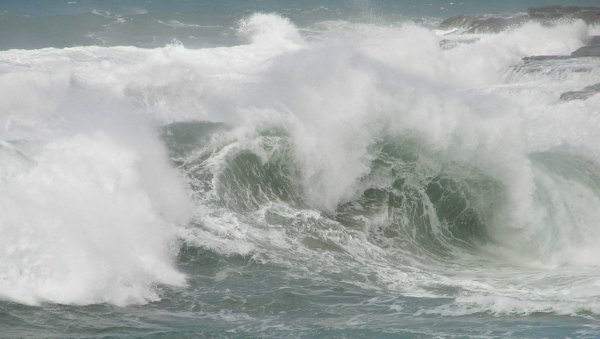
stormy seaCourage is priceless

First of all I am not talking about the winning of a Victoria Cross. For me that is bravery, you either have that or not as it emerges unbidden in extremes. Nobody really knows if they are brave until they face a clear danger head on.

Courage is subtler.

We need it every day, sometimes only in small amounts as it fuels the success and enjoyment of our days. Courage is what gets us out of bed and allows us to engage with the world and each other. It lets us believe in good and cope with bad.

Without it we would all be lost.

What I learned lately about… cooking

pavlovaAnybody could cook but not many can.

The other day I threw together a green vegetable curry and it tasted pretty good. I winged it from what was left in the fridge, a can of coconut milk and the dregs from a jar of curry paste. It helped that we had a lime, some cane sugar cubes, long green chilli and plenty of fresh coriander.

Also this week I diligently followed a recipe for lemon rice that went beautifully with some left over chicken that the real cook in the house made the day before.

And now I think I know who can cook.

It is anyone with their mind in and on the food.

Fork in the road

Photo FOTR Gandalf Mines of MoriaIt is dark, damp and there is an eerie silence as Gandalf the Grey leads the fellowship into the Mines of Moria towards the Halls of Durin. Among the countless bends and criss-crossing paths he loses his way.

Gandalf stops at the entrance to two tunnels at a loss. Which way to go?

Must he lead into the blackness on the right or the blackness on the left? They cannot go back. The wizard must make a choice.

After a long time he decides on the one with the least noxious smell. He smiles and the fellowship quests on.

Gandalf was lucky. Not because he managed to choose correctly after using about as much logic as a coin toss, but because he had the choice to make.

It was tremendous good fortune to know that there was a fork in the road. And even though the choice was difficult and required a gamble no more sophisticated than a guess, a choice was made.

The real world can be a challenge too.

Sometimes on the freeway the voice from the satnav in the car tells me to keep right. It insists on me keeping right even though there are no exists or forks in the road. The only choice is to go straight ahead. This is especially disconcerting and feels worse than missing a real exit or a concealed entrance on a country lane.

Being told there is a fork where none exists does your head in.

When my GPS tells me to keep right when there is no right to keep it feels like have relinquished control of both outcome and process for no reason. All I can do is ignore the instruction and proceed with the only option the road offers me.

There are many stories of people who failed to ignore the sultry voice of the satnav and driven into a lake, so I suppose I did make a choice of sorts. I ignored the obvious software error.

All this is about control, that ubiquitous fundamental of the human condition. Gandalf had no idea about the correct route he made the call anyway because he had to. And even though the outcome was out of his control, the process of choosing was his to command. And like all true leaders he made the choice with conviction bringing his companions along with him.

I wonder though how many real and metaphorical forks in the road are taken without any serious choice. How often do we crawl, run or scream through life without thought for the consequences of not taking the left fork?

Clearly this cannot be retrospective. In life the forks are often once only options. Like the fellowship, the journey is forward and missed paths remain so. And just as Gandalf found, many of our own forks are a puzzle without a solution. We simply have no evidence or experience for how to decide.

Perhaps this is the point. It means that we must grasp what we do have, the process of choice. Be thankful for the ability to make a call even when we are not sure it’s the right one.

Health, wealth and happiness

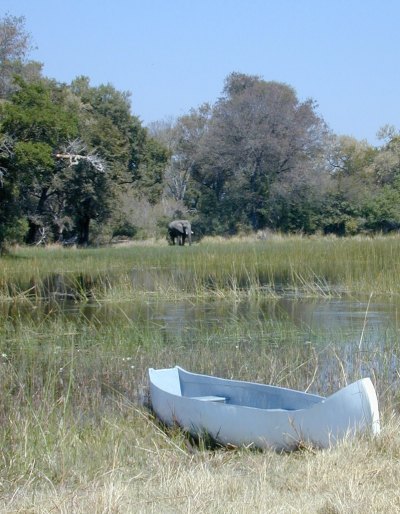
Okavango-BotswanaIn my lifetime the human population of the world has doubled and, according to the World Bank, global Gross Domestic Product has quadrupled to over $42 trillion. There are many more of us than there were and inequity remains rife but we are, on average, much wealthier. Some of us are twice as well off as folk in the less crowded days I toddled through in the early 1960’s.

Collective wealth translates to tangible benefits. For example, we live longer than we did. Mean life expectancy is well over 75 years now in most western economies thanks to better nutrition, health care and a two-thirds drop in infant mortality. Babies survive because we have better sanitation and primary health care and mothers are well nourished. And then that health care system helps us recover from sickness and keeps us going when our bodies begin to tire.

Despite the fear mongering and the real dangers in conflict hotspots around the world, on average, we are much safer than we were. Marauders, thieves and bullies still exist and yet we can mostly walk the streets and laneways more safety than our ancestors.

Then there are the material benefits. Today in the ‘west’ we shop more, consume more and enjoy a lifestyle that would be the envy of the average 1960’s family.

I can still remember the excitement of the ‘pop man’ delivering soda to Nanny Olive’s two up two down terrace in Staffordshire, a place near the heart of the engine that drove the industrial revolution. I used to take an empty bottle of soda from the wooden crate hidden in the pantry in both hands and hand it over in gleeful anticipation of a full one in return. Tell a kid today that soda should be a once a week treat and she will swear at you — just like this little tyke from the same part of the world who took the ice bucket challenge. Classic at just 2 years old.

Wherever you look today you can see people who are healthier and much wealthier than their predecessors.

I lived in Botswana for seven years in the early 1990’s. The country was booming on the back of diamonds with roads, housing, shops, schools and health care facilities springing up out of the Kalahari sand. The grandparents of the kids that were in my classes at the newly independent University of Botswana could not believe the changes. Just a few decades before the country was one of the poorest in Africa, frequently ravaged by drought and hunger.

The old folks complained of the excesses, the traffic and the loss of the old ways. But just about every Batswana today is healthier and wealthier than the elders in their family.

Or are they? After all health and wealth are relative.

Is a man with access to modern heart surgeons who reconfigure the plumbing of his arteries clogged by poor diet and lifestyle choices, healthier than the villager who dies from malaria after 40 years without an ache or pain?

Does the ability to buy a plasma TV that keeps me forever on the couch make me wealthier than the villager who spends much of his day walking through the bush to find food?

Does the extra longevity I gain from my modern health and wealth help me if I am so stressed that if I stop even for a moment my world will come crashing down?

The thing is we can never answer these questions.

We can speculate that happiness is found in the pleasure of gathering your own food as you are nurtured by nature. And that happiness exists in the closeness of village life with its allure of support from kin and kind, even if that village culture also brings genital mutilation, domestic violence and inter-tribal warfare.

Whilst we know that obesity, diabetes and cancer will not make us happy; we know that warmth, comfort, and food do. When pressed most of us would agree that the modern village has its benefits too.

And there is a hidden benefit. As a general rule healthier and wealthier people do live longer. So health and wealth give you more time to find and experience happiness.