Why not check out some background thoughts on Environmentalism | Environmental assets and complete the poll.. or just go ahead and tick yes or no. Keen to know what you think.
Why not check out some background thoughts on Environmentalism | Environmental assets and complete the poll.. or just go ahead and tick yes or no. Keen to know what you think.
 When historians sit to appraise the environmental actions of the baby-boomer generation they will say that they tried, did some good things, but failed to grasp the big picture.
They will also record that the most important consequence of this failure was that people did not see the solutions that were there for the taking.
Instead they focused on issues that they believed were real but turned out, with the benefit of hindsight, to be only partially relevant.
I have just published a short ebook at Smashwords that takes a sideways look at 10 environmental issues and puts them into context. It collates a few examples around one core idea that may be useful to the historians of the future.
And it can be yours for less that the price of a skim latte.
 Not satisfied with haranguing readers of this blog with environmental woes, I have branched out into the dynamic new world of ebook publishing.
Thanks to the amazing people at Smashwords my latest collection of essays on the environmental issues of the day is now available to download in all the usual formats.
Give it a whirl and maybe leave a review on the site. It would be great to hear what you think.
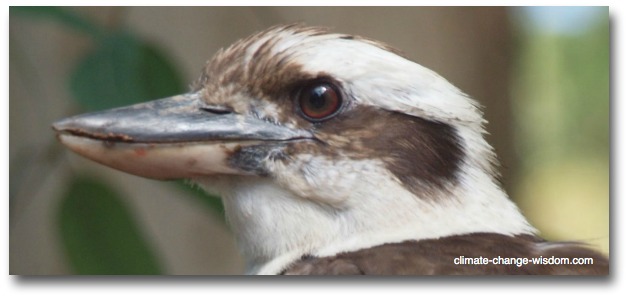
The recent natural history series Earthflight has been interesting to watch.
It follows birds as they fly around the planet, the sort of thing the BBC have done many times. Only this time the idea is to take the bird’s eye view.
And it is amazing where advances in digital, miniaturization and lens technology can take us. Some of the shots would have been unthinkable even a decade ago.
Here is my quick synopsis. Truly staggering photography is spoilt by gratuitous segways (usually to footage of large ferocious animals other than birds) and an inane sales copy narrative. But, hey, not every audience wants to hear Sir David all the time.
The images are so amazing that figuring out how they did it takes the mind away from what the bird sees.
Maybe it is a bit like the experience with flight simulator games. We know we cannot be up in the air because we are holding a game console and so part of us stays attached to that reality. It was similar with images of flight.
My brain said that it was not possible to be 1,000 feet up gliding on thermals across an Andean mountain top and so I did not see the landscape below as the condor might, even though the camera was right there on its back (at least that’s what we are supposed to think is how it was done – I have my doubts).
The footage I remember though was taken in conventional fashion. It was of 40 or so Andean condors chattering around a carcass at the end of a landfill site on the outskirts of Santiago. The narrator tells us that the carcass is provided for the birds so that they are not at risk from the bulldozers that are spreading out the garbage.
It was not so long ago that the Andean condor was classified as an endangered species by the IUCN. It is better off today with a near threatened classification, but remains susceptible to human influence.
Only here were 40 individuals on a rubbish tip. And this is a good thing?
I’ll leave you to decide.
This routine by George Carlin is certain proof of the old adage that “many a true word is said in jest.”
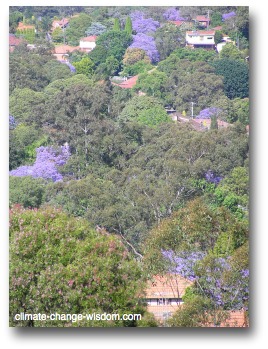 A garden is a place that humans create from nature.
We carve out a parcel of land around our dwelling, add some landscaping and select plants to display nature’s beauty and bounty. This orderliness of things is pleasing to us. We feel in control as though our effort has tamed the wilderness.
The cleared patch puts some space between our homes, allows us to potter around outside without bumping into the dangers that trigger our fight and flight response and even provides fresh lettuce for a salad.
The first gardens were probably about clearing the vegetation around the hut so that we would not step on an unseen snake and the water would drain away more easily.
Most of us have or would like a small garden, our own small patch of tamed tranquility. We also enjoy visits to grander spaces that surround opulent homes for a garden is also a statement. It says something about the owner.
These spaces are so important to us that when we allow half the land area in the suburbs of many of our cities to be gardens. This makes our cities bigger, city infrastructure more expensive, and our commutes longer.
So why is it that with all these good reasons and commitment to have a garden we actually don’t spend that much time in them?
Obviously during the week we are at work and our kids are at school so we cannot be in two places at once. Then there is homework, the newspaper or TV, and dinner to prepare. At weekends we have shopping and sports and, well, a whole bunch of things to do.
There is some gardening of course; only this is mostly to keep the garden looking good.
And then you can’t be in the garden in the rain.
Take away all the effort in upkeep and we hardly spend any time in the garden at all. Only the kids use it and for them it is an attractive space until they get to high school when other things tweak their interest or the space is just too small for real soccer.
There must be another reason for our love affair.
It could be because all we need is to see evidence of our personal control over nature. A garden is a space close to us that we (or perhaps the landscaper) have tamed and bent to our will if you like. It is a safe buffer between the real world and us.
And yes, we like that space to be beautiful. We like to select and display selections from nature that we especially like or on occasion might even want to eat. Most of all we want it to look good simply because looking at it is what we will do most.
Perhaps it is OK that we do this, that we create this visual buffer. Especially if when we get a spare moment and its not raining we wander around the garden or just sit in it, maybe even on the grass. Maybe we are now so removed from nature that it really is too much for us to be exposed directly to its real tooth and claw and that our modifications of nature are a necessary half way house.
My guess is that these days, gardens get looked at only occasionally and entered for their own sake very rarely. When I travel on the train to the city, a journey of 60km each way, I can count on one hand the times I have seen people in their gardens.
So maybe gardens are actually about that neighbour thing.
Perhaps they are there to demonstrate how wealthy we are. It explains why when we look to buy a house, the size and shape of the garden around it is so important to our purchasing decision.
It would be better if we actually spent more time in our gardens, just because we can.
We should find news footage of men and women in orange jump suits slashing with scythes at genetically modified crops disturbing.
And what was our response when the taxpayer foots the bill to “rescue” activists who board whaling vessels?
I was always told that the end cannot justify the means. Clearly it is not that simple.
Read my latest Ezine@rticle to see why environmentalism might be an environmental issue.
 If you are an environmentalist it is a scary thing to call anything natural an asset. This is because assets create wealth given the right investment, and, historically at least, investment meant exploitation.
In one way or another environmental assets are converted in order to realise their value.
The environmentalist paradigm has been about saving the last remaining patches of unspoilt nature from this type of asset (resource) exploitation.
Preservation and conservation of nature has required extraordinary commitment, tenacity and sacrifice. Either from those who pushed for and created the legislation for environmental protection that helped knock back pollution and create national parks or from the more radical individuals who had to hug trees.
The arrival of global warming as the next serious threat to the environment has proven more difficult to fight. The only acceptable solution has been to try and reduce greenhouse gas emissions and this should have created another route for environmentalism, a partnership with the investment community to trade carbon.
An unlikely alliance parodied in green has moved on
Only she hasn’t.
So far the financiers have not joined in the unholy alliance. Perhaps they have been distracted by more immediate economic woes or simply got cold feet.
Market mechanisms for trading carbon are in place, accounting rules have been tested and projects in forestry, agriculture and energy are ready. Environmentalists have relented but still nothing.
Are we losing faith in markets just when we thought they might help solve environmental problems?
That would be quite an irony.
 The other day I had a conversation with a friend that came to a conclusion. We decided that the environmental issues of biodiversity and climate change would be transient and replaced in the public consciousness by food security and the consequences of oil at $200 a barrel.
My point, conceded, was that food and the price of oil will stick until we find viable, safe and long-term alternatives to our current food production systems and energy sources.
We talked over an obvious and probably necessary option to improve food security, which is to eat less meat.
Animal protein requires many more times the space and water to produce than plant protein thanks to a simple and inevitable consequence of thermodynamics. Animals convert plants to protein at roughly 10% efficiency however good the farmer is at his husbandry. When both space and water become scarce it makes sense to eat the plant that is equally nutritious to us than. It would be easy enough to increase the proportion of plant protein in our diets.
Despite the logic being so obvious, my knee-jerk response to the suggestion that we could alter our diets and even grow some of these fruit and vegetables at or closer to home was:
“In whose lifetime?”
Maybe it was the cynic in me, that nasty resident who has become more cranky and vocal as the years pass, or knowledge of what has gone before that made me so negative.
Quite rightly my friend did not concede.
 The exchange reminded me of two articles I read a year ago that did give me some justification.
The first was on the flip side of the food security argument saying that some foods such a meat and fish should be eaten in moderation because there is an environmental cost to their consumption.
The second described the outrage people would feel at being told they must go against all the advice of the nutritionists and eat less fish and lean meat. These foods are good for our health. The article then went on to claim that the environment is free and bountiful so what is all the fuss about.
The ‘but it’s healthy’ argument will be strong and will kick back against rising prices when meat and fish become scarce. It is the kind of entitlement logic we have come to expect in modern societies.
In the end though we will learn some tasty preparation of vegetables, eat meat only occasionally, and curb our sweet tooth because most of us will not be able to afford anything else. And, of course, we will also become healthier.
It has already happened in Cuba where the drastic reduction in oil imports when the Soviet Union broke up forced the population to grow food locally. The diet of urban Cubans shifted to include more beans, pulses and vegetables. A big chunk of the produce is grown organically but intensively in urban farms.
It can be done. Maybe even in our lifetime.
 Here is an interesting thing. Over time, each and every corner of the planet has experienced just about every extreme of environmental condition.
Any given place on the earth will have been really hot, freezing cold, wet, dry, flooded, parched, ravaged by fire, hit by tsunami or earthquake, bathed in toxic gases from volcanic activity and seen the effects of meteorite strikes large enough to send gigatons of dust into the jet stream. It has all happened.
The only thing needed for all of these events to occur in any one place is a very, very long period of time. So long that, although we can write down the length of time in numbers, it is beyond our human perception.
One million years is a yawn in evolutionary time and a blink in geological time.
Certainly when impacts occur, there is a change to the way the environment works. Ecological processes may speed up, slow or shut down for a while and many species may be lost until others arrive more suited to the new conditions. But over time a new pattern emerges and life continues. No matter the severity or extent of change, disturbance and impact, planet earth has absorbed it and kicked on.
Even when the disturbance is extreme, such as a volcanic eruption sufficient to put the landscape under two feet of caustic ash, there is a period of apparent sterility until rain and the arrival of microbes start to turn the ash layer into something tolerable for bigger organisms. In a few hundred years, a little longer if the climate is cold, the process of succession will return a green mantle to the landscape.
So for the environment, there is no such thing as a problem, only change.
Not only is there change, but change is normal.
Enter Homo sapiens, modern humans, us. Initially we were of minimal consequence to this overall pattern of change. We started out with just a few million individuals spread far and wide in small groups in sync with the grand scheme of predator and prey on the savannas. This arrangement persisted for just shy of a million years, and then, all of a sudden, we figured out novel ways to appropriate resources – lots of them.
In an evolutionary blink we entered an exponential phase of population growth and migrated to all continents. Today we number 7 billion souls, with an additional 8,000 net added every hour (1.3 million per week). Together we appropriate over 40% of the global primary production, modify landscapes everywhere and have even started to change concentrations of atmospheric gases. If Homo sapiens were a species of insect or rodent the description would be ‘plague proportions’.
Still this is not a problem for the environment.
Voracious herbivores have come and gone before. Appropriation of resources by one species simply leaves less carbon to fuel other species and most plagues pass. For the environment, a plague is just another source of change.
Not so for us. We see change as a problem, a big one if it means that our means of production are compromised, or worse, our primary needs for food, water and shelter might not be met.
Unlike the environment, we have an awareness of self that makes us worry about change. We alter the environment to best produce resources for us and then we want it to stay in that modified state, steadily delivering the resources we require. Except that the very modifications we induce are a driver of change to the ecological processes that support primary production. They are disturbances as severe and widespread as any other.
Not only do we disturb; we have developed a system that allows a handful of us to supply the primary resources for everyone else in return for cash. This has too many consequences to describe here but it means that most of us can bunch up and live far away from the sources of our food and water. We then use energy to move these resources, and ourselves about the place.
As the modified system of production is efficient (initially at least) most of us have time to consider, manufacture and acquire goods that supply our secondary needs – we acquire lots of stuff. These goods use up materials that we have found in the landscape and under the earth. We extract and transform natural resources and further modify the landscape generating by-products as we go.
Even when this goes on for 7 billion humans scrambling for food, water, shelter and wants, the environment does not see this as a problem. It is merely another novel disturbance akin to a meteorite the size of a city crashing into the desert. This is bad news for humans and their needs for food and water but just another bout of disturbance and change for the environment. It will shrug and go on just as it has through deep ice ages, big meteorite impacts and a host of other disturbances that are just the way of things.
So what if there is a mass extinction? This has happened half a dozen times before and over time biodiversity has come back stronger. It will do it again, only maybe not with quite the array of mammal species we have now.
Pretending that the environment has a problem is a deflection. In the long run there are no problems for the environment, only problems for us.
 Alloporus