TED | Alan Savory

CattleTED lectures are a neat idea. Somehow they have managed to legitimise thinking outside the box and I suspect we don’t fully appreciate how important this is.

Most ideas that stick come from our current paradigms for anything really new must be pretty special to succeed in a society dominated by commerce and naturally conservative mind-set. So ‘good on ya’  TED.

About a decade ago I met Alan Savory on one of his trips to Australia to promote his ideas on holistic management. It was an interesting encounter [for me at least] that took me back to my time in Zimbabwe in the late 1980’s and then to thoughts of what it must have been like to both wander through the bush and the corridors of parliament in the time leading up to Zimbabwean independence in 1980 as Alan Savory had done.

He claims in his book that it was a combination of his science training, days on end tracking in the bush, and his time in politics that brought him to understand the importance of intensive, timed grazing by larger herds for the health of our grazing lands. Now he has extended his idea as a solution to two huge global issues: desertification and climate change.

Check out his TED lecture, it starts slowly but is worth persisting to the punch line.

http://on.ted.com/Savory

The elephant in the bathroom may have farted

elephant02Well it would seem that somebody close to the policy makers might have noticed the elephant in the bathroom.

This week an article in the Financial Review talked of a carbon tax budget hole that could be $4 billion deep thanks to a carbon price that might not continue to rise after the fixed price period after all.

Blind Freddie can’t help but chuckle and the elephant’s stomach rumbles with contentment.

It seems that there has been some new modeling of the carbon price beyond the fixed price period on behalf of Australia’s Climate Change Authority. The numbers suggest a “fall from July 2015 to $10.72 a tonne”.

This should be no surprise given the current European market prices are hovering around $5 tCO2e — this difference from $23 per tCO2e and rising to the reality of current market price is the elephant standing quietly next to the bassinette.

Now if you are a government that has been struggling to get the balance sheet back in the black because it was one of the core things you promised to do, then $4 billion less revenue is a problem. Especially given that the carbon price policy was hugely unpopular in the first place and will continue to give you trouble in an election year.

If it was just a revenue shortfall [$10 instead of $23+ per tCO2e] that probably wouldn’t be too bad. Only the revenue is already either spent or committed, mainly to ease the pain for exposed industries and for consumers, making a market price dip in 2015 a double whammy.

Awkward for the Australian government but stayers among carbon traders in Europe are not too worried. The say it is just what markets do, they will show price volatility around long-term trends. And just now the price is low. Later it will rise again, not least because this is a regulated market designed specifically to manipulate credit supply to raise the price and reduce demand. Like all markets, success comes from the long play.

Then there is another thing that the elephant symbolizes.

Remember that the carbon price is for a permit to emit and fewer permits purchased mean fewer carbon emissions. This was the policy objective: to reduce emissions of greenhouse gases by making it more expensive to emit than the alternatives.

And as President Obama brings action on climate change to the State of the Union address, it will be hard to ditch the policy now. So here are a couple of options given we can see the elephant.

Ostrich option | Bury the report or, if the electorate cotton on, spin it like a fury.

After all 2015 is a long way off. There is plenty of time for anything to happen, perhaps even something positive. Remind yourself of the positivity of the ballsy carbon traders and wait. In the meantime, do whatever is possible to make the whole thing go away.

Be a honey badger | take hold of the policy, believe in it and shake it hard.

The idea of a carbon price was that it should deliver behavior change and make Australia less carbon intensive.  So embrace that and with the tenacity of a honey badger stick with it. Allow an aggressive permit allocation limit, ease the coupling to the EU carbon market by changing the proportion of credits emitters can source from overseas and explain why to consumers. There is no reason that the domestic market cannot have a higher carbon price than elsewhere other than the fear of ceding competitive advantage.

In short, show leadership.

Now there is a thing.

€0.40 per tCO2e | the elephant in the bathroom

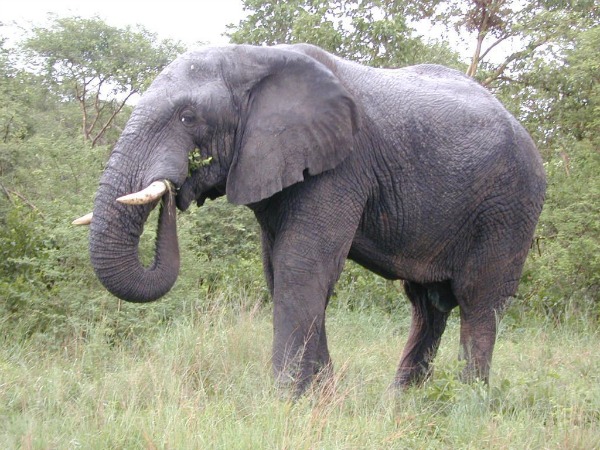
Elephant-01I wonder what it would be like if there was an elephant in the bathroom given a  mature female African elephant weighs 2,000+ kg, stands over 2m at the shoulder and will drop 100 kg of dung in a day.

She is here folks, right here in the bathroom, the smallest room in the house. And she is so big that she could not hide even in her Majesties powder room.

€0.40 per tCO2e

There she is, wafting her trunk gently from side to side, chewing quietly on some acacia bark.

€0.40 per tCO2e

Can you see her yet? Did you hear her stomach rumble?

€0.40 per tCO2e

Oh yes, there she is. The market mechanism designed to make alternative energy sources more attractive by making greenhouse gas emissions expensive.

Remember, emissions are permitted but only so many of them and you need to buy a permit for some or all of them. These permits cost you money. You can buy offsets against those permits from energy efficient projects, even from projects that reduce emissions from land management, and these would be cheaper than the permits and so create an opportunity for trade.

Only to achieve the outcome of overall emission reduction the offsets cannot be too cheap, otherwise what is the incentive to change your emission profile? That, after all, is an expensive thing to do.

€0.40 per tCO2e

If you would like to read about how not to see this elephant, for after all an elephant in the bathroom makes taking a shower a challenge, try here

Time to save the global carbon markets

Climate change | Google Trends #1

You have to hand it to Google. They are just all over business development. They have found something that everyone needs, perfected it quickly and delivered it so effectively that nobody else can hope to compete.

Then whilst they continue to improve the core offering they find a great way to make money without most of their customers even realizing it.

Not resting on this success they invest in both the core offering and start to add bells and whistles. At some point along the way they get big enough and powerful enough from unprecedented popularity to start changing and then setting the rules [it used to be that a Panda was just an endangered species].

One of the many bells is Google Trends, a neat tool that spits out data on search behavior for a key word from 2004 to present.

Here is a graphic of what Google trends says about the keyword ‘climate change’


GTClimateChange


The numbers here are all proportional to the peak of search activity over the period — in this case the peak searching occurred in December 2009. So low numbers represent less interest in the term relative to the peak and trends in the data show if the term is growing or waning in popularity. It is also possible to pick seasonality or specific events that trigger a spike or trend in search activity.

What can we say about climate change?

On the graphic I have added a few select events, particularly the various UNFCCC Conference of the Parties (COP) that have been an end of year staple for a few years now

We didn’t really bother too much about it until An Inconvenient Truth tweaked our curiosity in 2006. Then we got really excited around the time of the COP in Copenhagen when then Australian Prime Minister Kevin Rudd was calling climate change ‘the greatest moral challenge of our age’.

And what has happened since those heady days? Well, we have had three more COPs in Cancun, Durban and Doha with progressively more pathetic efforts at tackling the greatest moral challenge, accompanied by a downward trend towards pre-Al Gore levels of interest in the topic.

In a few more years we will have forgotten about it altogether.

Trends also suggests that regional interest in the topic now comes exclusively from the developing world with 8 of the top 10 countries by search volume from Africa. Only these are the places with the least resources to do anything about it.

Stats can also be a hoot. You’ll notice that after each COP there is a trough in search volume as everyone in the northern hemisphere tucks into their Christmas turkey and a regular annual dip in traffic in the northern hemisphere summer when its warmest!

No doubt that many equally critical challenges await and will trend upwards to their moment in the spotlight only to fall away again. Such is that nature of our attention span. It would just be nice if things went away because they were fixed.

On the upside, thanks Google for what will be endless hours of statistical fun.

Chance

Back in the day one of the first things I used to teach in my undergraduate biostatistics classes was that correlation is not causation.

For example, there may be a pattern between sun spot activity and the number of storks nesting in northern Europe, but you cannot conclude that sunspots cause nesting success. If it were that easy to assign a cause to all the patterns we see then a whole bunch of professions from currency speculation to climate change science would be unnecessary.

In my classes I used the presence of correlation to introduce the two main theme of my course: the concept of chance and the importance of the scientific method in helping us know when it is reasonably safe to ignore it.

Chance, and its measure probability, is a concept more intuited than taught. It was always fun to see the lights go on for a student who got it. More often though the pain of understanding likelihood was forsaken and students reverted to the age old standby of wrote learning.

All this recollection came about after I listened to a radio host who was recounting figures showing a significant spike in poker machine revenue in May and June 2012 (up 10 and 7%) across Australia. And in the same breath he reminded listeners that this coincided with cash payments to households from Federal government as compensation for cost of living rises from its introduction of a carbon price.

Now, of course, the radio host was smart. He didn’t imply or even hint that there was a causal relationship between the arrival of free cash and an increase in gambling revenue; but merely placing the two pieces of information together was enough.

My own emotions leapt to confirm gross inefficiency and lack of foresight in the government policy frame. Obviously people spent the money gambling.

Back in the classroom I would have berated my students for making the connection that I made. And really there is no evidence that a one-off cash payment to pensioners and low-income households ended up in slot machines, or even that some of it did.

Except that 10% of monthly poker machine revenue is roughly $100 million. This is a tidy sum and $500 more than usual in each and every poker machine.

Given that roughly 600,000 Australians play pokers machines weekly, that $100 million will be around $167 each.

The cash payments for families were $100 per child and for pensioners $250.

Chance is a fine thing.

Have we lost the plot?

This week Colin Barnett, the premier of Western Australia, was quoted in the Australian from a speech at a business leaders forum in Perth as saying that “We’ve lost the plot as to what we are trying to do here” implying there were other ways to reduce emissions than imposing a carbon tax.

“Why would we have a carbon price of $23 when the only somewhat credible trading market in Europe has a market price of $10?” he said.

This is the sort of thing you might expect a premier from the contrary political code to the Federal government to say. More so when it is the colossal revenues from mining that has been the engine of the WA economy for decades. The last thing a Liberal government wants is to dampen that particular fire.

At the same forum and quoted in the same article, the head of Westfarmers, who own a big chunk of Australia’s retail sector, described the carbon tax as “unnecessarily complex” and that “you have to be a rocket scientist to understand this stuff.”

Oh well, you could say, it’s just a couple of browns in a brown newspaper having a go at what they see as a constraint on the golden goose of capitalism. It’s to be expected.

And that would be a big mistake.

What everyone has forgotten to explain is why such a cost is necessary.

A few years ago we knew it was the “biggest moral issue of our time” at least according to Kevin07. Unless we took action global warming would consume us. And the majority believed that action was necessary.

Then the government prevaricated, forgot whose behviour they needed to change and introduced complex legislation that was more about plugging leaks than achieving a result.

It is emission reduction. Remember?

We thought that if we reduced greenhouse gas emissions then there would be fewer of the molecules that can trap long wavelength back radiation in the atmosphere than under business as usual and, if we managed reasonable reductions, we might slow global warming.

And then there is the real and far more critical reason. In a relatively short time we will run out of oil. If we haven’t at least begun the transition away from our dependence on oil for transport and fertilizers then we risk economic collapse everywhere. This is a huge deal, easily as important to the global economy as spiraling sovereign debt. Emission reduction might seem a bit left field as a means to transition away from oil but it starts the process of introducing and incentivizing alternative fuels and it starts to set the price signal that will come in a hurry when supply cannot meet demand.

Australian politicians must know this. They are well-educated, can interpret a graph and have a day job that puts this sort of issue front and centre.

Only they come up with a clunky policy that they have chosen not to explain to any of the people who really matter.

Maybe they think that because we have seemingly endless coal reserves, and now natural gas too, all will be well.

Or they just cannot bring themselves to explain the details behind the necessary pain of a transition – even though we already know that transitions are painful.

Perhaps they can’t explain something that they do not understand themselves.

Whatever the reason no one in the government has stood up to calmly, and with clarity, tell us why.

Then again, perhaps they really have just “lost the plot.”

Leadership is tricky when it comes to carbon

It is easy to see why political leaders are reluctant to let markets run things. Unconstrained buying and selling usually gets away from itself, careering towards the lowest denominator, the financial bottom line.

Even those of a conservative persuasion who often understand how markets work can be wary of the unfettered force of rapid growth. They know that growth increases the risk of collapse when commodities of the day become scarce as they inevitably do. Unleash these volatile forces at your peril.

So here we are in Australia about to embark on a new market mechanism, the carbon price. From 1 July 2012 the top 500 emitters of greenhouse gases will, at the end of each financial year, have to pay for permits to cover their emissions.

At first the government will sell permits at a fixed price of  $24. Then, after three years, permits will be priced by supply and demand through an auction mechanism. And just to make sure the market doesn’t go haywire the government will control the permit supply and set a price floor and a ceiling for at least three years.

If the price bombs, liable emitters will have pay extra to true up to the floor price.

The carbon price mechanism also offers the option of creating credits from approved emission reduction activities under the Carbon Farming Initiative. Naturally it is not really carbon farming as the bulk of activity will be in landfill gas and tree planting.  The problem here is where the money goes. In simple terms emitters buying credits spend their money in the market but they buy permits from government. Too many credits and the revenues fail to match the commitments government has made to ensure passage of the policy in the first place.

Why all the constraints?

The answer is that this is not really a market mechanism, even though it looks like one. It is actually a policy to reduce “pollution” by using financial cost to change behaviour. The market part is just a way to try and wield the policy instrument with an even hand.

The risk, of course, is that keeping all that market power in check takes away most of the benefit too.

It’s a bit like having a guard dog on a chain. The burglar hears the growls and barks but if he trusts the chain will hold, there is no danger and he can pass into the house to pilfer the silver. Soon enough the owner realizes the risk taken by leaving the dog on a leash.

So what should happen? Well some honesty first. Despite the rhetoric, a carbon price is not about the atmosphere or saving the planet from global warming. It is the first of many steps in the transition of the economy away from dependence on fossil fuels.  A vital step it must be said, although not the only one.

Pricing carbon is a way to foreshadow the economic costs of transition, to get us used to the pain before it really starts to hurt, let’s say when oil is $200 a barrel. It also gets the transition started earlier than it might if it were left to unfettered market forces. Ironically, it also protects some of the assets that create the emissions by giving them a longer life. It is a choice of leadership that sees its role as smoothing the inevitable bumps in the economic road.

Obviously reducing emissions is also a smart hedge on the global warming issue.

Now we know what the whole business is about, maybe we can let the mechanism run.

The climate change action thing

Here’s a thing.

The latest AustraliaSCAN survey suggests that fewer and fewer Australians are in favour of environmentalism whilst more people are saying they are against it. Environmentalism is dead?

Meanwhile the Victorian government has shelved its target to cut GHG emissions by 20% by 2020, put restrictions on wind turbines and given up on a planned ceiling on emissions from new coal-fired power stations.

And further north the new Queensland premier wants to pull out of a $500 million solar thermal project.

Rumour has it that conservative state premiers are considering challenging the Federal carbon tax in the High Court.

So, despite the international brownie points that Australia earns from having legislated for an ETS, the reality is some serious disinterest.

Now let’s take a look at the US – the Kyoto averse country that has been the climate action pariah and one of the main reasons put forward inaction anywhere else.

What’s going on there is:

  • EPA has announced proposal emissions limits on new power plants that would preclude coal-fired plants with carbon capture and storage.
  • US Energy Department set target of 75% reduction by 2020 in the price of solar energy systems to give solar a chance of meeting 14% of energy needs
  • US led the world with clean energy investment of US$56 billion
  • California, the 8th largest economy in the world, is introducing an ETS
  • tax credits of up to $7,500 for electric cars and by 2025 fuel efficiency in new cars will have to be doubled

A few years ago Australians walked across the Sydney harbour bridge for climate change action.

What happened?

Can REDD projects address wildlife poaching?

This question came in a forum on REDD, Reduced Emissions from Deforestation and Degradation, the somewhat controversial mechanism to tackle global warming. The idea is that because greenhouse gas emissions from clearing of land for agriculture makes up around a fifth of anthropogenic emissions, it makes sense to reduce clearing especially in tropical forests that are high on carbon and overall environmental value.

One typical pattern is that forests are first logged for commercial timber. This opens up the forest, makes access and further clearing easier. People move in to grow cash and subsistence crops.

REDD projects aim to substitute the financial returns from clearing with the sale of carbon credits that come about from the avoided emissions when forests are protected. In short local people receive payments for keeping their trees and their forest intact.

When it works there are less anthropogenic emissions, forests are protected, funds become available to help people create local economic development. Neat idea.

Since there are a few REDD projects that seem to be working pretty well in Africa, the question in the forum was about extending the concept to address wildlife poaching as well?

A successful REDD project would also protect wildlife because the financial incentive is to retain the integrity of the forest. Local communities are paid to be custodians of the resource.

A collective will would be enough to significantly reduce poaching so long as three key things happen:

local engagement is real

sufficient financial returns from the sale of carbon credits go to the local communities and

there is some long-term certainty in those financial returns

These are the key success criteria for any REDD project and, if met, then local protection of all the natural resources should follow. At least this is my experience talking to landholders in rainforests of Asia.

People everywhere prefer to live where the environment is healthy, the air is clean, the trees are green, and the wildlife free to roam. Only we need to live. Our priority is for a good life for ourselves and our families that is free from strain, risk and uncertainty. Meet this priority and any amount of environmental protection is possible.

What we have to remember is that throughout human history the forests have been cleared to meet these basic needs. So we are asking a lot to forego the route to development taken just about everywhere.

There has to be enough money in the system to meet the needs over the long haul.

The real challenge is that financial returns on REDD projects are neither certain nor comparable with the usual alternatives. Exactly why is another, long story. But I am sure you can guess the message. If we want to save trees or wildlife we have to pay a reasonable market price.