Farming not fracking

land-clearing-farmingStrolling through the village, as you do on a sunny winter’s Saturday morning, is a real treat.  It is a privilege just to take in the bustle of folk going about their weekend business — buying the paper, greeting a neighbor or settling down for coffee with friends serenaded by a teenager with a guitar and dreams of fame and fortune from his songs. This is why we are so fond of community.

Abruptly my reverie was rudely broken.

“No thank you,” I said to a brusque individual who ambushed me from behind the ‘vote green’ placards that were cluttering the pavement. The pamphlet purveyor was most indignant at my refusal and gave me the death stare. If that had happened in the playground it would have been called bullying.

I strolled on by and observed both the wave of annoyance that passed over me, and the slogan on one of the placards that read ‘ farming not fracking’.

For the uninitiated fracking is the controversial process of getting gas from coal seams by injecting fluid into deep rock layers to fracture them. This releases the pressure that holds onto the gas. Once free the gas can be piped to the surface. It is similar physics that happens when the seal is broken on a soda bottle and bubbles start to rise.

The Greens are on to fracking because it is another nasty resource exploitation process that results in burning of yet more fossil fuels, risks pollution of groundwater or local subsidence, and worst of all, will displace farmers from the land. Not all land, but the land gas companies might buy to exploit the gas reserves beneath the paddocks.

No matter that in greenhouse gas terms natural gas is cleaner than the coal that will be burnt instead to meet growing energy demand, that boreholes have always coexist with farming, and that legislation already prevents anything nasty being used as the lubricant.

As a slogan ‘farming not fracking’ is just silly. It is not even the issue.

Deliver it with a ‘holier than thou’ look on your face and even your supporters will cringe. Everyone else will tell you to take a hike, probably far less politely.

How about this instead?

We don’t like fracking or exploitation of coal seam gas so we have come up with this solution.

The energy that would have come from gas can be generated from alternative sources [solar, wind, wave, geothermal] plus some savings from improved energy efficiency. Both initiatives could be resourced from a small but compulsory ‘no fracking’ investment of say $500 from every household in the country — this one-off payment from everyone  would raise roughly $4 billion.

The return on investment is twofold. Cheap energy in the long run as alternative sources would get over the commercial hump and there will be environmental benefits from avoiding pollution risk. Plus, there would be lower greenhouse gas emissions from the soon to be necessary shift to alternative energy sources again saving money on transition costs.

All this for the annual expenditure to households of one weekly coffee and cake in the village.

The pamphleteer would probably look at me aghast and blurt out, “You mean to ask people to give up their Saturday morning coffee and cake, what are you thinking?”

Then he would spontaneously take up the chant “farming not fracking, farming not fracking…”

And no doubt the young songwriter could weave it all into a lyric.

Environmental value | perception is everything

Not a HyundaiSuppose for a moment you are in the market for a new car, a nice sporty hatchback to help you ease into mid-life.

And what if, due to some bizarre rift in the fabric of reality, I told you that for one week only a Mercedes and a Hyundai were the same bargain price. You could snap up either a zippy, sexy and undoubtedly metallic new Mercedes or equally zippy and metallic Hyundai for $20 grand.

What make would you choose?

It would be the Mercedes of course — and why not? The Merc has prestige written all over the badge on the bonnet.

As it happens and despite similar specs on performance, size and reliability, there is roughly $15k difference in the retail price in Australia between a standard Hyundai and the bottom of range Mercedes hatch.

In the real world without rifts where most folk are budget conscious it is no surprise that more Hyundai units are sold. And yet there are still enough people who value the Mercedes enough to fork out the extra cash — almost twice the amount to do essentially the same job.

Perception of value is obviously a powerful force.

The extreme of this for me is the handbag. Its functionality is always that same. Sure its looks vary from brand to brand but enough for the name on the clip to mean a handbag could retail for $50 or $5,000? Bizarre.

Here is another example.

Suppose you are accused of a crime that you did not commit. It’s a complex fraud charge and the police arrest you. Right away you call the best lawyer you can afford for even though you are innocent you know it will need the $500 per hour worth of expertise to prove it. Naturally as you are innocent and the judge agrees, the court awards you damages and you recoup all your expenses.

My point though is that at the time you gladly pay what it takes. In that circumstance of false accusation there is plenty of value in that $500 an hour.

Perception of value is also a highly contextual and personal thing. This is just as well. Individual preference for value helps create much of the complexity and variety in our society and we are the better for it. If you have the means and derive sufficient pleasure from a $5,000 handbag, go for your life [although part of me can’t get past the reality that $5,000 is roughly what it costs to keep 7 Ugandan children in school for a year].

So we come to environmental value and the same rule applies: perception is everything.

In western economies the majority of people who live on and off the land value it because it provides their livelihood. A paddock is a sheep factory and a field a grain production unit where primary production is harnessed to deliver goods for sale.

Of course there is some heritage, love of the great outdoors, feelings of wellbeing and social good that comes from growing food but ultimately it is about the production and sale of a commodity. And this production value is reflected in the price of goods and the production potential that is reflected in land value of rural properties.

Except that the end buyer of the goods, the consumer, never sees the paddock. She only sees the produce and the price sticker in the supermarket. The value to her is in what she can get to feed her family for her weekly budget, or in this metrosexual age, his weekly shopping budget.

The retailer does not see the paddock either. He [or she] just negotiates a wholesale farm gate price or better still enlists a supplier to do all that dealing. These business people see value in cost reduction and the ability to bargain down. And they use the powerful levers of volume and distribution to achieve the best price.

Their perception of environmental value is profit and we are grateful that they focus on it. Without this system of wholesale production and efficient retail we would have far less money to spend at the movies.

We could say that in this scheme of producing, buying and selling produce environmental value does not exist. The value is in the goods that we manipulate the environment to produce.

‘Ah but…’ I hear you shout. We do value the environment for itself. Why else would we have national parks, laws to prevent clearing and pollution and whole bureaucracies assembled to manage all our development activities?

Well yes, there are some picturesque, relaxing or wild patches of the environment that we ‘value’ and sometimes pay good money to visit. There are also places of cultural significance that mean a great deal to us. And yes, we have planning in place to allocate and sometimes restrict activities to preserve and maintain areas that we hold dear.

But, and it’s a Kardashian sized butt, these are not direct, back pocket values.

We ‘value’ conservation, wilderness, cultural heritage and are prepared to forego some development to retain it — an opportunity cost that we collectively wear — and yet we rarely ever feel that we have actually paid money for this. Nor I would suggest would we pay directly if pushed.

Back in the day in a lecture I gave to my biodiversity class, I asked the students what they would be prepared to pay to know that elephants still existed in the wild in Africa [the technical term is ‘existence value’]. What from their wallets or purses would they prepared to give, right there and then? $5, maybe $10 they said, with concern on their faces.  That was until I actually went round with a hat as though moving through the church pews and tested their commitment. None were actually able to part with their cash.


Radical suggestion

So here is a radical suggestion.

In our modern, city orientated system for living, there is no environmental value beyond a small suite of goods and services what we are prepared to pay for. No fiscal value to what the environment gives beyond what we can buy and sell because we have no system beyond cash to detect value and without cash our valuation senses have become numb.

If true I would say that this is not a failure of economics or even an unhealthy preoccupation with profit. It is actually a failure of perception. We simply do not know that we have a debt to the environment. We are not aware that we have been and continue to mine its resources without accounting the full cost.

No one has put in the marketing dollars to create the brand ‘environment’ equivalent to the Mercedes logo stamped onto the bonnet. Not surprisingly most people do not see the environmental value and happily continue to purchase the goods at bargain prices.

Even though we know that we are degrading soils, wasting almost half the food we produce and sending valuable resources to landfill, none of these things matter at the checkout. There will be few folk willing enough to buy the $4 net of sustainably produced onions when there is a net of equally good looking onions in the same isle at $1 because our perception of value is right there in the store. It happens as we compare the price per kilo to what is in our back pockets. We find it hard to make purchasing decisions on values that are distant and intractable.


A challenge

Here is a challenge for you.

Every time you make a purchase of anything from a tomato to a television, force yourself to consider the environmental value in the goods that you are about to buy.

Do not use these thoughts to make yourself feel guilty, go ahead and buy anyway, but do have a thought for what happened in or to the environment to make your purchase possible.
 

Leadership still sucks

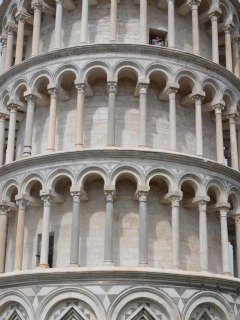
Leaning_Tower_PisaThe 100th post on alloporus was posted 8 months ago. That mini-review managed to reduce most of the previous content down to a couple of words “leadership sucks”.

And if you live in Australia then you would probably agree without reservation, whatever your political persuasion. We have an imploding Federal government with an opposition that just has to sit and watch it happen, whilst at state level there is a steady unpicking of legislation to turn the world brown.

Australia is even losing the plot in sport where in one code it is fine to punch the opponent in the biggest game of the season and in another a punch that missed is described as ‘despicable’

Ah, leadership, wherefore art thou.

As though in some kind of zombie state most folk seem to be ignoring it all. Perhaps it might go away. Just keep on selling the coal to the Chinese and we can carry on being rudderless [no pun intended].

Public lethargy is everywhere, spread as a thin veneer over stronger feelings of fear and woe, suggesting that leadership still sucks.

Only in the 100th post I also made a commitment to be more positive. Well that was a promise easily made and hard to keep.

It would seem that 5 decades of exposure to the human condition has allowed negativity to seep right through to my core. No matter the sunny disposition, gratefulness, the knowledge of blessings, and awareness of the privilege I enjoy — most of the latest alloporus blog posts are still glass half empty.

Not even the clever work of Plummer showing that despite our growing numbers the grand scheme of things is getting better has made me feel chipper.

It could be that I am wired to get upset and then depressed at all the craziness. I mean do we really need to know the sex of Kim Kardashian’s baby when we don’t know where most of our food comes from?

Less depressing would be the idea that this preoccupation with the inane and a requirement for drama is hard wired in us all and, more importantly, was necessary for our success.

There is obvious survival value in being obsessed with the immediate and the mundane for out on the savanna there were mundane things that could eat you or make you sick. Any hunter-gatherer who sent her mind gazing too far into the future went hungry or lost her child to an opportunistic leopard.

The addiction to stress is less easy to justify away unless we see it as a by-product of a requirement for drama. Argument does bring us awake, sets our adrenaline to work and makes us ready to fight or flee. In other words, drama was probably a basic requirement for successful savanna life.

Modernity provides us with every opportunity to latch onto drama and be in that alert state; only we have very little real need for it. Now drama is of our own making. These days we don’t find ourselves risking a drink from the crocodile infested rivers but we still like the feeling such risk brings.

I guess what all this justification talk becomes is a soothing of sorts. I do feel better posting rants when I accept that drama, argument and disagreement are a natural part of me, part of us all. The ego has to be thanked for getting us this far

What is still challenging is how to shift through to the positives. Not the ‘ra, ra, ra, yes we can’ positivity that is just another way of priming the body to act. I mean the real positives that come from truth.

For the moment these are harder to write about.

Must see post really makes you think


Yatchs_MonacoSo now that you have had a squizz and a chuckle at the excellent satire of Brad Plummer in the Washington Post [here is the link again if you missed his must see post], what should we make of a world where some of the big metrics of quality of life and lifestyle are trending in the right direction?

Yes it is true that there is still poverty, disease, crime, environmental degradation, precarious economies and the prospect of global changes out of our control, but the reality is that, even with so many of us, the majority are in pretty good shape. And those lucky enough to live in the developed world really do live like kings compared to the kings of just a few generations ago.

Not even all the King Georges in the House of Hanover who were having a ball before and after 1800 had electricity, TV or a mobile phones. All four of them would have had to get a lackey to heat their bathwater and another to send out the pigeons when messaging for a booty call.

What the numbers that Brad Plummer collated tell us is that there is a transition in most things. We start off slowly, get things moving to the point that they are a problem, and then turn them around so as to fix the problem. Next to no heart disease in the 1900’s, peaks at 40% of deaths in America during the 60’s and 70’s and now declining proportionately [probably because we got pretty good at human plumbing].

Humans are actually very good at this sequence.

Explore, innovate and exploit while we can get away with it, then put checks on all that exploitation and start to [slowly] clean up the mess. It is as inevitable as the earth orbiting the sun with a slight wobble in the tilt of its axis.

It means that ‘it will get worse before it gets better’ is often true and that we like it that way. Perhaps we even need it to be so.

We seem to need the worse to be upon us before we do anything about it. This is, of course, a great risk at a time of 7 billion human souls all striving and many getting a better life. Because it assumes that whatever the ‘worse’ is we can fix it — one day we will wake up to that fact that emission reduction is trendy policy but will not solve the climate challenge, but I digress.

The key message though is the psychology that makes Plummer’s post satire. We universally fail to see that what we really have is actually, for the most part and for most people, pretty good and getting better. Instead we prefer to be told that the sky is falling down.

Maybe there is a way to work through this necessary ‘doom saying’ faster. We could shunt along through it and get quickly to the other side where the solutions are found.

So all we need is a little rescheduling on TV — after Today Tonight, just before the inane sitcom starts, we get a ten minute Ted talk on some really neat idea that will solve a global challenge.

Easy and a bit like when the Magic Roundabout was on before the news to make sure that the kids were still around to get a glimpse of the headlines showing death, destruction and the political chaos of the day.

Betterment

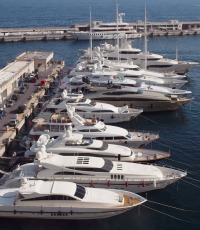
yatchs in monaco harbourMost of us gain more satisfaction than we realize from progress.

We are programmed to solve riddles and explore new things that give us the feeling of moving forward. In modern suburbia it may be that crime shows on TV are enough to satisfy our problem solving need and the confines of a cruise ship once a year does enough for our sense of adventure. Yet there is some expression of the betterment gene in us all. We really like progress.

Our need for progress has morphed over the generations. Not so long ago it was a struggle for equality. We fought against oppression, prejudice and the denial of opportunity, and, for the most part, have made things better.

These issues still linger of course, but all around the world societies mostly do not burn witches at the stake, deny education, a fair wage or the vote. Each generation has seen improvement in these fundamentals compared to times past. So much so that we seem to have lost collective interest in them.

Instead of core benefits, progress of late has been taken over by commerce. We measure ourselves by our access to an almost endless choice of goods and services that we seek to acquire. From the luxury yachts that spend 99% of their time tied up at a mooring, to a kitchen renovation, or even the necessity of five varieties of breakfast cereal in the pantry. Betterment is now all about stuff.

And it is what it is — inevitable really. For when there is no need for struggle people still find a way to do it. Intuitively we know that betterment requires work and sacrifice.

When all our basic needs arrive on a plate instead of channeling our struggle energy into achieving higher things we have settled on ways to get more stuff. This is a pity and perhaps the start of our undoing.

Betterment should really be about our higher selves — our efforts channeled toward awareness, balance and a sense of peace. Stuff would be part of this but not the all consuming driver and measure of how well we are doing.

Paradigm shift

grey kangaroo | NSW“You cannot solve a problem from the paradigm that created it” is a famous Albert Einstein quote.  The great man reminding us not only that lateral thinking is powerful, but that it is easy for us to stay with what we know at the expense of the things that we do not.

At times we appear so stuck in our ways that innovation seems all but impossible. We think in the current paradigm, work in it, live in it, trust it and are horribly uncomfortable when forced to go anywhere else.

Take sheep for example. A godsend if ever there was one — just about perfect wool and lamb cutlet factories. Nations were built on their backs.

In the late 1800’s there were more than 15 million of them in the parched lands of western NSW, outnumbering people by thousands to one.

Now we have talked about sheep before on Alloporus [Last chance to see | Buying up the land] and risk New Zealander and gum boot jokes if we go there again, only it is too good an illustration of what Einstein was on about.

Sheep production has been successful in Australia even when the conditions didn’t really suit them. Herding large numbers of the docile creatures on paddocks was the approach imported from overseas where the same thing had worked for generations.

It was difficult in dry country so, by necessity, the paddocks became quite large and the sheep stations huge. Graziers sweated hard and found a way. Countless sheep were reared, sheared and sold.

So many sheep left the stations over the years that it became apparent that these dry and dusty paddocks were becoming drier, dustier and less able to recover when the rains came. Growing numbers of feral animals, especially rabbits, didn’t help. Over time the rangeland became degraded almost everywhere threatening the viability of farms and bringing any number of unwanted costs from biodiversity loss to muddy waters.

What to do?

Here are some of the ideas that were tried:

  • make the paddocks even bigger
  • make the paddocks smaller
  • try running new sheep varieties
  • spell [rest] the paddocks for a while
  • turn the water points on
  • turn the water points off
  • apply some fertilizer to the paddocks
  • maybe keep the sheep but bring in feed from elsewhere to get them through the droughts

All these ideas and more were tested at some point. What you will notice is that they are all within the sheep-growing paradigm

A few innovators tried rearing goats or harvesting kangaroos. This is better perhaps but is still within the grazing paradigm.

A few very brave souls have suggested there are alternatives to meat and wool production and be paid for the carbon sequestration and/or ecosystem services provided by the land. And there is always ecotourism.

Again this may be better in some circumstances [although ecotourism is rarely the panacea proponents might like it to be] but it is still the economic paradigm.

So is it actually possible to solve the problem if it is so hard to think outside the core paradigm?

Fortunately there are enough ‘out there’ folk to become the early adopters of even quite wacky. The first business suit wearing users of the early mobile phones that were the size of a small suitcase looked most odd until they started doing deals from coffee shops — then everyone wanted one.

So paradigms do change and the grazing one might just be about to.

Groupthink

millipedeBruce, a good friend of mine in the time before the espresso when coffee trickled through a filter into a Pyrex jug, said as he poured the cremora free liquid into my mug, “There is no such thing as a new idea. They are all recycled.”

We were discussing evolutionary biology at the time. Probably some nuance of the idea free distribution as applied to Oystercatchers or maybe the reasons for the bizarre ornamentation of millipede genitalia, I don’t remember exactly. As young academics in the biology department at the University of Botswana, it was a normal enough conversation now long forgotten.

But I have always remembered that phrase, “no such thing as a new idea”. It was burned instantly onto my core because it hurt.

My ego could not accept such a crazy concept. It still can’t. I believed then and now that ideas come from the endless bounty of the ether. All you have to do is open a portal and they flow faster than filter coffee.

What happens next is where Bruce was coming from, for the ideas may well be recycled many times but the ego adopts them and presents them to the world as its own unique and original thought.

Now suppose that we put 40 sizable egos into a room for a day and get them to think about a problem. They are all technical experts who know a fair bit about the topic. We call this a workshop and it’s portals away.

Open the floor for discussion and soon there is a flood of ideas. By coffee time everyone is ankle-deep in them. Only all of these ideas conform to Bruce’s definition, none of them are new.

As each ego finds out something new it presents it back to the group as a great idea. And it is, except that other egos have already had that idea and moved on.

In the group though these old ideas keep coming and etiquette requires that these ideas are heard. So people listen politely but impatiently while they think up more ideas of their own. Ideas appear, bounce around and die, all the time taking up space that solutions should occupy.

Keep this up for a day and you can go insane.

Welcome to ‘groupthink’, the politically correct and increasingly popular way to tackle complex problem — put a bunch of “experts” in a room and let them regurgitate old ideas.

It is easy to see how groupthink has come about. We all tend to believe that no one person can have all the answers. There is simply too much information these days for one brain to be across it all, let alone have the skills and bandwidth to synthesize, analyze and interpret what it means.

A gathering of many brains each familiar with the topic should solve this problem performing a kind of risk management. Collectively this intellectual capacity should better cover all the bases.

The problem is those egos that refuse to accept that their ideas are old. What actually happens in workshops is reinvention of the wheel many times over as each participant gets up to speed and the groupthink gets mired in what amounts to getting up to speed. Progress becomes difficult.

When it gets bad things go backwards. Genuinely new ideas fail to make it at all.

Perhaps we should rethink the workshop.

Responsibility

At what point are we accountable for what we know?

Consider the recent tsunami in Japan. Anyone in one of those coastal towns who knew that the wave was coming would have warned whoever they could. And many did. There are stories of great heroism by fire servicemen, emergency workers and ordinary citizens staying in danger themselves as they encouraged people to reach higher ground.

Anyone who had the opportunity to raise the alarm but failed to use it would feel guilty for the rest of their lives.

Earthquakes and tsunami happen in Japan. This inevitability forces planners to carefully consider where buildings must go in relation to this known risk. Engineers must also put their expertise into building construction sufficient to withstand shocks from shifting ground and walls of water.

Should these precautions for a foreseen event follow similar rules to those when danger is real and present? Applying a planning rule or choosing a structural material does not require heroism, but there might be a similar sense of responsibility around the decisions made in these professions.

Sydney coastline

Prime real estate in coastal towns is where there is an ocean view.

Planners who zone the coastal fringe as green space or tsunami protection zones would not be popular. Developers would soon find an alternative to an engineer who insists on the super safe construction options for these are almost always expensive.

In the political and economic realities of a modern world, developers will leverage many a weight onto hapless planners for the profit is in those plots with an ocean view. Perhaps these decision makers need courage too, only for, them, it will be much harder than in the adrenaline-fueled heat of an emergency.

What about courage for decisions on climate change? We now know that there will be changes to the intensity, frequency and timing of weather events – the altered likelihood of extremes and long-term shifts in the averages. We can foresee these climate change effects even though it is not a real and present danger just yet.

It is, however, time to plan for sea level rise, extreme weather, drought, heat waves and shifts in seasonality that are the likely effects with significance for livelihoods.

At the moment we are dodging this accountability.

It would be sensible to put climate change scenarios into strategic and local planning tools and have planners understand why climate change effects should be considered in their planning horizon.

Building design already has the smarts for energy efficiency, structural integrity and resistance to extremes. All the engineers need to do is favour these options and set their skills and experience to figuring out even better solutions. The planners can support them with compliance requirements that assist against the pull of market forces that will always favour the cheaper alternatives.

There is a difference in these examples of required courage and personal responsibility. Decisions made in the face of danger are instinctual. When danger is at some unknown point in the future, we have time to think.  We rely less on instinct and more on reasoning and allow ourselves some latitude. We may respond to the pressure of compromise. No need to worry, it’s not happening now.

Without immediacy there is no adrenaline required, we can relax into the comfort of busy work and allow the process of decision making to take over. Soon it is the meetings, hearings, forms to be filled and documents to be filed that allow us to forget that there was actually an important, responsible choice to be made.

When buried in the process it is easy to forget that there might be some responsibility to make the call and some accountability for it.

No pain, no gain

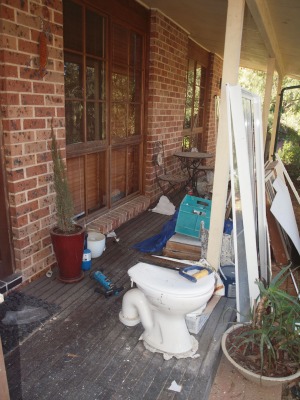
Porch-becomes-building-site

Our house is a shambles.

The dishwasher and the fridge are in the living room, the spare room looks like a bathroom warehouse, the front porch has turned into a building site and the lounges look horribly cute in their drop sheets.

Yep. We are in the middle of renovations, just a small upgrade to the kitchen and bathroom. It seemed so modest a task and yet the disruption has left me asking, “why, oh why did we do it?”

The answer my beloved wife — who has done a fabulous job in designing and managing our little project including sourcing all the materials [go eBay] — is tantalizingly simple.  No pain, no gain.

It is impossible to get a new bathroom and a kitchen upgrade in your house without copping major inconvenience and dust in the nostrils. It has to get worse before it gets better. Sound logic you might say.

But I suspect that this is not how we really think.

I reckon it is human nature to prefer “all gain, no pain”.

This is certainly what drives business. Profit is best arrived at with minimum fuss. Any cost that can be deferred, or better still, sent somewhere else, will be. The simpler the business system the less that can go wrong and so long as the company has enough competitive advantage in the marketplace, simple is good.

If there has to be pain then, reluctantly, businesses insure against its effects. Even though the logic of insurance is to cop the pain initially but be pain out to sooth its effects.

Now that I start to look for it, I cannot seem to find instances of business voluntarily accepting the ‘no pain, no gain’ maxim.

Perhaps this is the flaw in modern day commerce. Decoupled as we now are from a physical cap on monetary wealth [currencies are no longer tagged to gold bullion] business is free to find unlimited profit — and profit is best had without pain.

Parents of today’s teenagers will probably tell me that this phenomenon is not restricted to business. It is spreading through the youth faster than a tweet.

I will need some time for healthy thinking on this topic to develop but worth sharing I hope.

Meantime I can’t wait for the builders to finish.

As always, any comments gratefully received.


The heart of the matter

This article was written back in 2010 and was published online on The Climate Spectator. Nearly three years on it still makes fascinating reading as the rhetoric ramps up ahead of the federal election.

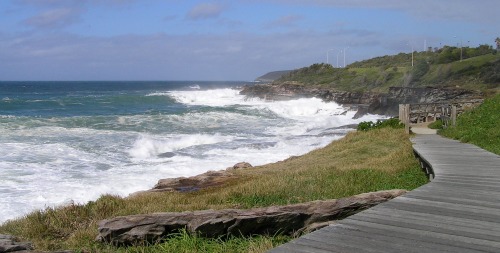
rocky shore NSWRecently the NSW Natural Resources Commissioner, Dr John Williams, hosted a workshop in Canberra on resilience thinking that was attended by a platoon of scientists, agency staffers and consultants, all concerned about the environment.

In his opening remarks, the Commissioner urged the participants to consider a simple enough question: What matters most?

A ripple went around the room as things that matter jostled for space in everyone’s head. No doubt thoughts of happiness, love, friendship, the mortgage and a few thoughts we don’t usually admit to arrived, and it was clear that there was not just one thought. The one thing that mattered did not appear instantly to everyone.

Caught as we are in the policy vacuum on climate change, with backflips and peculiar ideological positions to frustrate us, it might be useful to ask the same question of the climate change debate: What matters most?

Those representing heavy emitters will cry that exposure, unnecessary liability and uncertainty matter. Few of us like threats to business as usual. However, some exposed businesses have used climate change as an opportunity. We have all been offered the option to offset a flight or visit a carbon neutral office, where the most important thing is to be seen to be doing something good. Catastrophe can make for great PR, and so matters most, but for very different reasons.

Unless you install roofing insulation, climate change is of little consequence to small business. There is not much beyond the upward creep in the quarterly energy bill to keep your attention away from more pressing issues of cashflow, customers and the late arrival of a key staffer.

A couple of years ago, the general public in Australia thought climate change itself mattered most. They even elected a new government with a Prime Minister who claimed it was “the biggest moral challenge of our time”. Today polling suggests the majority see climate change as just another opportunity for politicians to renege on a promise. And a third of them think we should not pay a cent to fix it.

Climate scientists, at least those gathered under the banner of the IPCC, reached a consensus that greenhouse gas emissions matter most. Concentrations of gases that absorb reflected radiation, the atmospheric blanket that makes life as we understand it possible, were the key regulators of climate. Human activity was upsetting the delicate balance of greenhouse gas composition and we needed to stop that or risk catastrophic warming.

Emissions matter most because they lead to warming that puts more energy into the cyclical systems of atmosphere and ocean, changing the pattern of circulation, making it wetter, drier, and perhaps more stormy on an increasingly voluminous ocean. In short, having some very specific local climate effects.

The diplomats at the UNFCCC thought this mattered too, but not as much as the necessary diplomacy. So they negotiated at length to agree that net emission reductions matter, but that we need to negotiate some more to agree on the reduction targets and how to achieve them. Clearly, among the policy makers, it is debate that matters most.

Ask residents on the beach front at Byron Bay the question and it’s all about saving their homes from storms. They may not even know that warming will raise sea levels and may make some storm surges more acute, for it has always mattered that the ocean was only a wave away from your beachfront retreat. Save a thought for the 200 million citizens of Bangladesh on the Ganges delta who don’t even know that sea level rise matters most to them.

Irrigators along the Murray River in NSW who, despite having a legal license to extract water, have not seen any reach them for a long time, have another answer. What matters most to them is the real prospect of losing their livelihood altogether.

Clearly, there are as many things that matter most about climate change as if we had asked the question without the qualifier. Climate change is a threat and an opportunity, a challenge and a risk. For some it is real, but for most of us it is not the most important thought in our heads. So perhaps what matters most is not climate change at all.

Perhaps we have missed the real risk, the real challenge that we face, and the hint of what that is comes from all these specific concerns. What matters most is that we have the capacity to adapt and transform to a changing world.

It is critical that we give ourselves the flexibility to make our food production more efficient, ensure our environments will deliver all the services we take for granted and that our economic and social structures remain viable as they transition.

It also matters that we act on that capacity now, for the world is changing rapidly. The shifting climate just makes some of the inevitable the changes more acute and immediate. None of this should be a surprise, given that there are now close to seven billion souls trying to fix what matters most to them.

———

Here in April 2013 I am not sure if the timelessness of the sentiment in this article is what matters most.

Perhaps we should get our arses in gear.