Goanna


goanna

I can’t get this image out of my head.

A road in the outback and a young aboriginal kid in western clothes bashes the long grass on the verge with a big stick. He is trying, along with his mates, to flush a goanna all under the watchful eye of an elder. The hunted creature remains hidden and may or may not have avoided the blows.

The elder has his own stick, a baseball bat in metallic blue. After a fruitless search he calls time and the hunting party climb back into a late model land cruiser station wagon.

The sound bite captured by the media crew before the elder drives away is that this country is sacred to his people and should not be exploited for shale gas.

I know it is unholy to drawn attention to the truth of this scene. An ancient culture lost but still pretending to exist whilst embracing with both arms the trappings of a new one. I am afraid that even with a few baseball batted visits to the bush those youngsters will not have a feel for country. They will know mobile phones, internet porn, Call of Duty and soggy chips.

This is sad. The generations of indigenous kids that went before had a wholesome life that was connected to the earth. The kids that climbed into the air-conditioned land cruiser will live longer than their ancestors but maybe not with the same wellbeing.

It’s just that whilst fracking probably will contaminate groundwater, clutter the landscape with drilling rigs and mess up all the local roads with traffic, resource use is a requirement for a western lifestyle. We cannot fly, drive and cavort around with technology trappings by chasing goannas. We have to exploit natural capital and subsidize our own energies from external sources. And that is a truth.

Of course it would be nice to do this with the least externalities and with care to restore any damage that is done. But let us at least acknowledge the truth that we cannot make mobile phones with a goanna.

Nor can everyone who owns a car go out and hit one with a stick.

Ask Alloporus

OLYMPUS DIGITAL CAMERAIt has been a quiet spell on the Alloporus blog but you’ll be pleased to know it is not for want of healthy thinking. Although I sometimes wonder if thinking isn’t quite what it’s cracked up to be. A day or two without it would be glorious.

In blatant ignorance of all blogging rules here are my excuses for a lack of posts.

First there is the day job that every now and again gets out of hand — lately it has been more out of hand than in.

Then there were two lots of house renovations — enough said already.

My climate change wisdom website hit a search engine wall and demanded some resuscitation only for the wall to be [temporarily] insurmountable — plus I discovered that all you need to fix any climate issues is to change the government. No websites are necessary [but don’t get me started on the most bizarre myCFI.gov.au].

And so to the main excuse. My new website Ask Alloporus  — not satisfied with a SEO website on climate I have created another on environmental issues.

The idea is to talk about the environment without all the spin. It is similar to climate-change-wisdom but with a less restrictive topic [and maybe a few more winnable search terms]

So far there are 70 odd pages grouped around


Please pop across to Ask Alloporus and have a gander and let me know what you think. All feedback would be gratefully received.

There is also an Ask Alloporus a question page if you want to create some content.

If you like the site, a link to Ask Alloporus from your site would be fantastic.

Happy thinking.

The Kardashian Index

Take a look at this graphic. It records the number of two somewhat related terms — climate change and food security — appear in Google searches.

GoggleTrends-climatechange+biodiversity

The data is for the number of searches over time presented as relative to the peak number of searches that in this case was for climate change in December 2009, the Copenhagen COP [out].

Now we have talked about these trends before [Climate change | Google trends #1 and Biodiversity | Google trends #2 ] and concluded that either everyone now knows all they need to about these terms and so has no further need for the Google Gods, or nobody cares.

What we need is something more positive, something trending in the right direction. All we have to do is add another term to climate change and food security.

GoggleTrends-climatechage+biodiversity+KimKardashian

Now the numbers are relative to a new peak for Kim Kardashian in June 2013, presumably because we wanted to know about her new beau.

The averages are meaningful here of course. Relative to that heady peak, the proportional averages mean that we need to know 30x more about Kim than the other two boring terms.

And we still want to know more. None of this ‘we know already’ about Kim for there is always something new to find out. People are still interested.

There is no doubt in my mind that the best source of information on how the world is travelling is to follow this Kardashian Index. It is, after all, going in the right direction — none of this decline or flat lining nonsense.

Governments, market analysts, even environmentalists need go no further than keep their eye on Kim’s search rankings to have a reliable, predictable and highly informative measure of the state of the planet.

And respect to Google for providing this index for free.

Ah, the depths to which we fall.

Postscript | I guarantee that with Kardashian as a keyword tag this post will receive orders of magnitude more views than any other on this blog… Thanks Kim.

Shed a tear

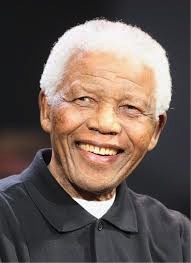
NelsonMandelaEveryone has written a eulogy for Nelson Mandela, I unashamedly shed a tear.

I knew that he would pass away as we all must, but I did not expect to feel his passing as though he was my own kin. Sadness, loss, grief and loneliness boil away in my soul as though I had lost my best friend.

Yes he was a hero of mine.

And yes I lived in southern Africa during the decade that straddled his extraordinary transition from prisoner to democratically elected president.

And yes I experienced the palpable change in everyone on his release — it was heady to live through history.

And yes, I could not believe that any one man could be so courageous and so compassionate at the same time, or hold on to both for so long. I still can’t. It was a miracle.

And because in worldly terms he was no saint he should be remembered as one.

All of this I know and many millions more will glimpse these things as the world pays its respects to greatness and genius.

But it does not fully explain my upset.

Somehow nerves have been gripped and emotion seared by the passing of a man I never met on a continent an ocean away. And I think it is the combination of courage and compassion that I lament. Mandela held up for all to see this essence of true leadership that is so despairingly rare. And now he is gone.

I feel the loss deeply. For right now it is leadership that we so desperately need.

No doubt my emotions will settle in time and maybe words will come that might help others understand his greatness, for hope will linger in his remembrance.

Just now it is hard not to weep uncontrollably for Madiba.

Tatenda Tuku

OliverMtukudziMangwanani, mararasei?

Excuse the apparent jibberish but I am still in the joyous grip of a surreal experience for last Friday I was transported to Zimbabwe the country of my son’s birth without leaving Australia.

How was this possible to be an ocean away not just in my imagination but actually there really and truly, feeling the pulse of that great and troubled nation?

Well it was quite a surprise.

All I had to do was follow my instinct and purchase online tickets from an unheard of website to a gig by the African guitar legend and true poet Oliver ‘Tuku’ Mutukudzi.

It sounded too good to be true scheduled as it was for an obscure venue in downtown Parramatta, the Roxy.

I had hesitated of course as one does when the internet throws up such a rare gem of uncertain truth.  It took me a few days to commit my credit card digits to the ether except that Mutserendende, one of the great mans songs, is the ring tone on my mobile — how could I not trust to fate?

Satisfied by a phone call to the venue that confirmed that ‘yes, Tuku would be playing on Friday’ the bargain was accepted.

Now when overseas artists play in Sydney that for all of them is very far away from home they will have their hard-core fans who flock to fill the mosh pit or at worst pay the big bucks for front row seats. Elsewhere the auditorium will be sprinkled with all kinds of folk: the young ones who only just discovered Tori Amos, the middle aged who are just amazed that Sade is just as stunning today as she was in 1980, a few old folk who have always known good music when they hear it, and the ‘be seen’ folk who needed somewhere to go that night. In short, an eclectic mix.

Not so Tuku.

In the surreal surroundings of an ancient cinema with its high ornate ceiling, overused seats, and flaking paint the audience was almost entirely Shona. It was as if all the Zimbabweans from that most populous tribe who were living within travel distance had come together for a party.

And what a pleasure it was — for if there is one thing that Africa does it is party. Smiles everywhere big enough to save the world, warmth to melt the coldest heart and, of course, everyone dances.

It is one of life’s true experiences to be in an African nightclub when the latest popular number is spun. A cheer greets the first chord and by the second the room is heaving. There is no need for a dance floor because everyone is on their feet where they are, instantly transported by the rhythm and moves to a very happy place

Now I had been telling my wife about this phenomenon of nature for years and had promised it would be high on the itinerary of our long planned Africa trip for she had not witnessed it for herself — until last Friday.

In that cinema now comfortably full with well dressed Africans showing off their unique style the DJ was warming the room for the support act and chose a track popular all over southern Africa in the 1990’s that brought back a memory rush of balmy nights in the silky dust of the Kalahari.

And there it was, instant recognition, a cheer, and joyous movement.

I looked at Milena and she felt it too for there is great power in such collective spontaneity. And that energy grew through the unknown yet lively support act and then with fervor for the legend himself

Despite only having his voice, guitar a bass player, drummer and percussionist, Tuku worked through, with genius that only few have, two hours of his layered songs selected seemingly at random from his vast catalogue.

The people danced, laughed, sang, chatted and most of all smiled.

They adored the performer without any thought for the performance or sound that the critic would have panned for its lack of second guitar, keyboard and female chorus for these give so much depth to his studio tracks.

It was a party you see.

And it was a chance to be back in Zimbabwe without paying the prohibitive airfare and everyone was grateful for it, me especially.

You see I lived in Harare for two years from 1987 in a country still basking in the glow of independence if wary of its future. Career blinkers meant that I did not see all that I should have back then, but Africa is too infectious not to seep into your pores for even in adversity the people smile. And they dance whenever the music moves them with an optimism that is infectious. You carry that joy away with you, hidden perhaps and clouded by the travails of the west, but it is always there somewhere deep within, an unconcerned syncopation that can catch you unawares.

So you can see why I have Oliver Mutukudzi as my ringtone, play his playlists often, and have wept at his lyrics that speak of suffering, courage and humanity even though I cannot translate the words.

And now I also have the privileged memory of dancing with his countrymen for two sacred hours far away from Africa, in the Roxy, Parramatta.


The feature wall

feature-wall.jpg

Apologies to regular readers for the lack of posts on Alloporus in the past few weeks.

As confused Confucius might say “take on renovations only when you are prepared to put the rest of your life on hold”

Good news is that the painting is done, the cleaners are booked in and all that will be left is to wait three months before I get around to that second coat on the patch of cornice that I missed.

Hours with a roller trying to perform the miracle of turning a dark blue feature wall white, is contemplative stuff. It makes for a wandering of the mind into surprisingly reflective places.

I wait variously from the precarious nature of human existence, to the even more perilous prospect of achieving Pincha Mayurasana [Feathered Peacock Pose], pause briefly at the staggering amount of road construction in China, and then to blissful focus on even application of white on blue.

“It is what it is” became more meaningful than ever in those moments.

The recalcitrance of individuals and the crippling inertia of organizations faded away as they should. Not even the necessity of returning to the day job that is full of such frustration was a worry.

So if anyone needs help to return a feature wall to normality, you know who to call.

Contemplation

Venice, ItalyI woke early this morning. It was still dark and the neighbourhood was quiet. At first I thought that blocked sinuses had snagged me awake at an unearthly hour until a kookaburra shattered the silence with a raucous laugh.

It always seems to be the loudest bird that begins the chorus. In Africa its fish eagles that squawk you awake if you camp anywhere near water. In my sleepy Sydney suburb it is kookaburras.

Being an early bird myself, I knew sleep was done, so I propped myself up a little to ease the sinuses and contemplated.

There is nothing wrong with contemplation. As the mind rambles, brushes on the existential, or just chatters along, all that goes on in the brain is made well by even a moment of observation by our true self — the quiet observer all things.

It is a shame that this silent observer is so often drowned out by all our noise that we forget it is there.

In my own early morning quiet I began to imagine the lives of everyone — the almost countless numbers of people that during the day ahead would go about their business.

Those in my street and suburb were easy enough. Almost all of them would be sleeping and coming to the end of another night’s rest in home comfort. My mind’s eye wandered toward the city of Sydney, stretched out on the plain below us as dots of light at this hour. I tried to imagine over 4 million souls, most of them sleeping too. Suburb after suburb of houses, each with one, two or a few folk resting with the doors locked.

Randomly my mind jumped to Haiti, a country on the other side of the world that I have never visited. Why Haiti I did not know for the contemplating mind has a will of its own. There were more people of course, and it would be towards the end of their day, many would be eating and evening meal. I could only guess at the menu other than to let my conditioned imagination suggests there were few banquets.

As you do when contemplating, I asked myself if these people really existed. I have never seen them and can only assume that they were there eating supper. Haiti is labeled on any map of the world and the country will be on Wikipedia lists, so logic says it exists, and by extension, so do the people. And, sure enough, Wikipedia says that today there are 10.1 million people in Haiti, double the number that lived there in 1974.

In the quiet that followed the kookaburra alarm call as my thoughts settled on my imagined Haitian village, I felt the magnitude of us all  — the ever so very many people on earth.

And it was a surprisingly neutral feeling. I was neither scared nor fearful. I did not feel worried, nor was I sad or frightened. Equally I was not jumping with joy at our numerical success. After all, it is what it is.

Many people, living many lives that make more people.

By now the rest of the dawn chorus had joined in as the growing light confirmed the reliability of the kookaburra’s internal clock. The moment passed and it was okay to be worried again, to let my mind chase every petrified thought of lack, and to settle onto a persistent fear for the future.

Career choices

career-choiceEver wondered why you do what you do?

Maybe back in your youth you thought carefully, analyzed the options, took stock and then embarked on a career path clearly chosen. Later you were probably equally thoughtful about if and when to veer off the path. Such conscious thought may even extend to immediate issues of when to push for promotion [or not] and when to change jobs [or not].

Equally likely is that the career chose you. There was no need for any fancy analysis or second-guessing, your vocation beckoned and you responded like a moth to a light.

Today I was struck by an observation that suggests that whether we think of ourselves as pragmatic or instinctual, more subtle forces may be at play to explain what we do.

Complex systems are more than the sum of their parts. In all systems there are properties that emerge simply because of complexity.  Add flour, salt, yeast, water and some energy in the right sequence and a loaf of bread emerges. This much is intuitive and we easily relate to the idea that there really is “more than the sum of the parts”.

In human systems that are crazily complex, there is a school of thought that the most important emergent property is an inertia that resists innovation and change. Put people together in an organization and very soon there is resistance to new ideas that you would not see if you just talked to people one on one. The collective personality shuns change and protects the conventional wisdom far more than individuals do.

This emergent property has far reaching implications for human society as our numbers grow, resources deplete and organizations get bigger and more complex.  It also means something to why we do what we do. I suspect that many a career is chosen through our degree of attraction or aversion to this inertia. It explains why so many professions are populated by people who fit the stereotype for that career — no need to be smarmy here with examples of lawyers, accountants, bureaucrats and the like for you know what I mean.

What is interesting is the relatively small proportion of career options for those with an aversion to this inertia. It is strong in entrepreneurs, the self-employed and maybe some branches of the arts.

The majority of us are at work in an organization. We even join organizations in our spare time to play, worship and give back. There is clearly something about that inertia that is soothing and makes us feel safe. At some level we recognize the emergent property and quite like it.

And maybe our grumpy gripes about these organizations that we spend all our time involved, together with our chirping about those that govern the societies in which we live, are actually our aversion response. Unable to cope with the relative insecurity of risky careers we go to work for an organization then satisfy our concerns that inertia might have a downside by complaining much of the time.

At the heart of this is that we instinctively know that the growing complexity and the inertia that goes with it will back us into a corner. We will loose the nimble problem solving abilities that made us so successful as a species as resistance to change erodes our ability to adapt.

Facing our growing pile of environmental issues without this skill will be far more troublesome that how to select a career.

Present moment awareness

confused confucius questionsAll the new age gurus that have managed to score a publishing deal tell us that most of our emotional troubles come from the twin fears of anxiety over the future and holding on to the past.

Somewhat surprisingly they are all pretty consistent in this message. This could be because they all borrowed it from the same old sage who sat and mused for a while under a fig tree, or it could be because there is truth in it.

They are also pretty consistent in their suggestions for solutions. Live in the present, the now, for that is all there is. Cultivate present moment awareness and all will be well. You will still feel all the same fears only they will have their place and so cause far less emotional pain, and, ultimately, should enlightenment come, no pain at all.

The books that now clutter the self-help shelves are mostly about the myriad tactics to achieve this awareness. They include  the tried and tested yoga, meditation and four agreements, to any number of whacky options with products peddled via websites in Kazakhstan.

So here is a question. If all we need to do is live in the now. Indeed, if all that is possible is the now, aren’t we already in it?

If so, and contrary to the observations you can make on any commuter train carriage, we are all walking around in a state of enlightenment with no need for a broom in a mountain monastery.

This is the kind of renaissance logic you might expect from Alloporus, all scientific and rational without even a piquant of metaphysics. Except it might be worth a thought.

We all walk around in the now — we have to for there is nothing else. And yet we also perambulate in blissful ignorance of most things that will actually influence the future we fear.

The conundrum that faces us is the requirement to leave the now so as to consider and prepare ourselves for the future. How else would be able to arrest the current erosion of natural capital, avert conflict over scarce resources, and, more fundamentally, even become aware that such risks assail us?

Leave the now so as to be in the now when it arrives in the future.

It is all mind bending trickery that explains why the packed shelves of guru wisdom have nothing much to say about the environment.

A guru of our own

By the way, Alloporus has searched far and wide under many a fig tree to find a guru worth sharing with its loyal readers. After many miles, many false alarms, pretenders and brushes with dodgy acolytes, finally we have a guru worth quoting.

Confused Confucius is its gender-neutral name.

This wise one has yet to sell out to the publishing world proudly posting regular pearls of wisdom from and to the universe for free on Confused Confucius.

Whilst this acceptance of social media is surprising in a sage, more so is that ConCon is not afraid to leave the now and speculate on our environmental future.

Check it out | Confused Confucius

Soil carbon | What we think

I wonder what went through Steve Jobs mind just after the image of the iPad came into it?

Perhaps it was an original idea that formed in a flash of inspiration from the ether — the sort of thing that happens to imaginative types.

Or it could have been a steady accumulation of images, ideas and bits of less elegant technology that came at him from all and sundry that suddenly coalesced into something elegant.

Maybe it arrived as he peered over the shoulder of an Apple designer.

No doubt Wikipedia or the upcoming biopic knows the answer to what the origins were, but we can only speculate as to what he was actually thinking.

It was probably something like…

Hey, I’m really onto something here. Finally a device that everyone will want to have and fits our brand so well our competitors will just have to make copies. And hey, there’s big bucks in it.

You can bet he wasn’t thinking…

Oh boy, I have seen this all before. Crazy how it takes so long to get good ideas to stick, I mean I dreamt this little design up years ago. It will cost so much to develop that I can’t see anyone wanting to buy one from a store or even eBay — that is if the hardware people can even make the thing.

I reckon a big part of the reason Mr Jobs enjoyed so much success is that he didn’t ever think the glass was half empty.

And I don’t mean this in the ‘ra, ra, ra’ kind of can do attitude that Americans are so prone. I get the feeling that his was more a sense of knowing when the idea is right and that it would work.

Recently I attended an ‘Agriculture, Soil Health and Climate Change Forum’

organized jointly by the United States Study Centre, University of Sydney and the DIICCSRT [the Australian federal government department of many acronyms that includes the bureaucrats responsible for implementing climate change policy]. There were 80+ people present who all had more than a passing interest in promoting soil health. Some were just crazy passionate about it… and good on them.

Soil heath is a timely and critical topic. In many ways it is a ‘Jobsesque’ idea being simple, elegant, functional and ultimately something that we cannot live without. A global population that will rattle around 10 billion for at least half a century will go hungry if we stick with the current paradigm of soil as a place to put plant roots and inorganic fertilizer. The biology of soil is what gives its potential to sustain and provide, and whilst we do not fully understand why, managing for soil biology is the agricultural equivalent of an iPad.

So it was depressing [a carefully chosen word] to listen to an apologetic speech outlining how DIICCSRT, who as part of their atmospheric responsibilities also deliver the Carbon Farming Initiative, have failed to get soil carbon management onto its list of CFI offsets.

It wasn’t that there are technical challenges to soil carbon accounting for everyone knows there are. They are as fundamental as decisions to measure or model or even to go with simple activity reporting. They also involve gathering in uncertainty about what agricultural management does to soil carbon stocks [although here I believe we know more than we realize].

It wasn’t even that it has taken so long. We all knew it would.

What was so depressing was that the glass was half empty… and oh so hard to fill

Whatever Steve Jobs thought when the iPad first registered in his mind, you can be sure it was hugely positive.

Luckily the tone of the soils workshop was rescued thanks to a presentation from an overseas guest from the research arm of the US Department of Agriculture. His was a glass ready to be filled. He knew we had a problem with soil and that it was a big one. He knew that it was going to be hard to convince his research staff that they didn’t yet have all the answers and that the solutions would probably come from left field, possibly even from the ‘snake oil’ salesmen. It was going to be about going where we might not be wholly sure of ourselves because that was where the answers would be found.

He didn’t quite say, “boldly go”, but that was what he meant. I was hugely enthused.

It could be argued that we need both of these opposing attitudes to challenges. We need the naysayers to keep out feet on the ground and we need the ‘gung ho’ types so we can keep putting one foot in front of the other.

I think that we don’t yet know how to get the balance right and, in Australia at least, we are stuck. When it comes to environmental policy we have become paralyzed, exquisitely versed in stalling tactics and so fearful of innovation that we fear it like the devil. This is not good and may well be our undoing.

Mr Jobs would have shaken his head.