Fork in the road

Photo FOTR Gandalf Mines of MoriaIt is dark, damp and there is an eerie silence as Gandalf the Grey leads the fellowship into the Mines of Moria towards the Halls of Durin. Among the countless bends and criss-crossing paths he loses his way.

Gandalf stops at the entrance to two tunnels at a loss. Which way to go?

Must he lead into the blackness on the right or the blackness on the left? They cannot go back. The wizard must make a choice.

After a long time he decides on the one with the least noxious smell. He smiles and the fellowship quests on.

Gandalf was lucky. Not because he managed to choose correctly after using about as much logic as a coin toss, but because he had the choice to make.

It was tremendous good fortune to know that there was a fork in the road. And even though the choice was difficult and required a gamble no more sophisticated than a guess, a choice was made.

The real world can be a challenge too.

Sometimes on the freeway the voice from the satnav in the car tells me to keep right. It insists on me keeping right even though there are no exists or forks in the road. The only choice is to go straight ahead. This is especially disconcerting and feels worse than missing a real exit or a concealed entrance on a country lane.

Being told there is a fork where none exists does your head in.

When my GPS tells me to keep right when there is no right to keep it feels like have relinquished control of both outcome and process for no reason. All I can do is ignore the instruction and proceed with the only option the road offers me.

There are many stories of people who failed to ignore the sultry voice of the satnav and driven into a lake, so I suppose I did make a choice of sorts. I ignored the obvious software error.

All this is about control, that ubiquitous fundamental of the human condition. Gandalf had no idea about the correct route he made the call anyway because he had to. And even though the outcome was out of his control, the process of choosing was his to command. And like all true leaders he made the choice with conviction bringing his companions along with him.

I wonder though how many real and metaphorical forks in the road are taken without any serious choice. How often do we crawl, run or scream through life without thought for the consequences of not taking the left fork?

Clearly this cannot be retrospective. In life the forks are often once only options. Like the fellowship, the journey is forward and missed paths remain so. And just as Gandalf found, many of our own forks are a puzzle without a solution. We simply have no evidence or experience for how to decide.

Perhaps this is the point. It means that we must grasp what we do have, the process of choice. Be thankful for the ability to make a call even when we are not sure it’s the right one.


Golf scores

Springwood Golf Club 10th green

How retentive is this?

For the last 5 years each time I come home from playing golf I have recorded my score on a spreadsheet.

If that wasn’t bizarre enough I plot the scores, handicap calculations, number of puts per round and even the consecutive times I can keep the over par score in single digits for 9 holes [133 is the record].

The longer this habit goes on the harder it is to break. Every time I try to ignore my score, I make a mental note of it and later open the spreadsheet to enter the numbers.

Why do I do this? The scores have no bearing on competitions, as I haven’t played in one for a decade. I don’t even have an official handicap. The numbers only make comparisons against myself.

I could put it down to the weirdness of the human condition or perhaps that I am nuts. Both unsatisfying explanations I think. Here is another.

What if it is about satisfying a deep the need to know what has gone before, so as to help predict an uncertain future? If I have a record of what has happened, the more confidence I will have in future events. And the longer the past record the more reliable is my prediction of the future.

This satisfies my left-brain dominance and the logic confirms that I cannot be nuts.

Except that it is not true either. The only reason I write down my golf scores is to make me feel good. It fuels my ego by working as a record of achievement. Even if there is a bad score, better ones can follow. My egoic self revels in the contest… against myself.

This is classic pleasure and a pain. It sets up and fuels an internal conflict and pampers the very thing I want to loose. It is definitely not the path to enlightenment.

Todays score was a 38 on the back 9 with 14 putts.

Gross national happiness and the truth about policy

snakeMy wife is scared stiff of snakes. The passing of a large python along our back deck one evening had her stomping down stairs to the laundry for months. She still carries that wariness with her.

Just as seemingly continuous sweeping around the African rondavel meant you could see the mamba before it could strike you, so a general fear of slithering things has a survival benefit.

Fear of snakes makes perfect evolutionary sense. Those with the ability to avoid such dangers will survive longer than the more blasé. Often this trait can translate across to a fear of nature in general on the logic that snakes, mosquitos, siders, scorpions, wasps… just about anything that bites, stings, or looks like a critter that bites or stings, could be under any rock.

It is a surprise that nature in the form of woodland and forest equates to happiness and could become part of the ‘GDP plus’ approach to measuring national well-being — the elusive gross national happiness index.

The survival instinct that took us away from forests into man-made buildings with fly screens is tempered by an emotional connection to the trees for their nurturing quality. A gentle breeze through the trees as the birds sing and the blossoms waft their scent across our senses has a calming effect — a counterbalance to the fear. Not to mention the sustenance from the deer and berries.

But give 1000 people a choice between either living rough in the forest for 30 days or living in an all expenses paid 5 star resort at the beach for a month and I would put money on 999 of them choosing the beach.

This creates an interesting conundrum for GDP plus.

If people prefer the hotel to the forest but are supposed to be happier in the forest, what should governments do? They could promote economic growth to give more people the money to stay at hotels or focus on retaining the forests that might otherwise have to make way for the hotels and money-making activities.

Put in these terms the choice seems far too simplistic yet it actually goes to the heart of policy making. Policy has to understand values and then decide on trade-offs among them. How much more should economic development be valued over the protection of rainforest is a question of values. Building new hotels is a decision to trade commercial and comfort values against the benefits of the wind in the trees, the filtering of air and water, and the odd forest product.

What the policy makers must remind themselves every day is that the values traded are inseparable. They exist together in each person. The 999 folk who chose to go to the beach also value the forest even if they don’t choose to go there, even for a visit. It is true that our value for nature and its nurture are often buried deep enough in our psyche for us to deny its existence, but it is there.

Policy is not actually about keeping enough stakeholders happy to ensure future election victory. It is about understanding where the real value trade-offs happen, inside each person. Even the ones that are buried or smothered by those from instant gratification.

People are frightened of snakes for good reason and yet deep down they also remember that nature is good to them too. Sometimes they even think of this as they sip cocktails by the pool.

What policy has to do is remind them of this truth.

$42 million

eveI was told that the recent ‘break the internet’ image of Kim Kardashian’s rear netted her a royalty of $42 million. A tidy sum that brings new meaning to a woman’s assets.

Now it is important not to believe everything that you hear or read on the damaged interweb. So I doubt very much that the fee was as bootilicious as the behind.

All we can be sure of is that the butt was not revealed for free and mere mortals will never know the actual amount of moolah exchanged.

When my brain had had enough of curvy bits I began to think up things you could do with $42 million.

Here are a few of them…

  • Pay one years salary for 17 premier league soccer players
  • Cover 10% of the bill for hosting the 2014 G20 summit in Brisbane
  • Buy roughly 6 months supply of coal for a 500 megawatt power station
  • Purchase a skinny latte for every man woman and child in Belgium
  • Fly first class around the world 8,400 times, or once with a lot of mates
  • Get a broker to secure a couple of 50m long luxury yachts
  • Acquire 68,000 ha of agricultural land and grow 300,000 t of wheat each and every year and donate the produce to famine relief charities [that is enough to meet the wheat consumption for 3 million people]
  • Purchase and make available first line anti-retroviral drugs for over 360,000 aids patients — 20% of the aids patients on Zimbabwe

If you had a famous behind, what would you do with $42 million?

Post comments.

Doors closing please stand clear

passenger trainIn life there are opportunities everywhere. It is possible to start a revolution, a company or a friendship almost anywhere at any time. All you need is enough energy and commitment.

It is a marvel of the human condition that the societies we create mostly facilitate this desire for opportunity that is in all of us. We even pen a plethora of self-help literature on the back of this universal potential. Books on positivity that show us the glass as half full to overflowing only sell because they catalyse our innate desire for opportunity.

Fair enough you say.

Such a hippy-dippy worldview may be upbeat but it is only part of the truth. There is the downside too.

The cheats, naysayers and greed infested abound to ruin many an opportunity with their negativity. The world is nothing if not two-sided. It always has enough ying and yang for everyone, even those with a library full of Tolle tomes.

I agree. Opportunity does exist for us all but so too does misfortune. Both are a heartbeat away.

Here is the thought. I suspect that those who cheer their way through life easily coping with misfortune and insatiably seeking opportunity know one crucial thing…

Doors closing please stand clear

In other words everything is transient. The opportunity will not be there forever any more than the misfortune. The doors will close on both so that new doors can be opened.

The human condition is honed to this flux.

We intuitively know that when an opportunity comes along it will only be there for a short time. Our chance at it is likely to be brief. We either act to grab the chance or we watch it pass by and say ‘better luck next time’.

In day-to-day life the loss of an opportunity is rarely life changing. There will be stories of the record producer who passed up the Beatles or a soccer manager who said no to signing Lionel Messi, but these are rare anecdotes. The frequency of opportunity in everyday life means that misses do not matter that much.

Not so with nations. They move more slowly and are less nimble in both recognising and taking opportunities. Leaders of nations must be much more alert to see opportunity on the horizon and position themselves and their constituents to be ready.

Australia for example has done very nicely out of wool and then minerals, especially iron ore and coal. It took these soft and hard commodity opportunities with both hands and has become wealthy as a result. Only to keep the wealth coming it needs to ready to grab the next opportunity. Current leadership seems to be doing the opposite and holding on tight to the past.

It’s a poor choice.

What, no job

mural

Suppose that you had a role instead of a job.

You go through school and train for your role and can choose one that suits you, but there is no salary. You don’t get paid, nobody does. Reward comes only from the role.

Instead of a salary all the needs and little luxuries of life are taken care of by a totally new system that doesn’t use capitalism — a bit like the Star Trek universe. All the stuff you need is made in the replicator or gets delivered by folk whose role is to drive trucks.

The only rule is that the free stuff is conditional on you delivering on your role for 24 hours per week in three 8-hour shifts.

Would you do it?

Would you go through the education, learning and apprenticeships to qualify for the role knowing that you would not be paid? You will not need money for all the needs, the good stuff, even the unnecessary stuff, because they are plentiful and free.

I wonder if you would.

Most people feel incomplete without some sort of occupation. At some level all human beings need to feel useful. We actually want to help each other out even when ‘each other’ might be limited to our kin.

A role would fulfil that requirement to be useful.

But is that enough?

Do you really need to get paid?


Time for scepticism

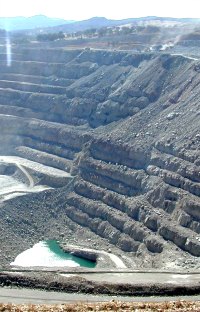
coal mineAt what point did scepticism become a dirty word?

Perhaps it was when political correctness overtook us and we were forced to accept convention or risk ridicule from everyone, including the kids. Maybe it was when we disappeared into the virtual world where the only thing reminding us of reality was stiffness from ‘smartphone neck’. Or maybe it was when the media purposely made sceptic and denial mean the same thing.

Here is quick reminder of the real definition of sceptical… not easily convinced; having doubts or reservations.

What this means is that a sceptic is not convinced by the first thing she hears. She thinks about new information, turning it around to see it from all sides. She seeks other opinion, even counsel. She thinks some more and then makes a decision to believe or not.

The sceptic is not a denier even though she may choose to reject what she is told. She is much smarter than that — she starts with the idea that whatever new information is heard may not be all that it seems.

Recall any scene from your favourite reality TV show. The editors pull together snippets of action to present the most drama and then milk it with liberal use of mood music enhancement. This can make the little craziness in the scene much wilder and entertaining; but if we believed all these capers as the truth we would be foolish indeed.

Now let’s consider how the sceptic would deal with a more difficult example.

Should we believe the Australian government when it says that giving mining companies taxpayer funded offset credits to capture methane at new coal mines is a good tactic to achieve policy targets for emission reduction?

Under any carbon price mechanism the idea is to reduce the carbon intensity of human activities. This means that energy generation, manufacturing, transport and agriculture [the sectors that make up almost all the greenhouse gas emissions] should release less carbon to the atmosphere than in the past. Where the activity can’t be made less intensive, such as a coal-fired power station, emitters can buy credits [or are given allowances] that, in time, make them commercially inefficient and so they are replaced by cleaner technologies.

Methane gas is often associated with coal seams. The whole coal seam gas debate is about extracting this methane as a fuel source. But when the resource in demand is the coal, the methane is either incidental or too expensive to capture. Usually it is released to the atmosphere where it contributes to climate change effects because methane has 23 times the global warming potential of carbon dioxide. Capturing and burning the methane from coal mines would reduce this emission source because methane converts to carbon dioxide when burnt. And carbon dioxide has a net global warming potential of 1.

Burning methane would reduce net emissions from the activity of mining coal.

Except how does this contribute to emission reduction when new coal mines will extract millions of tons of the very stuff that generates greenhouse gases in the first place. No matter that most of the coal is exported and ends on the emissions accounts of another country.

Whatever the rhetoric the taxpayer is actually paying for more emissions not less. In effect it subsidises the development of new coal extraction capacity. This cannot be “a good tactic to achieve policy targets”.

So what should the sceptic do with all this? Be themselves and be sceptical, very sceptical.

This is a ruse by the mining sector to get paid for emitting, the exact opposite of the original policy objectives.

Inspiration

workstationHave you ever stared at a blank page and wondered how on earth you will ever fill it with words? Yes, it has happened to us all. Maybe it was a long time ago in the exam hall, or perhaps more recently in front of the computer as the icy cold keyboard repels your fingertips.

And yet blank pages usually end up stuffed with words. Often it is drivel, but the empty screen is patterned soon enough. Somehow we find something to say.

It is amazing how this happens. We dip into the recesses of our synapses and an idea pops into being followed by words in some logical sequence to describe the thought. Blank is transformed because our brains conjure up meaning from somewhere.

Neuroscientists claim, as they populate their own blank pages, that this learned process is all about higher brain functions communicating with the more ancient limbic system in ways unique to humans. Something about our frontal cortex physically enveloping the base of the brain.

As maybe, only this inevitable mechanistic explanation sounds like an apology. Why not admit that we have no idea just how staring at a blank page can yield nothing, or a page of drivel, or on those very rare occasions a masterpiece.

There was a blank page before Shakespeare came up with “Shall I compare thee to a summer’s day?” Enough said.

After many decades trying to fill pages and screens with drivel from technical reports to blog posts, I believe that the inspiration that finds the idea and sets the words in motion is with us all the time. A portal if you like that can connect us to all the ideas in the universe. Only we constantly forget where it is and how to open it.

If we are tenacious or stubborn we find tricks to get around this amnesia. Reading related material, preferably of poor quality, often opens the portal for me, as does a tedious conference presentation. Something ego related happens when exposed to someone else’s drivel. It fires up my competitive instinct.

“You see,” says the neuroscientist. “It’s all about the limbic system.”

Touché

Another trick I use is to find a place to write. A spot where there is nothing else to do or has been done other than fill the blank page. The first draft of ‘Fences’ an as yet unpublished novel was written long hand on the train. By the way if anyone wants to read a ripping yarn about Jacob Morafe’s adventures as an African game ranger, let me know. Someone has to be the first to read a future bestseller. It could be you.

But I digress. Any actions taken to help fill the page are just triggers to achieve the portal and you will have yours. It is the mystery of the muse.

And there you go. Before you know it another 500-word post has appeared on a blank page. Drivel or not, it is as much a necessity for those afflicted with the writing curse as the limbic system was for our early survival.


Idea for healthy thinking

Here’s a thing.

Is this portal, the mythical link to the inspirational power of the universe, just the moment when we connect with each other?

Drivel or masterpiece is only known by how much it connects with other people. Somehow the masterpieces resonate.

I like this idea. Wouldn’t it be amazing if this were to permeate all the fluff that fill screens and clogs printers every day. So instead of just covering up the white space of the page, we waited for the good stuff.

“Nice thought Mark, but tell that to the limbic system.”

Happy thinking.

Inspiration 

budda statue smlHave you ever stared at a blank page and wondered how on earth you will ever fill it with words? Yes, it has happened to us all. Maybe it was a long time ago in the exam hall, or perhaps more recently in front of the computer as the icy cold keyboard repels your fingertips.

And yet blank pages are usually filled. Often with drivel, but the empty screen fills soon enough. Somehow we find something to say.

It is amazing how this happens. We dip into the recesses of our synapses and on an idea pops into being followed by words in some logical sequence to describe the thought. Blank transforms because our brains conjure up some meaning from somewhere.

Neuroscientists claim, as they feel their own blank pages, that this learned process is all about higher brain functions communicating with the more ancient limbic system in ways unique to humans. Something about our frontal cortex physically enveloping the base of the brain.

As maybe; only this time the inevitable mechanistic explanation sounds like an apology. Why not admit that we have no idea just how staring at a blank page can yield nothing, or a page of drivel, or on those very rare occasions a masterpiece.

There was a blank page before Shakespeare came up with “Shall I compare thee to a summer’s day?” Enough said.

After many decades trying to fill blank pages with drivel from technical reports to blog posts, I believe that the inspiration that finds the idea and sets the words in motion is with us all the time. A portal if you like that can connect us to all the ideas in the universe. Only we constantly forget where it is and how to open it.

Inevitably we find tricks to get around this amnesia. Reading related material, preferably of poor quality, often opens the portal for me, as does a tedious conference presentation. Something ego related happens when exposed to someone else’s drivel. It fires up my competitive instinct.

“You see,” says the neuroscientist. “It’s all about the limbic system.”

Touché.

Another trick I use, along with ignoring smartarses, is to find a place to write. A spot where there is nothing else to do or has been done other than fill the blank page. The first draft of ‘Fences’ an as yet unpublished novel was written long hand on the train. By the way if anyone wants to read a ripping yarn about Jacob Morafe’s adventures as an African game ranger, let me know. Someone has to be the first to read a future bestseller. It could be you.

But I digress. Any actions taken to help fill the page are just triggers to achieve the portal and you will have yours. It is the mystery of the muse.

And there you go. Before you know it another 500-word post has appeared on a blank page. Drivel or not, it is as much a necessity for those afflicted with the writing curse as the limbic system was for our early survival.


idea for healthy thinking

Is this portal, the mythical link to the inspirational power of the universe, just the moment when we connect with each other?

Drivel or masterpiece is only known by how much it connects with other people. Somehow the masterpieces resonate.

I like this idea. Wouldn’t it be amazing if this were to permeate all the fluff that fill screens and clogs printers every day. So instead of just covering up the white space of the page, we waited for the good stuff.

“Nice thought Mark, but tell that to the limbic system.”

Happy thinking.

Barry O’Farrell resigns as NSW premier

So there we have it.

After 7 years as leader of the opposition waiting for his tilt at the top job, Barry O’Farrell lasted three years as premier. Forced to resign for misleading the Independent Commission Against Corruption because he obviously did receive a $3,000 bottle of wine as a ‘gift’ after all.

This is not what usually happens. In politics there are no lies, there is just being economical with the truth. Politicians usually spout so much waffle and fluff their comments can be cut down to one word without loss of meaning. Consequently a host of dodgy doings and ‘mistakes’ can be erased, buried or simply forgotten.

So why did he resign? Many a politician of every hue has survived much worse.

Clearly it is not about the wine. Or even that he claimed not to have received it. It is about a system that is the epitome of not what but who you know.

We all walk around blinkered thinking that the world is meritorious. We believe that the best athletes play professional sport for our team, the best singers are the ones we download, the best minds are employed to engineer better lifestyles for us, and that the best organisers run our commerce.

We also believe that we elect the best politicians to sit in parliament and make the laws that we live by — yes, believe it or not, politicians are elected to make the laws that we are expected to live by. Not only that, but we believe they do the right thing in selecting the help they need to run things.

Well they don’t.

Barry resigned because he stuffed up. And presumably because he is an honest sort of bloke, felt that the stuff up was irretrievable. Except that by resigning he also took the spotlight off the truth of the matter. The political system is about who and not what you know. People get the job and companies get the tender because they are known. And sometimes to get known you need to send out expensive bottles of wine. It is the way of things. It is not necessarily corrupt but it always comes close.

The premier resigned because he nearly exposed the system for what it is and always has been… dodgy.