
Crystal clear thinking…

Photo by Victor Grabarczyk on Unsplash
Animal Medicine Australia estimates there are 5.1 million dogs in Australia. Most of these will be family pets and companion animals that make a difference to wellbeing.
What does it cost to keep all these pouches?
Dog ownership costs roughly $1,500 a year and perhaps $25,000 in the lifetime of the cuddly family member. All up Australians fork out $7.6 billion a year on their dogs. Just for perspective, NSW, where 8 million Australians live, spends roughly $4 billion on its police force each year and $24 billion on public education.
It seems that the dogs are up there with the essential things in people’s lives.
What about the hidden costs?
A single dog produces approximately 340 grams of waste per day. That means Australian dogs drop a mind-boggling 1,734 tonnes of turds a day.
That is as heavy as 137 double-decker buses or the take-off weight of three Airbus A380 aircraft with 1,500 people on board.
This weight of organic smelliness dropped on Australian sidewalks and parks is small compared to global output.
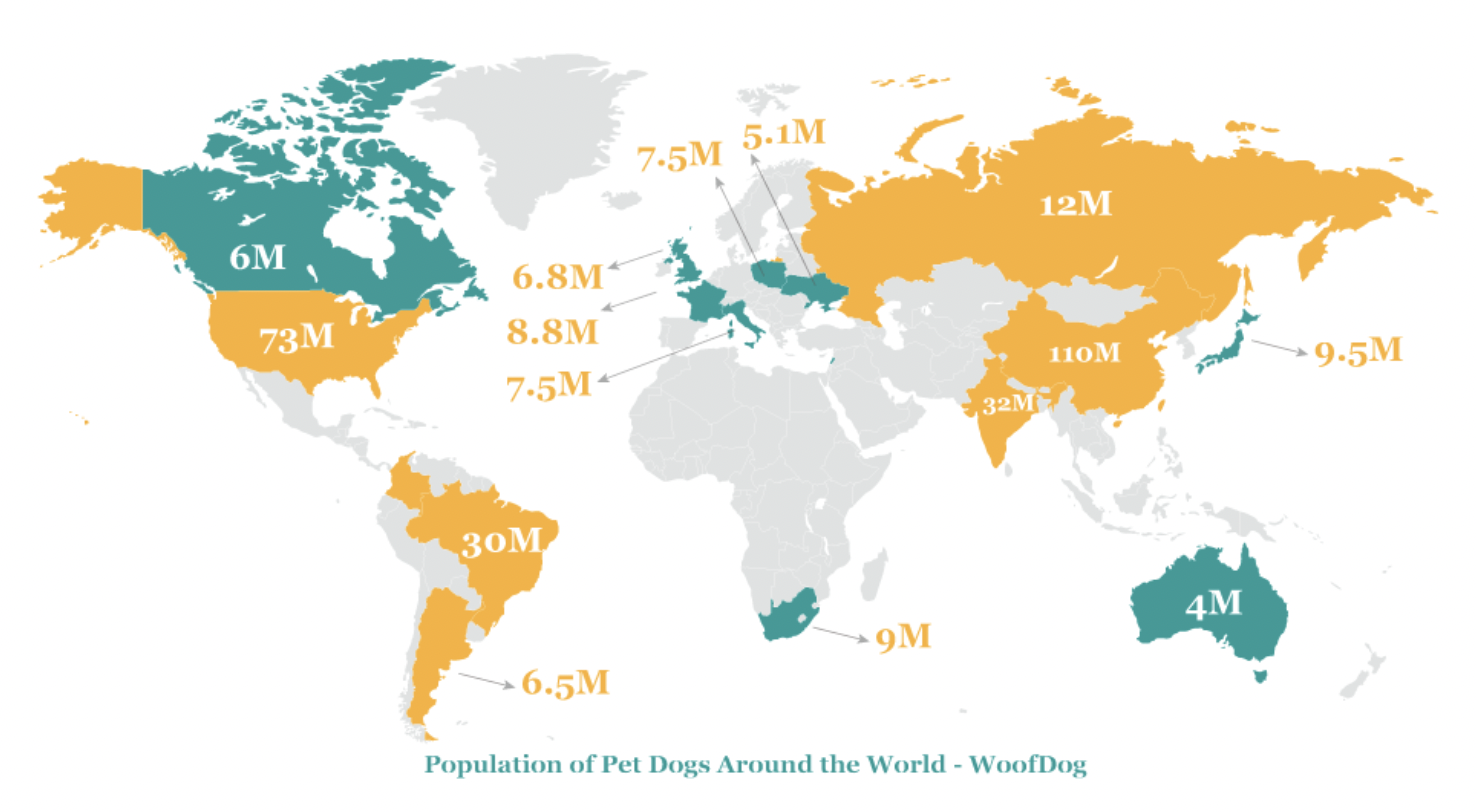
The data here are rubbery as the actual numbers are hard to find, not all countries keep records, and many dogs are strays, but there are probably around 470 million dogs worldwide.
A380 commercial flights pre-COVID were around 300 per day. This is just about enough take-off weight to airlift a day’s worth of dog poop.
This mass of manure is clearly significant given we need every ton of organic matter to keep soils productive.
Dog faeces (and those of cats) contains about 0.7% nitrogen, 0.25% phosphate and 0.02% potassium.. This chemistry means dog faeces are poor plant fertilizer, plus they often smell, stick to shoes, and contain pathogens. In its unweathered state, dog faeces are not useful, let alone fertilizer.
Most dog waste breaks down naturally in the environment where the dog left it. Some cities collect and incinerate waste with composting avoided.
So maybe the excreta of our omnivorous poodles is not such a resource after all.
An idea for the poop mountains
Perhaps the modest plant nutrients, the challenge in collecting it all, and the considerable smelliness take all the fun out of composting.
What about converting the raw material?
One company in the UK that makes small-scale incinerators for medical waste recognises the possibilities for dog poo in the waste to energy market.
Rather than just energy, what if the incinerators burnt the poop in low oxygen (pyrolysis) to create biochar such as these Mobile Pyrolysis Plants in Australia.
Biochar is a wonder product that increases carbon levels and helps retain moisture and improves nutrient exchange when applied as a soil amendment.
A conversion of poop to biochar would get around all the problems of composting pet waste for use in agriculture.
Dog poo on the paddock. Now that is an excellent idea.
Please share this idea with your next pet post


Photo by Kimberly Farmer on Unsplash
Well, who would have thought that after 13 years and a handful of readers that this blog would reach 500 posts?
Not me, certainly.
I am amazed and a little proud of myself for keeping it going all this time.
When I started, the blogosphere was the online space. There were prospects for a wide readership and perhaps even a side hustle from the proliferation of traffic. Then Facebook, Twitter, Instagram, TikTok, YouTube and a host of other online distractions hogged the breeze, and what was left was quickly mopped up by aggregators like Medium. Bloggers do it now for personal satisfaction, with only a handful of the early adopters maintaining their readership.
I can’t complain because I write rather than read blog posts, and it seems unfair to lament a lack of traffic. So the blog ticks along with 50 to 100 visitors a month.
Anyway, low traffic volume just needs a few viral outbreaks to explode. We live in hope.
A huge thank you to those kind folk who stumbled onto this blog over the years and read a post or two. And especially the few regulars who clicked the RSS.
It is nice to know that there are real people in the ether.
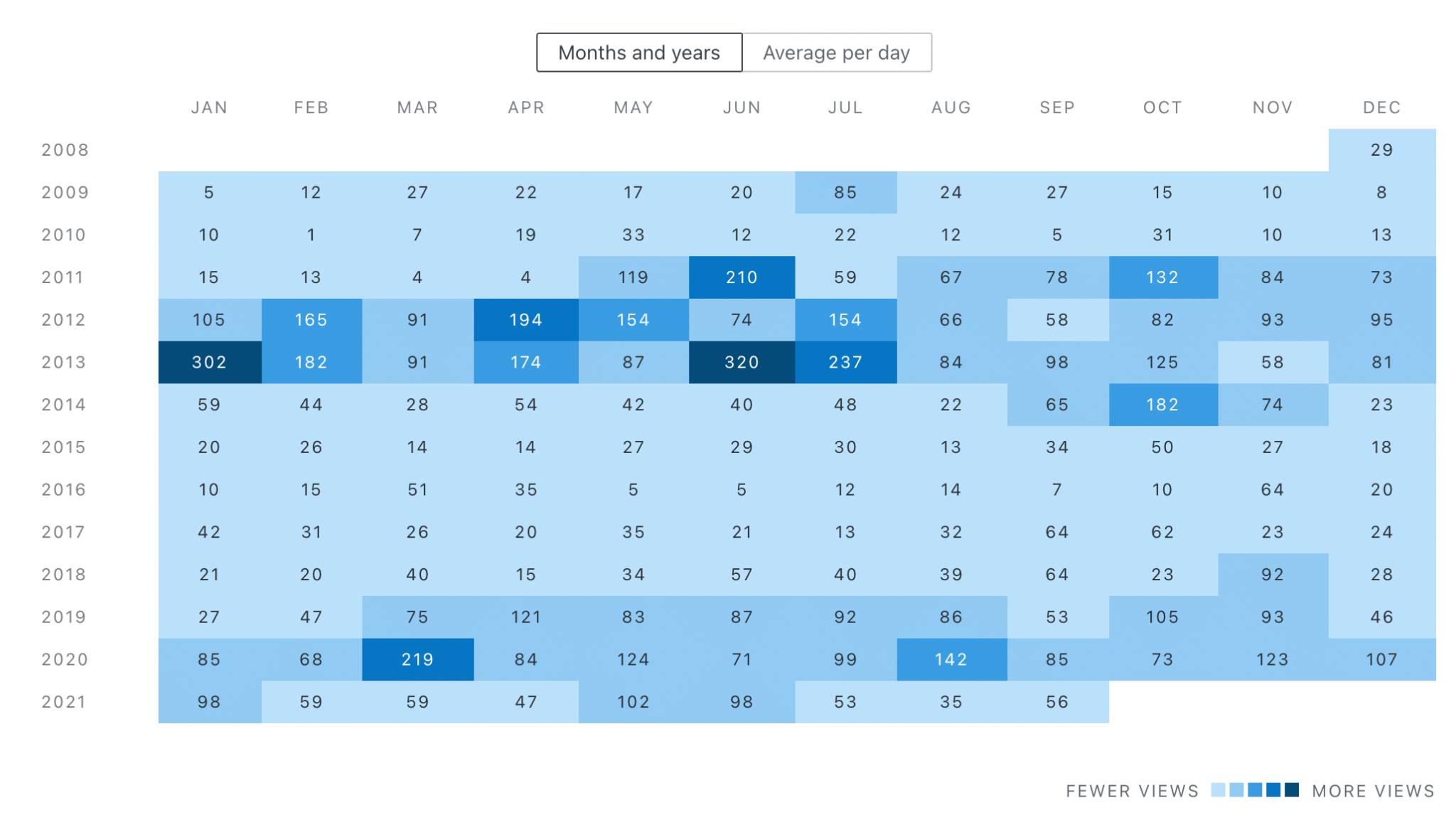
Not surprisingly, for an ecologist, the environment was the most popular category (142 posts), chased by awareness (135) and the Big Picture (127).
I did not expect to write about leadership (88 posts) as much as I did. But the political debacle that Australians have lived through in the last decade meant that laments on the absence of leadership were inevitable.
If any of these whinges offended, then good. It is beyond time that we woke each other up with a cattle prod and did something about the ugly, shameful behaviour that passes for political leadership in this country.
This week, I watched Strong Female Lead, a documentary film billed as “an exploration of gender politics during Julia Gillard’s term as Australia’s first female prime minister”.
It was harrowing to see grown adults dispense abuse to a colleague without the slightest remorse. I might have looked for the nearest bus if it wasn’t for this documentary’s hopeful ending. Let’s just say those 88 posts came about because the nation’s moral compass is buried six feet under.
No doubt there is more to say about our vacuous leaders.
I have always believed that awareness is essential to human wellbeing. No surprise that several posts were tagged thus. Our personal and social lives are better if we pay attention to each other.
Knowledge and perception of the bigger picture are more tricky.
Dissonance, denial and disbelief are much more accessible than confronting the truth of a finite planet with close to 8 billion eager people. Ostrich behaviour makes it hard to raise awareness without sounding pessimistic or preachy. But we all must confront fears, or our grandchildren will have a terrible and short time on earth.
I am working on some practical tools to help with awareness. It is a little early to announce what they are, but the intro has begun over at our new website sustainably FED.
A blog with 230,000+ words of depressing content should have run its course.
After a break from posting through 2010, I tried to reset Alloporus onto a more positive path, and it lasted for a month or two before returning to the usual laments. It seems I am stuck with the frustration of the information age being full of worthless detail.
Why can’t we see that food security is critical to the future of humanity, not climate change or koalas?
Humanity needs 23 trillion kilocalories per day, for goodness sake, just to keep the people alive, let alone the pets — by 2030, it will be 32 trillion.
There is a therapeutic effect of writing about the world in this way. It makes for depressing reading, but it helps to get it off my chest.
I am semi-retired now, too — phew, that was an admission I have been avoiding — so there should be more time to craft more engaging pieces.
So I will continue to post once a week in the hope of seeding some healthy thinking.
Thanks again for reading,
it means a lot to me.
Alloporus


Photo by Michael Longmire on Unsplash
I suspect that most people believe that the primary job of a bank is to look after their cash.
Deposit your money and, at any point in time, you can rock up at a branch or a hole in the wall and receive your cash up to the amount that you put in, minus a few fees.
The reality is that banks only provide a haven for our cash because it allows them to leverage the money held into investments. They borrow against their available capital and invest funds into a wide range of assets that they expect will yield more than what they’re giving you for the privilege of looking after your money.
It’s a fantastic financial model.
It’s the reason that having conquered the world of futures trading, capital gains, and hedge funds, Bobby Axelrod, the megalomaniac character in the Stan thriller Billions, played by Damian Lewis, decides he wants to become a bank.
Essentially it’s a license to print money.
Banks are always looking for assets that will yield investment returns in the shortest space of time. Their mantra, indeed their requirement under the law, is to profit, and they are ‘in the pound seats’ to do it, literally.
They have the scale and capacity to invest in projects that your average Joe couldn’t dream of, from skyscrapers to industrial plants, freeways, and airports. The kinds of investments that require tens to hundreds of millions of dollars to see them to fruition.
Banks have the advantage of using other people’s money and the advantage of scale. They make huge sums from investments that yield high returns for long periods, partly on the fact that no one else can invest in them.
And so it is and has been.
The banks make money, but the projects they fund often deliver utility.
It is not always good.
The pursuit of profit is relentless and ruthless.
Goldrush mentality attracts the most ardent and most skilled as well as the opportunist. Money gives banks the very best people with a sharp mind and a ruthless attitude. They quickly find the best ways to reduce costs and maximise returns.
No surprise that banking can support projects that have severe externalities and direct impacts on the environment. Recall an externality happens when the cost of an activity is not absorbed but shipped out. The commons are excellent dumping ground because no one person or entity gets hit with the liability.
Capitalism degrading the environment is profound. Development has to happen, but it becomes pointless if humanity has no safe place to live.
So who is to blame?
The reality is that we, the people, want roads, skyscrapers, and industrial plants that deliver raw materials for all of the stuff we want to buy.
We are the ones that live in large houses with more bedrooms than you could ever need, more luxury than you could ever really afford. And yet, everyone wants a better life, and it is forever the human condition to want betterment.
In other words, the consumer is ultimately responsible.
Instead of blaming the banks, what if we blame the consumer?
Maybe get consumers, us, to give up our desire for stuff, our emotional and mental drive to better ourselves and provide for our families. Quosh those innate biological feelings to make more that is in all of us.
Well, good luck with that one.
Perhaps there is a compromise position where both individuals and the finance community begin to work together to look long and prosper.
Currently, we do this through regulation.
Governments curtail the riskiest financial behaviours through legislation limiting the amounts of money banks can borrow, their financial ratios, and their ability to exploit customers, in itself a significant ongoing task.
Governments are in a difficult position. They see growth as a political necessity and are reluctant to curtail development activity or the banks that finance it. Yet, all the while, development activity is damaging the planet.
If we can’t blame ourselves or the banks for doing what we want them to do, humanity has a problem.
We do have a choice.
We can accept that consumption and more-making has an impact and try to do something about it. Even a little is better than doing nothing. Light bulbs, anyone?
But fiddling just puts off the inevitable. Instead, something dramatic is needed. The doughnut, perhaps?
Alternatives to historic capitalism exist, and many of the options are maturing nicely.
For example, ‘cooperative enterprises’ where workers make the major enterprise decisions rather than boards of directors selected by shareholders. This alternative is called economic democracy.
Only this is not a million miles away from what we already have. The people choose, but this will not guarantee decisions in favour of anything other than the people.
Robin Hahnel’s book Of the People, By the People: The Case for a Participatory Economy describes the participatory economy where all citizens, through the creation of worker councils and consumer councils, deal with large-scale production and consumption issues without the need for appointed representatives. The participatory economy is the origin of the Green New Deal, a package of policies that address climate change and financial crises.
A participatory economy is different. Imagine the circus of state and national politics banished to the bench.
Doughnut economics is an economic model proposed by Kate Raworth that combines planetary boundaries with the complementary concept of social boundaries. Look after everyone and the planet.
Doughnut economics is different too.
And these are just three of the many alternatives with potential.
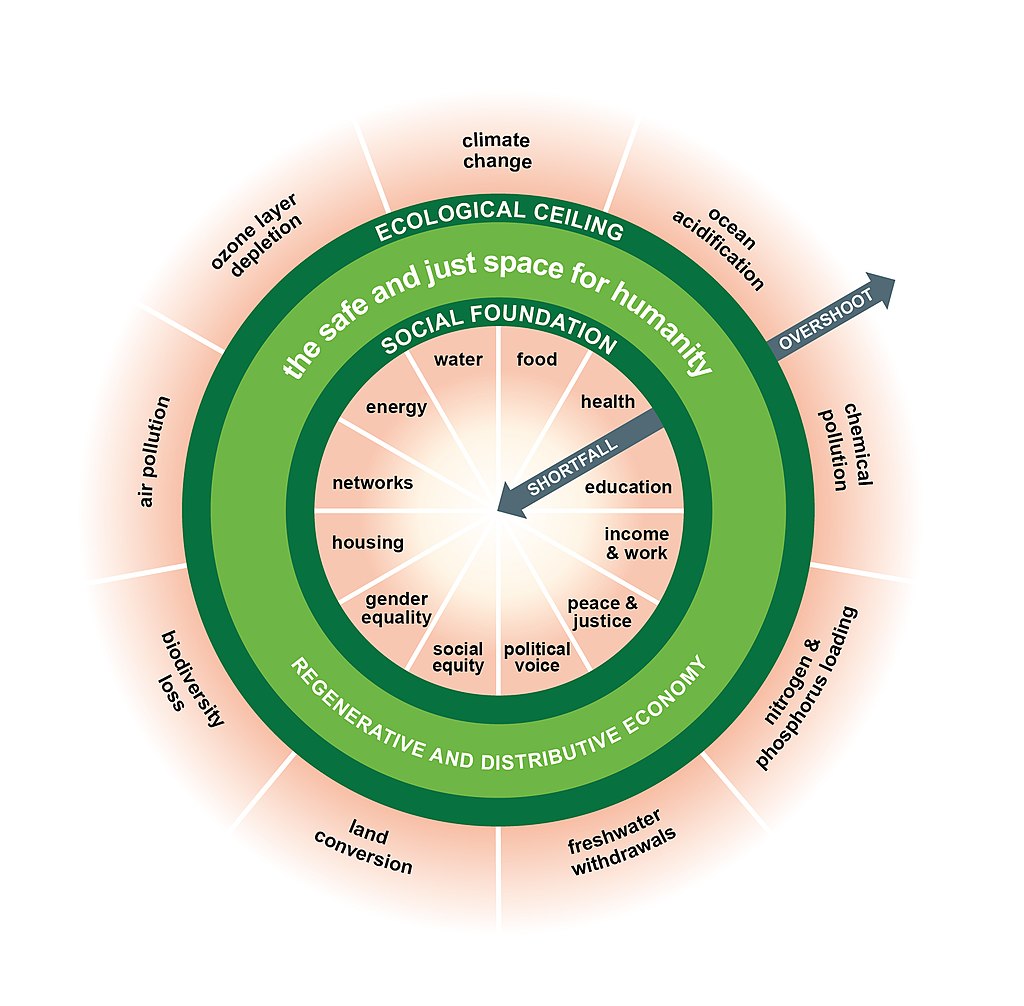
Most of the alternative economic systems require a shift in responsibility.
It would be on us, not the banks or the government or the unscrupulous developers. We will all have to step up and understand the consequences of our choices.
The banks would continue to do their thing on our behalf; only we would be responsible for the consequences of what they do.
And so we get to the rub.
Capitalism has delivered growth and, on average, betterment for humanity. Only it comes at an uncomfortable cost. And the only way to pay back that cost is to take responsibility for it.
Are banks bad? No, they are a caricature of our abdication from personal responsibility.
Please like or share or comment. It helps me heaps, thanks.


Photo by Shaah Shahidh on Unsplash
According to Ian Verrender, ABC business editor, a senior Australian government minister who was on the wrong side of a few drinks made this off the cuff comment…
“The difference between Labor’s policy and ours is that Julia Gillard introduced a scheme where big polluters paid Australian taxpayers. Tony changed it so that Australian taxpayers pay big polluters,”
Unnamed Austrailian Government Minister
This bizarre statement referred to the carbon price, the so-called ‘great big tax’ introduced by the Labour government in 2012. This blog has mentioned the debacle that is Australian climate policy and the frustration and sadness that it has been thus for over a decade.
Imagine the arrogance in this inebriated quip.
Australians elect such individuals, and as an excellent article by Leigh Sales, another ABC stalwart, tells us, this level of vulgarity is typical. It is not a personality thing but ingrained into the political system. It is leadership that lacks.
I always liked the idea that the cream rises to the top.
It ranks alongside ‘the truth persists’ as quotes that are hopeful and true. The problem is it’s taking a while, way too long.
“Cream always rises to the top…so do good leaders”.
John Paul Warren
The delay in the arrival of some genuine leaders will have consequences.
One of the more ironic is the one Ian Verrender describes, the consequences for Australia of the rest of the world putting a price on carbon in the form of carbon border taxes. Countries that have lowered emissions and want to keep it that way are reluctant to import emission-intensive commodities. At least that is the rhetoric.
The reality for Australia is that there will be carbon levies. The world was trending towards enforcing climate policy through trade action. For example, the EU Carbon Border Adjustment Legislation is still rough but will include aluminium, iron, steel, cement, natural gas, oil and coal.
Here are the 10 Biggest Exporting Industries in Australia
That is at least $309 billion in exports that could get slugged for their emission intensity. If the levy is just 5%, that is $15 billion in lost revenue… per year.
But it’s ok; the taxpayer is waiting patiently to pay the big polluters.
If you enjoyed this little rant or care at all that leadership needs some new blood, please share on your socials.


The next time you’re out and about in nature, sidle up to the nearest tree that you can’t quite get your arms around.
This mighty organism will tower above your head and its trunk will feel rock solid even as the branches sway gently in the wind.
Now take yourself back to the time just before humans invented metal tools.
This is about 6,000 years ago around 4,200 BC.
Imagine you were there with a few fellow hunter-gatherers or perhaps your clan was amongst the earliest primitive farmers and look again at the tree.
Ask yourself “I wonder if we can cut this thing down, with my stone axe?”
The answer, of course, is not really. Unless you have an enormous amount of time on your hands or there’s an extended family around willing to help with the herculean task.
Obviously, if the tree fell down of its own devices, in a storm or because it had reached the end of its natural life, this would help a lot. Not least reducing the dangers of several tons of timber falling on one of the helpers.
The problem would then become shaping it into useful material, for example, a canoe to take you out onto the swamp to gather food or beams for a shelter. This processing still requires an enormous amount of effort with stone tools.
The fact that our ancestors tried it anyway even with simple technology is a testament to human ingenuity, tenacity, and our skill with tools.
Run forward a few thousand years and imagine what it would have been like for some of the early European settlers in Australia in the late 1700s. When they arrived on the east coast they were presented with vast forests of massive trees that they recognized as a resource, but only had limited tools and not much machinery.
Until around 1850, red cedar, native softwoods, and eucalypt trees were felled by axe or crosscut saw and sawn into lengths using pit saws. Timber was also hewn or split with broad axes and wedges. Transport of the timber to mills and markets was by animal power and so forests closest to market areas were logged first.
Cutting down 30 m trees with handheld saws and axes is hard work when it’s 35 degrees in the shade. You need to be one tough cookie to be able to do that on a regular basis.
But they did it.
After 1850 the use of steam power including powered sawmills and road transport enabled higher productivity and access to areas previously uneconomic to harvest such as some of the coastal rainforests.
It was not until electrification and diesel power, which first appeared in the 1940s, did wood-chipping plants, pulp and paper from plantation softwoods, eucalypts, cypress pine, and rainforest timbers make the whole process of access to timber products easier.
By this time most of the forests in Australia had lost their biggest trees that were taken out first, particularly the hardwoods, and many of those huge trees that they began with no longer exist except for in a few isolated parcels of the inaccessible country that the tractors cannot reach.
There’s a video going around on the social feeds at the moment showing what happens in a sawmill. Not a particularly large one but a modern one with all the efficient high-tech tools.
The trunks of the trees, about the size of the one you tried to get your arms around, arrive at the yard neatly trimmed of all their branches and squared at both ends. This of course is done by a machine in the forest, no longer is it required for a tree to be cut down by hand. A tree lopper and strimmer and cutter will do that job in a fraction of a second.
The cleaned logs are piled on the back of a B double and deposited at the sawmill outside in a hopper. That hopper moves the logs in such a way that they end up on a conveyor belt, separated and aligned ready to go into the mill.
The conveyor belt takes each log one at a time through into the mill. As it arrives it is scanned to accurately record width and length and shape. This information is fed into the next machine, essentially a huge and very fancy band-saw, that begins to cut the planks from the round trunk, taking slices in both directions thanks to a double-sided saw blade. The slices are measured precisely, cut and fall onto another conveyor belt as neat planks.
The machine then flips the log four times until the square pole in the middle is left and goes down the belt that takes the timber into the stacking yard. In a matter of minutes, each log is measured, cut, and stored.
What would have taken our ancestors weeks or months of very hard labour just to get a canoe. Our modern technologies can produce timber of any size and shape in a matter of minutes.
Here is another example on an even bigger scale.
Logs to Lumber – An aerial journey through the sawmill
Imagine what this capability does to resource use and to the supply of resources.
It is much much easier to exhaust supply when processing efficiency is so high. And if the objective is to convert a resource into cash — the name of the game for every business — then that is what happens so long as the process is profitable.
The conversion of capital into cash is a powerful force. Modern technology advances make the conversion process for natural capital super-efficient.
That tree you hugged is no match for a chain saw let alone a forestry tree lopper.
Commerce plus technology is why natural capital is used up.
And we generally call it development. And even if the rhetoric is for sustainable development the power of commerce and technology makes that ideal a challenge.
The reality is that these systems of production are so efficient and so hungry for resources to maintain their profitability and deliver return on investment in the lumber yard machinery that it is not just the trees that need to worry.
Please share on your socials. It might be a bit depressing to read but these realities need a spotlight.
 Alloporus