
The heart of the matter
This article was written back in 2010 and was published online on The Climate Spectator. Nearly three years on it still makes fascinating reading as the rhetoric ramps up ahead of the federal election.
 Recently the NSW Natural Resources Commissioner, Dr John Williams, hosted a workshop in Canberra on resilience thinking that was attended by a platoon of scientists, agency staffers and consultants, all concerned about the environment.
In his opening remarks, the Commissioner urged the participants to consider a simple enough question: What matters most?
A ripple went around the room as things that matter jostled for space in everyone’s head. No doubt thoughts of happiness, love, friendship, the mortgage and a few thoughts we don’t usually admit to arrived, and it was clear that there was not just one thought. The one thing that mattered did not appear instantly to everyone.
Caught as we are in the policy vacuum on climate change, with backflips and peculiar ideological positions to frustrate us, it might be useful to ask the same question of the climate change debate: What matters most?
Those representing heavy emitters will cry that exposure, unnecessary liability and uncertainty matter. Few of us like threats to business as usual. However, some exposed businesses have used climate change as an opportunity. We have all been offered the option to offset a flight or visit a carbon neutral office, where the most important thing is to be seen to be doing something good. Catastrophe can make for great PR, and so matters most, but for very different reasons.
Unless you install roofing insulation, climate change is of little consequence to small business. There is not much beyond the upward creep in the quarterly energy bill to keep your attention away from more pressing issues of cashflow, customers and the late arrival of a key staffer.
A couple of years ago, the general public in Australia thought climate change itself mattered most. They even elected a new government with a Prime Minister who claimed it was “the biggest moral challenge of our time”. Today polling suggests the majority see climate change as just another opportunity for politicians to renege on a promise. And a third of them think we should not pay a cent to fix it.
Climate scientists, at least those gathered under the banner of the IPCC, reached a consensus that greenhouse gas emissions matter most. Concentrations of gases that absorb reflected radiation, the atmospheric blanket that makes life as we understand it possible, were the key regulators of climate. Human activity was upsetting the delicate balance of greenhouse gas composition and we needed to stop that or risk catastrophic warming.
Emissions matter most because they lead to warming that puts more energy into the cyclical systems of atmosphere and ocean, changing the pattern of circulation, making it wetter, drier, and perhaps more stormy on an increasingly voluminous ocean. In short, having some very specific local climate effects.
The diplomats at the UNFCCC thought this mattered too, but not as much as the necessary diplomacy. So they negotiated at length to agree that net emission reductions matter, but that we need to negotiate some more to agree on the reduction targets and how to achieve them. Clearly, among the policy makers, it is debate that matters most.
Ask residents on the beach front at Byron Bay the question and it’s all about saving their homes from storms. They may not even know that warming will raise sea levels and may make some storm surges more acute, for it has always mattered that the ocean was only a wave away from your beachfront retreat. Save a thought for the 200 million citizens of Bangladesh on the Ganges delta who don’t even know that sea level rise matters most to them.
Irrigators along the Murray River in NSW who, despite having a legal license to extract water, have not seen any reach them for a long time, have another answer. What matters most to them is the real prospect of losing their livelihood altogether.
Clearly, there are as many things that matter most about climate change as if we had asked the question without the qualifier. Climate change is a threat and an opportunity, a challenge and a risk. For some it is real, but for most of us it is not the most important thought in our heads. So perhaps what matters most is not climate change at all.
Perhaps we have missed the real risk, the real challenge that we face, and the hint of what that is comes from all these specific concerns. What matters most is that we have the capacity to adapt and transform to a changing world.
It is critical that we give ourselves the flexibility to make our food production more efficient, ensure our environments will deliver all the services we take for granted and that our economic and social structures remain viable as they transition.
It also matters that we act on that capacity now, for the world is changing rapidly. The shifting climate just makes some of the inevitable the changes more acute and immediate. None of this should be a surprise, given that there are now close to seven billion souls trying to fix what matters most to them.
———
Here in April 2013 I am not sure if the timelessness of the sentiment in this article is what matters most.
Perhaps we should get our arses in gear.
The real elephant in the room
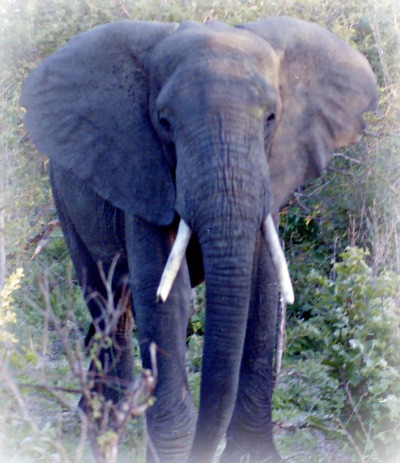
As the author of ‘Awkward News for Greenies‘ it is a little odd to see alloporus promote green thinking of the tree hugging variety, but…
this time they are right and we should pay attention.
Check out this video on the elephant in the room
TED | Alan Savory
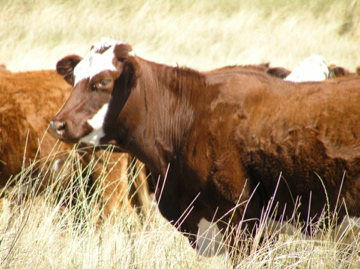 TED lectures are a neat idea. Somehow they have managed to legitimise thinking outside the box and I suspect we don’t fully appreciate how important this is.
Most ideas that stick come from our current paradigms for anything really new must be pretty special to succeed in a society dominated by commerce and naturally conservative mind-set. So ‘good on ya’ TED.
About a decade ago I met Alan Savory on one of his trips to Australia to promote his ideas on holistic management. It was an interesting encounter [for me at least] that took me back to my time in Zimbabwe in the late 1980’s and then to thoughts of what it must have been like to both wander through the bush and the corridors of parliament in the time leading up to Zimbabwean independence in 1980 as Alan Savory had done.
He claims in his book that it was a combination of his science training, days on end tracking in the bush, and his time in politics that brought him to understand the importance of intensive, timed grazing by larger herds for the health of our grazing lands. Now he has extended his idea as a solution to two huge global issues: desertification and climate change.
Check out his TED lecture, it starts slowly but is worth persisting to the punch line.
Protecting Mother Nature
 “We must protect mother nature from our worst excesses” is the headline of an article in the Enquirer section of The Weekend Australian this week.
The tagline “We can raise our living standards without destroying the natural world” introduces an opinion piece about growing human numbers and our deepening psychological motivation to keep up with the Joneses. Two things that are leaving us with stress and putting strain on the environment. And yet the ”wonderland of nature” is still there to us inspire the spirit. Natural glories abound that should garner our respect and “a determination to protect Mother Earth from our worst excesses.”
All good stuff you would think.
There are posts a plenty on this blog and by many thousands of other bloggers saying pretty much the same thing. Hey, it is even the main tenet of my latest book Missing Something.
_
Missing Something | get your print on demand copy from Amazon or download a paperless version Missing Something Kindle Edition.
_
So why mention this piece from the sunday paper? Well, the curious thing is that the article is attributed to Craig Emerson, the federal Minister for Trade and Competitiveness in the struggling Labour government.
Now if the juxtaposition of topic and source doesn’t make you smile, then it is worth remembering that the newspaper is as brown as it gets [being owned by News Limited is a bit of a give away] and is always sticking the knife into anything with a green hue.
Clearly the editor was having a laugh and providing a great gotcha opportunity to catch the hapless minister sometime later in the election year.
It is shameful that the sordid media cycle and political agendas do this to such important ideas. We do need to be more mindful of nature, more concerned about our exploitation of natural resources, and even to take time out to feel the wonder for ourselves.
What the Minister did, apart from being suckered, was miss the opportunity. It is not enough to say that there are now very many of us putting the environment under pressure, we have to confess to our dysfunctional desire to exploit and find the emotional fortitude to think before we act.
Maybe my lesson was to enjoy the chuckle I had at reading a green rant from a trade minister and leave it at that.
–
NEW BOOK | NEW BOOK | NEW BOOK | NEW BOOK | NEW BOOK | NEW BOOK | NEW BOOK
It is true, I do have a new book that is all about how we perceive natural resources and those wonders of nature.
Check out a description here or better still order a print-on-demand copy of Missing Something from Amazon or download the Amazon Kindle edition of Missing Something right now.
Something unexpected
 Here is an interesting situation, almost unimaginable.
You are approaching your 60th birthday and are about to be surprised by an unexpected inheritance from a wealthy relative that you barely remember.
Many years ago your great Aunt, who was always rather odd, left you some money.
She stipulated that you could only access the balance of the funds when you are 60 years old, 40 years on from when the money was deposited.
The good news is that the initial capital she left was $10 million, a huge sum even if nobody quite knew how she came to be so wealthy. The bad news is that the $10 million capital has lost value to the tune of 1.3% a year.
Bummer. Not only did you have to wait to be rich, but also each year there were 1.3% fewer funds. Still, in a few months time when you reach 60 there will be a bank cheque for $6 million in the post, more than enough for a world cruise or two and a luxurious retirement.
Your younger brother was less fortunate. The dowager only bequeathed $1 million to him under the same rules. He has to wait longer for his funds and gets a much smaller cheque of $593,000.
A tidy sum for sure but not quite enough to fund his retirement.
Your three cousins, who soon found out about the unexpected inheritance, were also hoping for something from this distant relative that they only just realized they had. Sure enough, she did not forget them and deposited $100,000 each for when they reach their 60th birthday. They get $59,250 — certainly better than a kick in the teeth but hardly a pension fund.
On the first of your world cruises you mull over the odd situation of financial capital failing to appreciate.
What if your retirement savings, that before your great slice of luck were your only means of support in old age, were being eroded at 1.3% a year?
Each year the amount you had saved up went down a bit, not much admittedly but it went down. Likely you would seek to reinvest your capital quick smart rather than run the risk of not having enough funds for your retirement. Also likely you would fire your investment analyst and rant at everyone you could, looking for a scapegoat for such a fundamental error.
And what bad news it was for your brother. If he had known about that $1 million all those years ago and invested it wisely he would have more money than you right now.
As you sip a G&T on the sundeck you can’t help thinking it funny what we take for granted.
Another unexpected thing
Soil scientists have estimated that the amount of carbon in agricultural soils in Australia has declined by 51% in the last 40 years — that is 1.3% a year.
Soil carbon is a critical environmental asset that drives plant growth because carbon fuels soil biological activity, promotes soil structure, aids infiltration and moisture retention and supports nutrient exchange. Handy material to have and not something to be squandered.
What is worse is that science has little idea about the initial carbon stocks [the capital]. It might have been the equivalent of $10 million in which case we can keep going for a while.
We might even have time to reinvest by adopting smart agricultural practices and get the capital to appreciate again.
The worry is that we may be as uninformed and as poorly off as your cousins.
Here is the original scientific reference for loss of soil carbon [you can find a copy on Google Scholar]:
Zhongkui Luo, Enli Wang, & Osbert Jianxin Sun (2010) Soil carbon change and its responses to agricultural practices in Australian agro-ecosystems: A review and synthesis. Geoderma 155 (2010) 211–223.
And some more articles on soil carbon
The elephant in the bathroom may have farted
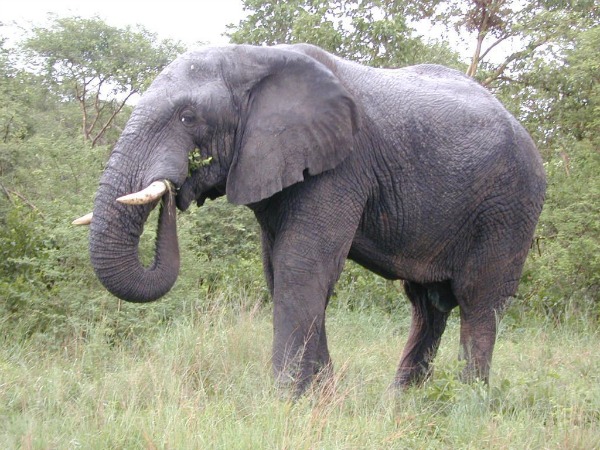 Well it would seem that somebody close to the policy makers might have noticed the elephant in the bathroom.
This week an article in the Financial Review talked of a carbon tax budget hole that could be $4 billion deep thanks to a carbon price that might not continue to rise after the fixed price period after all.
Blind Freddie can’t help but chuckle and the elephant’s stomach rumbles with contentment.
It seems that there has been some new modeling of the carbon price beyond the fixed price period on behalf of Australia’s Climate Change Authority. The numbers suggest a “fall from July 2015 to $10.72 a tonne”.
This should be no surprise given the current European market prices are hovering around $5 tCO2e — this difference from $23 per tCO2e and rising to the reality of current market price is the elephant standing quietly next to the bassinette.
Now if you are a government that has been struggling to get the balance sheet back in the black because it was one of the core things you promised to do, then $4 billion less revenue is a problem. Especially given that the carbon price policy was hugely unpopular in the first place and will continue to give you trouble in an election year.
If it was just a revenue shortfall [$10 instead of $23+ per tCO2e] that probably wouldn’t be too bad. Only the revenue is already either spent or committed, mainly to ease the pain for exposed industries and for consumers, making a market price dip in 2015 a double whammy.
Awkward for the Australian government but stayers among carbon traders in Europe are not too worried. The say it is just what markets do, they will show price volatility around long-term trends. And just now the price is low. Later it will rise again, not least because this is a regulated market designed specifically to manipulate credit supply to raise the price and reduce demand. Like all markets, success comes from the long play.
Then there is another thing that the elephant symbolizes.
Remember that the carbon price is for a permit to emit and fewer permits purchased mean fewer carbon emissions. This was the policy objective: to reduce emissions of greenhouse gases by making it more expensive to emit than the alternatives.
And as President Obama brings action on climate change to the State of the Union address, it will be hard to ditch the policy now. So here are a couple of options given we can see the elephant.
Ostrich option | Bury the report or, if the electorate cotton on, spin it like a fury.
After all 2015 is a long way off. There is plenty of time for anything to happen, perhaps even something positive. Remind yourself of the positivity of the ballsy carbon traders and wait. In the meantime, do whatever is possible to make the whole thing go away.
Be a honey badger | take hold of the policy, believe in it and shake it hard.
The idea of a carbon price was that it should deliver behavior change and make Australia less carbon intensive. So embrace that and with the tenacity of a honey badger stick with it. Allow an aggressive permit allocation limit, ease the coupling to the EU carbon market by changing the proportion of credits emitters can source from overseas and explain why to consumers. There is no reason that the domestic market cannot have a higher carbon price than elsewhere other than the fear of ceding competitive advantage.
In short, show leadership.
Now there is a thing.
Dangerously quiet
 It has been 23 months since the NSW Labour government left office after more than 16 years in power.
Normally when a left leaning administration is replaced by a right leaning one the inevitable shift in attitude to nature and natural resources would galvanize the environmental movement.
When hard won conservation legislation, planning rules and funding for environmental management are chipped away there might be an objection, some resistance, or at least some verbal argument. Only there has been very little noise.
No great shouts against the inching away from protection — not even allowing shooting in national parks seemed to get a reaction.
Only the nationally significant issue of coal seam gas, particularly how it will be extracted and the possible impact on farmers, seems to have stirred the pot.
Regular readers will know that alloporus is not overtly green — a regular guy who owns a car, takes plane rides, watches a plasma TV and wrote a book called “Awkward news for Greenies” has little moral ground to claim great environmental advocacy. Yet this quiet is eerie — makes you wonder.
Is it the calm before the storm, the tirade that must hit when the environment is no longer considered?
Or is it something else? Perhaps there is no energy left. It could be that the era of loud advocacy has passed. Maybe the malaise of personal entitlement has swept across us all, even the card-carrying activists.
If it has then we have a problem. Whilst screaming from greenies is about as welcome as a crying baby in the quiet carriage of the commuter train, it performs a vital function.
It keeps the b—-ds honest
And when all that goes quiet it is dangerous for us all.
€0.40 per tCO2e | the elephant in the bathroom
 I wonder what it would be like if there was an elephant in the bathroom given a mature female African elephant weighs 2,000+ kg, stands over 2m at the shoulder and will drop 100 kg of dung in a day.
She is here folks, right here in the bathroom, the smallest room in the house. And she is so big that she could not hide even in her Majesties powder room.
€0.40 per tCO2e
There she is, wafting her trunk gently from side to side, chewing quietly on some acacia bark.
€0.40 per tCO2e
Can you see her yet? Did you hear her stomach rumble?
€0.40 per tCO2e
Oh yes, there she is. The market mechanism designed to make alternative energy sources more attractive by making greenhouse gas emissions expensive.
Remember, emissions are permitted but only so many of them and you need to buy a permit for some or all of them. These permits cost you money. You can buy offsets against those permits from energy efficient projects, even from projects that reduce emissions from land management, and these would be cheaper than the permits and so create an opportunity for trade.
Only to achieve the outcome of overall emission reduction the offsets cannot be too cheap, otherwise what is the incentive to change your emission profile? That, after all, is an expensive thing to do.
€0.40 per tCO2e
If you would like to read about how not to see this elephant, for after all an elephant in the bathroom makes taking a shower a challenge, try here
Paying more for food

As regular readers of alloporus will know, posts on food appear quite often on this blog.
Not new recipes for banoffee pie [can be too bananary] or salted caramel tart [delicious with just the right amount of salt] but more about how we are going to consistently grow enough of food to feed the growing and increasingly fussy global human population, not to mention their pets.
Food security | A food security challenge | What we eat
Recently I asked a question in my confused Confucius series on the article site Hubpages to see if food security was something people thought about.
Being confused Confucius the question was just a tad lateral: Would you be prepared to pay more for your food if it meant food supply was secure? [The link takes you to the answers and comments] and there is also a summary Hub
Turns out that there were three main objections
- Could not pay more because it was already a struggle to cover the food bill
- Paying more would not solve anything
- We already pay
Social media is a great tool to canvas opinion but, unlike answers to exam questions from my long-suffering undergraduates, answers to questions are often oblique.
Not being able to pay is fair enough and no doubt very real for many people all around the world.
Paying more not solving anything did not really answer the question by making the assumption that it was not possible to pay for security. Bit of a dodge I think and quite common I suspect in our thinking. We jump onto the polemic in order to avoid searching ourselves for what we truly think.
The ‘we already pay’ because our production system is riddled with externalities, also didn’t really answer the question.
I guess all I was asking is if we would pay to be secure, pay more for our current food to know that we would always have enough food in the future.
So far the answer seems to be either ‘no’ or ‘not something I want to answer thanks’. This I find both curious and just a little disturbing.
 Alloporus