Environmental value | perception is everything

Not a HyundaiSuppose for a moment you are in the market for a new car, a nice sporty hatchback to help you ease into mid-life.

And what if, due to some bizarre rift in the fabric of reality, I told you that for one week only a Mercedes and a Hyundai were the same bargain price. You could snap up either a zippy, sexy and undoubtedly metallic new Mercedes or equally zippy and metallic Hyundai for $20 grand.

What make would you choose?

It would be the Mercedes of course — and why not? The Merc has prestige written all over the badge on the bonnet.

As it happens and despite similar specs on performance, size and reliability, there is roughly $15k difference in the retail price in Australia between a standard Hyundai and the bottom of range Mercedes hatch.

In the real world without rifts where most folk are budget conscious it is no surprise that more Hyundai units are sold. And yet there are still enough people who value the Mercedes enough to fork out the extra cash — almost twice the amount to do essentially the same job.

Perception of value is obviously a powerful force.

The extreme of this for me is the handbag. Its functionality is always that same. Sure its looks vary from brand to brand but enough for the name on the clip to mean a handbag could retail for $50 or $5,000? Bizarre.

Here is another example.

Suppose you are accused of a crime that you did not commit. It’s a complex fraud charge and the police arrest you. Right away you call the best lawyer you can afford for even though you are innocent you know it will need the $500 per hour worth of expertise to prove it. Naturally as you are innocent and the judge agrees, the court awards you damages and you recoup all your expenses.

My point though is that at the time you gladly pay what it takes. In that circumstance of false accusation there is plenty of value in that $500 an hour.

Perception of value is also a highly contextual and personal thing. This is just as well. Individual preference for value helps create much of the complexity and variety in our society and we are the better for it. If you have the means and derive sufficient pleasure from a $5,000 handbag, go for your life [although part of me can’t get past the reality that $5,000 is roughly what it costs to keep 7 Ugandan children in school for a year].

So we come to environmental value and the same rule applies: perception is everything.

In western economies the majority of people who live on and off the land value it because it provides their livelihood. A paddock is a sheep factory and a field a grain production unit where primary production is harnessed to deliver goods for sale.

Of course there is some heritage, love of the great outdoors, feelings of wellbeing and social good that comes from growing food but ultimately it is about the production and sale of a commodity. And this production value is reflected in the price of goods and the production potential that is reflected in land value of rural properties.

Except that the end buyer of the goods, the consumer, never sees the paddock. She only sees the produce and the price sticker in the supermarket. The value to her is in what she can get to feed her family for her weekly budget, or in this metrosexual age, his weekly shopping budget.

The retailer does not see the paddock either. He [or she] just negotiates a wholesale farm gate price or better still enlists a supplier to do all that dealing. These business people see value in cost reduction and the ability to bargain down. And they use the powerful levers of volume and distribution to achieve the best price.

Their perception of environmental value is profit and we are grateful that they focus on it. Without this system of wholesale production and efficient retail we would have far less money to spend at the movies.

We could say that in this scheme of producing, buying and selling produce environmental value does not exist. The value is in the goods that we manipulate the environment to produce.

‘Ah but…’ I hear you shout. We do value the environment for itself. Why else would we have national parks, laws to prevent clearing and pollution and whole bureaucracies assembled to manage all our development activities?

Well yes, there are some picturesque, relaxing or wild patches of the environment that we ‘value’ and sometimes pay good money to visit. There are also places of cultural significance that mean a great deal to us. And yes, we have planning in place to allocate and sometimes restrict activities to preserve and maintain areas that we hold dear.

But, and it’s a Kardashian sized butt, these are not direct, back pocket values.

We ‘value’ conservation, wilderness, cultural heritage and are prepared to forego some development to retain it — an opportunity cost that we collectively wear — and yet we rarely ever feel that we have actually paid money for this. Nor I would suggest would we pay directly if pushed.

Back in the day in a lecture I gave to my biodiversity class, I asked the students what they would be prepared to pay to know that elephants still existed in the wild in Africa [the technical term is ‘existence value’]. What from their wallets or purses would they prepared to give, right there and then? $5, maybe $10 they said, with concern on their faces.  That was until I actually went round with a hat as though moving through the church pews and tested their commitment. None were actually able to part with their cash.


Radical suggestion

So here is a radical suggestion.

In our modern, city orientated system for living, there is no environmental value beyond a small suite of goods and services what we are prepared to pay for. No fiscal value to what the environment gives beyond what we can buy and sell because we have no system beyond cash to detect value and without cash our valuation senses have become numb.

If true I would say that this is not a failure of economics or even an unhealthy preoccupation with profit. It is actually a failure of perception. We simply do not know that we have a debt to the environment. We are not aware that we have been and continue to mine its resources without accounting the full cost.

No one has put in the marketing dollars to create the brand ‘environment’ equivalent to the Mercedes logo stamped onto the bonnet. Not surprisingly most people do not see the environmental value and happily continue to purchase the goods at bargain prices.

Even though we know that we are degrading soils, wasting almost half the food we produce and sending valuable resources to landfill, none of these things matter at the checkout. There will be few folk willing enough to buy the $4 net of sustainably produced onions when there is a net of equally good looking onions in the same isle at $1 because our perception of value is right there in the store. It happens as we compare the price per kilo to what is in our back pockets. We find it hard to make purchasing decisions on values that are distant and intractable.


A challenge

Here is a challenge for you.

Every time you make a purchase of anything from a tomato to a television, force yourself to consider the environmental value in the goods that you are about to buy.

Do not use these thoughts to make yourself feel guilty, go ahead and buy anyway, but do have a thought for what happened in or to the environment to make your purchase possible.
 

Carbon farming | when to rant and rave

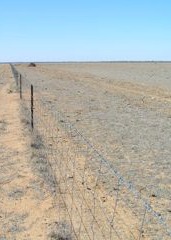
carbon farming farmland

The other day I received an invitation from the Australian government’s Department of Industry, Innovation, Climate Change, Science, Research and Tertiary Education to a forum with the Domestic Offsets Integrity Committee (the DOIC). This is the committee that approves carbon accounting methodologies for the Carbon Farming Initiative (CFI) scheme that was touted as providing Australian farmers with the opportunity to earn carbon credits from land management change.

The invite was keen to point out that “there are now 16 methodologies available for farmers and landholders to undertake carbon offsets projects” and that “The CFI is a ground-breaking scheme offering Australian farmers and landholders the opportunity to earn carbon credits while potentially achieving environmental and productivity benefits”.

What to do?

My first rational thought was not to go. Why should I spend my own funds and contribute to greenhouse gas emissions by travelling from Sydney to Melbourne to attend a 2 hour discussion on a policy that so far has delivered nothing that a farmer could actually use. The 16 approvals to date are for methodologies related to capture of landfill gas [that most landfills had the infrastructure to do anyway], various approaches to growing trees that you cannot cut down, and avoided emissions from a few specialist activities such as piggeries. These have nothing to do with the bulk of real-world farming practices.

My instinct, however, was to attend and at some point in the proceedings stand up and bellow at the top of my lungs a string of obscenities to vent my frustration at what has been a slow and hugely inefficient process of bureaucratic numbness — not to mention the unnecessary reinvention of a wheel already fashioned by international carbon offset schemes.

Unfortunately such actions would only give me temporary relief and would be be swiftly followed by long-term personal damage. Even writing down my thoughts in this post is probably not very smart.

So instead of the rage filled rant, I will reply to the invitation politely saying, “unfortunately I am unable to attend”.

It is worth looking more closely at my frustration [and maybe at my copout].

The frustration

I have never been wholly convinced by the global approach to climate change policy.

I accept that 7 billion humans plus 10,000 years of agriculture and 200 years of global commerce have had an impact on the climate system and I know that we need to take some action.

What has always troubled me is the premise of the chosen policy that we can actually fix the damage we have caused simply by reversing our actions. As I have blogged before, King Canute really had a better chance.  That we can take an engineering solution as naive as emission reduction to a problem of this magnitude seems to be a scandalous inflation of our capability.

Does it also mean we going to fix Milankovich cycles by tweaking the tilt of the planet or take on the variation in the solar wind [both major climate drivers]? Craziness.

That said, emission reduction is prudent for two key reasons: 1) it will help economies transition away from fossil fuel energy sources to sources that are cleaner and less likely to run out and 2) in the short run will help make business more efficient. Both of these are important outcomes that have little to do with the climate.

What is missing from the policy is an understanding of the need to adapt to climate change particularly in the way we manage landscapes. Yes indeed, the very landscapes that supply almost all the food and water for all those people.

So for the CFI not to have methodologies that give farmers an opportunity to sequester carbon into soil, to rehabilitate vegetation in grazing lands, and to obtain co-benefits from more sustainable land management practices is a huge failing of the policy. And not least because these actions will also deliver adaptation as the climate changes.

So carbon, and by extension the CFI, is really about creating more sustainable and resilient landscapes and helping farmers leave behind unproductive practices  – and by the way, there is the potential for around 100,000,000 tCO2e per annum on the positive side of the national carbon account.

What is more, should carbon permit price track the international markets and come in below $10 tCO2e, land management practices that deliver carbon sequestration into vegetation and soil as well as avoiding emissions may still be cost-effective. Most land management activities sit towards the left of most cost-abatement curves and so are cheaper per ton of abatement than many of the engineering solutions.

The cop out

So why did I choose not to accept the invitation when it provided a great opportunity to scream and shout?

There is an element of shooting the messenger. Public servants are there to deliver the policy frame not necessarily to create it. It is likely that there are higher political forces that have chosen to slow down policy delivery and to steer away from the farming sector, higher than those charged with delivery.

Attending only to have a shout at the wrong people makes no sense.

There is also a feeling that attending would both validate a process that I do not agree and have little impact, particularly as providing feedback seems to have had little effect in the past. The system is still slow, lacks focus, and technical clarity.

An example from the many challenges faced by methodology developers is that the positive list cannot actually be a list of activities to take care of additionality if each methodology has to prove the validity of an activity already on the list. That negates the whole concept of a positive list approach [one tried and rejected by other schemes] seems to fall on deaf ears.

Ultimately though, I have folded and chosen not to point out the faults but to stay silent.

This does not make me feel any better.

Postscript

Whilst I was drafting this post I received n update from one of the major laws firms with an interest in the carbon market. Their take on the status of the CFI is quite contrary to mine — it seems that everything is dandy. In fact they must be drinking out of a glass so half full it’s overflowing.

If only I still had the energy to talk it up.

Book title pain

MissingSomethoing3DcoverSChoosing the title of a book is huge challenge and about as troublesome as writing the thing in the first place. It should never be left to the author, as that is just cruel. Instead a dispassionate personality preferably with a commercial bent but minimal investment in the project is required. Otherwise you just generate material for standup comics who get laugh at angst.

I wallow in said angst.

So far my book titles have been as changeable as Australian prime ministers. Usually a working title sticks only to be rejected in the final hour to be replaced by option after option created, edited and also rejected.

It is a classic symptom of self-publishing pain.

Whilst playing the title game with Missing Something that, as regular readers will know, is now available from Amazon as hardcopy and Kindle ebook at terrific prices, I came up with Empathy for a warm, crowded world.

It went the way of numerous other attempts but I regret that it did. Given the book is a non-fiction account of what it means for a planet to have so many people growing ever more affluent it actually makes good sense.

Rather than rail at the environmental degradation we cause or ignore all of that because resource use is our right, maybe we just need some empathy for ourselves

We could give ourselves a hug and say:

“Well, there a lot of us now. We didn’t ask for it and we can’t change that fact or that we will need to use a whole bunch of resources. And so we mustn’t beat ourselves up about it. It is what it is. Let’s take a deep breath, accept that we have a big challenge ahead, and work together.”

Pity this is too long for a title.


Spillage

The ghost of Abraham Maslov would be having a chuckle right now, or maybe a wry smile at a spectacular confirmation of his hierarchy of needs theory played out in Australian politics. Elected members of the Australian Labour Party so frightened for their psychological health at the prospect of losing their jobs, last night rolled the first woman prime minister in favour of the previous prime minister they rolled when they were feeling a bit more secure.

The short version of events is that Kevin Rudd was elected prime minister in 2007 on a majority. His colleagues deposed him in 2010 in favour of Julia Gillard who, despite starting with a healthy lead in the polls, returned after the 2010 election to lead a minority government in a hung parliament. She and the party fell so far behind in popularity that all seemed lost. The upcoming election would see a wipeout so severe that it would hand power the opposition for several terms. So, almost at the eleventh hour, the party spilled her out to put Kevin Rudd back in. And yes it is farcical — you are probably surprised that it’s not in the alloporus “sounds crazy” series.

Only Dr Maslov has a perfectly sensible explanation. We all fill the safety and security buckets of our emotional hierarchy before the self-actualization one that holds morality, lack of prejudice and acceptance of facts. When the position is precarious self-preservation automatically sets in. We allow ourselves to put aside what, in the good times, we espoused. We do what it takes to save the ship from sinking.

Clearly some of the motivation behind changing the collective mind on who should be in charge [again] came from the need of individuals to survive, to keep their jobs. No doubt this was part of it. Except that we heard many times in the brief lead up to the leadership spill that it was “in the best interests of the party” and “the best interests of the nation”.

Obviously the party benefits if it goes into damage limitation to maybe reduce the margin of defeat at the election or even have an outside chance of a win. Loose by a few seats and recovery can be swift. Loose many and history tells you that it will take many election cycles before those seats are recovered. So if it has to lose, the party benefits by limiting the margin of defeat.

But why does the nation benefit? Well the conventional wisdom is that in party democracies, good government requires a strong opposition and that usually means a two party system. The public gets to pick one of two options — one to govern and the other to ‘keep the bastards honest”.

Sounds sensible enough. Only the smell of self-preservation in this argument is strong. In the long run the two party option favours both parties — check out the hilarious Spitting Image skit below where the Margaret Thatcher and Neil Kinnock puppets explain the logic.

The two party system can work if the process of ‘keeping honest’ produces innovation, new ideas and ideologies that match the circumstances of the day. The parties evolve with the times.

The spillage Australians witnessed last night was because this did not happen. Going back to the future was the consequence of a failure to evolve to cope with the needs of the day. The incumbent and her cabinet did not deliver enough policies that worked for the majority of people. And even when policies did work the government failed to communicate the benefits. They lost the trust of enough of the electorate to suggest a massive election loss and with no more time to get it right the party decided change was the only option they had.

Failure can often look chaotic. It became bizarre because Kevin Rudd was still around to get his old job back and that in itself is telling. If he really was a bad prime minister who dithered, back-flipped and regularly lost the plot with his staff and colleagues, then giving him another go confirms the desperation.

What might send us all cascading down the hierarchy of needs though is that Rudd was still the best option in a two party system.


Leadership still sucks

Leaning_Tower_PisaThe 100th post on alloporus was posted 8 months ago. That mini-review managed to reduce most of the previous content down to a couple of words “leadership sucks”.

And if you live in Australia then you would probably agree without reservation, whatever your political persuasion. We have an imploding Federal government with an opposition that just has to sit and watch it happen, whilst at state level there is a steady unpicking of legislation to turn the world brown.

Australia is even losing the plot in sport where in one code it is fine to punch the opponent in the biggest game of the season and in another a punch that missed is described as ‘despicable’

Ah, leadership, wherefore art thou.

As though in some kind of zombie state most folk seem to be ignoring it all. Perhaps it might go away. Just keep on selling the coal to the Chinese and we can carry on being rudderless [no pun intended].

Public lethargy is everywhere, spread as a thin veneer over stronger feelings of fear and woe, suggesting that leadership still sucks.

Only in the 100th post I also made a commitment to be more positive. Well that was a promise easily made and hard to keep.

It would seem that 5 decades of exposure to the human condition has allowed negativity to seep right through to my core. No matter the sunny disposition, gratefulness, the knowledge of blessings, and awareness of the privilege I enjoy — most of the latest alloporus blog posts are still glass half empty.

Not even the clever work of Plummer showing that despite our growing numbers the grand scheme of things is getting better has made me feel chipper.

It could be that I am wired to get upset and then depressed at all the craziness. I mean do we really need to know the sex of Kim Kardashian’s baby when we don’t know where most of our food comes from?

Less depressing would be the idea that this preoccupation with the inane and a requirement for drama is hard wired in us all and, more importantly, was necessary for our success.

There is obvious survival value in being obsessed with the immediate and the mundane for out on the savanna there were mundane things that could eat you or make you sick. Any hunter-gatherer who sent her mind gazing too far into the future went hungry or lost her child to an opportunistic leopard.

The addiction to stress is less easy to justify away unless we see it as a by-product of a requirement for drama. Argument does bring us awake, sets our adrenaline to work and makes us ready to fight or flee. In other words, drama was probably a basic requirement for successful savanna life.

Modernity provides us with every opportunity to latch onto drama and be in that alert state; only we have very little real need for it. Now drama is of our own making. These days we don’t find ourselves risking a drink from the crocodile infested rivers but we still like the feeling such risk brings.

I guess what all this justification talk becomes is a soothing of sorts. I do feel better posting rants when I accept that drama, argument and disagreement are a natural part of me, part of us all. The ego has to be thanked for getting us this far

What is still challenging is how to shift through to the positives. Not the ‘ra, ra, ra, yes we can’ positivity that is just another way of priming the body to act. I mean the real positives that come from truth.

For the moment these are harder to write about.

Must see post really makes you think


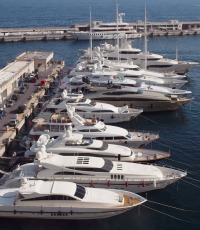
Yatchs_MonacoSo now that you have had a squizz and a chuckle at the excellent satire of Brad Plummer in the Washington Post [here is the link again if you missed his must see post], what should we make of a world where some of the big metrics of quality of life and lifestyle are trending in the right direction?

Yes it is true that there is still poverty, disease, crime, environmental degradation, precarious economies and the prospect of global changes out of our control, but the reality is that, even with so many of us, the majority are in pretty good shape. And those lucky enough to live in the developed world really do live like kings compared to the kings of just a few generations ago.

Not even all the King Georges in the House of Hanover who were having a ball before and after 1800 had electricity, TV or a mobile phones. All four of them would have had to get a lackey to heat their bathwater and another to send out the pigeons when messaging for a booty call.

What the numbers that Brad Plummer collated tell us is that there is a transition in most things. We start off slowly, get things moving to the point that they are a problem, and then turn them around so as to fix the problem. Next to no heart disease in the 1900’s, peaks at 40% of deaths in America during the 60’s and 70’s and now declining proportionately [probably because we got pretty good at human plumbing].

Humans are actually very good at this sequence.

Explore, innovate and exploit while we can get away with it, then put checks on all that exploitation and start to [slowly] clean up the mess. It is as inevitable as the earth orbiting the sun with a slight wobble in the tilt of its axis.

It means that ‘it will get worse before it gets better’ is often true and that we like it that way. Perhaps we even need it to be so.

We seem to need the worse to be upon us before we do anything about it. This is, of course, a great risk at a time of 7 billion human souls all striving and many getting a better life. Because it assumes that whatever the ‘worse’ is we can fix it — one day we will wake up to that fact that emission reduction is trendy policy but will not solve the climate challenge, but I digress.

The key message though is the psychology that makes Plummer’s post satire. We universally fail to see that what we really have is actually, for the most part and for most people, pretty good and getting better. Instead we prefer to be told that the sky is falling down.

Maybe there is a way to work through this necessary ‘doom saying’ faster. We could shunt along through it and get quickly to the other side where the solutions are found.

So all we need is a little rescheduling on TV — after Today Tonight, just before the inane sitcom starts, we get a ten minute Ted talk on some really neat idea that will solve a global challenge.

Easy and a bit like when the Magic Roundabout was on before the news to make sure that the kids were still around to get a glimpse of the headlines showing death, destruction and the political chaos of the day.

Environmental values | A national park should be a national park

EucalyptusForestMany years ago I was driving along a dirt road in rural Zimbabwe.

We had been following a game fence for several miles, a formidable veldspan barrier between a tired looking patchwork of withered maize fields, goats, and clusters of rondavels out the passenger window, and the intact open woodland of a game reserve on the driver’s side.

Dirt roads allow plenty of time to take in the scenery and I couldn’t help but notice how one of my fellow passengers, a former student recently appointed to the wildlife department as a trainee scout, was so captivated by it. Not the savanna with its prospects of a kudu bull framed by an acacia thicket, an elephant ambling along ready to tug at the sweetest smelling grass tussock, or maybe even a leopard draped across the bow of a marula tree; no he watched with great intent the farmland.

“Which do you like best,” I asked him, “the savanna or the lands?” He looked back across at me with eyes wide, forehead furrowed and cheeks raised and said nothing. He turned back to his left to look out of the window and said softly “the lands”.

It was not the only time during a decade in Africa, that included the great fortune of visits to half a dozen countries, where the locals made it very clear how important agricultural land was to their very soul. Fields and pastures are, after all, the source of sustenance to us all and a place of protection and community. Human modification of the wild and dangerous savanna into safer and more comfortable countryside is the achievement that founded our ongoing numerical and lifestyle success.

In the west we sometimes pretend that the wild mountains, forests and windswept moors are our places of true beauty, but actually we too have quite the soft spot for farmland. Countryside would end up as a more popular choice for most than wilderness. Even the words themselves evoke opposites: cozy comfort aside inglenook fireplaces with a slice of apple pie, or gray skies, damp smells and wind that howls.

Given these deep and innate responses it’s no surprise that there is a conflict over what to do with wild areas. Should we set some aside and then keep out of them to be what they are as unfettered cauldrons for nature? Or should we designate them and, with a calming hand, mollify all that that wildness? After all we are under more pressure that ever to make every hectare of the land productive and available to yield fuel and raw materials for our voracious economic engines.

Australia is slipping into the midst of this conundrum.

After many decades of increasing environmental protection with laws set to slow or stop landscape modification, restrict pollution, and set aside close to 7% of the land [529,380 km2] as conservation areas, change is afoot. State governments in Victoria, Queensland, and NSW are variously allowing areas designated as national parks to be used by recreational hunters, mineral prospectors, graziers and even foresters.

Whatever your politics, hunting, livestock grazing, digging big holes and cutting down trees do seem rather odd activities to allow within a national park. Remember that the majority of these areas are either rugged and remote [part of their initial charm] or unproductive for all the usual commercial things we like to do. Allowing them environmental value seems to make perfect sense.

There is also the important ecological reality that once an area of land is grazed by livestock, or cleared, or a road cut through it, or big holes dug into it, then it will never again be as it was. Our modifications are irreversible.

We can [and should] restore landscape after the effects of our worst excesses but, by definition, we cannot return a landscape to pristine wilderness. All we can do is set areas aside for nature to be and preferably areas that we have not messed up too much already.

Recognition of environmental value, so that each set aside area has meaning, is a really smart thing to do.

Yet in doing so we are at odds with our instinct for the safe place that is productive. We all want to look to the left of the dusty road at the brown stalks of the harvested mealies just as the young wildlife scout did, because at core we are all control freaks. We are desperate to keep the nastiness of nature at bay and make the land safe and productive for our families — something inside says that that wild wood must be tamed. Let’s send in the guns, the herders and the chainsaws.

Only we are better than this. Surely there is enough in us to recognize that we do not have to be afraid of lions or wolves anymore and we can let some small proportion of the planet be close to what it was before we swarmed across it.

And surely we don’t have to go back to the trenches of environmental warfare where passion to protect and equal passion to exploit creates sides that throw dirty grenades at each other and the only winner is the peddler of vitriol.

For goodness sake let a national park be a national park.

97% said their cats prefer it

Its official, 97% of peer-reviewed science papers, that expressed a preference, agree that climate change is caused by human activity.

Academics have surveyed nearly 12,000 academic papers penned by 29,000 scientists. There were 4,000-plus papers that took a position on the causes of climate change and less than 100 of these disputed the scientific consensus that climate change is the result of human activity.

Here is what the lead author had to say about the survey

Call me a cynic but all I could think about was the “8 out of 10 owners who expressed a preference said their cats preferred it” Whiskers ad and how I didn’t believe that either.

And later I imagined what it was like back in the day when every intellectual believed that the earth was flat until some crazy dude decided to sail all the way around it.

And later still I decided that it really is missing the point because it does not matter what the cause is, it is the effects we have to worry about.


Sounds crazy #4 | Logging of native forests

Logged forest NSWIt is wise not to believe everything you read in the newspapers. Most of the time the stories are, at best, economical with the truth, spun faster than a flywheel, and sensationalized out of all recognition.

This week though I was taken by the “Hatchet job on native forest logging” headline in the Sun-Herald [18 May 2013].

The report claimed that the recently privatized Forestry Corporation of NSW was making an $8 million loss on revenue of $111 million from logging of native forest across NSW — equivalent to a $671 loss per hectare of trees cut.

If it is true that logging of native forest makes a financial loss then to continue such a destructive practice that was never fully able to account true environmental costs is madness. It would be stupidity that borders on negligence

The piece notes that plantation forestry is profitable [$32 million in 2010/11] and implied that the plantation estate effectively subsidizes the harvest of native forest.

Clearly the story is never just about profit. There are jobs at stake, impacts on rural economies to consider if production stopped, and significant flow on effects to the supply chain. Consumers would still want timber. Suppliers are likely to source their hardwood timber from overseas where controls of logging practices may not be as tight as they are in Australia.

And yet, operating the logging of native forest at a financial loss really does sound crazy.