Goanna


goanna

I can’t get this image out of my head.

A road in the outback and a young aboriginal kid in western clothes bashes the long grass on the verge with a big stick. He is trying, along with his mates, to flush a goanna all under the watchful eye of an elder. The hunted creature remains hidden and may or may not have avoided the blows.

The elder has his own stick, a baseball bat in metallic blue. After a fruitless search he calls time and the hunting party climb back into a late model land cruiser station wagon.

The sound bite captured by the media crew before the elder drives away is that this country is sacred to his people and should not be exploited for shale gas.

I know it is unholy to drawn attention to the truth of this scene. An ancient culture lost but still pretending to exist whilst embracing with both arms the trappings of a new one. I am afraid that even with a few baseball batted visits to the bush those youngsters will not have a feel for country. They will know mobile phones, internet porn, Call of Duty and soggy chips.

This is sad. The generations of indigenous kids that went before had a wholesome life that was connected to the earth. The kids that climbed into the air-conditioned land cruiser will live longer than their ancestors but maybe not with the same wellbeing.

It’s just that whilst fracking probably will contaminate groundwater, clutter the landscape with drilling rigs and mess up all the local roads with traffic, resource use is a requirement for a western lifestyle. We cannot fly, drive and cavort around with technology trappings by chasing goannas. We have to exploit natural capital and subsidize our own energies from external sources. And that is a truth.

Of course it would be nice to do this with the least externalities and with care to restore any damage that is done. But let us at least acknowledge the truth that we cannot make mobile phones with a goanna.

Nor can everyone who owns a car go out and hit one with a stick.

Sounds Crazy #11 | Count your beans precisely

0.04122349

Is there anything wrong with this number?

Out of context it hard to tell. Running to 8 decimal places it is a very precise number. So much so that if it was a measurement of mass in metric tons the 9 would be precision to 100th of a gram.

If the number represented the weight of an object it would take an amazingly sensitive balance to reliably measure such a weight range to such precision.

Back in the day I used a 7-place balance to record the mass of woodlice offspring [the sort of weird thing PhD candidates have to do to unpick life history theory] and it required a very steady hand with the weighing trays suspended on the thinnest of wires.

The balance could handle the precision but nowhere near the mass range. And it cost a small fortune.

Now let’s consider the number in context.

It appears in this equation:

EN2O,j=CBB,j×0.04122349

The number is an emissions factor that converts the carbon in the biomass of trees [CBB,j] into nitrous oxide emissions should the biomass burn in a wildfire.

If a tree is measured and found to contain 4.2 tons of carbon, then this equation claims that should the tree burn in a wildfire, 0.173138658 tons of nitrous oxide will be emitted to the atmosphere.

Now it is hard enough to determine the biomass of a tree to the nearest kilo even if you cut it down into pieces and weighed each one. So to then apply an emission factor with 8 digits after the first zero is bizarre.

It is like weighing out grains of salt on a research grade balance when the recipe calls for a pinch.

Be it woodlice offspring or emission modifiers, the first thing you are taught in high school science class is that the number of digits in a number implies its precision.

0.0412 implies two orders of magnitude more precision than 0.04

It’s called the ‘significant figure’ and is a very important rule in science. The number of digits implies the precision with which the information was recorded. If you write 0.04122349 you imply that that last 9 has real meaning.

If you really can be, need to be, or can prove such precision then fair enough.

And it may be meaningful in the engineering of silicon chips but is meaningless in an ecological estimation on something as large as a tree.

This is a classic example of bean counting gone mad — non-scientists playing loose with the basic rules of science and common sense. It is plain crazy. Unfortunately this kind of misplaced precision is sucking the life out of innovation that could help us understand how the environment works and move us towards sustainability.

Except where would we be without the precise number of beans?

Ask Alloporus

OLYMPUS DIGITAL CAMERAIt has been a quiet spell on the Alloporus blog but you’ll be pleased to know it is not for want of healthy thinking. Although I sometimes wonder if thinking isn’t quite what it’s cracked up to be. A day or two without it would be glorious.

In blatant ignorance of all blogging rules here are my excuses for a lack of posts.

First there is the day job that every now and again gets out of hand — lately it has been more out of hand than in.

Then there were two lots of house renovations — enough said already.

My climate change wisdom website hit a search engine wall and demanded some resuscitation only for the wall to be [temporarily] insurmountable — plus I discovered that all you need to fix any climate issues is to change the government. No websites are necessary [but don’t get me started on the most bizarre myCFI.gov.au].

And so to the main excuse. My new website Ask Alloporus  — not satisfied with a SEO website on climate I have created another on environmental issues.

The idea is to talk about the environment without all the spin. It is similar to climate-change-wisdom but with a less restrictive topic [and maybe a few more winnable search terms]

So far there are 70 odd pages grouped around


Please pop across to Ask Alloporus and have a gander and let me know what you think. All feedback would be gratefully received.

There is also an Ask Alloporus a question page if you want to create some content.

If you like the site, a link to Ask Alloporus from your site would be fantastic.

Happy thinking.

Sounds crazy series summary #1

Well in a blink we have reached double figures in the Alloporus ‘Sounds Crazy’ series and, as the headlines suggest, we have covered wild craziness territory.

There is plenty of lunacy out there, especially in the unfathomable worlds of policy, planning and bureaucracy.

The series could run for many more episodes without the need to hire expensive Hollywood writers. This in itself is odd. It’s crazy that we are so crazy.

It got me thinking about why.

I get the human need to be busy and that this overrides any logic of what we are busy at. Add the need to be seen to be busy and we can explain away many a craziness. In the extreme we have the lap dog ‘being seen’ in a $300 Louis Vuitton collar as Monsieur Vuitton laughs all the way to the bank.

I also understand the fear that drives illogical policies that ensure there will be enough people to buy white goods [baby bonus, policy choice] and puts business opportunity above all else [Waiting for the road to dry out, Where to build a house]. The economic growth spiral is as consuming as a black hole and we will struggle to break free of its gravitational pull so long as we keep reproducing at 9,000 an hour.

Reluctantly I understand the fear that drives obsession with human safety [Hidden hazards in the back yard]. Survival is a base instinct after all.

I even accept ostrich behavior [Wild planet] because sometimes we need denial as a handy way to make things go away. We are far more courageous when we pretend there are no sharks in the water.

Then there is the inertia that emerges when we create institutions and the pedantry that they generate [Count your beans].

Only now my tolerance is stretched.

I get the logic of becoming stuck just because there are more than a handful of people involved. This makes sense for force of personality can only hold so much sway. It takes a big ego or considerable oratory skill to sway the crowd.  But this constraint of and by the many should not be an excuse. Some of the craziness of institutions is the craziest of all.

It seems that craziness is in part inevitable [because we all have fear and cannot do without institutions] and in part our choice. We seem to want to be ‘a bit nuts’ — and not just for some light relief — for some part of us may want it.

The latest Alloporus website adventure is Ask Alloporus where environmental issues are explained [including some of the crazy ones]. Most pages on the site conclude with some ‘pragmatology’, our attempt to both invent a new word and provide some pragmatic understanding of the environmental issue.

Yet even this sounds crazy. Why should we expect that some pragmatism can help the craziness go away?

Here are the links to the Sounds Crazy series to date…

  1. Where to build a house
  2. Waiting for the road to dry out
  3. Baby bonus
  4. Logging of native forests
  5. Carbon price forecasts
  6. Policy choice
  7. Hidden hazards in the backyard
  8. Wild Planet: North America
  9. Bandwidth
  10. Pest control means getting on with it

Sounds Crazy #10 | Pest control means getting on with it

DeerFeral animals are pests in large parts of rural Australia. The list of culprits is long with foxes, cats, feral dogs, goats, rabbits, pigs, deer, and camels all causing problems for farmers and conservationists alike. In production terms the cost is estimated at billions of dollars a year.

Not surprisingly there are pest control programs all over the country with poison baits, mustering, hunting, trapping and a host of other control tactics in place.

In 2005 some scientists became curious to see if any of these control programs actually made a difference.

They interviewed as many of the pest control organisers as they could in all the states and territories for control programs that had a conservation focus. They established that the majority of over a thousand programs they identified, 68% in fact, had no form of monitoring in place at all. The pest control teams did not know how many pests they had removed or what had happened to the species or habitats the pests were affecting.

In short they were operating blind.

Now a pilot in Papua New Guinea on a stormy afternoon, if he had any sense, wouldn’t take off. Flying blind is dangerous.

Except that the only immediate danger in pest control is to the pests. The operators simply get on with control. Indeed the researchers found that there was some monitoring of person days spent tracking, numbers of baits released, and helicopter logbooks full of hours mustering sufficient to show that the job was being done — but nothing on the outcome.

After habitat loss, pests and weeds are the next most significant threat to biodiversity in Australia. In many places they are the main cause of biodiversity loss and attempts at control make sense.

What is crazy is to have no idea if control measures have made a difference. We have no idea if they are worth all the effort.

Perhaps it is that distinctly human trait where being seen to do the right thing is just as important as doing it.

Sounds crazy to me.

Google Scholar can link you to the original research

Reddiex B, et al (2006) Control of pest mammals for biodiversity protection in Australia. I. Patterns of control and monitoring. Wildlife Research 33, 691–709

Reddiex B. & Forsyth D.M. (2006) Control of pest mammals for biodiversity protection in Australia. II. Reliability of knowledge Wildlife Research 33, 711–717

Sounds Crazy #9 | Bandwidth

Back in my academic days we were not allowed to spend any University money on coffee and tea. I would ask politely why I couldn’t create a more convivial workplace by providing free beverages for my postgrad students and research assistants only to be told it was not allowed. Even in the department tearoom there was an honesty box to cover the cost of the milk.

I never understood this and used to think it was just the system being stingy. And being me, I railed, often taking my team out for coffee even though we had a perfectly suitable coffee room next to the labs. The first thing that happened when I converted our research into a company was the purchase of a kettle followed swiftly by a water cooler.

What upset me back then was the assumption that productivity was all about the number of hours at the desk and how expertly one counted beans. It obviously had nothing to do with how happy people were at work.

Research is repetitive stuff. In our case there were many hours of routine sample processing every day. This meant taking regular breaks was essential to our sanity. The irony is that these days we would be instructed by the OH&S officer to stop peering down the microscope and go to yoga class — but I digress.

What got my goat recently was a report on the front page of the weekend paper telling us that the new Australian prime minister has decreed that all travel by politicians and Federal bureaucrats must have permission.

Mr Abbot requires that government ministers sign off on travel requests from civil servants and that he himself must agree to any travel that costs more than $50,000.

Now I don’t know about you, but I always thought that members of parliament and the senior staff that support their efforts were there to develop, debate, design and implement public policy.

Instead Mr Abbot wants them to be travel agents.

I would rather have the finite daily energy allocation to the brains of national leaders and their staff to be used furthering the public good.

I want them thinking about policy and figuring out the endless machinations of delivering it effectively. Not wasting valuable mental bandwidth as travel police.

Next they will be buying their own coffee.

Sounds crazy because it is.

The Kardashian Index

Take a look at this graphic. It records the number of two somewhat related terms — climate change and food security — appear in Google searches.

GoggleTrends-climatechange+biodiversity

The data is for the number of searches over time presented as relative to the peak number of searches that in this case was for climate change in December 2009, the Copenhagen COP [out].

Now we have talked about these trends before [Climate change | Google trends #1 and Biodiversity | Google trends #2 ] and concluded that either everyone now knows all they need to about these terms and so has no further need for the Google Gods, or nobody cares.

What we need is something more positive, something trending in the right direction. All we have to do is add another term to climate change and food security.

GoggleTrends-climatechage+biodiversity+KimKardashian

Now the numbers are relative to a new peak for Kim Kardashian in June 2013, presumably because we wanted to know about her new beau.

The averages are meaningful here of course. Relative to that heady peak, the proportional averages mean that we need to know 30x more about Kim than the other two boring terms.

And we still want to know more. None of this ‘we know already’ about Kim for there is always something new to find out. People are still interested.

There is no doubt in my mind that the best source of information on how the world is travelling is to follow this Kardashian Index. It is, after all, going in the right direction — none of this decline or flat lining nonsense.

Governments, market analysts, even environmentalists need go no further than keep their eye on Kim’s search rankings to have a reliable, predictable and highly informative measure of the state of the planet.

And respect to Google for providing this index for free.

Ah, the depths to which we fall.

Postscript | I guarantee that with Kardashian as a keyword tag this post will receive orders of magnitude more views than any other on this blog… Thanks Kim.

That’s Africa

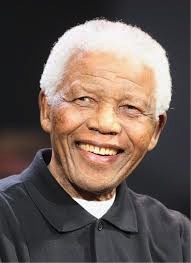
Okavango Africa.jpgLast Wednesday night I tuned in to the ABC News24 coverage of the memorial service for Nelson Mandela expecting somber reverence or perhaps the kind of party that only Africans can do.

I should have known it would be something else.

The start was delayed by the requirement for every dignitary to make his or her own special entrance aided by typically inept African organizing but, conveniently, heavy rain could take the blame.

And nobody seemed to mind.

Filling in the airtime was anther matter. The ABC wheeled in a former activist who had struggled against the apartheid regime and then escaped [long before Mandela was released] to become an Australian citizen.

Unfortunately he was sadly bitter. His deep hurt and anger had travelled with him and he still had it in spades. His comments ran as though the oppressors were still oppressing and Nelson Mandela had not existed.  This attitude of hatred and recrimination was exactly what Mandela knew he had to diffuse. The miracle was that through courage and compassion he did it for a nation, but sadly not for this exile.

Quickly we abandoned the ABC and its disrespectful commentator and streamed the coverage.

You had to laugh out loud at the antics.

There were the random guys in the foyer as the dignitaries arrived. These are the traditional ‘hangers around’ that are everywhere in Africa, who obviously had nothing to do but hang around. Presumably they had security clearance… presumably.

There was an extraordinary performance by a gospel cum rap singer trying desperately to energise the crowd to God by being energetic himself. As his antics became more and more exuberant another random guy assigned to hold an umbrella over the singer was finding it more and more difficult to complete his assigned task. He was stoic and hugely comical as he did his best.

Then there was the huge amusement of Ban Ki Moon claiming the applause of another African dignitary as the latter ascended the stage to be embarrassingly ignored by the UN Secretary General.

President Obama showed how to calm the restless crowd with an impassioned speech that closed in on the truth of what Mandela gave us. Cleverly he still managed a sly dig at the current crop of African leaders who cannot hold a candle anywhere near the father of the nation. Only he spoilt it later by helping the Danish PM take a selfie — and we thought only Kevin Rudd did that.

And there were the boos for President Jacob Zuma. Not, as I thought at the time, because there was politics even at the memorial service for one of the world’s greatest, but because he had not made the day a public holiday. Fair enough, he deserves a slap for that.

Then we ran out of steam and let the remaining hours of the ceremony go.

The bit we watched was classic Africa, full of cheer, cheek and irreverence layered over famously sloppy organization. It rained and was obviously cold, went on for hours, and still the people danced to celebrate a great life.

I reckon Madiba was watching all the antics as proud as punch with his famous smile lighting up the heavens.

Shed a tear

NelsonMandelaEveryone has written a eulogy for Nelson Mandela, I unashamedly shed a tear.

I knew that he would pass away as we all must, but I did not expect to feel his passing as though he was my own kin. Sadness, loss, grief and loneliness boil away in my soul as though I had lost my best friend.

Yes he was a hero of mine.

And yes I lived in southern Africa during the decade that straddled his extraordinary transition from prisoner to democratically elected president.

And yes I experienced the palpable change in everyone on his release — it was heady to live through history.

And yes, I could not believe that any one man could be so courageous and so compassionate at the same time, or hold on to both for so long. I still can’t. It was a miracle.

And because in worldly terms he was no saint he should be remembered as one.

All of this I know and many millions more will glimpse these things as the world pays its respects to greatness and genius.

But it does not fully explain my upset.

Somehow nerves have been gripped and emotion seared by the passing of a man I never met on a continent an ocean away. And I think it is the combination of courage and compassion that I lament. Mandela held up for all to see this essence of true leadership that is so despairingly rare. And now he is gone.

I feel the loss deeply. For right now it is leadership that we so desperately need.

No doubt my emotions will settle in time and maybe words will come that might help others understand his greatness, for hope will linger in his remembrance.

Just now it is hard not to weep uncontrollably for Madiba.

Failure

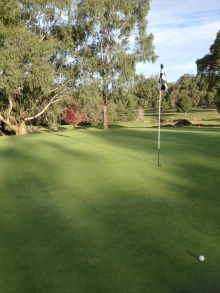
Springwood golf clubHow do you know when it is you who has failed or when the system has failed? Is it possible to tell the difference or even what failure is at all?

Everyday life is enough to trigger such anguished questions in all of us. Should we ‘man up’ and take responsibility or go the way of the mountaintop and realize that nothing is ever fired directly at us?

Recently a series of events made my own thoughts about failure acute.

First I enjoyed a delightful [if somewhat rainy] charity golf day to raise money for bushfire victims. The local community rallied as it has done consistently since 193 homes were lost in a fire that an ecologist friend of mine described as a huge blowtorch.

Sponsors showered golfers with freebies and the golfers duly purchased vast numbers of raffle tickets and made generous bids in the auction when the golfing was done. The clubhouse was packed with people and there was a palpable sense of unity in a shared cause… and that isn’t so common in these distracted days.

Out on the course it was a team game [the scramble format for those in the know] and we were doing ok. We had an ideal handicap mix and the will to win that seems to gush out of every golfers pores no matter their [in]ability.

Coming to the last two holes we knew we had a bit of chance but really needed a couple of birdies. Drive, 6 iron, putt gave us one. Then, a 9 iron to two feet. That was two and enough for a credible 4th place. We were quietly chuffed with that.

Not a failure at all and, for me, sticking that 9 iron when it [kind of] mattered made me quite proud of myself. Such moments make the memories of an amateur sporting life.

I’ll pass over the conversation a few days later with a social media marketing guy who politely said I would never make any money from my books along with the ongoing anguish that is every consultants daily grind — clients who, bless their cotton socks, don’t really want the help you are offering — and cut to the chase.

The system of information gathering on how the environment works in the state of NSW is, abruptly, surplus to requirements, along with the conceptual framework that supports environmental decision-making.

The new[ish] state government have thrown out statewide natural resource management targets and cut the guts out of the human capital and budgets that previously gathered data on the health of the environment. A brutal dismantling that stinks of the political polemic.

Why would anyone do this? Knowledge is power and always has been. The environment is and always has been the foundation of our success, not to mention the source of what keeps each and everyone of us alive. So why stop trying to understand it by scrimping on the measly current spend on collecting the data?

Perhaps it is a sinister plot, a backlash against all those closet greenies in the previous government who had run the show [somewhat corruptly as it turns out] for more than a decade. Or, more worryingly, a belief that natural capital is inexhaustible and that humans were invented to mobiise it into wealth, fast cars and tea parties.

Whatever the reason the news hit me as a monumental personal failure. Clearly I had nothing to do with the decision or any influence over it either way and yet I took it personally.

Even as I fought the illogical feelings with personal pep talks and a viewing of Despicable Me 2, anguish was taking hold. It has since solidified into a funk that if I don’t shake it loose will sit for a long time in the pit of my stomach.

Of course there is some justification for my malaise.

Since the early 1990’s I have been variously teaching, researching, advising, criticizing, developing and talking up environmental monitoring — I even switched out of academia into the risky world of entrepreneurship to build an environmental monitoring company that for a time helped accumulate data and understanding.

Wearing my consultant’s hat I have prepared countless reviews of strategy and provided policy advice on MER that has consistently talked it up and tried to explain the value proposition. Recently I even came up with some new approaches to data analyses that will add more value to the raw numbers.

And it feels like it was all for nothing.

Only worse, it also feels like I should have done more to make it obvious, even to blind Freddie, that monitoring the environment was worth it for everyone.

As I write there is still a lead weight in my midriff that I am sure will take some shifting…

But this too shall pass.

Time will lighten the load and another golf game will see a white ball fly and land somewhere near the flag.

I hope.