Stumps makes you dizzy

When I was a student we played a drinking game called stumps. There are variants on it everywhere but ours was a cricketing homage involving two teams of equal number. Ideally it was my mates lined up in single file on the outfield against the opposition we had just bowled out in their chase of our out of sight total. Each team member has a pint of beer in hand.

The first in line downs the pint and inverts the glass over his head to prove the point and then runs to a cricket stump in the ground 22 yards away. Sliding to a stop he places his forehead on the stump and then as fast as is humanly possible circles it 10 times without lifting his head. At the ten count he stands and runs back to tag the next teammate. The first team with all beers downed, stumps circled and last man across the start line wins.

Now there is no real reason for the beer. This game is hilarious when played sober for standing and running are relative concepts in a dizzy state.

Most people have a great deal of trouble staying on their feet let alone making it back to their line of cheering comrades. No amount of brow furrowing or steely gaze makes any difference as they make their acquaintance with the turf.

Nearby bushes simply add to the amusement.

When beer is involved, fast drinking is just an additional skill that can determine the outcome of the race. In tight finishes drinking can be replaced by pouring the beer over your head. More than once this has saved enough time to secure the win.

If drinking games are now just fond memories [thankfully] then suspend your reflex to berate the youth and give the game a try without the beer. It is truly funny to see determination on faces as they come crashing down.

It is also quite a metaphor.

We genuinely believe that we can control anything with our will.  And whilst we accept that luck might send external forces for good or evil our way from time to time, we can always rely on ourselves.

Our trust in control often defines us.

The lunacy of stumps cheerily explodes this myth. It is why it’s so funny.

The athlete, the nerd and the boofhead use their determination to the max visibly forcing out control over their bodies only to fall over.

It is a true leveller.

Postscript on spin

The thing is if you spin around enough times and then try to reach a destination the chances are you will fall over and look very silly.

I think that Petr Cretin suggested that this game would be a ripper to play and Tony Abbott agreed.

Sure enough he looks very silly.


Golf scores

Springwood Golf Club 10th green

How retentive is this?

For the last 5 years each time I come home from playing golf I have recorded my score on a spreadsheet.

If that wasn’t bizarre enough I plot the scores, handicap calculations, number of puts per round and even the consecutive times I can keep the over par score in single digits for 9 holes [133 is the record].

The longer this habit goes on the harder it is to break. Every time I try to ignore my score, I make a mental note of it and later open the spreadsheet to enter the numbers.

Why do I do this? The scores have no bearing on competitions, as I haven’t played in one for a decade. I don’t even have an official handicap. The numbers only make comparisons against myself.

I could put it down to the weirdness of the human condition or perhaps that I am nuts. Both unsatisfying explanations I think. Here is another.

What if it is about satisfying a deep the need to know what has gone before, so as to help predict an uncertain future? If I have a record of what has happened, the more confidence I will have in future events. And the longer the past record the more reliable is my prediction of the future.

This satisfies my left-brain dominance and the logic confirms that I cannot be nuts.

Except that it is not true either. The only reason I write down my golf scores is to make me feel good. It fuels my ego by working as a record of achievement. Even if there is a bad score, better ones can follow. My egoic self revels in the contest… against myself.

This is classic pleasure and a pain. It sets up and fuels an internal conflict and pampers the very thing I want to loose. It is definitely not the path to enlightenment.

Todays score was a 38 on the back 9 with 14 putts.

Pure genius #1 Fireman minion

I am frequently inspired by what for me are moments of pure genius.

They can be creative, inspirational, an expression of athletic talent or just moments when the vastness of the universe floods through a human soul into the present moment.

I thought it might be nice to record and share them as a series of posts. Here is the first.

Pure genius #1 | Bee Daw, Bee Daw

Minions, the adorable yellow blobs of magic in the Despicable Me movies are a fantastic invention.

It is amazing how so much warmth and charm can pour out of an animated character in the shape of a bean. The first pure genius moment is the fireman minion scene in Despicable Me 2 when the minion responsible for the fire alarm has his loud haler taken away.

Incredulity mixed with shock and resignation… and impeccable comic timing, pure genius. It creases me up every time.

Needless to say Youtube has the clip.

A new alloporus

Elephant-01So here we have a new post on a new look template with the prospect of new topics and a reinvention of Alloporus.

Oh no, not again. He’s said this so many times before.

Well maybe you’re right. Change is a constant everywhere except in our own minds where we are limpets to the past in some vain attempt to stay stable and comforted. So to reinvent the muse is a challenge.

Regular readers will know that my attempt to be glass half full on topics environmental that was promised in post #100 has obviously failed. The next 100 were more cynical than ever. Perhaps jaded edges and gray hair are inevitabilities for persons of a certain age. ‘Grumpy Old Men’ was a great show because the actors just had to be themselves and play to a ready made grumpy old audience.

This means I will need a plan if things are to change.

It begins by writing about topics other than the debacle that is our management of the environment — see how hard it is — without any special purpose. I am not sure if a scientist can do this as it means putting aside a powerful legacy. Eons of determinism and adherence to logic must step aside for themes without obvious physical purpose. It is what it is and all that.

Naturally there are plenty of topics: golf, cricket, soccer… well also spirituality, the meaning of life, yoga, politics, diets, sex, cooking, kids [and adult kids], parents… Life clearly gives us plenty to think about and most are worth writing about.

In the spirit of the new Alloporus that is about as far as the plan goes. The only real rule is that I will try to stay clear of the environment but it will be difficult and I know that the odd ‘sounds crazy’ will sneak in because they are usually too bizarre to miss.

I hope you watch this space as keenly as I must.

Here we go and comment away. Have your say.

The against colour

In recent weeks I have been running around more than usual talking to people who wear suits to work. They have nice offices and meeting rooms with coffee to order brought in by waiters with Kevin on their name badge. This is all very nice if a little challenging for your caffeine intake.

The discussions have been about green bonds, a newish variant on a familiar form of fixed income investment. Along with talk of debt, security, risk and annuities, a conundrum that befuddled the starched white-collar folk was how to define green — often put as succinctly as the simple question, ‘what is green?’

Pause for a moment to ponder this situation. Here we have the business end of town asking a question that they have always managed to ignore. The very question that environmental advocates have consumed careers trying to get them to even think about asking.

There was even the suggestion that failure to answer the question might slow the process of green bond origination. Suddenly the health of the environment was important…

Surely not.

But there it was, the question they wanted answered was ‘what is green?’

Regular Alloporus readers will know that green is not my favourite colour — pastilles are more me. Green is a colour waved to claim goodness and the moral high ground and a banner to deny and repel a host of things that some people find useful — the mahogany table in the meeting room for example.

But my fundamental problem is that green is an ‘against’ colour.

Green is against logging, against clearing and against anything that damages nature. Green is against exploitation, excess and exuberance. Green is even against agriculture even though vegans still have to eat something

All this ‘against’ naturally comes with the requirement of being ‘for’ anything that is green. You have to be ‘for’ saving the koala, forests and anything indigenous. Habitat corridors are good green things and so we have to have them. The fact that evidence for the green credentials of corridors is equivocal should just be ignored.

Before I am trolled into submission for my heresy, let it be known that there is green in me beyond my many lime green t-shirts. I try to reduce, reuse and recycle and would prefer to see better use and protection of the environment.

And having been lucky enough to see them in the wild I know it would be gut-wrenchingly tragic for the black rhino to go extinct in my lifetime as seems increasingly likely. My science training reminds me that the loss of any species is irreversible. I even felt a little nauseous at some Youtube footage of bow hunting that turned up in a review piece.

Except that all this has nothing to do with the question of ‘what is green’ asked over coffee on the 14th floor. That was asked with a very different thought in mind. The question was about how to show the activity could deliver more than the required financial benefit.

On any number of levels that was weird.

The answer needed a list of benefits and ways to record and report them. This is actually how business people think. They count and they account. It would not be enough to say that green is against these things and for some others.

Of course business has no real interest in green. They are looking for the cheapest finance with the fewest strings attached. If one of those strings is green, so be it.

I wonder if the ‘against’ colour can handle that.


Other Alloporus posts on green…

Greens

Green has moved on

The greens need a new name

Evidence-based decisions

Melbourne-skylineIn the last month I have been exploring decision making in business. It’s a long story that spins around one core assumption that I needed to test. The assumption is this.

If evidence is available people will use it to help them make smart choices.

Now I always thought that before any serious decision was made the brain recalled and sifted its available knowledge relevant to the decision. This coffee is hot. It must be because I just saw the barista pour steaming milk into it so I will sip it to avoid burning my tongue.

Other decisions rely on less categorical evidence. My superannuation scheme allows me to choose between steady and more risky but high-yield investments that have something to do with the mixture of stocks and bonds in my portfolio. I choose the steady option because I remember seeing a graph showing share price crashes occur often enough for another big one to happen before I retire.

Sipping coffee or avoiding risky stocks are evidence-based decisions even if the amount and quality of the evidence used is vastly different.

As a professional scientist evidence is my currency. Training and experience have taught me the skills to sift data into facts and to understand how facts can become evidence. And I always hope that the evidence is articulated in forms that influence decisions. This is a powerful paradigm that still underpins my consulting practice alloporus environmental.

It always made perfect sense to believe that if the human brain makes decisions based on facts, then if evidence were available people would use it.

Oh the bliss of naivety. If only it were possible to be in such a state indefinitely. Life would be so much easier.

Then I began to ask business types this question.

If evidence were available to help decision-making, would you use it?

Mumbling ensued. In just a handful of meetings it was clear that the real answer was no. There were claims of course and even the occasional example of actuarial prediction or due diligence report, but in reality decisions are gut feel things.

At best evidence is gathered in support of a decision already made.

It has been quite a shock to find a core assumption that is a given for a scientist is at best bent and at worst ignored in other walks of life, even where evidence is needed.

Then I paused and realised where evidence comes from for the majority of people who do not have the time or inclination to peruse academic tomes. It comes from their experience; usually their immediate experience that is still in the front of the mind.

And a good deal of this ‘evidence’ is incomplete.

What we see in the workplace or told by the boss or browse on the web is not evidence in the scientific sense. Even if it involves data it has no context to determine inference. In short we decide on a whim. What our guts tells us.

If this is true it begs some very interesting questions.

Why doesn’t the system fall over if we are relying on the [mostly] corpulent guts of [mostly] male business managers?

Why do we have evidence at all if nobody uses it?

Would decisions be better if they were made analytically?

Fate

Over a decade ago I was at the Sydney Cricket Ground with my son. South Africa were playing a tour game against NSW and in a break in the play we took a walk. A couple of the South Africans not playing in the match were practicing in the nets and we watched at close quarters.

Makaya Ntini, yet to become the fast bowling legend, was sending a few down. We stood behind the net just a yard or two from the single stump that Ntini was trying to hit — just a few strands of cotton mesh between us and the ball travelling at 140+ kph.

Now I had played cricket a lot and my son was about to start on his cricketing odyssey so this was quite a treat. Imagining yourself trying to protect that stump and send the ball to all parts with just willow in your hand.

I remember the sound. The ball goes fast enough to whistle through the air. And I remember that it was crazy quick. Unless you watched with your whole body and responded with  cat like reflexes, the ball was gone.

It was a pure moment. I realised then that in any human endeavour the very best are so much better at what they do than the rest of us.

On Tuesday at the same ground a cricket ball fatally injured one of the very best. Philip Hughes was good enough to dispatch those whistling fastballs to all parts of cricket grounds from Sydney to Durban, in a flash notching 26 first class centuries and over 9,000 runs.

Tragically one delivery that was slower than he thought hit him. It stuck in the wicket and he had played it before it arrived. Fate then played cruelly.

All cricket lovers are grieving the loss of a great talent. We feel it deeply for only a gifted few have the ability to stand and play balls delivered at such great pace without a care.

Phillip Hughes was one of the very best.

Gross national happiness and the truth about policy

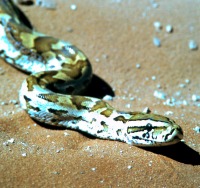
snakeMy wife is scared stiff of snakes. The passing of a large python along our back deck one evening had her stomping down stairs to the laundry for months. She still carries that wariness with her.

Just as seemingly continuous sweeping around the African rondavel meant you could see the mamba before it could strike you, so a general fear of slithering things has a survival benefit.

Fear of snakes makes perfect evolutionary sense. Those with the ability to avoid such dangers will survive longer than the more blasé. Often this trait can translate across to a fear of nature in general on the logic that snakes, mosquitos, siders, scorpions, wasps… just about anything that bites, stings, or looks like a critter that bites or stings, could be under any rock.

It is a surprise that nature in the form of woodland and forest equates to happiness and could become part of the ‘GDP plus’ approach to measuring national well-being — the elusive gross national happiness index.

The survival instinct that took us away from forests into man-made buildings with fly screens is tempered by an emotional connection to the trees for their nurturing quality. A gentle breeze through the trees as the birds sing and the blossoms waft their scent across our senses has a calming effect — a counterbalance to the fear. Not to mention the sustenance from the deer and berries.

But give 1000 people a choice between either living rough in the forest for 30 days or living in an all expenses paid 5 star resort at the beach for a month and I would put money on 999 of them choosing the beach.

This creates an interesting conundrum for GDP plus.

If people prefer the hotel to the forest but are supposed to be happier in the forest, what should governments do? They could promote economic growth to give more people the money to stay at hotels or focus on retaining the forests that might otherwise have to make way for the hotels and money-making activities.

Put in these terms the choice seems far too simplistic yet it actually goes to the heart of policy making. Policy has to understand values and then decide on trade-offs among them. How much more should economic development be valued over the protection of rainforest is a question of values. Building new hotels is a decision to trade commercial and comfort values against the benefits of the wind in the trees, the filtering of air and water, and the odd forest product.

What the policy makers must remind themselves every day is that the values traded are inseparable. They exist together in each person. The 999 folk who chose to go to the beach also value the forest even if they don’t choose to go there, even for a visit. It is true that our value for nature and its nurture are often buried deep enough in our psyche for us to deny its existence, but it is there.

Policy is not actually about keeping enough stakeholders happy to ensure future election victory. It is about understanding where the real value trade-offs happen, inside each person. Even the ones that are buried or smothered by those from instant gratification.

People are frightened of snakes for good reason and yet deep down they also remember that nature is good to them too. Sometimes they even think of this as they sip cocktails by the pool.

What policy has to do is remind them of this truth.

$42 million

eveI was told that the recent ‘break the internet’ image of Kim Kardashian’s rear netted her a royalty of $42 million. A tidy sum that brings new meaning to a woman’s assets.

Now it is important not to believe everything that you hear or read on the damaged interweb. So I doubt very much that the fee was as bootilicious as the behind.

All we can be sure of is that the butt was not revealed for free and mere mortals will never know the actual amount of moolah exchanged.

When my brain had had enough of curvy bits I began to think up things you could do with $42 million.

Here are a few of them…

  • Pay one years salary for 17 premier league soccer players
  • Cover 10% of the bill for hosting the 2014 G20 summit in Brisbane
  • Buy roughly 6 months supply of coal for a 500 megawatt power station
  • Purchase a skinny latte for every man woman and child in Belgium
  • Fly first class around the world 8,400 times, or once with a lot of mates
  • Get a broker to secure a couple of 50m long luxury yachts
  • Acquire 68,000 ha of agricultural land and grow 300,000 t of wheat each and every year and donate the produce to famine relief charities [that is enough to meet the wheat consumption for 3 million people]
  • Purchase and make available first line anti-retroviral drugs for over 360,000 aids patients — 20% of the aids patients on Zimbabwe

If you had a famous behind, what would you do with $42 million?

Post comments.

Doors closing please stand clear

passenger trainIn life there are opportunities everywhere. It is possible to start a revolution, a company or a friendship almost anywhere at any time. All you need is enough energy and commitment.

It is a marvel of the human condition that the societies we create mostly facilitate this desire for opportunity that is in all of us. We even pen a plethora of self-help literature on the back of this universal potential. Books on positivity that show us the glass as half full to overflowing only sell because they catalyse our innate desire for opportunity.

Fair enough you say.

Such a hippy-dippy worldview may be upbeat but it is only part of the truth. There is the downside too.

The cheats, naysayers and greed infested abound to ruin many an opportunity with their negativity. The world is nothing if not two-sided. It always has enough ying and yang for everyone, even those with a library full of Tolle tomes.

I agree. Opportunity does exist for us all but so too does misfortune. Both are a heartbeat away.

Here is the thought. I suspect that those who cheer their way through life easily coping with misfortune and insatiably seeking opportunity know one crucial thing…

Doors closing please stand clear

In other words everything is transient. The opportunity will not be there forever any more than the misfortune. The doors will close on both so that new doors can be opened.

The human condition is honed to this flux.

We intuitively know that when an opportunity comes along it will only be there for a short time. Our chance at it is likely to be brief. We either act to grab the chance or we watch it pass by and say ‘better luck next time’.

In day-to-day life the loss of an opportunity is rarely life changing. There will be stories of the record producer who passed up the Beatles or a soccer manager who said no to signing Lionel Messi, but these are rare anecdotes. The frequency of opportunity in everyday life means that misses do not matter that much.

Not so with nations. They move more slowly and are less nimble in both recognising and taking opportunities. Leaders of nations must be much more alert to see opportunity on the horizon and position themselves and their constituents to be ready.

Australia for example has done very nicely out of wool and then minerals, especially iron ore and coal. It took these soft and hard commodity opportunities with both hands and has become wealthy as a result. Only to keep the wealth coming it needs to ready to grab the next opportunity. Current leadership seems to be doing the opposite and holding on tight to the past.

It’s a poor choice.