Disillusioned with politics

Disillusioned with politics

Apparently, it’s not just supporters of the Donald and Pauline who are upset about the state of political leadership. The rich and influential are disillusioned with politics too.

And fair enough.

Lack of direction, courage and conviction eventually drains everyone’s resolve. We all need something or someone to look up to, compare against and even aspire to become. It is the psychological glue that keeps most religions from fading into extinction.

Australia has had a decade of hope, false starts, and farce from its federal politicians. When all leaders can do is badmouth each other for sucking up to those with real influence, then the last hope is lost.

The problem is what to do about it.

Electing in the opposition just means more of the same. It simply fuels the downward cycle. Frustrated US citizens squeaked Donald over the line and he will disrupt in ways unimagined. But little of it will be desirable, even for his supporters. At some point, that experiment will pass.

The rich and influential group mentioned earlier are up for a new democracy that involves random selection and deliberation – the jury model – as a central process rather than elected representatives. A kind of back to the ancient future.

There is merit in this. A jury reaches a decision based on evidence and the inference they draw from it. Logic, reasoned argument and debate come together into consensus solutions that should make decisions more trustworthy. They should, at least, be less affected by partisan or vested interest.

The problem is the quality of the inference. Can a citizens assembly or jury have enough capacity to sift the evidence supplied to them for complex decisions like the design of the national broadband network or defence procurement or health funding? It would be instructive to find out.

It cannot be any worse than the ministerial Merry-go-round.

The lily pad puzzle

The lily pad puzzle

Imagine a small pond that has clear blue water reflecting the summer sky.

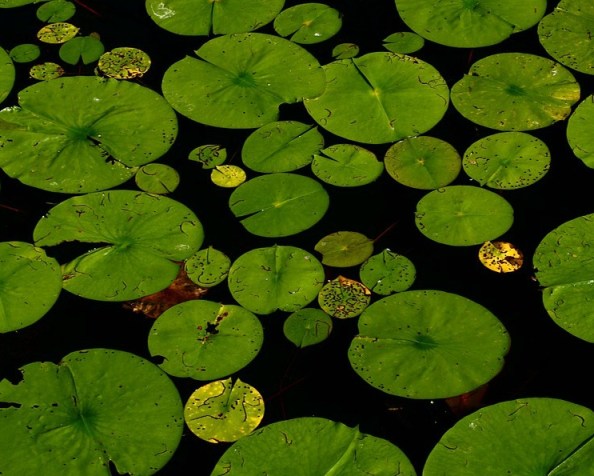
In the centre of the pond are two lily pads, the emergent leaves of an aquatic plant, floating safely on the surface of the water, curled up edges keeping the surface of the leaf dry.

On one pad is a green frog.

The frog is hard to pick out on the green of the leaf but a yellow stripe on its back gives it away.

Chance happens that a week later you pass by the same pond and stop to admire the scene. Sure enough, the frog is still there only you notice that there are now four lily pads; the number of leaves has doubled. In a week the frog has gained surface real estate.

A week later you happen to pass by the pond again and even before you spot the frog you see that there are now eight lily pads. These aquatic plants are quite prolific.

You have to go away for a while and forget the frog and his growing number of Lilypads. A few months pass. Delighted to return home you saunter by the pond again. The first thing you see is that the pond is now mostly green as half of it is covered with lily pads and rather less of the blue sky is reflected in the water.

Sure enough the frog is still sitting proud in the middle.

The puzzle question is this.

How many more weeks until the pond is completely covered with lily pads and the frog can hop to shore without getting wet?

The lily pad puzzle answer is…

One week.

When the pond is half covered with lily pads and they are doubling every week, the pond will go from being half covered to totally covered in just one week. It is the reality of doubling.

Two to four seems like nothing much. Four to eight is mostly trivial too. But when the number is large and the doubling time short, then it is a different thing.

3,500,000,000 is a large number.

It happens to be the number of people on earth in 1967 just 44 years ago. Since then the human population has doubled to 7,000,000,000 (7 billion).

Unlike the pond, we cannot make the Earth any bigger than it already is. So we must hope that should the population double again, there is space enough.

The cute animal postscript

Hans Rosling explains why the human population is unlikely to double again. There are demographics at play that will see family size decline as kids survive better in poorer countries and most of the world passes through the demographic transition.

But 12 billion people is a distinct possibility.

Do you know what you want?

Do you know what you want?

A long time ago I was at a seminar by an upbeat American whose particular brand of snake oil was about how to get what you wanted in life. His specific pitch was creative visualisation.

Waved along by an expensive Italian suit he had people tell him exactly what they wanted in life. It was not enough to want a house with a picket fence. The deal, he said, is to know exactly where the house is, which suburb, street, and all the details right down to the shade of white paint and the distance between the rails on the fence out front.

Most of the people he asked to describe such detail did not have a clue. They had only a vague notion of what they wanted out of life.

Of course this worked like a charm for the charmer. “It’s all about visualisation you see.” He said, once again waving his arms. “If you can’t describe exactly the items you want you will never be able to get them.”

No surprise this has become a popular concept and not just because we are besotted with goods and chattels. Knowing what we want does motivate and guide our actions. Back in the day it got us out from the relative safety of the thicket onto the open plains where there was more risk but also success to be had, perhaps even a tasty warthog.

Today’s versions of warthog might be a new flat screen or the European coupe with the cute front grill and alloys, but the visualisation of things remains a strong motivator.

What do we want politically?

Wanting for things is easy but there is no reason it should not stretch to wanting a certain type of society with specific combinations of rights, freedoms, economic leanings and relationship to the past.

My hunch is that we don’t think of politics this way and have just as much trouble visualising what we want for society as imagining the most desirable garden border.

Clearly it is hard to see the radical-left or far right or Third Way as a tactile thing and so it is easy not to visualise our political stance at all. We don’t discover the detail of what our innate political leaning looks like in the smartphone world.

This is not about how you vote — the choice you must make among your countries versions of major party left or right or centre or even wether to pitch up to the voting booth. This is about what your leanings actually look like. How far apart are the rails on your radical-centre fence?

First you need to know how to place your innate political leanings. Where on the confusing spectrum of ideologies will you feel most comfortable?

Grab your smartphone and ask Google or Siri to search ‘political ideologies’ and click on the Wikipedia entry to see a very long list of the options. More simply you can follow these links to the main flavours

Left wing politics

Centrist politics

Right wing politics

Remember this is not about whether Wikipedia gets the ideological description correct, leave that never-ending argument to the political philosophers. Just pick the description that resonates.

In a jiffy you will have a description of the philosophies that align with feelings that always made you a staunch republican or so excited by Bernie Saunders vision of progression.

You will get to know what you feel about the tricky balance between personal and social responsibility — how much the government should interfere.

You’ll find yourself thinking about just how much capital should be allowed to flow and businesses encouraged with or without a social safety net. And, as former Australian prime minister Kevin Rudd was want to say, just how much of ‘a fair shake of the sauce bottle’ people should get.

You might even make sense of the Brexit decision and the new US president-elect although these events might be a stretch.

What you will find is that visualisation is hard.

Even if you land firmly in an established ideology that describes a political system with strong personal responsibility and a social safety net built on a free market economy [left-centre in case you were wondering]. What does that look like for policy on terror, boat people, exploitation of coal seam gas, or tax bracket creep?

So just like most of the people who had no idea that there were even shades of white in a picket fence, political visualisation is not for the lazy minded. It takes effort.

Only it is time to start making those mental images.

What do you want citizenship laws to look like? Should farmland be dotted with gas wells or modest pay rises tipping you across into the next tax bracket?

It is a very good time to do this because the shake up is upon us. The sauce bottles are out.

Just ask Donald.

If this is leadership, heaven help us

If this is leadership, heaven help us

At various times I have ranted about the politics of climate change in Australia

The climate change action thing

Climate change policy – does Australia need it?

The Kardashian Index

And I am not alone. Many are tearing out what remains of their hair.

So I thought I would bring to your attention the latest from the current direct action policy option in place in Australia. This is the policy setting that hopes to achieve emission reduction targets through the purchase of greenhouse gas abatement at auctions.

At the end of 2016 the vehicle for this, the Emission Reduction Fund, had paid for 177 million tCO2e of abatement purchased across four auctions at an average price of $12 per tCO2e.

Yes, you read it right. Close to $2 billion, that is $2,000,000,000 or roughly enough to pay the annual salary of 100 cabinet ministers for over 50 years, has been spent to purchase roughly the amount of abatement needed to meet the emission reduction target Australia presented in Paris… for one year.

Let’s make this clear. Emitters of carbon are not paying for this abatement, the taxpayer is.

Now you could be generous and say that the taxpayer is really the economy, so the economy is footing the bill, but that is a very long bow. Industries that were previously under the carbon price and reducing their emissions to save money are not anymore. Instead, various activities from other players in the economy are offered to reduce emissions or to capture carbon into vegetation and the CO2e tonnage presented for sale.

The concept of ‘polluter pays’ that has been so successful in a host of situations, from cleaning up rivers to closing the hole in ozone layer, is not in play here. Polluters carry on polluting as they merrily pass on the externality to the taxpayer.

This is neither good policy nor good governance.

There is no incentive to reduce emissions across the economy only an opportunity for a few to make a fast buck if they have access to some abatement.

At current prices, $2 billion will buy you 400 million tCO2e of offset credit on the international markets, nearly 2.5 times the local option. So not only does the policy fail to incentivise prudence, it pays way over the top for mitigation.

You cannot help think that a few people are laughing all the way to the bank.

One million people

One million people

Consider a city of roughly 1 million people, Adelaide, Australia for example — Calgary, Canada; Bonn, Germany; Tuscon Arizona; or Bristol in the UK would do equally well.

Adelaide has two Australian Football League teams, a pro soccer team, two professional basketball teams, three Universities, a cathedral, numerous hospitals, many shopping malls, around 440 schools, an International airport, and a zoo.

There are over 400 suburbs arranged around a CBD that has high-rise office blocks that provide a common destination for a metropolitan public transport system that includes a fleet of over 1,000 buses.

There are doctors, dentists, lawyers, Artisans and actors; and enough skilled tradesmen to build or engineer almost anything.

In short, Adelaide is a self-contained community surrounded by enough farmland to feed everyone.

If it were possible to gather all the people who live in Adelaide into one, standing room only location it would be quite a spectacle. It is hard to imagine what it would look like.

There would people as far as the eye could see. Lay them down head to toe and the line would stretch 1,800 km — 400 km further than a road trip from Adelaide to Sydney.

Stand them in single file and the line would be 30 km long, similar to the queue at the post office.

Now having conjured the image of so many people in your mind’s eye put them all onto commercial aircraft.

Because 1 million is roughly the number of human beings who are, at any one time, airborne in commercial airliners making vapor trails around the globe.

This is both staggering and scary at the same time.

It is enough just to illustrate the scale of the challenge to provide life support to all the people we have made and still retain some environmental integrity.


First posted on LinkedIn

Merry-go-round

Merry-go-round

Suppose you are a smart person with considerable experience of the world. You have worked hard and sacrificed much for a stellar career that now has you among the CEO ranks. One of your rewards is a seven figure a year salary that puts you just shy of the top 250 CEO earners on 2014 numbers.

In a most peculiar turn of events in 2016, you go from being the CEO of a global environmental consulting firm to running a major power corporation and then, just six months later, you take over as head of the largest a private health fund in the country.

Not in a million years. Such career shifts are impossible in the real world. Consulting firm to energy company maybe. Even energy company to health fund is possible. But not from environment to industry to health in six months. Impossible.

Such career shifts are impossible in the real world. Consulting firm to energy company maybe. Even energy company to health fund is possible. But not from environment to industry to health in six months. Impossible.

Impossible.

Unless of course, you are a minister in the Australian federal government. Then you can make the change from Environment minister to Industry minister to Health minister in a jiffy. In your latest incarnation at health, you are responsible for a $65 billion portfolio. Quite some responsibility.

Somewhat surprisingly, your annual remuneration for handling the health of the nation is just $330,000 plus some expenses — but you have to be very careful indeed not to abuse any entitlements.

I’m not sure what is more bizarre. The merry-go-round of ministers running around the cabinet room and putting their bums down on the nearest chair when to music stops. Or the fact that they are paid such a pittance to take on huge financial and, dare I say moral responsibility.

Professor John Rice, writing in The Conversation, is optimistic that some positive policy settings can survive a similar revolving door of ministers in the science portfolio.  He may be right if all the newest minister has to do is keep on the innovation course and maintain the finding. Only it never is quite so simple.

The analogy with commercial firms is not a trivial one. CEOs steer their ships through turbulent waters towards profit. Shareholders demand that they do this wisely and the law protects their interests from incompetence as well as malfeasance. Rarely will the CEO survive without relevant experience and at least some knowledge.

Why should ministers be any different? It is just as important that they have at least some topic skills and experience in their portfolio even though their remuneration seems not to depend on it.


Monkeys like peanuts — more on CEO salaries

What predators do

What predators do

I have just seen a wildlife documentary where eco-tourists out whale watching in Monterey Bay had the experience of a lifetime.

They were on the water hoping to catch a glimpse of migrating grey whales, mostly mothers and calves as they journey along the coast to feeding grounds in the Arctic. Only on this particular day, and for the mother and calf they happened to be watching, the laws of nature were graphically applied.

As the tourists stared on in boats tens of meters from the migrating family a pod of killer whales arrived and began to harass, circle and ram to try and separate the calf from the mother.

This is, of course, what predators do. They predate. Usually on the individual that is easiest to catch or subdue thus giving them a meal that keeps them alive at the lowest risk to their own safety.

On the plains of Africa, lions, wild dogs and hyenas will single out the weakest of the grazing herd – why make things any harder than they already are? Chase down predators, as opposed to those that sit and wait, will benefit from making the chase as easy as possible.

The orcas were persistent. Injuries to the calf steadily accumulated and blood became visible in the water, the reality of the event dawning on the faces of the watchers. For the television audience, the narrator embellishes the visuals with “the calf was being eaten alive”.

Marine scientists, who later analysed footage of the event, observed that it was the younger orcas that took the most active roles in the attack whilst the adult animals held back. “Teaching the youngsters how to hunt”, they concluded – or perhaps leaving the dangerous work to the more agile individuals.

The scientists also concluded that this was “not usual behaviour” or “if it is what orcas do, then we have not observed it” and “maybe it was because of the high numbers of grey whales in the bay at the time”. Or maybe, like the lions, hyenas and wild dogs of Africa, predators rarely pass up an opportunity for lean times are more common than times of plenty.

Whatever the reason, the attack was a prolonged event lasting several hours.

Time enough for the storyline with a happy human ending that is so essential to the modern wildlife movie, as “against all the odds” the grey whales swam towards the shore, reached shallower water and the orcas broke off.

No-one could follow the calf to see if it survived its injuries but the looks on the faces of the tourists interviewed for the documentary left the audience in no doubt. Of course it had survived for the sake of all things decent.

The responses of the eyewitnesses were most intriguing. They went to see nature in the wild where wild things happen by definition, yet they were all shocked, not quite able to accept that wildness includes violence and death. Perhaps if the calf had died quickly and became the meal the orca pod was after the onlookers would have been more accepting of the cycle of life.

Instead, the escape and inevitable pain was, for many, too much. The people were visibly affected.

No doubt a few of them went home to enjoy a t-bone steak.

Banks

Banks

Banks are a handy invention. They provide a safe place to store everyday money and, so long as you a meet certain criteria, a place to borrow money for items too costly for everyday money.

Banks also have a stupendous business model. There is no more profitable commodity to trade than money. Everybody needs it and is prepared to pay a premium for access to it. This willingness to pay even helps banks manage their risk of not holding enough capital to cover their obligations because most people do the right thing and make their repayments.

Even psychology is on their side.

Despite such a stupendous business model bankers are sharp to opportunity and the squeeze to profit is ingrained in their culture.

Last year in Australia the four main high street banks declared an after tax profit just shy of $14 billion and account for around 80% of the systemic risk in the financial system. They play a big game.

And the rhetoric is that we need them to play. If the flow of cash stopped, then so would everything else. Our system of trade and exchange requires that both capital and cash flow. Deals have to be done to ensure that a new housing block is built, paying tradesmen and providing homes for people to fill with white goods and flat screen TVs.

Banks profit from all of these transactions as they provide capital, credit and a place to store cash for a fee.

The question is how much should they profit? Is $14 billion in profits fair? It is enough to pay roughly 176,000 people the average wage for a year or 400,000 people the minimum wage. The number of people recorded as unemployed in Australia as at November 2016 was 725,000.

Remember that profit is the money made over and above the cost of doing business, paying taxes, and executive bonuses.

Of course, some profit is distributed as dividends to shareholders and so is fed back into the economic system. And without this redistribution, the money would not have been mobilised toward profit in the first place. So care is needed here.

It is too simple to imply that $14 billion could make a serious dent in the unemployment rate. But it is worth a thought.

At what point does society collectively say that enough profit is enough?

Is the world changing?

Is the world changing?

Love him or loath him, infamous climate scientist Dr Michael Mann recently made an important point about Donald Trump’s rhetoric on bringing manufacturing industry back to make the US great again.

On the America Adapts podcast Mann suggests that to achieve such a goal, manufacturing in the US must embrace the energy revolution. Implying factories running on fossil fuel energy will not be competitive in a global market.

The only way a fossil fuel based industry would be competitive is if there were trade restrictions and tariffs to keep them competitive. This makes Trump’s anti-trade agreement gambit a typical business bully approach to finding a competitive edge that, in this case, US manufacturers would not have.

The evidence is that the energy revolution is well advanced. All over the world technologies are maturing rapidly to deliver distributed clean energy. It is realistic to believe the many mayors and governors that claim carbon neutrality for their towns and jurisdictions when their constituents are all up for a Tesla wall.

Today’s first graders, who will consume a fair amount of electricity in their lifetimes, may not know or care, but most of that energy will not come from a coal-fired power station.

This change from fossil fuel to alternative energy and the accompanying shift from centralised to distributed generation is exactly the one that was needed to tackle the climate issues Michael Mann is so passionate about. Only it is happening because it makes economic sense and not because of a limp international agreement made in a Japanese city or from late night breakthroughs in Paris.

Let’s not kid ourselves. The change is happening certainly. Only it is happening because the technology is becoming commercially competitive. So competitive in fact, that a US president is elected on the back of rhetoric to prop up his countries uncompetitive energy system and hold on to the past.

Does all this mean that the world is changing? Not really. Those first graders, who will spend more of their lives looking at a screen than the trees, may notice more wind farms and will drive an electric car they plug into ports on the street to share the energy captured from the roof at home. But they will also be fiercely competitive and, just like their parents and grand pappy, rely on markets to deliver their lifestyle.

They will work, eat, sleep, and procreate with their mobile device never more than an arm’s length away. They will earn money and use it to pay for their data plans. Not much will be different…

Unless, just maybe, perhaps, possibly…

All this distributed energy makes everything easier, and the system changes. If stuff gets cheaper and cheaper, maybe value is recognised in what people do and not what they have.

Here’s hoping.