Slow, slow, quick, quick

It was 1987 at the end of the dry season, 26 years ago almost to the day that I first visited a non-descript patch of miombo woodland near Marondera on the Highveld of Zimbabwe.

Scattered amongst the mature Brachestegia and Julbernardia trees were many wooden boxes all set on stilts ready and waiting to catch anything that fell from above. On the woodland floor beneath the cathedral canopy were mesh bags containing known volumes of leaf litter steadily decomposing, some with and some without the attentions of termites, ants and their tiny critter cousins. Everywhere there were small plastic flags of pink and yellow popping up from the lichen covered soil like daffodils in spring.

As a bushy tailed postdoctoral fellow my job was to take all this in. I then had to figure out how to make reliable counts of all the soil animals in this small patch of savannah and, for good measure, in the adjacent maize field.  Over the coming months many a sweaty day went by digging through that sandy Marondera soil but also much joy when sometime later the results were published in a peer-reviewed journal. The paper entitled ‘Abundance, biomass and diversity of soil macrofauna in savanna woodland and associated managed habitats’ was published in Pedobiologia [a journal title that sounds a bit dodgy but is actually quite legit as pedon is the Greek word for soil] and provided much academic satisfaction and a handy unit of kudos.

CO2 enrichment Cumberland Plain WoodlandEarlier this week I visited a rather similar patch of woodland. Only this time it was in Australia just 30 minutes drive from home where a parcel of Cumberland Plain woodland owned by the University of Western Sydney had been similarly commandeered for scientific research.

The litter traps and mesh bags were all present along with the ubiquitous daffodil like flags. The major difference was that there were also vast steel cages that formed circular sampling plots around clusters of trees designed expertly and with considerable precision to enhance the carbon dioxide levels throughout the vegetation. Once I forced myself to ignore the $40 million outlay for the infrastructure and the $1.5 million per year just to supply the extra carbon dioxide, it was a real back to the future experience. All that was missing was the soothing aroma from the tannins as they volatilize from the floor of the African bush.

Aside from the complex technology and infrastructure to enhance CO2 levels it felt like not much had changed. Today’s researchers were sampling the soil biology in pretty much the same way.  The challenges of understanding the complex biology that goes on under our feet were still there and no amount of high-tech wizardry had yet helped to break us out of the sampling constraints.

We like to think of research as being at the cutting-edge. It is after all where we find out solutions to our problems and create greater understanding that can be used to improve our lives.

Certainly since 1987 there have been major advances in a whole range of fields — back then the iPad or even the mobile phone were not even imagined let alone in use by everyone. What I took away from my déjà vu visit the notion that even when well resourced, progress is not a given.  Advances are just as likely to be patchy or steady and rarely come in spurts.

Back in 1987 the idea that soil could be defined as much by its biology as its structure was an exciting ‘new’ thing. There were a host of applications from understanding the basics of how natural systems functions to practical advances for agriculture and forestry.

Interestingly it is still a ‘new’ thing. Progress has trundled rather than sprinted along. Somehow all those benefits of understanding and managing soil biology failed to reach the farm gate [perhaps because it was easier to throw in some fertilizer].

Fortunately there is a new generation of the bright and bushy tailed. Only this time I suspect there really will be serious attention outside the close world of academia. We cannot achieve the push toward the next doubling of agricultural production that demand projections say we will need by 2030 without a hefty input from soil biology, not least because we are reaching the limits of yield benefit from fertilizer application.

So more power to those modern pioneers pumping CO2 into Cumberland Plain woodland and to their research colleagues around the world and let’s hope we can get a foxtrot happening.

Here are the citations

Dangerfield J.M. (1990) Abundance, biomass and diversity of soil macrofauna in savanna woodland and associated managed habitats. Pedobiologia 34: 141—151

Dangerfield J.M. (1990) The distribution and abundance of Cubitermes sankurensis (Wassmann)(Isoptera; Termitidae) within a miombo woodland site in Zimbabwe. African Journal of Ecology 28: 15—20
97% said their cats prefer it

Its official, 97% of peer-reviewed science papers, that expressed a preference, agree that climate change is caused by human activity.

Academics have surveyed nearly 12,000 academic papers penned by 29,000 scientists. There were 4,000-plus papers that took a position on the causes of climate change and less than 100 of these disputed the scientific consensus that climate change is the result of human activity.

Here is what the lead author had to say about the survey

Call me a cynic but all I could think about was the “8 out of 10 owners who expressed a preference said their cats preferred it” Whiskers ad and how I didn’t believe that either.

And later I imagined what it was like back in the day when every intellectual believed that the earth was flat until some crazy dude decided to sail all the way around it.

And later still I decided that it really is missing the point because it does not matter what the cause is, it is the effects we have to worry about.


Groupthink

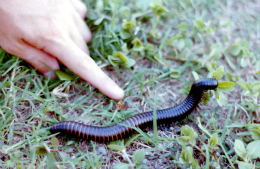
millipedeBruce, a good friend of mine in the time before the espresso when coffee trickled through a filter into a Pyrex jug, said as he poured the cremora free liquid into my mug, “There is no such thing as a new idea. They are all recycled.”

We were discussing evolutionary biology at the time. Probably some nuance of the idea free distribution as applied to Oystercatchers or maybe the reasons for the bizarre ornamentation of millipede genitalia, I don’t remember exactly. As young academics in the biology department at the University of Botswana, it was a normal enough conversation now long forgotten.

But I have always remembered that phrase, “no such thing as a new idea”. It was burned instantly onto my core because it hurt.

My ego could not accept such a crazy concept. It still can’t. I believed then and now that ideas come from the endless bounty of the ether. All you have to do is open a portal and they flow faster than filter coffee.

What happens next is where Bruce was coming from, for the ideas may well be recycled many times but the ego adopts them and presents them to the world as its own unique and original thought.

Now suppose that we put 40 sizable egos into a room for a day and get them to think about a problem. They are all technical experts who know a fair bit about the topic. We call this a workshop and it’s portals away.

Open the floor for discussion and soon there is a flood of ideas. By coffee time everyone is ankle-deep in them. Only all of these ideas conform to Bruce’s definition, none of them are new.

As each ego finds out something new it presents it back to the group as a great idea. And it is, except that other egos have already had that idea and moved on.

In the group though these old ideas keep coming and etiquette requires that these ideas are heard. So people listen politely but impatiently while they think up more ideas of their own. Ideas appear, bounce around and die, all the time taking up space that solutions should occupy.

Keep this up for a day and you can go insane.

Welcome to ‘groupthink’, the politically correct and increasingly popular way to tackle complex problem — put a bunch of “experts” in a room and let them regurgitate old ideas.

It is easy to see how groupthink has come about. We all tend to believe that no one person can have all the answers. There is simply too much information these days for one brain to be across it all, let alone have the skills and bandwidth to synthesize, analyze and interpret what it means.

A gathering of many brains each familiar with the topic should solve this problem performing a kind of risk management. Collectively this intellectual capacity should better cover all the bases.

The problem is those egos that refuse to accept that their ideas are old. What actually happens in workshops is reinvention of the wheel many times over as each participant gets up to speed and the groupthink gets mired in what amounts to getting up to speed. Progress becomes difficult.

When it gets bad things go backwards. Genuinely new ideas fail to make it at all.

Perhaps we should rethink the workshop.

Something unexpected

Teaspoon of soilHere is an interesting situation, almost unimaginable.

You are approaching your 60th birthday and are about to be surprised by an unexpected inheritance from a wealthy relative that you barely remember.

Many years ago your great Aunt, who was always rather odd, left you some money.

She stipulated that you could only access the balance of the funds when you are 60 years old, 40 years on from when the money was deposited.

The good news is that the initial capital she left was $10 million, a huge sum even if nobody quite knew how she came to be so wealthy. The bad news is that the $10 million capital has lost value to the tune of 1.3% a year.

Bummer. Not only did you have to wait to be rich, but also each year there were 1.3% fewer funds. Still, in a few months time when you reach 60 there will be a bank cheque for $6 million in the post, more than enough for a world cruise or two and a luxurious retirement.

Your younger brother was less fortunate. The dowager only bequeathed $1 million to him under the same rules. He has to wait longer for his funds and gets a much smaller cheque of $593,000.

A tidy sum for sure but not quite enough to fund his retirement.

Your three cousins, who soon found out about the unexpected inheritance, were also hoping for something from this distant relative that they only just realized they had. Sure enough, she did not forget them and deposited $100,000 each for when they reach their 60th birthday. They get $59,250 — certainly better than a kick in the teeth but hardly a pension fund.

On the first of your world cruises you mull over the odd situation of financial capital failing to appreciate.

What if your retirement savings, that before your great slice of luck were your only means of support in old age, were being eroded at 1.3% a year?

Each year the amount you had saved up went down a bit, not much admittedly but it went down. Likely you would seek to reinvest your capital quick smart rather than run the risk of not having enough funds for your retirement. Also likely you would fire your investment analyst and rant at everyone you could, looking for a scapegoat for such a fundamental error.

And what bad news it was for your brother. If he had known about that $1 million all those years ago and invested it wisely he would have more money than you right now.

As you sip a G&T on the sundeck you can’t help thinking it funny what we take for granted.


Another unexpected thing

Soil scientists have estimated that the amount of carbon in agricultural soils in Australia has declined by 51% in the last 40 years — that is 1.3% a year.

Soil carbon is a critical environmental asset that drives plant growth because carbon fuels soil biological activity, promotes soil structure, aids infiltration and moisture retention and supports nutrient exchange. Handy material to have and not something to be squandered.

What is worse is that science has little idea about the initial carbon stocks [the capital]. It might have been the equivalent of $10 million in which case we can keep going for a while.

We might even have time to reinvest by adopting smart agricultural practices and get the capital to appreciate again.

The worry is that we may be as uninformed and as poorly off as your cousins.


Here is the original scientific reference for loss of soil carbon [you can find a copy on Google Scholar]:

Zhongkui Luo, Enli Wang, & Osbert Jianxin Sun (2010) Soil carbon change and its responses to agricultural practices in Australian agro-ecosystems: A review and synthesis. Geoderma 155 (2010) 211–223.


And some more articles on soil carbon

Carbon in Soil – Why Organic Carbon is So Important

Soil – the missing carbon sink

Once in a lifetime

Cyclone_Yasi_QueenslandIf you play sport then one day you will achieve your lifetime personal best.

You will catch a 3 kg bream, swim 400m in 5 minutes, make 122 not out on a green wicket or score 34 goals in the season. Every sporty person has their personal best, the one they talk about modestly to their grandkids and boast about after a few beers with mates.

It is also true that in your lifetime you will witness your hottest, wettest and coldest day, and your biggest storm.

Now that most of us go beyond the three score years and 10, there are upwards of 25,000 days for us to experience extremes.

Hurricane Sandy was devastating, as was Katrina, events that should only occur once in a lifetime and preferably not at all.

Sandy was a confluence of events, each one quite severe but devastating together, yet it happened. And we know that that equally perfect storm has happened before in previous lifetimes and will again in our children’s lifetime.

Even events that skip a generation or two and occur on average every 100 years are possible. The rank amateur can fluke a hole in one and have his day.

Given time Sandy will be followed by Samantha, Sybil and Susan. And she was preceded by literally thousands of equally severe storms in times past witnessed by settlers, indigenous peoples and before them, various species of now extinct megafauna.

The difference was there were no subways to flood, houses on wooden piers to collapse and substations to explode.

If we understood this fully then we would not blame Sandy or her sisters even if climate change means they happen more often that they did before.

We would realize what we have changed. We are present to witness and put flimsy things in the way of the storms.

We happen to be around for that meteorological PB.

After Katrina, and again after Sandy, there was much courageous talk of rebuilding clearing up and starting it over — inspiring stuff from leaders who know how to tap into the spirit humans have that makes them feel good even in hard times.

So the flooding will be drained and cleared up, the millions of dead rats ground up for fertilizer, the house rebuilt in readiness for Samantha and Shona. Although I suspect not built with too much more care than before.

This is what humans do. It is as innate as any cravings for salt and sugar. We will get to work, repeat what we did before and complain that it wasn’t our fault. So be it, it is our endless love affair with risk and opportunity

Some families will witness tragedy and have to mourn the loss of loved ones and of property, but society will shake off Sandy, even use her as a motivator and fiscal stimulus.

And later, remember her as that once in a lifetime storm.

The new gold

You would never call an actuary sexy. Number logic people just don’t have the suave of a James Bond or the sass of a Marilyn. They are just too precise. Absorbed by detail and loving that a + b = c, especially when b is the reciprocal of the square root of f, they just lack that playful oomph.

That said being a good number cruncher was never a bad career. Thanks to the acute need for their skills, especially from insurance companies treading the tightrope of premiums over risk, data people have always been well paid and in reasonable demand. Over the years it has been quite tricky to get a place on an actuarial degree.

Now, however, sexy is in for the statisticians too, because the mad men need them. Or more strictly, there is a new breed of advertiser who have taken the mix of imagery and psychology invented to persuade us all to buy things to a whole new level. Now it is possible to predict as well as persuade.

Thanks to the already huge and rapid accumulating databanks on our online profiles, our offline purchases and even where we are throughout the day (yep, that handy little app in your smartphone does more than tell you where you are and how long it takes to walk three blocks), it is now possible to track behaviours and from that predict what might happen next, or better still intervene with an irresistible offer.

The mad men who want to place that person specific ad on the right device at the right time need the data crunchers to do the sums.

Here is a simple example. Your Facebook profile says that you like the delectable British soul singer Sade (mine does) and your mobile pings a GPS signal that you are in Sydney. Instantly the ticketing website you use puts two and two together and sends you an email with Sade tour dates. Not only that but her Sydney concert listing is flashing with a special offer of 10% off the usual ticket price. Outcome obvious, you have an outstanding night out and can’t wait for her next tour.

Here is another example. Your credit card purchases at the casino hotel, activity at the gaming tables and even what goes out of the mini-bar in your room are monitored in real time. What you buy, win, and loose on your casino weekend break are matched to a predictive model based on thousands of previous punters that tells the hotel staff the optimum time to offer you a free meal voucher or a discounted show ticket for the next evening. That optimum being the point being just before your instinct tells you to cut your losses and check out.

This is just the start of the thousands of uses that analysis of data can support. Take a moment and you will think of plenty yourself.

Usefulness readily translates into products and services that become a new gold, the nuggets that come from data mining. The vast datasets on what people do, where they do it and when trawled, filtered, analysed and modeled to predict what, where and when they will do next. All so that businesses can deliver a timely intervention.

The talk is of a multi-billion dollar industry built around analysis, interpretation, and prediction, followed by delivery of highly targeted suggestion. It is a whole new field for anyone unfazed by terabytes of data and permutation algorithms…. and who are also unfazed by where the money comes from.

I wonder how many of the new gold diggers will dare to ask.

Historical science

I have just finished Jared Diamond’s 1997 book Guns, germs and steel. The subtitle, A short history of everybody for the last 13,000 years, sums up a fascinating tale of not just our past but of the human condition. It is an extraordinary account of both the quirks of human history and the astonishing speed of our emergence to colonize and appropriate the planet.

You cannot go wrong with Diamond’s books. They are accessible, fluid and delivered, as one reviewer put it, with “a combination of expertise, charm and compassion.” The Third Chimpanzee and Collapse are popular science classics.

Although Diamond is a scientist, more precisely an evolutionary biologist, Guns, germs and steel is about history. A courageous attempt to describe and explain why in amongst all the movements of people some groups won, expanding territory and growing in number, while other groups lost, either by being overrun or exterminated.

Diamond’s science take seems to be fuelled by a sense of compassion. He flatly rejects racist explanations for success in favour of a more cause and effect analysis. The conclusions that technology (guns), the biological consequences of living in sedentary groups close to livestock (germs) and growing sufficient food to stay put long enough to work metal (steel) is convincing as it trots through 400 pages to a simple punch line.

But this is not to spoil the plot. It is the epilogue on history as a science that was the most intriguing.

Diamond leaves the detail of human occupation of every corner of the planet and makes a plea for science as knowledge. Science as a means to understanding that is more than the narrow view of controlled experimentation that is the essence of the scientific method.

His plea for historical science, an approach to history that is scientific in its logic. Only not of experimentation, for that is not possible, but for a sifting of the evidence that will allow for predictions and align cause.

This is curious because the book provides historical observation and interpretation that always suffers for want of attribution. It is odd that in an epilogue is a plea that draws attention to the core weakness in the argument. Observation is evidence but only in rare circumstances does it point to cause.

Cause must be surmised and then believed rather than proven in the way we can prove an experimental result.

Perhaps history is history, a catalogue of events and an interpretation of their meaning. And perhaps science is science only when attribution (a hypothesis) can be tested.

None of this makes Guns, germs and steel a lesser book, for the evidence and conclusions Diamond draws need to be read and heeded by us all.

Spongy attribution may explain why such books have only limited influence.

Science and scientists

Recently I was on a selection panel that awards the prestigious McKell medal in recognition of contributions to natural resource management in Australia.

Nominees for the medal are farmers, senior bureaucrats, consultants or researchers, all of whom went beyond the requirements of their job or business to lead, educate and understand best use of natural resources. We reached a point in the proceedings where the relative merits of the nominees were discussed.

As happens every year, there was considerable debate over merit. It is very difficult to compare the relative contributions of candidates from such diverse career paths. When considering the merits of a senior scientist nominated for his research efforts in conservation, one comment from a panel member, an experienced and pragmatic farmer, caught my attention.

He said he’d rather see a result with his own eyes than research findings that said the same thing.

This was because he felt more inclined to believe an outcome if he actually saw it.

I confess that it took me a while to process my colleagues comment, but I think the implications are profound.

It means that whilst science and scientists are revered, hard evidence is what persuades us when it matters most. And then, if all the evidence must be seen, then not only do we have little faith, but our ability to apply scientific discoveries will be limited.

After much debate the panel recommended the medal be awarded to a farmer.

M