Earthflight

The recent natural history series Earthflight has been interesting to watch.

It follows birds as they fly around the planet, the sort of thing the BBC have done many times. Only this time the idea is to take the bird’s eye view.

And it is amazing where advances in digital, miniaturization and lens technology can take us. Some of the shots would have been unthinkable even a decade ago.

Here is my quick synopsis. Truly staggering photography is spoilt by gratuitous segways (usually to footage of large ferocious animals other than birds) and an inane sales copy narrative. But, hey, not every audience wants to hear Sir David all the time.

The images are so amazing that figuring out how they did it takes the mind away from what the bird sees.

Maybe it is a bit like the experience with flight simulator games. We know we cannot be up in the air because we are holding a game console and so part of us stays attached to that reality. It was similar with images of flight.

My brain said that it was not possible to be 1,000 feet up gliding on thermals across an Andean mountain top and so I did not see the landscape below as the condor might, even though the camera was right there on its back (at least that’s what we are supposed to think is how it was done – I have my doubts).

The footage I remember though was taken in conventional fashion. It was of 40 or so Andean condors chattering around a carcass at the end of a landfill site on the outskirts of Santiago. The narrator tells us that the carcass is provided for the birds so that they are not at risk from the bulldozers that are spreading out the garbage.

It was not so long ago that the Andean condor was classified as an endangered species by the IUCN. It is better off today with a near threatened classification,  but remains susceptible to human influence.

Only here were 40 individuals on a rubbish tip. And this is a good thing?

I’ll leave you to decide.


Zoological gardens

Earlier I posted a somewhat acerbic commentary on gardens.

In brief it concluded that we must have them even though we don’t really use them. I am curious to know if the same thought process could be applied to zoological gardens.

Zoos began as collections, or more strictly, menageries.

Some of the wealthy and idle rich, who often liked to collect things, developed a fascination for animals and started to collect them. The more weird, more wonderful, and wilder the better.

It is not hard to imagine the independently wealthy of the early industrial era with access to travel on the new steam ships and trains wandering off to see the wondrous wildlife of Africa, all hurrahs, what ho’s, and gin and tonics. Once they were done with shooting the lions, buffalo, elephants, rhino and leopards it was inevitable that they would want some in their copious back yards at home

It probably started with taxidermy they had done on all the trophies. But stuffed didn’t quite cut if you could have a roaring lion the other side of the rose garden.

Plus, if you could have a botanical garden, then why not a zoological garden?

So live animals became the go and menageries an inevitable consequence of wealth and travel.

And for a long while these were private collections, places where the privileged few showed off their latest acquisitions to a handful of their friends and guests. Even today, the majority of the exotic creatures held in captivity are in private collections.

Only later did the fascination spread to the general public and the notion that there might be a buck in showing the weird and wonderful to the masses.

If you have been fortunate enough to witness wildlife in the wild then even the best zoo is an anathema. You know there is something about a cage, enclosure, display (the noun choice cannot really hide the reality) that strips the zoo animal of its essence.

It does not matter that most animals are not aware of their situation as captives or that a well run zoo is no more cruel than keeping a dog or a cat at home.

And that even all the zoos in the world hold a miniscule fraction of the extant specimens of all but the rarest species. The number of captives is a blip. What is a few hundred elephants when there are hundreds of thousands still alive in the wild?

Then there are the well-rehearsed reasons in favour; various expansions on themes of

  • education
  • conservation
  • preservation
  • enjoyment value

And these all have merit.

The concern I have is an impression that we have not stretched these themes far enough.  Especially to the importance of maintaining viable wild populations of the species that we like to exhibit.

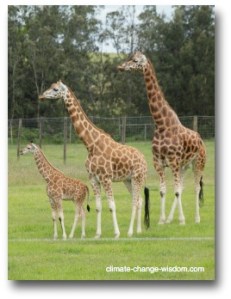
Whilst I find a trip to the local zoo to stand and admire a zebra, giraffe and even a tubby lion rewarding, I cannot escape this feeling that something’s missing.

Gardens

A garden is a place that humans create from nature.

We carve out a parcel of land around our dwelling, add some landscaping and select plants to display nature’s beauty and bounty. This orderliness of things is pleasing to us. We feel in control as though our effort has tamed the wilderness.

The cleared patch puts some space between our homes, allows us to potter around outside without bumping into the dangers that trigger our fight and flight response and even provides fresh lettuce for a salad.

The first gardens were probably about clearing the vegetation around the hut so that we would not step on an unseen snake and the water would drain away more easily.

Most of us have or would like a small garden, our own small patch of tamed tranquility. We also enjoy visits to grander spaces that surround opulent homes for a garden is also a statement. It says something about the owner.

These spaces are so important to us that when we allow half the land area in the suburbs of many of our cities to be gardens. This makes our cities bigger, city infrastructure more expensive, and our commutes longer.

So why is it that with all these good reasons and commitment to have a garden we actually don’t spend that much time in them?

Obviously during the week we are at work and our kids are at school so we cannot be in two places at once. Then there is homework, the newspaper or TV, and dinner to prepare. At weekends we have shopping and sports and, well, a whole bunch of things to do.

There is some gardening of course; only this is mostly to keep the garden looking good.

And then you can’t be in the garden in the rain.

Take away all the effort in upkeep and we hardly spend any time in the garden at all. Only the kids use it and for them it is an attractive space until they get to high school when other things tweak their interest or the space is just too small for real soccer.

There must be another reason for our love affair.

It could be because all we need is to see evidence of our personal control over nature. A garden is a space close to us that we (or perhaps the landscaper) have tamed and bent to our will if you like. It is a safe buffer between the real world and us.

And yes, we like that space to be beautiful. We like to select and display selections from nature that we especially like or on occasion might even want to eat. Most of all we want it to look good simply because looking at it is what we will do most.

Perhaps it is OK that we do this, that we create this visual buffer. Especially if when we get a spare moment and its not raining we wander around the garden or just sit in it, maybe even on the grass. Maybe we are now so removed from nature that it really is too much for us to be exposed directly to its real tooth and claw and that our modifications of nature are a necessary half way house.

My guess is that these days, gardens get looked at only occasionally and entered for their own sake very rarely. When I travel on the train to the city, a journey of 60km each way, I can count on one hand the times I have seen people in their gardens.

So maybe gardens are actually about that neighbour thing.

Perhaps they are there to demonstrate how wealthy we are. It explains why when we look to buy a house, the size and shape of the garden around it is so important to our purchasing decision.

It would be better if we actually spent more time in our gardens, just because we can.


Environmental issues for real – Environmentalism

We should find news footage of men and women in orange jump suits slashing with scythes at genetically modified crops disturbing.

And what was our response when the taxpayer foots the bill to “rescue” activists who board whaling vessels?

I was always told that the end cannot justify the means. Clearly it is not that simple.

Read my latest Ezine@rticle to see why environmentalism might be an environmental issue.

A food security challenge

I have been writing a few articles lately about food.

Oddly not in the culinary sense, given the profusion of cooking shows and what seems like an exponential growth in the number of celebrity chefs.

I am more interested in ‘How we will grow enough food‘ and whether we can cope with a global dietary change given ‘What we eat‘.

An observation made by a friend of mine who recently retired from a distinguished career as a public servant in agriculture and natural resource management gave me pause.

After observing the agricultural community in Australia for several decades his comment was that farmers take up practices that improve productivity and sustainability when times are good.

When it’s tough they just do what it takes to stay viable.

The implication of this logical and insightful observation is that future food production is dependent on how well farmers are doing now, in the immediate.

Those of us who get our food from commercial agricultural production (nearly everyone in agricultural economies) have become quite used to highly reliable food quality, variety and supply. And to keep the supply consistent the farmers relax and adopt sustainable practices when the weather is good and the seasons have behaved.

The likely response to drought, flood, frost and heat waves, or soil degradation is do what you can to get some kind of crop to market. This is because the market demand requires it and, as a business, the farm must at least cover its costs or it goes out of business.

The same response occurs when input costs rise. Do what you can to keep the business viable. In short, get some product to market.

This understandable response is a food security challenge, especially where the bulk of food production comes from the small to medium size businesses that we call farms.

If farm viability is so important to both the market and the individual business then there is little to stop exploitative practices when times are tough. At the margins risks will be taken just to keep the business going; because the alternative is the businesses go under. We do it in manufacturing, retail and service sectors so it should be no surprise that we do it in agriculture.

We will save the government subsidy issue for later. What we might think about is the challenge to good practice presented when times are hard.

The reality is that good practice will only be good if it results in some buffering of economic returns when times are tough. Sustainable practices are those that keep inputs to a minimum, make optimal use of the conditions even when its warm and doesn’t rain, and end up with some salable produce.

Where this is not possible, then the farm ceases to be a business. And given that in our current model we buy almost all our food, business failure makes food supply far less secure.


No valentine

If you are an environmentalist it is a scary thing to call anything natural an asset. This is because assets create wealth given the right investment, and, historically at least, investment meant exploitation.

In one way or another environmental assets are converted in order to realise their value.

  • Trees become railway sleepers, pit props, roof trusses, furniture and firewood.
  • Flower filled meadows become livestock factories.
  • Ore bodies and coal seams become giant holes in the ground upstream of depleted and polluted waterways.

The environmentalist paradigm has been about saving the last remaining patches of unspoilt nature from this type of asset (resource) exploitation.

Preservation and conservation of nature has required extraordinary commitment, tenacity and sacrifice. Either from those who pushed for and created the legislation for environmental protection that helped knock back pollution and create national parks or from the more radical individuals who had to hug trees.

The arrival of global warming as the next serious threat to the environment has proven more difficult to fight. The only acceptable solution has been to try and reduce greenhouse gas emissions and this should have created another route for environmentalism, a partnership with the investment community to trade carbon.

An unlikely alliance parodied in green has moved on

Only she hasn’t.

So far the financiers have not joined in the unholy alliance. Perhaps they have been distracted by more immediate economic woes or simply got cold feet.

Market mechanisms for trading carbon are in place, accounting rules have been tested and projects in forestry, agriculture and energy are ready. Environmentalists have relented but still nothing.

Are we losing faith in markets just when we thought they might help solve environmental problems?

That would be quite an irony.


What we eat

The other day I had a conversation with a friend that came to a conclusion. We decided that the environmental issues of biodiversity and climate change would be transient and replaced in the public consciousness by food security and the consequences of oil at $200 a barrel.

My point, conceded, was that food and the price of oil will stick until we find viable, safe and long-term alternatives to our current food production systems and energy sources.

We talked over an obvious and probably necessary option to improve food security, which is to eat less meat.

Animal protein requires many more times the space and water to produce than plant protein thanks to a simple and inevitable consequence of thermodynamics. Animals convert plants to protein at roughly 10% efficiency however good the farmer is at his husbandry. When both space and water become scarce it makes sense to eat the plant that is equally nutritious to us than. It would be easy enough to increase the proportion of plant protein in our diets.

Despite the logic being so obvious, my knee-jerk response to the suggestion that we could alter our diets and even grow some of these fruit and vegetables at or closer to home was:

“In whose lifetime?”

Maybe it was the cynic in me, that nasty resident who has become more cranky and vocal as the years pass, or knowledge of what has gone before that made me so negative.

Quite rightly my friend did not concede.

The exchange reminded me of two articles I read a year ago that did give me some justification.

The first was on the flip side of the food security argument saying that some foods such a meat and fish should be eaten in moderation because there is an environmental cost to their consumption.

The second described the outrage people would feel at being told they must go against all the advice of the nutritionists and eat less fish and lean meat. These foods are good for our health. The article then went on to claim that the environment is free and bountiful so what is all the fuss about.

The ‘but it’s healthy’ argument will be strong and will kick back against rising prices when meat and fish become scarce. It is the kind of entitlement logic we have come to expect in modern societies.

In the end though we will learn some tasty preparation of vegetables, eat meat only occasionally, and curb our sweet tooth because most of us will not be able to afford anything else. And, of course, we will also become healthier.

It has already happened in Cuba where the drastic reduction in oil imports when the Soviet Union broke up forced the population to grow food locally. The diet of urban Cubans shifted to include more beans, pulses and vegetables. A big chunk of the produce is grown organically but intensively in urban farms.

It can be done. Maybe even in our lifetime.


Problems for the environment

Here is an interesting thing. Over time, each and every corner of the planet has experienced just about every extreme of environmental condition.

Any given place on the earth will have been really hot, freezing cold, wet, dry, flooded, parched, ravaged by fire, hit by tsunami or earthquake, bathed in toxic gases from volcanic activity and seen the effects of meteorite strikes large enough to send gigatons of dust into the jet stream. It has all happened.

The only thing needed for all of these events to occur in any one place is a very, very long period of time. So long that, although we can write down the length of time in numbers, it is beyond our human perception.

One million years is a yawn in evolutionary time and a blink in geological time.

Certainly when impacts occur, there is a change to the way the environment works. Ecological processes may speed up, slow or shut down for a while and many species may be lost until others arrive more suited to the new conditions.  But over time a new pattern emerges and life continues. No matter the severity or extent of change, disturbance and impact, planet earth has absorbed it and kicked on.

Even when the disturbance is extreme, such as a volcanic eruption sufficient to put the landscape under two feet of caustic ash, there is a period of apparent sterility until rain and the arrival of microbes start to turn the ash layer into something tolerable for bigger organisms. In a few hundred years, a little longer if the climate is cold, the process of succession will return a green mantle to the landscape.

So for the environment, there is no such thing as a problem, only change.

Not only is there change, but change is normal.

Enter Homo sapiens, modern humans, us. Initially we were of minimal consequence to this overall pattern of change. We started out with just a few million individuals spread far and wide in small groups in sync with the grand scheme of predator and prey on the savannas. This arrangement persisted for just shy of a million years, and then, all of a sudden, we figured out novel ways to appropriate resources – lots of them.

In an evolutionary blink we entered an exponential phase of population growth and migrated to all continents. Today we number 7 billion souls, with an additional 8,000 net added every hour (1.3 million per week). Together we appropriate over 40% of the global primary production, modify landscapes everywhere and have even started to change concentrations of atmospheric gases. If Homo sapiens were a species of insect or rodent the description would be ‘plague proportions’.

Still this is not a problem for the environment.

Voracious herbivores have come and gone before.  Appropriation of resources by one species simply leaves less carbon to fuel other species and most plagues pass. For the environment, a plague is just another source of change.

Not so for us. We see change as a problem, a big one if it means that our means of production are compromised, or worse, our primary needs for food, water and shelter might not be met.

Unlike the environment, we have an awareness of self that makes us worry about change. We alter the environment to best produce resources for us and then we want it to stay in that modified state, steadily delivering the resources we require. Except that the very modifications we induce are a driver of change to the ecological processes that support primary production. They are disturbances as severe and widespread as any other.

Not only do we disturb; we have developed a system that allows a handful of us to supply the primary resources for everyone else in return for cash. This has too many consequences to describe here but it means that most of us can bunch up and live far away from the sources of our food and water. We then use energy to move these resources, and ourselves about the place.

As the modified system of production is efficient (initially at least) most of us have time to consider, manufacture and acquire goods that supply our secondary needs – we acquire lots of stuff. These goods use up materials that we have found in the landscape and under the earth. We extract and transform natural resources and further modify the landscape generating by-products as we go.

Even when this goes on for 7 billion humans scrambling for food, water, shelter and wants, the environment does not see this as a problem. It is merely another novel disturbance akin to a meteorite the size of a city crashing into the desert. This is bad news for humans and their needs for food and water but just another bout of disturbance and change for the environment. It will shrug and go on just as it has through deep ice ages, big meteorite impacts and a host of other disturbances that are just the way of things.

So what if there is a mass extinction? This has happened half a dozen times before and over time biodiversity has come back stronger. It will do it again, only maybe not with quite the array of mammal species we have now.

Pretending that the environment has a problem is a deflection. In the long run there are no problems for the environment, only problems for us.
Forest loss

Forest clearing for agriculture, Papua New GuineaThere is a curious twist in the ongoing debate over the protection of tropical forest.

In the west we say that we are worried by the rate of deforestation that is equivalent to an area twice the size of Tasmania every year or an area the size of Sydney every two days. And we are becoming more concerned when we hear that this deforestation, the cutting and burning of carbon stores, makes up around 13% of global greenhouse gas emissions from human activity.

No matter that many of the trees end up providing us with furniture or paper and the cleared land grows cows for our wrapped up burgers.

In an attempt to slow the rates of both legal and illegal logging, the west is talking up various financial incentives to reduce the rates of deforestation in the tropics. There have been stewardship payments before but this time we are proposing making payments for the carbon that stays in the forest if trees are not cut, an avoided emission.

Several labels have been used to describe this incentive for forest protection. It started as RED, reduced emissions from deforestation. Then a second ‘D’ was added to capture situations when forests are degraded but not felled. And now a ‘+’ has been included to cover the social and economic implications of both deforestation and the incentive mechanism.

So we now have the inclusive REDD+.

The idea is simple enough. An estimate is made of the carbon emissions that would happen if a forest were cut down completely and/or degraded as a result of timber harvest. A detailed set of carbon accounting rules and information on the forest is used to determine the amount of avoided emissions that would accrue from keeping the forest intact. Once the amount of avoided emissions is verified carbon credits can be issued and sold on international carbon markets for areas where the forest is protected. Those with a need for carbon credits and pay the market price for each ton of carbon dioxide to whomever is responsible for keeping the forest intact.

At first glance it seems like a great deal. Local peoples get paid to keep their forests standing and greenhouse gas emitters get to pay to offset their negative effects on the atmosphere.

And where these payments flow and are equal to or greater than the value that would accrue from clearing and cultivating their land, it will seem like a good deal for everyone.

Carbon emitters in the west pay real dollars to resource owners in developing countries to keep the trees standing.

Recall, however, what happened in the industrialised countries where just about everywhere land was cleared of forest for agriculture. Less than 3% of Western Europe still has natural forest, down from over 80% before agriculture. In the US where there are large tracts of inaccessible land unsuitable for agriculture where forests are still intact, some 40% of the forests in southern and northern states were cut down during the 1800’s.

Agriculture in these places was hugely successful. Crops were grown and sold each and every year that created wealth and with it innovation, industry and more wealth. Then that wealth created finance that generated even more wealth with lifestyles to match.

So with REDD+ actually we are asking that for modest payments spread out over a few decades and spurning the opportunities of the repeat revenue from agriculture, owners of tropical forests will forego the route to opportunity and wealth that, so far, is the only one we know works.

I wonder how many of us who already live in affluence would take that deal?

Not many is my guess. And yet conservative management of tropical forest remains is a critically important task. It is just that we must find an alternative development pathway to mobile phones, plasma TVs, education and health care that is both equitable and reliable.

At some point we must understand that we cannot be so numerous and still try to solve problems on the cheap.