Paradigm shift

grey kangaroo | NSW“You cannot solve a problem from the paradigm that created it” is a famous Albert Einstein quote.  The great man reminding us not only that lateral thinking is powerful, but that it is easy for us to stay with what we know at the expense of the things that we do not.

At times we appear so stuck in our ways that innovation seems all but impossible. We think in the current paradigm, work in it, live in it, trust it and are horribly uncomfortable when forced to go anywhere else.

Take sheep for example. A godsend if ever there was one — just about perfect wool and lamb cutlet factories. Nations were built on their backs.

In the late 1800’s there were more than 15 million of them in the parched lands of western NSW, outnumbering people by thousands to one.

Now we have talked about sheep before on Alloporus [Last chance to see | Buying up the land] and risk New Zealander and gum boot jokes if we go there again, only it is too good an illustration of what Einstein was on about.

Sheep production has been successful in Australia even when the conditions didn’t really suit them. Herding large numbers of the docile creatures on paddocks was the approach imported from overseas where the same thing had worked for generations.

It was difficult in dry country so, by necessity, the paddocks became quite large and the sheep stations huge. Graziers sweated hard and found a way. Countless sheep were reared, sheared and sold.

So many sheep left the stations over the years that it became apparent that these dry and dusty paddocks were becoming drier, dustier and less able to recover when the rains came. Growing numbers of feral animals, especially rabbits, didn’t help. Over time the rangeland became degraded almost everywhere threatening the viability of farms and bringing any number of unwanted costs from biodiversity loss to muddy waters.

What to do?

Here are some of the ideas that were tried:

  • make the paddocks even bigger
  • make the paddocks smaller
  • try running new sheep varieties
  • spell [rest] the paddocks for a while
  • turn the water points on
  • turn the water points off
  • apply some fertilizer to the paddocks
  • maybe keep the sheep but bring in feed from elsewhere to get them through the droughts

All these ideas and more were tested at some point. What you will notice is that they are all within the sheep-growing paradigm

A few innovators tried rearing goats or harvesting kangaroos. This is better perhaps but is still within the grazing paradigm.

A few very brave souls have suggested there are alternatives to meat and wool production and be paid for the carbon sequestration and/or ecosystem services provided by the land. And there is always ecotourism.

Again this may be better in some circumstances [although ecotourism is rarely the panacea proponents might like it to be] but it is still the economic paradigm.

So is it actually possible to solve the problem if it is so hard to think outside the core paradigm?

Fortunately there are enough ‘out there’ folk to become the early adopters of even quite wacky. The first business suit wearing users of the early mobile phones that were the size of a small suitcase looked most odd until they started doing deals from coffee shops — then everyone wanted one.

So paradigms do change and the grazing one might just be about to.

Sounds crazy #1 | Where to build a house

Paramatta River floodSuppose I build a house on a floodplain.

What can I be sure will happen sooner or later? Yep, there will be a flood.

I could anticipate this inevitability, keep a supply of sandbags handy and build my house on stilts — an ungainly, limiting and potentially expensive option

Or I could insure against the consequences of flooding, cop the damage when the river overflows its banks, but return everything back to normal at home with the help of a payout. All well and good if I can obtain commercial insurance for this particular plot of land that the actuaries know only too well is prone to getting wet.

Or I could build a house on higher ground above the level of the biggest floods. This is obviously the most sensible option

Now suppose that the government gets involved. It decides that it is cheaper to allow people to build in flood prone areas than to move them elsewhere, further away from existing transport and utility infrastructure and from where they are needed for the economy. The jobs happen to be at businesses that also happen to have located themselves on the floodplain.

And then there is the stimulus of spending. The insurance payouts go towards rebuilding and all the new carpets that must be bought and fitted after each flood — all very good for the local economy.

All politicians know how important it is to keep money moving through the system. So government provides a subsidy to the insurance industry so that households can stay on the floodplain.

The result is people do get insurance and, mostly they stay put. It will be painfull when the next flood ravages their Ikea lounge furniture and through the process of claiming the payout but happy enough wielding the Allen key to construct the new lounge suite.

Meantime we have damaged and thrown away perfectly usable materials that we have replaced from never ending environmental resource supplies.

Sounds crazy — but it is true.


TED | Alan Savory

CattleTED lectures are a neat idea. Somehow they have managed to legitimise thinking outside the box and I suspect we don’t fully appreciate how important this is.

Most ideas that stick come from our current paradigms for anything really new must be pretty special to succeed in a society dominated by commerce and naturally conservative mind-set. So ‘good on ya’  TED.

About a decade ago I met Alan Savory on one of his trips to Australia to promote his ideas on holistic management. It was an interesting encounter [for me at least] that took me back to my time in Zimbabwe in the late 1980’s and then to thoughts of what it must have been like to both wander through the bush and the corridors of parliament in the time leading up to Zimbabwean independence in 1980 as Alan Savory had done.

He claims in his book that it was a combination of his science training, days on end tracking in the bush, and his time in politics that brought him to understand the importance of intensive, timed grazing by larger herds for the health of our grazing lands. Now he has extended his idea as a solution to two huge global issues: desertification and climate change.

Check out his TED lecture, it starts slowly but is worth persisting to the punch line.

http://on.ted.com/Savory

Protecting Mother Nature

“We must protect mother nature from our worst excesses” is the headline of an article in the Enquirer section of The Weekend Australian this week.

The tagline “We can raise our living standards without destroying the natural world” introduces an opinion piece about growing human numbers and our deepening psychological motivation to keep up with the Joneses. Two things that are leaving us with stress and putting strain on the environment. And yet the ”wonderland of nature” is still there to us inspire the spirit. Natural glories abound that should garner our respect and “a determination to protect Mother Earth from our worst excesses.”

All good stuff you would think.

There are posts a plenty on this blog and by many thousands of other bloggers saying pretty much the same thing. Hey, it is even the main tenet of my latest book Missing Something.

_

Missing Something | get your print on demand copy from Amazon or download a paperless version Missing Something Kindle Edition.

_

So why mention this piece from the sunday paper? Well, the curious thing is that the article is attributed to Craig Emerson, the federal Minister for Trade and Competitiveness in the struggling Labour government.

Now if the juxtaposition of topic and source doesn’t make you smile, then it is worth remembering that the newspaper is as brown as it gets [being owned by News Limited is a bit of a give away] and is always sticking the knife into anything with a green hue.

Clearly the editor was having a laugh and providing a great gotcha opportunity to catch the hapless minister sometime later in the election year.

It is shameful that the sordid media cycle and political agendas do this to such important ideas. We do need to be more mindful of nature, more concerned about our exploitation of natural resources, and even to take time out to feel the wonder for ourselves.

What the Minister did, apart from being suckered, was miss the opportunity. It is not enough to say that there are now very many of us putting the environment under pressure, we have to confess to our dysfunctional desire to exploit and find the emotional fortitude to think before we act.

Maybe my lesson was to enjoy the chuckle I had at reading a green rant from a trade minister and leave it at that.

NEW BOOK | NEW BOOK | NEW BOOK | NEW BOOK | NEW BOOK | NEW BOOK | NEW BOOK

It is true, I do have a new book that is all about how we perceive natural resources and those wonders of nature.

Check out a description here or better still order a print-on-demand copy of Missing Something from Amazon or download the Amazon Kindle edition of Missing Something right now.

Something unexpected

Teaspoon of soilHere is an interesting situation, almost unimaginable.

You are approaching your 60th birthday and are about to be surprised by an unexpected inheritance from a wealthy relative that you barely remember.

Many years ago your great Aunt, who was always rather odd, left you some money.

She stipulated that you could only access the balance of the funds when you are 60 years old, 40 years on from when the money was deposited.

The good news is that the initial capital she left was $10 million, a huge sum even if nobody quite knew how she came to be so wealthy. The bad news is that the $10 million capital has lost value to the tune of 1.3% a year.

Bummer. Not only did you have to wait to be rich, but also each year there were 1.3% fewer funds. Still, in a few months time when you reach 60 there will be a bank cheque for $6 million in the post, more than enough for a world cruise or two and a luxurious retirement.

Your younger brother was less fortunate. The dowager only bequeathed $1 million to him under the same rules. He has to wait longer for his funds and gets a much smaller cheque of $593,000.

A tidy sum for sure but not quite enough to fund his retirement.

Your three cousins, who soon found out about the unexpected inheritance, were also hoping for something from this distant relative that they only just realized they had. Sure enough, she did not forget them and deposited $100,000 each for when they reach their 60th birthday. They get $59,250 — certainly better than a kick in the teeth but hardly a pension fund.

On the first of your world cruises you mull over the odd situation of financial capital failing to appreciate.

What if your retirement savings, that before your great slice of luck were your only means of support in old age, were being eroded at 1.3% a year?

Each year the amount you had saved up went down a bit, not much admittedly but it went down. Likely you would seek to reinvest your capital quick smart rather than run the risk of not having enough funds for your retirement. Also likely you would fire your investment analyst and rant at everyone you could, looking for a scapegoat for such a fundamental error.

And what bad news it was for your brother. If he had known about that $1 million all those years ago and invested it wisely he would have more money than you right now.

As you sip a G&T on the sundeck you can’t help thinking it funny what we take for granted.


Another unexpected thing

Soil scientists have estimated that the amount of carbon in agricultural soils in Australia has declined by 51% in the last 40 years — that is 1.3% a year.

Soil carbon is a critical environmental asset that drives plant growth because carbon fuels soil biological activity, promotes soil structure, aids infiltration and moisture retention and supports nutrient exchange. Handy material to have and not something to be squandered.

What is worse is that science has little idea about the initial carbon stocks [the capital]. It might have been the equivalent of $10 million in which case we can keep going for a while.

We might even have time to reinvest by adopting smart agricultural practices and get the capital to appreciate again.

The worry is that we may be as uninformed and as poorly off as your cousins.


Here is the original scientific reference for loss of soil carbon [you can find a copy on Google Scholar]:

Zhongkui Luo, Enli Wang, & Osbert Jianxin Sun (2010) Soil carbon change and its responses to agricultural practices in Australian agro-ecosystems: A review and synthesis. Geoderma 155 (2010) 211–223.


And some more articles on soil carbon

Carbon in Soil – Why Organic Carbon is So Important

Soil – the missing carbon sink

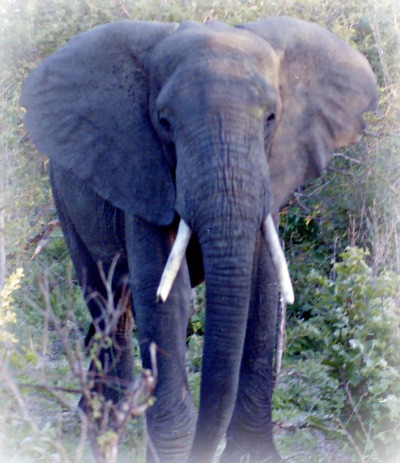
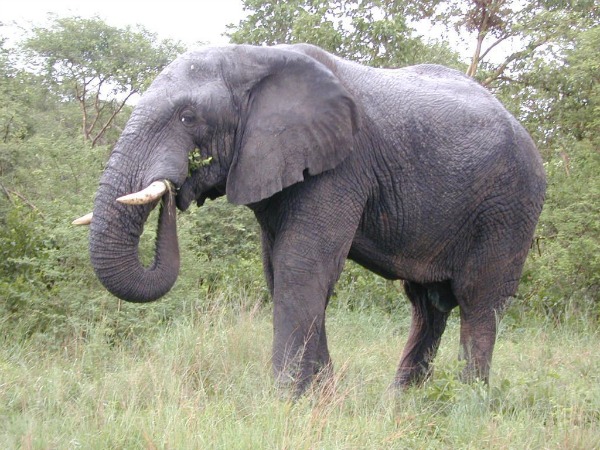
The elephant in the bathroom may have farted

elephant02Well it would seem that somebody close to the policy makers might have noticed the elephant in the bathroom.

This week an article in the Financial Review talked of a carbon tax budget hole that could be $4 billion deep thanks to a carbon price that might not continue to rise after the fixed price period after all.

Blind Freddie can’t help but chuckle and the elephant’s stomach rumbles with contentment.

It seems that there has been some new modeling of the carbon price beyond the fixed price period on behalf of Australia’s Climate Change Authority. The numbers suggest a “fall from July 2015 to $10.72 a tonne”.

This should be no surprise given the current European market prices are hovering around $5 tCO2e — this difference from $23 per tCO2e and rising to the reality of current market price is the elephant standing quietly next to the bassinette.

Now if you are a government that has been struggling to get the balance sheet back in the black because it was one of the core things you promised to do, then $4 billion less revenue is a problem. Especially given that the carbon price policy was hugely unpopular in the first place and will continue to give you trouble in an election year.

If it was just a revenue shortfall [$10 instead of $23+ per tCO2e] that probably wouldn’t be too bad. Only the revenue is already either spent or committed, mainly to ease the pain for exposed industries and for consumers, making a market price dip in 2015 a double whammy.

Awkward for the Australian government but stayers among carbon traders in Europe are not too worried. The say it is just what markets do, they will show price volatility around long-term trends. And just now the price is low. Later it will rise again, not least because this is a regulated market designed specifically to manipulate credit supply to raise the price and reduce demand. Like all markets, success comes from the long play.

Then there is another thing that the elephant symbolizes.

Remember that the carbon price is for a permit to emit and fewer permits purchased mean fewer carbon emissions. This was the policy objective: to reduce emissions of greenhouse gases by making it more expensive to emit than the alternatives.

And as President Obama brings action on climate change to the State of the Union address, it will be hard to ditch the policy now. So here are a couple of options given we can see the elephant.

Ostrich option | Bury the report or, if the electorate cotton on, spin it like a fury.

After all 2015 is a long way off. There is plenty of time for anything to happen, perhaps even something positive. Remind yourself of the positivity of the ballsy carbon traders and wait. In the meantime, do whatever is possible to make the whole thing go away.

Be a honey badger | take hold of the policy, believe in it and shake it hard.

The idea of a carbon price was that it should deliver behavior change and make Australia less carbon intensive.  So embrace that and with the tenacity of a honey badger stick with it. Allow an aggressive permit allocation limit, ease the coupling to the EU carbon market by changing the proportion of credits emitters can source from overseas and explain why to consumers. There is no reason that the domestic market cannot have a higher carbon price than elsewhere other than the fear of ceding competitive advantage.

In short, show leadership.

Now there is a thing.

Dangerously quiet

King Parrot, NSWIt has been 23 months since the NSW Labour government left office after more than 16 years in power.

Normally when a left leaning administration is replaced by a right leaning one the inevitable shift in attitude to nature and natural resources would galvanize the environmental movement.

When hard won conservation legislation, planning rules and funding for environmental management are chipped away there might be an objection, some resistance, or at least some verbal argument. Only there has been very little noise.

No great shouts against the inching away from protection — not even allowing shooting in national parks seemed to get a reaction.

Only the nationally significant issue of coal seam gas, particularly how it will be extracted and the possible impact on farmers, seems to have stirred the pot.

Regular readers will know that alloporus is not overtly green — a regular guy who owns a car, takes plane rides, watches a plasma TV and wrote a book called “Awkward news for Greenies” has little moral ground to claim great environmental advocacy. Yet this quiet is eerie — makes you wonder.

Is it the calm before the storm, the tirade that must hit when the environment is no longer considered?

Or is it something else? Perhaps there is no energy left. It could be that the era of loud advocacy has passed. Maybe the malaise of personal entitlement has swept across us all, even the card-carrying activists.

If it has then we have a problem. Whilst screaming from greenies is about as welcome as a crying baby in the quiet carriage of the commuter train, it performs a vital function.

It keeps the b—-ds honest

And when all that goes quiet it is dangerous for us all.

It’s not my fault

Every man and his dog has written an ebook and not even those by the dogs sell all that well. So rather than let one of mine languish in the vaults of Smashwords, here is a chapter from Environmental Issues for Real for your reading pleasure.

Chapter 11

Environmental Issues For Real

It’s not my fault

“I am a weapon of massive consumption. It’s not my fault it’s how I’m programmed to function.”

The wonderful Lilly Allen wrote this profound lyric in her song The Fear and it sums up our situation perfectly. This is our way and always has been. We have been successful because at our core we are driven to more making and we cannot help it. It should be no surprise that over time western society has shunned Dickensian poverty and the conservatism of the Victorians for a more generous way of life. We aspire to live like kings, always have and always will.

Innately we are fearful of lack and this explains our conservatism, but we also believe that there is plenty. We default to the notion that even if it is tough now, tomorrow will be much better and good for making hay.

An observation made by a friend of mine who recently retired from a distinguished career as a public servant in agricultural policy gave me pause. After observing the agricultural community in Australia for several decades his comment was that farmers take up practices that improve productivity and sustainability only when times are good. When it’s tough they just do what it takes to stay viable.

One implication of this logical and insightful observation is that future food production is dependent on how well farmers are doing now, in the immediate.

Another is that sustainability is a challenge. Frugality is a learned response for times of hardship and we don’t like it. Despite our best intentions we don’t show restraint naturally.

This collection of essays on environmental issues with their peculiar takes on what we understand by environmentalism came together because we are missing something.

Our debate has been about how the environment is hurting, that we are to blame and only we can do something about it. Only the environment does not hurt, it just responds. Evolution has come about in spite of all the disturbances, atmospheric upheavals and changing climate. And evolution will be ongoing with or without us and the environment will always be there doing its thing.

Real environmental issues are about us. They are about how we will cope with the notion that perhaps we are reaching the limit, that unlike the experience of our ancestors, today, here, there is not a new fertile valley to exploit just across the next ridge, because today that valley already has people in it.

Of course we have been told about all the environmental issues many times. The natural wonders of the world have come into our lounge rooms to inspire us. Vocal advocates for the environment have shouted at us for our excesses. We are even being forced to dip into our pockets to pay for the hidden cost of resource use (what the economists call externalities) through a carbon price. So we know all about the issues.

What we are missing is the awareness of this reality. We have chosen to ignore the consequences of our success.

Fortunately awareness is just a yoga class or two away. But that is another story.