How many mobiles do we need?

It is reasonably well known that despite widespread poverty and reliance on subsistence agriculture, growth in the uptake and use of mobile phones in Africa is the fastest in the world.

The opportunity to bypass the clunky fixed line option that you must wait months to have connected by going mobile has been too good to miss. Pay as you go options with tiny recharge amounts to cope with the cost just made it even easier.

All over the world and in just a few decades every man and his dog has acquired a mobile phone.

A recent techcrunch.com report has aggregated the consequences of this inevitable trend.

The headline figure is that the number of mobile-connected devices will exceed the number of people on earth by the end of 2012. And well worth a headline. Quite staggering really that we already have enough mobile devices to go around everyone.

More telling was the prediction that by 2016, there will be 1.4 mobile devices per capita. That year, there will be over 10 billion mobile-connected devices, including machine-to-machine (M2M) modules.

Pause a moment on the notion that having sufficient mobile enabled devices in circulation for one each, even though there are 7 billion of us, is not enough.

One device obviously does not cut it.

What this means is that once we have one, most likely we will get one, two, maybe several more.

Staying in touch has always meant a lot to us and, whatever way we look at it, we are a social species.  It looks like that instinct to stay on touch or to feel that we are able to connect is very important indeed – important enough to part with the funds to hire or buy multiple devices.

It may not be too late to invest in telecoms shares.

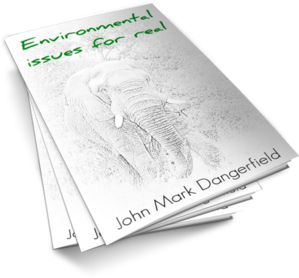
New eBook – Environmental Issues for Real

Not satisfied with haranguing readers of this blog with environmental woes, I have branched out into the dynamic new world of ebook publishing.

Thanks to the amazing people at Smashwords my latest collection of essays on the environmental issues of the day is now available to download in all the usual formats.

Give it a whirl and maybe leave a review on the site. It would be great to hear what you think.

Wot, no politics

It was a momentous day in 1990 when the Australian government decided to permit the broadcast of proceedings in the Australian parliament on free-to-air television.

Since then it has been possible for the electorate to see first hand what elected members get up to in their day jobs.

We can all follow the procedure, the tradition, the ceremony, the banter, the heckling, the bad behaviour, the nodding off after lunch, and the politics.

It is the last bit that interests me.

Tune in to question time and you will see the government field questions on where it stands on the issues of the day. The opposition will poke and prod to unearth the truth, the philosophy that underpins the position. This they will then undermine and deride to make their alternative position seem so much more sensible.

In return the government will fire back proclaiming the logic of their stance and how the alternatives will surely fail.

In short, there will be debate.

And debate will help us all understand the options and form our own opinion. Those of us not able or foolish enough to take in question time live will be able to get a potted summary in the weekend editorials or a sound bite on the news, maybe even head to the blogosphere to see what everyone else thinks.

So what happens when, back in the chamber, you are so afraid of your philosophical position you bury it so far back in your mind that after a while you easily forget what it is.

You now have nothing to defend. No philosophical foundation on which to argue the issue; no weapons or ammunition for a verbal fight and no empathy, compassion or understanding if enlightenment is your gig. You have nothing.

And there is no debate.

Tune in to question time today and what you will witness is a slanging match over nothing more than personality and procedure.

It is simply too painful to watch.

Labour leaders

At this time of confusion over political leaders in Australia that highlights a frightening vacuum in leadership, I though I might point back to a post from last year entitled Don’t argue the mechanism, set the target.

It hints at why the Australian Labour Party finds itself in such a mess today and at why, when the Liberals return, they will show themselves to be equally disheveled.

What will it take for real opinion to spark real debate to result in real policy?

Answers on a postcard to….


Timescales

Thought I might share this passage from page 393 of Ian Plimer’s book Heaven and Earth.

On a scale of 500 years the planet is warming after the Little Ice Age 500 years ago.

On a scale of 5,000 years there have been many periods of warming and cooling.

On a scale of 5,000,000 years there have been numerous periods of intense cold and many short periods of warmth.

The average global temperature over the past 2.67 million years is less than the current global temperature. Why? Because we are living in the Pleistocene glaciation which has not yet run its full course.

This logic is sound.

Plimer’s cogent argument is that on geological timeframes the climate has been both hotter and significantly cooler than at present and that to really understand climate change, it is geological time that provides the best context and insight.

The earth is, after all, very old leaving plenty of time and opportunity for a range of climate conditions everywhere. It is hard to imagine that not so long ago in geological terms the current continents were in a very different configuration, that in an epoch mountains can form and erode away, and all the time sediments form and are consumed into the mantle of the earth at plate margins.

It is the rare the talent of the geologist to think on the time scales that matter to the formation of sediment, rocks and ore bodies.

What is interesting is to map global human population size onto the points in time that Pilmer quotes to illustrate his understanding of climate change.

For this purpose ‘human’ means both the species Homo sapiens that first appeared around 250,000 years ago and the genus Homo that the fossil record suggests has been present as various species since around 2.3 million years ago.

  • 500 years ago after the Little Ice Age at 1500 AD there were 500 million humans. This is roughly the present day population of the United States and Indonesia combined, 7% of the current global total.
  • 5,000 years ago there were just 5 million humans, or roughly the population of present day Finland and today there are over 100 countries with more people than Finland.  At the advent of agriculture 10,000 years ago there were perhaps 1 million H. sapiens.
  • Around 70,000 years ago there is genetic evidence that H. sapiens went through a population bottleneck when for some reason, perhaps the eruption of the supervolcano Toba in Indonesia, numbers went as low as 15,000 individuals.
  • 5,000,000 years ago there were no recognizable humans.

Calculations suggest that there may have been 110 billion humans that have ever lived and a full 6% of them are alive today. Human population growth is an explosion in comparison to geological time.

So when discussion stalls on the causes of climate change or even on its existence, it is worth remembering that the real challenge for humans is to handle the resource needs of 7 billion souls alive today, the 6% of those that have ever lived, without destroying the resource use opportunity for the descendents of this 7 billion.

This is, of course, the standard definition of sustainable development.

It would be a shame if we forgot about sustainable development to focus on the latest fad that, if we think about it on the time scale of the geologists, we can do little about.


A food security challenge

I have been writing a few articles lately about food.

Oddly not in the culinary sense, given the profusion of cooking shows and what seems like an exponential growth in the number of celebrity chefs.

I am more interested in ‘How we will grow enough food‘ and whether we can cope with a global dietary change given ‘What we eat‘.

An observation made by a friend of mine who recently retired from a distinguished career as a public servant in agriculture and natural resource management gave me pause.

After observing the agricultural community in Australia for several decades his comment was that farmers take up practices that improve productivity and sustainability when times are good.

When it’s tough they just do what it takes to stay viable.

The implication of this logical and insightful observation is that future food production is dependent on how well farmers are doing now, in the immediate.

Those of us who get our food from commercial agricultural production (nearly everyone in agricultural economies) have become quite used to highly reliable food quality, variety and supply. And to keep the supply consistent the farmers relax and adopt sustainable practices when the weather is good and the seasons have behaved.

The likely response to drought, flood, frost and heat waves, or soil degradation is do what you can to get some kind of crop to market. This is because the market demand requires it and, as a business, the farm must at least cover its costs or it goes out of business.

The same response occurs when input costs rise. Do what you can to keep the business viable. In short, get some product to market.

This understandable response is a food security challenge, especially where the bulk of food production comes from the small to medium size businesses that we call farms.

If farm viability is so important to both the market and the individual business then there is little to stop exploitative practices when times are tough. At the margins risks will be taken just to keep the business going; because the alternative is the businesses go under. We do it in manufacturing, retail and service sectors so it should be no surprise that we do it in agriculture.

We will save the government subsidy issue for later. What we might think about is the challenge to good practice presented when times are hard.

The reality is that good practice will only be good if it results in some buffering of economic returns when times are tough. Sustainable practices are those that keep inputs to a minimum, make optimal use of the conditions even when its warm and doesn’t rain, and end up with some salable produce.

Where this is not possible, then the farm ceases to be a business. And given that in our current model we buy almost all our food, business failure makes food supply far less secure.


Easy or not

Meercat taking it easyIn his book ‘Hot, flat and crowded’ Thomas L. Friedman rails against the glorification of easy. His main complaint is that anything we do to support ourselves in an increasingly hot and crowded world is not going to be easy. And those who say there is an easy way are just kidding themselves.

Humans are notoriously hard to motivate without some form of reward. Most of what we need to do to keep producing natural resources and accommodate climate change when there are so many of us will require some sacrifice. The only reward will be the hope that we have done the right thing. Saying it will be easy is at best naive and at worst irresponsible.

To illustrate his point Friedman quotes Michael Maniates of Allegheny College.

Maniates makes the following assertions about what we ask of ourselves and one another:

  • we should look for easy, cost-effective things to do in our private lives as consumers because
  • if we all do them the cumulative effect will be a safe planet, because
  • by nature, we aren’t terribly interested in doing anything that isn’t private, individualistic, cost-effective and, above all, easy.

I reckon Maniates is on the money.

In default mode we are lazy. We would rather not sacrifice but if we have to then please can we do it from the couch. Please do not ask us to actively sacrifice.

Friedman’s frustration is understandable because it was this lazy default mode that has seen us consume with abandon and take ourselves to the edge of the resource use precipice.

In his book ‘Thinking, fast and slow’ Daniel Kahneman even has an explanation for why lazy is the default.

Cognitive research seems to be telling us that we think in a couple of different ways. We intuit most things. This action is easy and fast and works well for the bulk of our everyday decisions.

Only our intuition is not very good at complex thought, especially where we need to analyse for or calculate a result. For this we have to engage the thinking brain. The only problem is that this type of thinking takes work – real physical work apparently – and we find it difficult.

Our environmental challenges are very new and not in the default program. Our intuition has evolved for us to know that food, water and shelter are either here now, or just around the corner. We are not used to thinking about where these things are going to come from; yet we are forced more and more to think analytically about the basics. Indeed we have to think twice: first to tell us that we have a problem and second to figure out some solutions.

Friedman suggests it is irresponsible to say that our environmental challenges are easy to solve when, in fact, they are hard. Potentially more challenging than the problems themselves is that we prefer to solve things in our default mode. We prefer to intuit answers because it is a lot easier that way. Thinking is just too hard.

Take a moment to recall your experiences in the workplace or at home. Ask yourself what proportion of your time and that of your colleagues and family members is spent in default mode

Yep, we prefer not to have to think hard. No surprise that we glorify easy.

Only there is a reason why talking up easy is so common. My guess is that any call to think hard about anything will fall on deaf ears.

Leaders not heroes

Leadership is hard to define, not easy to learn and is, perhaps, only gifted.

True leaders inspire us and we trust them. We listen to what they say and we accept what they decide. This is because leaders do and say things that make us feel good about ourselves. And what they do we believe in, often without need of explanation or a spelling out of logic.

Heroes are a little different. They motivate us because they are admirable. They do what we would like to do. We can imagine ourselves slaying the dragon and winning the adoration of the damsel or, if you prefer, as a heroine beating up the patriarchy to create equality and emancipation. Our heroes actually do these things. Heroism generally requires conflict.

In our modern ritualized world, our heroes do our fighting for us or they act bravely in the face of danger. Leaders can do these heroic things for they too have courage. Only they do them without having to fight.

Leaders show the way forward as not only the logical but the truthful path. They do this instinctively; picking their way with ease through the complexity of options to choose those that really make sense. They can slay the dragon if needs must, only they will more likely convince it to live happily on the top of the mountain.
They also have vision. A clear notion of what the future looks like that is not an idealized utopia but achievable and likely futures. And leaders are not afraid to explain the future to followers and skeptics alike. The dragon will live on the mountain and will not visit the valley unless invited.

And there is one more critical element that sets leaders apart from both heroes and mere mortals: they can combine fearless vision with timing. They know instinctively how to act and when to act to achieve the desired outcome. Heroes are presented with their opportunity and instinctively move to the front of the cowering throng sword in hand. Leaders anticipate the dragon’s arrival and go outside the village to engage the foe on neutral ground.
It takes courage, smarts and conviction to be a leader. It also needs a certain lightness of hand (and word) dispensed with ease and grace. And wisdom helps, preferably born of experience, or where time has yet to allow for this, then from instinct.

There have always been leaders who have most of these things and these people have become important in our societies. You could probably name your own favorite. And if we did a survey of favorites, the majority of the many leaders that people would chose to name as inspirational come from the past. Many favorites will be historical, a few will be modern, but hardly any will be in public office. Bar the notable exception of a few charismatic entrepreneurs, our current leaders do little to inspire us. This is especially true in politics.

And then there is one final, and perhaps the most critical, quality of leaders, one that seems to be missing from all modern political leaders. That is the ability to realize that leadership is not about them, even though they must be strong, stand out and even be heroic. Leadership is actually about the outcome, the means proposed to get there and the timing of the actions. So true leaders must have humility. The quality of knowing that it is just a channel that they present to the people who look to them.

People follow what they intuitively know to be right. All they need is for it to be presented. Sometimes we are conned. A few infamous historical leaders have taken their people down horror roads through force of rhetoric and oratory but have all fallen when the truth came out. When it became clear they lacked humility they were ousted. It sometimes took a great effort but they did not survive any more than the pathways they proposed.

So in the end leadership cannot be about being heroic because actually we lead ourselves. All that leaders really do is show us the way. Outcomes happen as each one of us as individuals take responsibility.

Mental musings on leadership might help a little. The real issue is what the future holds and who will lead us to it.

In our children’s lifetimes we will reach 9 billion souls, oil will be $200 a barrel making alternative energy an economic imperative, agricultural soils will show the symptoms of overuse and we will have to wrestle with the consequences of land, water and food shortages. These things will happen with or without climate change and we will want wise heads to lead us through the challenges with confidence and surety.

Can we expect this from our political elite? Yes we can. Indeed we should demand it.

We should ask for courage, smarts, timing and, most of all, humility.
Thinking

Do we think enough or too much? It’s an interesting question with chalk or cheese answers depending on where you try to find them.

According to Parnell McGuiness writing in the Sydney Morning Herald we are not thinking enough because our breakneck media cycle and the domination of the lobbyist has eroded true thoughtfulness on the big issues. Immediacy and a need to be right have reduced the extent to which we really explore a challenge and so we have become stuck in a narrow range of options. Discussion has been reduced to argument and no one seems able or confident enough to subject their view to serious interrogation.

I must say I have to agree. Our serious media reports more on style than substance from our leaders, although to be fair, this is because there is so little substance to discuss. The intellect is there. It cannot be that so many highly educated individuals cannot figure things out or engage in the necessary debate on issues that are difficult to resolve. Yet it is hard to find that debate. Instead we are given the extremes of opinion without the logic flow that led the proponents to their definite conclusion.

McGuiness suggests a return to true open-ended questions such as ‘What is happiness?’ As opposed to the already constrained “Can we be happy in a capitalist society?” Implying that we have become too constrained in our thinking for thinking to be effective. She has a point. And her solution is that we create more fertile thinking places and get to it.

Then there are the new age types who tell us that we think too much. We live in a mental fog created by our thinking brain that makes it very hard to see the truth. Constant brain chatter has made us fearful of the future and a slave to all our past psychological damage. If we could only stop all that noise and intuit then we would know instinctively what must be done.

This spiritual solution, that is hardly new having been around in various guises for millennia, is to take up meditation, yoga and gentle walks in the countryside or any activity that will help our chatterbox brains take a breather. In short, think less.

So are we not thinking enough or are we thinking too much?

Well there is definitely too much chatter going on in our heads. We are far too easily distracted by the inane, argumentative and opinionated. And what is it with the thousands of TV dramas in which there is either murder, infidelity, corruption or, preferably, all three. Our minds are so stimulated that it is no surprise they are manic.

So yes, we think too much. And we could all do with some quiet and quieting time.

Only then we need to re-engage our thinking minds with the wisdom we will find in those quiet moments. We need our brains to help make intuition real because reality requires practical solutions. And they need some thought.

So maybe we each need a week of Vipassana meditation followed by a workshop at the nearest think tank. I wonder what kind of solution that would produce.

M

You can find the original essay on open-ended thinking by Parnel McGuiness in the latest issue of Binge Thinking

The Greens need a new name

This picture is of a white rhinoceros, Ceratotherium simum.

The species nearly became extinct in the 1980’s but was saved by a concerted and dedicated effort of translocation, breeding, reintroduction and protection.

When you are next to one of these creatures you know that a world without Ceratotherium simum would be a lesser place.

Saving both the iconic and the less well-known but equally important species that make up biodiversity will require more heroic action and a fundamental shift in perception. We will all need to understand that there are consequences of resource use by 7 billion humans and that if we want to keep rhinos, even as semi-wild species, then we must pay attention to those consequences.

We will all need to be green.

And this will happen. When it does we won’t think of recycling, energy efficiency, consuming only what we need, rambling in wild places because they will all be completely normal. Green will not be some funky fringe activity, it will be the solid mainstream.

There will not be green, only normal.

As Hot, Flat and Crowded author Thomas L Friedman says

“(The) sign that we are succeeding will be when the term ‘green’ blessedly disappears. (Because) when green is the standard, not an option, you’ll know that we’re having a green revolution and not just a green party.”   

In anticipation of this critical event the Australian Greens might consider a name change. How about ‘The Progress Party’? Or maybe, ‘The New Whigs’?

No doubt there are far better suggestions.

Only the point is serious. There is an opportunity right now for new political leadership, for a party to emerge that understands that green and brown will be replaced by another colour; purple perhaps

A colour that can meld all the conservation and preservation ethos of green with the production and wealth creation necessity of brown to create a colour that represents an economic system that supports for now and the long term.

It is a shame that word purple has too many syllables to be marketable, for it is the colour of wisdom.