Failure

Springwood golf clubHow do you know when it is you who has failed or when the system has failed? Is it possible to tell the difference or even what failure is at all?

Everyday life is enough to trigger such anguished questions in all of us. Should we ‘man up’ and take responsibility or go the way of the mountaintop and realize that nothing is ever fired directly at us?

Recently a series of events made my own thoughts about failure acute.

First I enjoyed a delightful [if somewhat rainy] charity golf day to raise money for bushfire victims. The local community rallied as it has done consistently since 193 homes were lost in a fire that an ecologist friend of mine described as a huge blowtorch.

Sponsors showered golfers with freebies and the golfers duly purchased vast numbers of raffle tickets and made generous bids in the auction when the golfing was done. The clubhouse was packed with people and there was a palpable sense of unity in a shared cause… and that isn’t so common in these distracted days.

Out on the course it was a team game [the scramble format for those in the know] and we were doing ok. We had an ideal handicap mix and the will to win that seems to gush out of every golfers pores no matter their [in]ability.

Coming to the last two holes we knew we had a bit of chance but really needed a couple of birdies. Drive, 6 iron, putt gave us one. Then, a 9 iron to two feet. That was two and enough for a credible 4th place. We were quietly chuffed with that.

Not a failure at all and, for me, sticking that 9 iron when it [kind of] mattered made me quite proud of myself. Such moments make the memories of an amateur sporting life.

I’ll pass over the conversation a few days later with a social media marketing guy who politely said I would never make any money from my books along with the ongoing anguish that is every consultants daily grind — clients who, bless their cotton socks, don’t really want the help you are offering — and cut to the chase.

The system of information gathering on how the environment works in the state of NSW is, abruptly, surplus to requirements, along with the conceptual framework that supports environmental decision-making.

The new[ish] state government have thrown out statewide natural resource management targets and cut the guts out of the human capital and budgets that previously gathered data on the health of the environment. A brutal dismantling that stinks of the political polemic.

Why would anyone do this? Knowledge is power and always has been. The environment is and always has been the foundation of our success, not to mention the source of what keeps each and everyone of us alive. So why stop trying to understand it by scrimping on the measly current spend on collecting the data?

Perhaps it is a sinister plot, a backlash against all those closet greenies in the previous government who had run the show [somewhat corruptly as it turns out] for more than a decade. Or, more worryingly, a belief that natural capital is inexhaustible and that humans were invented to mobiise it into wealth, fast cars and tea parties.

Whatever the reason the news hit me as a monumental personal failure. Clearly I had nothing to do with the decision or any influence over it either way and yet I took it personally.

Even as I fought the illogical feelings with personal pep talks and a viewing of Despicable Me 2, anguish was taking hold. It has since solidified into a funk that if I don’t shake it loose will sit for a long time in the pit of my stomach.

Of course there is some justification for my malaise.

Since the early 1990’s I have been variously teaching, researching, advising, criticizing, developing and talking up environmental monitoring — I even switched out of academia into the risky world of entrepreneurship to build an environmental monitoring company that for a time helped accumulate data and understanding.

Wearing my consultant’s hat I have prepared countless reviews of strategy and provided policy advice on MER that has consistently talked it up and tried to explain the value proposition. Recently I even came up with some new approaches to data analyses that will add more value to the raw numbers.

And it feels like it was all for nothing.

Only worse, it also feels like I should have done more to make it obvious, even to blind Freddie, that monitoring the environment was worth it for everyone.

As I write there is still a lead weight in my midriff that I am sure will take some shifting…

But this too shall pass.

Time will lighten the load and another golf game will see a white ball fly and land somewhere near the flag.

I hope.
Soil carbon | What we think

I wonder what went through Steve Jobs mind just after the image of the iPad came into it?

Perhaps it was an original idea that formed in a flash of inspiration from the ether — the sort of thing that happens to imaginative types.

Or it could have been a steady accumulation of images, ideas and bits of less elegant technology that came at him from all and sundry that suddenly coalesced into something elegant.

Maybe it arrived as he peered over the shoulder of an Apple designer.

No doubt Wikipedia or the upcoming biopic knows the answer to what the origins were, but we can only speculate as to what he was actually thinking.

It was probably something like…

Hey, I’m really onto something here. Finally a device that everyone will want to have and fits our brand so well our competitors will just have to make copies. And hey, there’s big bucks in it.

You can bet he wasn’t thinking…

Oh boy, I have seen this all before. Crazy how it takes so long to get good ideas to stick, I mean I dreamt this little design up years ago. It will cost so much to develop that I can’t see anyone wanting to buy one from a store or even eBay — that is if the hardware people can even make the thing.

I reckon a big part of the reason Mr Jobs enjoyed so much success is that he didn’t ever think the glass was half empty.

And I don’t mean this in the ‘ra, ra, ra’ kind of can do attitude that Americans are so prone. I get the feeling that his was more a sense of knowing when the idea is right and that it would work.

Recently I attended an ‘Agriculture, Soil Health and Climate Change Forum’

organized jointly by the United States Study Centre, University of Sydney and the DIICCSRT [the Australian federal government department of many acronyms that includes the bureaucrats responsible for implementing climate change policy]. There were 80+ people present who all had more than a passing interest in promoting soil health. Some were just crazy passionate about it… and good on them.

Soil heath is a timely and critical topic. In many ways it is a ‘Jobsesque’ idea being simple, elegant, functional and ultimately something that we cannot live without. A global population that will rattle around 10 billion for at least half a century will go hungry if we stick with the current paradigm of soil as a place to put plant roots and inorganic fertilizer. The biology of soil is what gives its potential to sustain and provide, and whilst we do not fully understand why, managing for soil biology is the agricultural equivalent of an iPad.

So it was depressing [a carefully chosen word] to listen to an apologetic speech outlining how DIICCSRT, who as part of their atmospheric responsibilities also deliver the Carbon Farming Initiative, have failed to get soil carbon management onto its list of CFI offsets.

It wasn’t that there are technical challenges to soil carbon accounting for everyone knows there are. They are as fundamental as decisions to measure or model or even to go with simple activity reporting. They also involve gathering in uncertainty about what agricultural management does to soil carbon stocks [although here I believe we know more than we realize].

It wasn’t even that it has taken so long. We all knew it would.

What was so depressing was that the glass was half empty… and oh so hard to fill

Whatever Steve Jobs thought when the iPad first registered in his mind, you can be sure it was hugely positive.

Luckily the tone of the soils workshop was rescued thanks to a presentation from an overseas guest from the research arm of the US Department of Agriculture. His was a glass ready to be filled. He knew we had a problem with soil and that it was a big one. He knew that it was going to be hard to convince his research staff that they didn’t yet have all the answers and that the solutions would probably come from left field, possibly even from the ‘snake oil’ salesmen. It was going to be about going where we might not be wholly sure of ourselves because that was where the answers would be found.

He didn’t quite say, “boldly go”, but that was what he meant. I was hugely enthused.

It could be argued that we need both of these opposing attitudes to challenges. We need the naysayers to keep out feet on the ground and we need the ‘gung ho’ types so we can keep putting one foot in front of the other.

I think that we don’t yet know how to get the balance right and, in Australia at least, we are stuck. When it comes to environmental policy we have become paralyzed, exquisitely versed in stalling tactics and so fearful of innovation that we fear it like the devil. This is not good and may well be our undoing.

Mr Jobs would have shaken his head.

Spillage

The ghost of Abraham Maslov would be having a chuckle right now, or maybe a wry smile at a spectacular confirmation of his hierarchy of needs theory played out in Australian politics. Elected members of the Australian Labour Party so frightened for their psychological health at the prospect of losing their jobs, last night rolled the first woman prime minister in favour of the previous prime minister they rolled when they were feeling a bit more secure.

The short version of events is that Kevin Rudd was elected prime minister in 2007 on a majority. His colleagues deposed him in 2010 in favour of Julia Gillard who, despite starting with a healthy lead in the polls, returned after the 2010 election to lead a minority government in a hung parliament. She and the party fell so far behind in popularity that all seemed lost. The upcoming election would see a wipeout so severe that it would hand power the opposition for several terms. So, almost at the eleventh hour, the party spilled her out to put Kevin Rudd back in. And yes it is farcical — you are probably surprised that it’s not in the alloporus “sounds crazy” series.

Only Dr Maslov has a perfectly sensible explanation. We all fill the safety and security buckets of our emotional hierarchy before the self-actualization one that holds morality, lack of prejudice and acceptance of facts. When the position is precarious self-preservation automatically sets in. We allow ourselves to put aside what, in the good times, we espoused. We do what it takes to save the ship from sinking.

Clearly some of the motivation behind changing the collective mind on who should be in charge [again] came from the need of individuals to survive, to keep their jobs. No doubt this was part of it. Except that we heard many times in the brief lead up to the leadership spill that it was “in the best interests of the party” and “the best interests of the nation”.

Obviously the party benefits if it goes into damage limitation to maybe reduce the margin of defeat at the election or even have an outside chance of a win. Loose by a few seats and recovery can be swift. Loose many and history tells you that it will take many election cycles before those seats are recovered. So if it has to lose, the party benefits by limiting the margin of defeat.

But why does the nation benefit? Well the conventional wisdom is that in party democracies, good government requires a strong opposition and that usually means a two party system. The public gets to pick one of two options — one to govern and the other to ‘keep the bastards honest”.

Sounds sensible enough. Only the smell of self-preservation in this argument is strong. In the long run the two party option favours both parties — check out the hilarious Spitting Image skit below where the Margaret Thatcher and Neil Kinnock puppets explain the logic.

The two party system can work if the process of ‘keeping honest’ produces innovation, new ideas and ideologies that match the circumstances of the day. The parties evolve with the times.

The spillage Australians witnessed last night was because this did not happen. Going back to the future was the consequence of a failure to evolve to cope with the needs of the day. The incumbent and her cabinet did not deliver enough policies that worked for the majority of people. And even when policies did work the government failed to communicate the benefits. They lost the trust of enough of the electorate to suggest a massive election loss and with no more time to get it right the party decided change was the only option they had.

Failure can often look chaotic. It became bizarre because Kevin Rudd was still around to get his old job back and that in itself is telling. If he really was a bad prime minister who dithered, back-flipped and regularly lost the plot with his staff and colleagues, then giving him another go confirms the desperation.

What might send us all cascading down the hierarchy of needs though is that Rudd was still the best option in a two party system.


Leadership still sucks

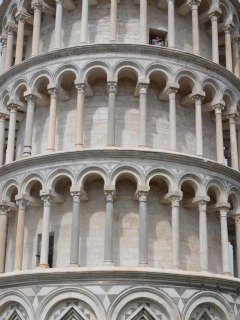
Leaning_Tower_PisaThe 100th post on alloporus was posted 8 months ago. That mini-review managed to reduce most of the previous content down to a couple of words “leadership sucks”.

And if you live in Australia then you would probably agree without reservation, whatever your political persuasion. We have an imploding Federal government with an opposition that just has to sit and watch it happen, whilst at state level there is a steady unpicking of legislation to turn the world brown.

Australia is even losing the plot in sport where in one code it is fine to punch the opponent in the biggest game of the season and in another a punch that missed is described as ‘despicable’

Ah, leadership, wherefore art thou.

As though in some kind of zombie state most folk seem to be ignoring it all. Perhaps it might go away. Just keep on selling the coal to the Chinese and we can carry on being rudderless [no pun intended].

Public lethargy is everywhere, spread as a thin veneer over stronger feelings of fear and woe, suggesting that leadership still sucks.

Only in the 100th post I also made a commitment to be more positive. Well that was a promise easily made and hard to keep.

It would seem that 5 decades of exposure to the human condition has allowed negativity to seep right through to my core. No matter the sunny disposition, gratefulness, the knowledge of blessings, and awareness of the privilege I enjoy — most of the latest alloporus blog posts are still glass half empty.

Not even the clever work of Plummer showing that despite our growing numbers the grand scheme of things is getting better has made me feel chipper.

It could be that I am wired to get upset and then depressed at all the craziness. I mean do we really need to know the sex of Kim Kardashian’s baby when we don’t know where most of our food comes from?

Less depressing would be the idea that this preoccupation with the inane and a requirement for drama is hard wired in us all and, more importantly, was necessary for our success.

There is obvious survival value in being obsessed with the immediate and the mundane for out on the savanna there were mundane things that could eat you or make you sick. Any hunter-gatherer who sent her mind gazing too far into the future went hungry or lost her child to an opportunistic leopard.

The addiction to stress is less easy to justify away unless we see it as a by-product of a requirement for drama. Argument does bring us awake, sets our adrenaline to work and makes us ready to fight or flee. In other words, drama was probably a basic requirement for successful savanna life.

Modernity provides us with every opportunity to latch onto drama and be in that alert state; only we have very little real need for it. Now drama is of our own making. These days we don’t find ourselves risking a drink from the crocodile infested rivers but we still like the feeling such risk brings.

I guess what all this justification talk becomes is a soothing of sorts. I do feel better posting rants when I accept that drama, argument and disagreement are a natural part of me, part of us all. The ego has to be thanked for getting us this far

What is still challenging is how to shift through to the positives. Not the ‘ra, ra, ra, yes we can’ positivity that is just another way of priming the body to act. I mean the real positives that come from truth.

For the moment these are harder to write about.

Must see post really makes you think


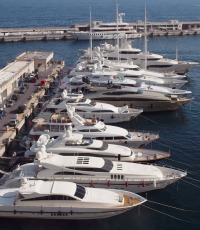
Yatchs_MonacoSo now that you have had a squizz and a chuckle at the excellent satire of Brad Plummer in the Washington Post [here is the link again if you missed his must see post], what should we make of a world where some of the big metrics of quality of life and lifestyle are trending in the right direction?

Yes it is true that there is still poverty, disease, crime, environmental degradation, precarious economies and the prospect of global changes out of our control, but the reality is that, even with so many of us, the majority are in pretty good shape. And those lucky enough to live in the developed world really do live like kings compared to the kings of just a few generations ago.

Not even all the King Georges in the House of Hanover who were having a ball before and after 1800 had electricity, TV or a mobile phones. All four of them would have had to get a lackey to heat their bathwater and another to send out the pigeons when messaging for a booty call.

What the numbers that Brad Plummer collated tell us is that there is a transition in most things. We start off slowly, get things moving to the point that they are a problem, and then turn them around so as to fix the problem. Next to no heart disease in the 1900’s, peaks at 40% of deaths in America during the 60’s and 70’s and now declining proportionately [probably because we got pretty good at human plumbing].

Humans are actually very good at this sequence.

Explore, innovate and exploit while we can get away with it, then put checks on all that exploitation and start to [slowly] clean up the mess. It is as inevitable as the earth orbiting the sun with a slight wobble in the tilt of its axis.

It means that ‘it will get worse before it gets better’ is often true and that we like it that way. Perhaps we even need it to be so.

We seem to need the worse to be upon us before we do anything about it. This is, of course, a great risk at a time of 7 billion human souls all striving and many getting a better life. Because it assumes that whatever the ‘worse’ is we can fix it — one day we will wake up to that fact that emission reduction is trendy policy but will not solve the climate challenge, but I digress.

The key message though is the psychology that makes Plummer’s post satire. We universally fail to see that what we really have is actually, for the most part and for most people, pretty good and getting better. Instead we prefer to be told that the sky is falling down.

Maybe there is a way to work through this necessary ‘doom saying’ faster. We could shunt along through it and get quickly to the other side where the solutions are found.

So all we need is a little rescheduling on TV — after Today Tonight, just before the inane sitcom starts, we get a ten minute Ted talk on some really neat idea that will solve a global challenge.

Easy and a bit like when the Magic Roundabout was on before the news to make sure that the kids were still around to get a glimpse of the headlines showing death, destruction and the political chaos of the day.

Responsibility

At what point are we accountable for what we know?

Consider the recent tsunami in Japan. Anyone in one of those coastal towns who knew that the wave was coming would have warned whoever they could. And many did. There are stories of great heroism by fire servicemen, emergency workers and ordinary citizens staying in danger themselves as they encouraged people to reach higher ground.

Anyone who had the opportunity to raise the alarm but failed to use it would feel guilty for the rest of their lives.

Earthquakes and tsunami happen in Japan. This inevitability forces planners to carefully consider where buildings must go in relation to this known risk. Engineers must also put their expertise into building construction sufficient to withstand shocks from shifting ground and walls of water.

Should these precautions for a foreseen event follow similar rules to those when danger is real and present? Applying a planning rule or choosing a structural material does not require heroism, but there might be a similar sense of responsibility around the decisions made in these professions.

Sydney coastline

Prime real estate in coastal towns is where there is an ocean view.

Planners who zone the coastal fringe as green space or tsunami protection zones would not be popular. Developers would soon find an alternative to an engineer who insists on the super safe construction options for these are almost always expensive.

In the political and economic realities of a modern world, developers will leverage many a weight onto hapless planners for the profit is in those plots with an ocean view. Perhaps these decision makers need courage too, only for, them, it will be much harder than in the adrenaline-fueled heat of an emergency.

What about courage for decisions on climate change? We now know that there will be changes to the intensity, frequency and timing of weather events – the altered likelihood of extremes and long-term shifts in the averages. We can foresee these climate change effects even though it is not a real and present danger just yet.

It is, however, time to plan for sea level rise, extreme weather, drought, heat waves and shifts in seasonality that are the likely effects with significance for livelihoods.

At the moment we are dodging this accountability.

It would be sensible to put climate change scenarios into strategic and local planning tools and have planners understand why climate change effects should be considered in their planning horizon.

Building design already has the smarts for energy efficiency, structural integrity and resistance to extremes. All the engineers need to do is favour these options and set their skills and experience to figuring out even better solutions. The planners can support them with compliance requirements that assist against the pull of market forces that will always favour the cheaper alternatives.

There is a difference in these examples of required courage and personal responsibility. Decisions made in the face of danger are instinctual. When danger is at some unknown point in the future, we have time to think.  We rely less on instinct and more on reasoning and allow ourselves some latitude. We may respond to the pressure of compromise. No need to worry, it’s not happening now.

Without immediacy there is no adrenaline required, we can relax into the comfort of busy work and allow the process of decision making to take over. Soon it is the meetings, hearings, forms to be filled and documents to be filed that allow us to forget that there was actually an important, responsible choice to be made.

When buried in the process it is easy to forget that there might be some responsibility to make the call and some accountability for it.

No pain, no gain

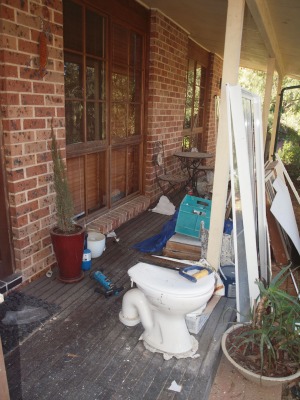
Porch-becomes-building-site

Our house is a shambles.

The dishwasher and the fridge are in the living room, the spare room looks like a bathroom warehouse, the front porch has turned into a building site and the lounges look horribly cute in their drop sheets.

Yep. We are in the middle of renovations, just a small upgrade to the kitchen and bathroom. It seemed so modest a task and yet the disruption has left me asking, “why, oh why did we do it?”

The answer my beloved wife — who has done a fabulous job in designing and managing our little project including sourcing all the materials [go eBay] — is tantalizingly simple.  No pain, no gain.

It is impossible to get a new bathroom and a kitchen upgrade in your house without copping major inconvenience and dust in the nostrils. It has to get worse before it gets better. Sound logic you might say.

But I suspect that this is not how we really think.

I reckon it is human nature to prefer “all gain, no pain”.

This is certainly what drives business. Profit is best arrived at with minimum fuss. Any cost that can be deferred, or better still, sent somewhere else, will be. The simpler the business system the less that can go wrong and so long as the company has enough competitive advantage in the marketplace, simple is good.

If there has to be pain then, reluctantly, businesses insure against its effects. Even though the logic of insurance is to cop the pain initially but be pain out to sooth its effects.

Now that I start to look for it, I cannot seem to find instances of business voluntarily accepting the ‘no pain, no gain’ maxim.

Perhaps this is the flaw in modern day commerce. Decoupled as we now are from a physical cap on monetary wealth [currencies are no longer tagged to gold bullion] business is free to find unlimited profit — and profit is best had without pain.

Parents of today’s teenagers will probably tell me that this phenomenon is not restricted to business. It is spreading through the youth faster than a tweet.

I will need some time for healthy thinking on this topic to develop but worth sharing I hope.

Meantime I can’t wait for the builders to finish.

As always, any comments gratefully received.


The heart of the matter

This article was written back in 2010 and was published online on The Climate Spectator. Nearly three years on it still makes fascinating reading as the rhetoric ramps up ahead of the federal election.

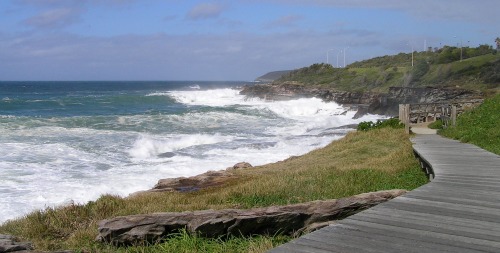
rocky shore NSWRecently the NSW Natural Resources Commissioner, Dr John Williams, hosted a workshop in Canberra on resilience thinking that was attended by a platoon of scientists, agency staffers and consultants, all concerned about the environment.

In his opening remarks, the Commissioner urged the participants to consider a simple enough question: What matters most?

A ripple went around the room as things that matter jostled for space in everyone’s head. No doubt thoughts of happiness, love, friendship, the mortgage and a few thoughts we don’t usually admit to arrived, and it was clear that there was not just one thought. The one thing that mattered did not appear instantly to everyone.

Caught as we are in the policy vacuum on climate change, with backflips and peculiar ideological positions to frustrate us, it might be useful to ask the same question of the climate change debate: What matters most?

Those representing heavy emitters will cry that exposure, unnecessary liability and uncertainty matter. Few of us like threats to business as usual. However, some exposed businesses have used climate change as an opportunity. We have all been offered the option to offset a flight or visit a carbon neutral office, where the most important thing is to be seen to be doing something good. Catastrophe can make for great PR, and so matters most, but for very different reasons.

Unless you install roofing insulation, climate change is of little consequence to small business. There is not much beyond the upward creep in the quarterly energy bill to keep your attention away from more pressing issues of cashflow, customers and the late arrival of a key staffer.

A couple of years ago, the general public in Australia thought climate change itself mattered most. They even elected a new government with a Prime Minister who claimed it was “the biggest moral challenge of our time”. Today polling suggests the majority see climate change as just another opportunity for politicians to renege on a promise. And a third of them think we should not pay a cent to fix it.

Climate scientists, at least those gathered under the banner of the IPCC, reached a consensus that greenhouse gas emissions matter most. Concentrations of gases that absorb reflected radiation, the atmospheric blanket that makes life as we understand it possible, were the key regulators of climate. Human activity was upsetting the delicate balance of greenhouse gas composition and we needed to stop that or risk catastrophic warming.

Emissions matter most because they lead to warming that puts more energy into the cyclical systems of atmosphere and ocean, changing the pattern of circulation, making it wetter, drier, and perhaps more stormy on an increasingly voluminous ocean. In short, having some very specific local climate effects.

The diplomats at the UNFCCC thought this mattered too, but not as much as the necessary diplomacy. So they negotiated at length to agree that net emission reductions matter, but that we need to negotiate some more to agree on the reduction targets and how to achieve them. Clearly, among the policy makers, it is debate that matters most.

Ask residents on the beach front at Byron Bay the question and it’s all about saving their homes from storms. They may not even know that warming will raise sea levels and may make some storm surges more acute, for it has always mattered that the ocean was only a wave away from your beachfront retreat. Save a thought for the 200 million citizens of Bangladesh on the Ganges delta who don’t even know that sea level rise matters most to them.

Irrigators along the Murray River in NSW who, despite having a legal license to extract water, have not seen any reach them for a long time, have another answer. What matters most to them is the real prospect of losing their livelihood altogether.

Clearly, there are as many things that matter most about climate change as if we had asked the question without the qualifier. Climate change is a threat and an opportunity, a challenge and a risk. For some it is real, but for most of us it is not the most important thought in our heads. So perhaps what matters most is not climate change at all.

Perhaps we have missed the real risk, the real challenge that we face, and the hint of what that is comes from all these specific concerns. What matters most is that we have the capacity to adapt and transform to a changing world.

It is critical that we give ourselves the flexibility to make our food production more efficient, ensure our environments will deliver all the services we take for granted and that our economic and social structures remain viable as they transition.

It also matters that we act on that capacity now, for the world is changing rapidly. The shifting climate just makes some of the inevitable the changes more acute and immediate. None of this should be a surprise, given that there are now close to seven billion souls trying to fix what matters most to them.

———

Here in April 2013 I am not sure if the timelessness of the sentiment in this article is what matters most.

Perhaps we should get our arses in gear.

TED | Alan Savory

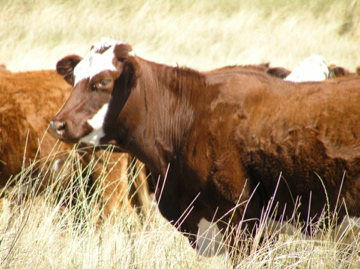
CattleTED lectures are a neat idea. Somehow they have managed to legitimise thinking outside the box and I suspect we don’t fully appreciate how important this is.

Most ideas that stick come from our current paradigms for anything really new must be pretty special to succeed in a society dominated by commerce and naturally conservative mind-set. So ‘good on ya’  TED.

About a decade ago I met Alan Savory on one of his trips to Australia to promote his ideas on holistic management. It was an interesting encounter [for me at least] that took me back to my time in Zimbabwe in the late 1980’s and then to thoughts of what it must have been like to both wander through the bush and the corridors of parliament in the time leading up to Zimbabwean independence in 1980 as Alan Savory had done.

He claims in his book that it was a combination of his science training, days on end tracking in the bush, and his time in politics that brought him to understand the importance of intensive, timed grazing by larger herds for the health of our grazing lands. Now he has extended his idea as a solution to two huge global issues: desertification and climate change.

Check out his TED lecture, it starts slowly but is worth persisting to the punch line.

http://on.ted.com/Savory