What to do with grumpies

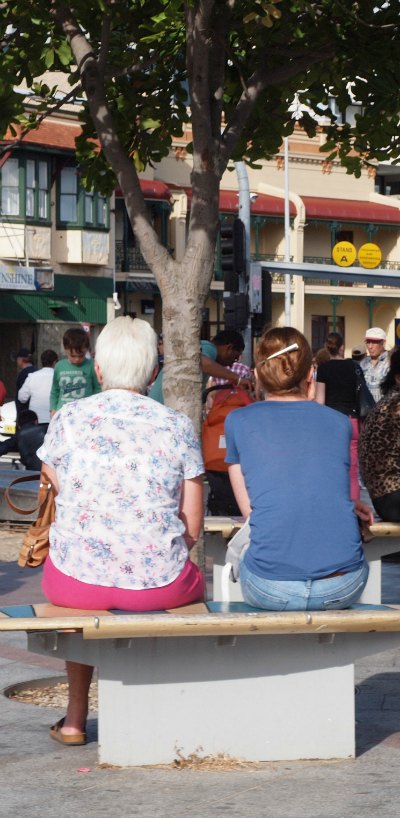
OLYMPUS DIGITAL CAMERAIf you are of a certain age you will be familiar with a lessening of capacities. The muscles ache a little more than they should, the hair is grey or gone and the boobs are sagging. And no, this is not sexist — just have a surreptitious gander at a few middle-aged men next time you’re about town.

For grumpies this is the time of life for reflection, a pondering of why time steals faculties. And for some it is a time of crisis.

Needless to say I plumped for crisis. What else would you expect from a wannabe writer and career risk taker? It is inevitable that once the energy of youth is spent there is little left to fuel the courage needed to absorb uncertainty. Almost overnight we want life to be simple, predictable and safe.

The time for dream chasing is replaced with rounds of golf and coffee after yoga class. But even this is not enough because the ego suddenly realises that it might not be needed if all you are going to do is relax and sip lattes. It rails at its impending redundancy and makes you feel like a failure.

Before you know it, sagging pecs are the least of your worries.

At this time in the world’s history the towns and cities of western economies are replete with people of this certain age. A quirk of demography, nutrition and the wonders of modern medicine have made it so. There are lots of folk pondering and trying to come to terms with their depleted courage.

Some of them are still in boardrooms and in parliament where they stumble onto decisions that reflect their mood and what got them there — the status quo. The time for radical risk and innovation is long passed for there is no courage left for such things. Instead the obvious is to conserve what we have by doing more of the same. After all, it worked didn’t it. At least that is what President Obama just told the State of the Union.

When you add up more of the same what you get is growth. More of everything got us here, so yet more of everything will see us through any crisis, personal or otherwise.

Does this mean we are addicted to growth? No, probably not. It means we are mentally lazy and lack courage. And these are two of the inevitable properties of a certain age. And being of that certain age myself, it freaks me out.

The obvious solution is to replace all the grumpies with newer models — energetic, courageous types with an idea or two and a spring in their step. Only this takes time for the system first makes youngsters jump through enough hoops to use up all their sprightliness. And if we fast tracked them they’d lack all the life experience that is an undeniable benefit of being a certain age.

No, the solution is this. Reenergise at least some of the grumpies with a dose of certainty. Give them permission to spend a decade at the end of their careers revisiting the ideas of their youth. Allow them to discuss way out notions and suggest possibilities without fear of persecution at the polls or on Facebook. Let them feel free to give it a go.

Who knows what will happen. It cannot be any worse that the leadership vacuum we are in.
$42 million

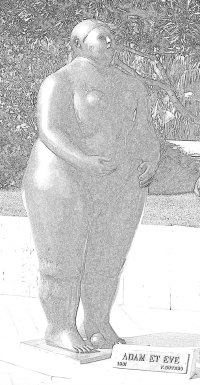
eveI was told that the recent ‘break the internet’ image of Kim Kardashian’s rear netted her a royalty of $42 million. A tidy sum that brings new meaning to a woman’s assets.

Now it is important not to believe everything that you hear or read on the damaged interweb. So I doubt very much that the fee was as bootilicious as the behind.

All we can be sure of is that the butt was not revealed for free and mere mortals will never know the actual amount of moolah exchanged.

When my brain had had enough of curvy bits I began to think up things you could do with $42 million.

Here are a few of them…

  • Pay one years salary for 17 premier league soccer players
  • Cover 10% of the bill for hosting the 2014 G20 summit in Brisbane
  • Buy roughly 6 months supply of coal for a 500 megawatt power station
  • Purchase a skinny latte for every man woman and child in Belgium
  • Fly first class around the world 8,400 times, or once with a lot of mates
  • Get a broker to secure a couple of 50m long luxury yachts
  • Acquire 68,000 ha of agricultural land and grow 300,000 t of wheat each and every year and donate the produce to famine relief charities [that is enough to meet the wheat consumption for 3 million people]
  • Purchase and make available first line anti-retroviral drugs for over 360,000 aids patients — 20% of the aids patients on Zimbabwe

If you had a famous behind, what would you do with $42 million?

Post comments.

Are we doomed?

food spreadRecently I was able to have dinner with my eldest son. He was born in 1989 and now has some life experience under his belt.

As always we had some good conversation covering the usual topics that’s Dads have with their grown up sons — soccer, cricket, work, cars and the like. We took taking great care to avoid topics that mothers might ask about.

Then out of the blue he asked me what I thought would happen to the world. “Are we doomed?” he said. “Will we run out of food?”

Startled, I blinked and rattled off my usual patter.

“There are 7 billion of us” I said, “and for the 600+ million that live on less than a dollar a day we have already run out of food and for another billion or so who manage on less than $10 a day they would say food is very scarce. Then there are the billion or so fortunate ones who live in the mature economies amidst relative plenty and are copping obesity and its associated diseases.”

I paused and realised, partly from the blank expression opposite, that I had not answered the question.

“Immediate doom is unlikely because we will invent distributed and cheap sources of power, fuels cells probably. Power gets us over the water problem because we can then desalinate and/or pump freshwater to wherever we need it to irrigate the desert or flush the toilet. We will have to recycle nutrient like crazy so as to replenish the soils but again that can be done.”

“Doom is also unlikely because people will not like it. In extremis human beings are incredibly good at making things better. It happens because we hate it when things are bad. The Victorians with their class system and global exploitation managed to get rid of the smog that was killing thousands in London. The Chinese will find a way to do the same for Beijing. Even wars end because the horrors are too much spurring one side on to victory or a compromise agreement.”

Such was my immediate answer and it seemed satisfactory.

Then I got to thinking. Whilst most of my answers on this sort of thing had solid enough logic and a degree of history to back them up, I was not convinced by any of them. If pushed I wouldn’t buy my own arguments.

I genuinely don’t what is going to happen.

Some days I can’t believe the economic and social systems that I live within can possibly persist another day. They appear so fragile. But that is what we said last year, and every year back as far as can be remembered. Instead I marvel at human persistence.

So I have decided that it is time to think seriously about what might happen. I’ll get back to you after a good cogitate.

Meantime if you have any suggestions please post comments.

Can you answer these four easy questions?

factorySuppose that for an extra $5,000 on your home loan you could have unlimited electricity for all the household appliances and your electric car for the lifetime of your loan. Over the 25 years that must pass as you steadily pay the bank more than double the amount you borrowed [yes folks, it’s true] you would not have any energy bills.

Would you take the offer?

Now suppose you also own a factory that makes Halloween costumes for kids, the only one of its kind outside of China, and I said that for $20,000 you could have unlimited power day and night to run the machinery for as long as there are kids wanting lollies and parents willing to buy them scary outfits.

Would you find the money?

And now for your next car, whether you are in the market for an SUV or a hot hatch, what if you could purchase an electric version of you model of choice that had the acceleration of a Porsche, a 500km range, and cost 20% less than the petrol version?

What would you say?

It seems that Elon Musk the co-founder of the Tesla car company [among other things] knows your answers. He is building a solar-powered Gigafactory to make batteries. The plant will cover 93 ha of the Nevada desert and produce 50 GWh in annual production by 2020.

Because all it takes to realise these fantasies is the ability to capture and store sun or wind energy at a reasonable price. Reliable cheap batteries would make it happen

Here is the fourth and final question.

What would you do if you were on the board of a company and responsible for maintaining profits from a coal mine or coal-fired power station and you had the ear of the Australian prime minister?

Answers on a postcard.

Civil service overhaul

officesHere’s a line from a recent article by Harold Mitchell writing in the Sydney Morning Herald on club mentality in the civil serviceIf we just keep swapping jobs around among the boys, before we know where we are, the world will have gone past us and the boys won’t care. 

The lament is not a new one. Many know that the civil service system inherited from the British is a cunning mixture of yes minister patronising and self-preservation. Don’t appear to rock the boat as you climb the bureaucrat ladder to success. Adhere to these two metaphors and you should rise in the system cleverly skipping from department to department. It is smart to hone skills in boating and rung adherence because they are far more important than any topic expertise.

Arguably it is no better in business. Only there it is ok to rock the boat near to capsize as you climb the ladder. But in business it is unlikely that you can readily switch from let’s say the insurance ladder to one in pharmaceuticals. In business topic expertise also has some value.

Harold Mitchell was calling for a change to the club mentality that sees senior public servants shuffle around with abandon among the portfolios. He might have added that the same happens in the lower ranks too. Especially at Federal level, junior staff also shuffle between positions and from ladder to ladder all too frequently. They learn the fine art of survival in a system they see as being inherently unstable and insecure.

Risk is the given justification for feeling antsy. Certainly if I had a dollar for every departmental name change over the last 15 years or 10c for every time I heard a staffer say ‘there are not enough resources to do that’ then I could retire from my own ladder today. But this is a ruse. In fact the tasks are the same whatever the moniker and the resources are still there. Almost all of those who claimed to be in fear of their jobs are still in one.

I think that what happens is that club mentality in the high ranks seeps down the ladders too. It creates an atmosphere of fear and even loathing that cramps the creativity and drains the capacity of the whole system.

My experience with the Feds has mainly been with the wonders of the Carbon Farming Initiative. Here in the land of carbon offsets and emission abatement — that without irony has nothing to do with farming as you and I understand the term — you can see the system visibly strangling the staff and shunting them around. Staffers seem to move just when they are about to understand the details of their job and those that stay pretend that they have no idea. Now I can’t pass without saying that some of these people were complicit. They were boating and laddering with the best of them. Most though were prevented from being good at their jobs by the system.

This inefficiency was not the only reason that the CFI was a wasted opportunity to make a real difference to the climate change conundrum but it certainly didn’t help. Now that the CFI has become ‘Direct Action’ a new round of staff has set about reinventing offset payments yet again. Only this time coal mines can get offsets for mining coal — go figure.

Meantime the world has indeed gone past us.

Sounds Crazy #12 | Fossil fuel subsidies

Here’s a thing. Why would you have any international agreement to reduce carbon emissions when governments across the globe are spending 8.5% of tax revenue on fossil fuel subsidies?

Allow yourself to imagine that you come from a nation where the per capita emissions was less than the global average of around 4.5 tCO2e — you could choose any from around 120 different ones.

You would not be too chuffed at any international agreement on emission reduction when you find out that a big chunk of taxpayers money goes to propping up the problem. You could ask this perfectly sensible question: Why not reduce the subsidies? Wouldn’t that make emitting more expensive and be the very market force that complex trading schemes were designed to achieve?

Now you would be told, well yes, but it’s not as simple as that.

Except that it is.

Sayre’s law now applies to politics

Wallace Stanley Sayre (1905–1972) was a U.S. political scientist and professor at Columbia University who came up with the following law of human nature: “In any dispute the intensity of feeling is inversely proportional to the value of the issues at stake.”

Smart fellow to notice the universality that when it doesn’t matter, we get really intense.

The law would clearly apply to ‘does my bum look big in this’ or ‘that really isn’t your colour’ or equally ‘Rooney will never be a number 10’.

Much of this is because we are more attuned to drama than the truth. The soap opera formula is the definitive expression swaying as it does from one drama to the next failing elegantly to resolve any issue. Most reality TV offers up the same basic plan.

Sayre found the proof of his law in observation of academics. He is quoted as saying “Academic politics is the most vicious and bitter form of politics, because the stakes are so low.” And having had a previous life in the hallowed halls of academia I have to agree. Create job security and it takes everyone off their toes only to channel energies at each other. It’s weird indeed. When I left the ivory towers it was because I am cursed with a copy of the entrepreneur gene, but the bickering was easy to leave behind and observed from a safe distance.

What concerns me is that Sayre’s law appears to be leaking into big P politics. There is fierce agreement over the big values such as perceived threats to security even if they are a loose excuse to justify war. Much head nodding and stoic repose on the cross-benches whenever the PM speaks of response to atrocity.

Move to question time and suddenly there is mayhem over a medicare co-payment. The shadow health minister turns red and is about to explode forcing the speaker to announce that the end of the world is near. It makes crazy posts like Fun with flags seem normal.

This should be a big worry. Am I wrong to expect parliamentarians to get fired up about the big stuff? No, I want them to debate the crucial decisions even if they end up in agreement — and it can’t get more serious than war and what to do about terrorism.

Yet we are deafened by silence. Instead the debate spills into the streets causing pain to many an innocent. This is very poor leadership.

I am left with the absence of Australian PM at the UN climate summit in New York, only for him to take the proverbial by pitching up in the big apple the very next day to address a somewhat disinterested general assembly.

Agreement mutes debate and so does avoiding the issue. It’s not good at all.

Warrior

Warriors beachThe desert bakes the feet of the brave warrior even in the shade of the acacia. A waft of thick air brings a strange scent, somehow fresh and made of vibrant colour. Our warrior turns toward the smell and an urge comes to stride out. Instinct draws feet forward ever faster as clean air banishes the torpor of heat. So powerful is this cleansing that he runs towards the breeze. As beads become rivulets down his temples he reaches the edge of a cliff and is amazed at what he sees, an azure vista full of promise and opportunity. Fatally he stops to think. The view is too much. It calls and repels in equal measure, pregnant with the opportunity of pastures new and yet is far away. His breath hurts and his legs stiffen in fear of further exertion. He thinks again and returns to the safety of the scalded earth.

Jobless

workerIn the modern world people need jobs. Employment gives us a source of income so that we can pay bills, make a home and bring up kids. We take this as both fact and inevitable, for most of us will be short a lottery win or, lamentably, independent means

It was not always like this.

For our recent ancestors [all of those humans who lived before the invention of agriculture some 10,000 years ago] it was enough to find food, water and shelter on the back of your own effort.

People hunted and gathered with their time as they sourced from nature what was needed. They lived in groups to share out the workload, spread the risk of bringing up the kids, and protect the best gathering patches, but in the end they ate what they found.

No doubt there were roles within these groups but no jobs.

We assume that the employer worker story — the perennial struggle between capital and labor — began much later and in the scheme of things very recently. Paid work probably began in earnest around the time agriculture which would mean that 190,000 years had past where anatomically modern humans had existed without a salary.

Today everyone in the western [and increasingly the eastern] world has the notion of a job and we assume that most covet one. People know the difference between employer and employee even if they may not fully understand the mobilization of capital. Except that half the people alive today find their ‘jobs’ in subsistence agriculture where all their time is taken up growing food for themselves and their family.

In many ways half the world’s people are closer to the joblessness of our ancestors, tending and gathering from their kitchen gardens, paddies and maize fields. The other half could not imagine life was possible without work. How else would the rent get paid?


Idea for healthy thinking

Do you think it is possible in mature economies to return to such joblessness or roles without jobs?

I wonder?

It is hard to imagine that we could give up our competitive natures. Money and our desire to compete for ever more of it satisfies that need without resorting to its obvious alternative of beating each other up.

After all those hunter-gatherers did more than hunt wildlife with their spears and arrows.