Where does life take you?

Where does life take you?

My youngest son has just taken a trip to London on a one-way ticket. It’s a brave move and even though he only intends to be away from Australia for a year, I recall leaving the UK for Zimbabwe with a similar intention 30 years ago. I’m still to make my way back for anything more than a holiday.

Once you step out into life, there is no telling where it will take you. This is a challenging realisation for a parent. When your son exists the departure lounge the mixed feelings of pride and loss are excruciating.

Through the wonders of Whatsapp we heard from the intrepid traveller a few days into his sojourn. His most acute initial observation was that if a beer is over five quid a pint and most casual work pays less than a tenner an hour, London is expensive.

Indeed it is, although by the beer and minimum wage metrics, probably no more so than Sydney. It’s just that on your own in a new country such sums take on a whole new meaning.

Already his initial plan, which was to find casual work after first having a look around, is fast-tracked. Some of the looking will have to wait. Apparently, a Scottish cousin might have some work in Wales.

And there it is. Life is already taking him in new directions after just a few days. It really does make you smile.

My own journey from a childhood in London to the quaintness of Norwich via Zimbabwe, Botswana, and suburban Sydney to my longest residency the Blue Mountains of NSW makes me smile too. It wasn’t planned especially. It had ambition at times, frustrations aplenty, and a vague logic that joins up the thread, yet really it was just a willingness to let the universe decide.

It is worth doing that I think. Be courageous enough to by the one-way ticket, then, all you need is the belief in what the world can offer.

As for the lad, nothing doing in Wales yet but a bedsit and barista work in Shoreditch, that is, apparently, a really happening place.

The quiet carriage

The quiet carriage

You are commuting to work on a train along with a few hundred others. It is quiet, a Monday morning. So quiet in fact that there are few sounds. The hum of the air conditioner, a rustle of a breakfast bar wrapper, an occasional cough, and the guard announcing rules for the quiet carriage.

At the next stop a young woman boards. Her phone is in her hand and she is deep in conversation. She blurts out a whinge against her family and it is loud. Her normal voice probably. She is not especially angry or agitated, as the complaining seems natural and well practised.

Now imagine what would happen if the commuters, still all quiet and respectful, were to arrive at this woman’s home this evening. They would not do anything. They are there to just stand in the corners and along the walls of the room and listen to the private conversation.

Of course, there would be incredulity and bedlam. The police would be called and the incident recorded in gossip for a generation.

The woman is easily aware of an invasion of her space but is totally oblivious to her invasion of others. In fact, if you point out to her that she might be disturbing the peace she would tell you to fuck off to the quiet carriage.

This is an insidious challenge.

Awareness of self and others is the core ingredient of both personal happiness and societal success. And it seems to be slipping away from us. As individuals retreat into their technology so they lose touch with themselves and everyone else.

Many have written about this and many more will suggest solutions. So here is mine.

Teach yoga to school kids.

The biggest global challenges revisited

The biggest global challenges revisited

I am an ecologist of the academic kind so this typical list of the significant challenges facing humanity makes perfect sense to me

  • global biodiversity loss
  • anthropogenic pollution and associated climate change
  • land allocation
  • energy generation
  • growing global human population

Here are some similar lists from the United Nations, the Millenium Project and the World Economic Forum.

The usual suspects crop up that are mostly about loss and degradation from resource use by an ever increasing human population.

What is interesting though is how this type of list often conflates cause and effect. In the one above most of the biodiversity loss is a result of past land allocation (most people call it land clearing) itself driven by demand for food and space from a rapidly growing human population.

If we stopped population growth there will be lags before any tangible change in the consequences. There is also the small matter of resourcing the current population. So the challenges will not resolve simply by removing the driver. This is also true for many conservation issues too.

Somewhat ironically the most effective way to slow population growth is through wealth creation. When parents can see a future for their children they have fewer of them. This involves worsening the problem in order to fix it; always a risky proposition.

I propose a new list of biggest global challenges and here it is

  • raising awareness

That’s it, a list of one and only one item. If we raised awareness of self and of situation for everyone there is a good chance that the human race could persist alongside a functional environment indefinitely.

The issues on the usual list would persist for a while, but with everyone aware of them, creative solutions would be found. The reason is that awareness comes from a loss of ego. It makes most people far less concerned about themselves. They feel good from the greater good. Weird, but true.

What I really like about this list is not brevity, although that is a handy property, it’s that awareness is the solution to the fundamental producer of global challenges. The human psyche.

Awareness messes with our values, beliefs, prejudices and any number of other emotional and logical thought consequences of our brains. It challenges us to be more than slaves to ego.

This makes it a huge challenge. It dwarfs any of those on the lists of biggest global challenges.

Because it is up to you.

The lily pad puzzle

The lily pad puzzle

Imagine a small pond that has clear blue water reflecting the summer sky.

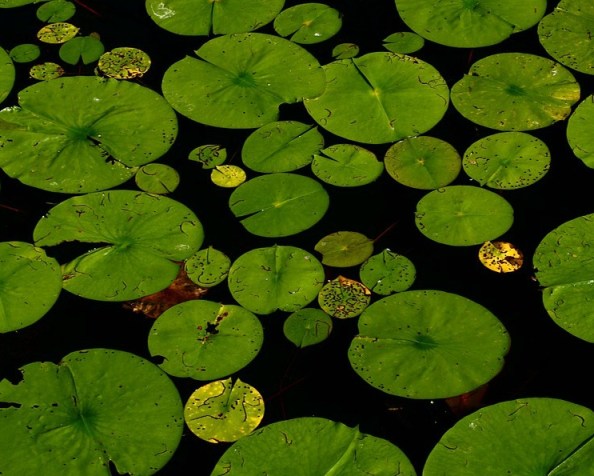
In the centre of the pond are two lily pads, the emergent leaves of an aquatic plant, floating safely on the surface of the water, curled up edges keeping the surface of the leaf dry.

On one pad is a green frog.

The frog is hard to pick out on the green of the leaf but a yellow stripe on its back gives it away.

Chance happens that a week later you pass by the same pond and stop to admire the scene. Sure enough, the frog is still there only you notice that there are now four lily pads; the number of leaves has doubled. In a week the frog has gained surface real estate.

A week later you happen to pass by the pond again and even before you spot the frog you see that there are now eight lily pads. These aquatic plants are quite prolific.

You have to go away for a while and forget the frog and his growing number of Lilypads. A few months pass. Delighted to return home you saunter by the pond again. The first thing you see is that the pond is now mostly green as half of it is covered with lily pads and rather less of the blue sky is reflected in the water.

Sure enough the frog is still sitting proud in the middle.

The puzzle question is this.

How many more weeks until the pond is completely covered with lily pads and the frog can hop to shore without getting wet?

The lily pad puzzle answer is…

One week.

When the pond is half covered with lily pads and they are doubling every week, the pond will go from being half covered to totally covered in just one week. It is the reality of doubling.

Two to four seems like nothing much. Four to eight is mostly trivial too. But when the number is large and the doubling time short, then it is a different thing.

3,500,000,000 is a large number.

It happens to be the number of people on earth in 1967 just 44 years ago. Since then the human population has doubled to 7,000,000,000 (7 billion).

Unlike the pond, we cannot make the Earth any bigger than it already is. So we must hope that should the population double again, there is space enough.

The cute animal postscript

Hans Rosling explains why the human population is unlikely to double again. There are demographics at play that will see family size decline as kids survive better in poorer countries and most of the world passes through the demographic transition.

But 12 billion people is a distinct possibility.

One million people

One million people

Consider a city of roughly 1 million people, Adelaide, Australia for example — Calgary, Canada; Bonn, Germany; Tuscon Arizona; or Bristol in the UK would do equally well.

Adelaide has two Australian Football League teams, a pro soccer team, two professional basketball teams, three Universities, a cathedral, numerous hospitals, many shopping malls, around 440 schools, an International airport, and a zoo.

There are over 400 suburbs arranged around a CBD that has high-rise office blocks that provide a common destination for a metropolitan public transport system that includes a fleet of over 1,000 buses.

There are doctors, dentists, lawyers, Artisans and actors; and enough skilled tradesmen to build or engineer almost anything.

In short, Adelaide is a self-contained community surrounded by enough farmland to feed everyone.

If it were possible to gather all the people who live in Adelaide into one, standing room only location it would be quite a spectacle. It is hard to imagine what it would look like.

There would people as far as the eye could see. Lay them down head to toe and the line would stretch 1,800 km — 400 km further than a road trip from Adelaide to Sydney.

Stand them in single file and the line would be 30 km long, similar to the queue at the post office.

Now having conjured the image of so many people in your mind’s eye put them all onto commercial aircraft.

Because 1 million is roughly the number of human beings who are, at any one time, airborne in commercial airliners making vapor trails around the globe.

This is both staggering and scary at the same time.

It is enough just to illustrate the scale of the challenge to provide life support to all the people we have made and still retain some environmental integrity.


First posted on LinkedIn

What I learnt lately about… tradesmen

What I learnt lately about… tradesmen

Tradesmen do not always know their trade

Be very careful when the builder says he is also a plumber, tiler and painter. Chances are he isn’t. He may have seen a plumber or tiler or painter at work but if he is actually a chippie then he will know how to erect a stud wall but not necessarily how to put tiles on straight.

It is a sobering but important lesson for us all.

Get good at something by all means, but then be honest about it.

Claims of competence beyond what you truly know are too easily found out.

President Trump — the shock we had to have

trump-1266570_1280

In 1990, Paul Keating, as Treasurer in the Hawke government, famously described the 1990s recession in Australia as “the recession we had to have” to correct a series of excesses through the 1980’s. Keating challenged Bob Hawke for the leadership of the Labor Party in 1991 and became Prime Minister of Australia.

This week the American people, via a slim minority, voted Donald Trump into the Presidency of the United States.

It is the shock they (and we) had to have.

What happened is that a nation of educated folk just put a narcissistic isolationist with little respect for anyone but himself and no experience of public office into the highest position in the land. Is this man really the best person from among the 322 million or so options?

You would have to think not. There had to be someone better, although not the democratic candidate apparently.

So what is going on?

There are a large number of people who now have no faith in the system of government to improve their lot. Median income in the US is now $30,525 up just $1,113 since 2000, less than 4% in over a decade. Average wages for those without a college degree in the US have declined over the same period and the number without a job has increased. Meantime median house prices have doubled to $304,800.

A xenophobic return to the old days was a message people wanted to hear.

There are some bigger picture numbers too. A growing disparity in wealth due as much to concentration into the few wealthy as to the loss of earnings among workers. A high risk of GFC 2.0 despite the national debt ballooning to $19.8 trillion raised ostensibly to stave off such a catastrophe. A law making establishment that is out of touch.

Check out the US national debt clock

But these individual and economic symptoms are best seen through the lens of what brought them about. Slavish adherence to the market and its fixation with growth, neo-liberalism it’s called.

Ironically Trump is going to be the messenger that demonstrates this slavish adherence is untenable. Because he will not be able to deliver on most of his promises. Given the debt, wealth concentration and stagnant growth, the system cannot afford his tax cuts, wall construction or restricted trade.

Imagine halving corporate tax when the country carries more debt than its GDP.

If he insists on keeping his promises the fragile economy collapses. If he relents, the people are let down (again). Either way, there is a jolt to the system. An opportunity is created for genuine progressive change.

There is a reason this feels like much more than trying to find a silver lining in a dark misogynistic cloud.

On the night before the US election I attended a public function in Sydney under the 100 Resilience Cities program. The theme was ‘Is Sydney ready? Working together for a resilient city’ and even a confirmed skeptic like myself would have to say, yes.

Because for the first time it became clear to me what resilience is. It is the ability of people to connect with each other across the barriers we all erect to find common ground and support. Throughout the evening there was evidence of people doing this more and more. Just the recognition that resilience is all about people is huge.

And this is the real change that can truly help those who voted for the orange guy. Where people actually talk to each other, find things they agree on, accept the things they cannot agree on, and build things together.

It will happen.

Donald is the shock we need to make it so.

Joel

Joel


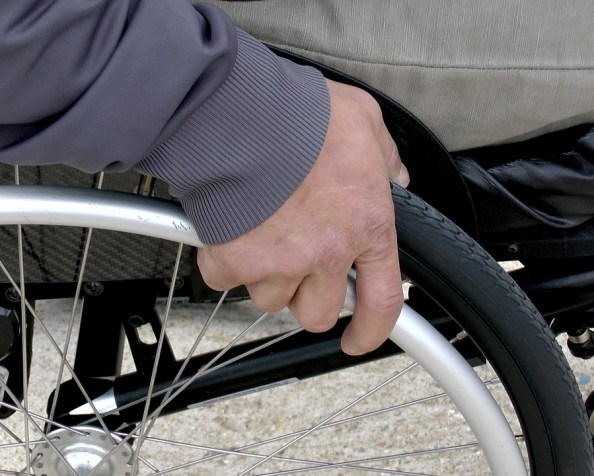
Joel has been in a wheelchair all his life. He is 32 years old and his parents have looked after him since he was born. They are worn out.

It is impossible to know how they feel about Joel.

He is their son who requires their attention for just about everything he does. They have been there for 11,680 days of dressing, showering and bowel movements. Between these days they didn’t sleep through on half the nights.

This is not a normal life.

Joel not only has physical disabilities he has mental issues too.

He couldn’t learn to speak and, according to numerous psych analyses, is not aware of where or who he is. Yet he seems to know what he likes and he gets scared and upset, even if very few people can tell the difference. The best care can see Joel comfortable and safe but no one knows if he is content.

Who speaks for Joel?

He is of legal age with an identity yet he cannot sign or speak his own name. He thinks for there are responses to likes and dislikes but no obvious capacity to discern. His smiles and cries and shouts are unfathomable to all but his parents and his sister. Often even they are not sure what he wants or what he means.

Those with a normal life cannot know how Joel feels or thinks.

His parents want to speak for Joel. They have provided his care, sacrificed much to be there for him and know him better than anyone, perhaps more than Joel knows himself. In the world of the rational they could, perhaps should, be his voice and decide what is best.

It just happens that Joel is aware of his sexuality. Whatever wiring his brain missed it developed the signals for procreation. He cannot speak his desires but   Joel obviously likes girls, especially the good-looking ones.

His parents see this. On occasion, it embarrasses them.

Only they believe sex is reserved for marriage and they cannot see Joel being married to anyone. It is silly to even think of it.

They do not even consider that Joel might want to have sex. Nor do they see that this fundamental human experience is what Joel the person might desire and even deserve.

However kind and dedicated they are, on the matter of sex Joel’s parents are clouded by their own preconceptions. They cannot truly speak for him.

It is likely that Joel will be denied any sexual encounters his whole life. His parents have a right to their worldview and are unlikely to change what they think about sex before marriage. They are also unlikely to change their devotion to Joel and his care.

There is an inevitable compromise in meeting Joel’s dependency. At some level, the caregiver decides and Joel must lose his voice.

It is a truly wicked conundrum.


Born again

Sometimes I wish for a flash of bright light and a sudden awakening of the soul.

It would be such a relief to be born again.

In an instant all the reality of the world would fall away into the arms of blind faith.

So far I remain far too cynical for a sortie down the road to Damascus but the prospect has immense appeal. It is not the redemption that promises rewards. Not even the ability to reset the moral clock at the end of each day with a few choice prayers for forgiveness. It is the prospect of abdication.

Just think…

No more thinking.

No more need to sift the evidence and no matter how it’s diced, find that it scares you shitless.

No more worry about how on earth the global system persists when really it should have already collapsed under the weight of human need and greed.

No more moral dilemmas because good and evil takes care of that.

Oh the bliss.

Pass me the hymnbook.

Disappointment

At the moment you realise, optimism and anticipation instantly gives way to shock and sadness. You want to punch, cry and curl up into a ball whilst spewing forth an almighty howl.

The hope you imagined is no longer possible. The prospect of wonder dashed onto the rocks. You feel cheated and sad at the same time.

Before long grief at the loss of anticipation rasps at the throat and anger erupts at hope’s sudden departure.

So much goes on that all you can feel is the knot in your stomach and a body about to burst.

You are disappointed.

Disappointment is such an ugly word, full of sharp edges and too many syllables. Somehow single syllable feelings: love, joy, sad and fear are truly simple by comparison.

Built like a saw to describe convoluted emotions it may be one of the most painful words around.

Of course there are things that are only mildly disappointing.

A poor performance by your favourite soccer team or rain on the day of the cricket can trigger the emotion to appear but never for very long. A quick rant with your mates at the referee and it passes. Such mild episodes also leave little behind.

When you feel let down on important matters then the feelings are not so easy to banish. The visceral response from your limbic system will pass as life moves you on but there is a legacy. The saw leaves emotional scars across your once smooth fabric.

Partners, true friends and family are the most acute source of these bigger events. Not when they rile or frustrate you but when your vision of them is shattered. The best person can never live up to your expectations for or of them. Soon enough they falter and you are wounded and sometimes the gash is fatal.

Disappointment.