Are banks bad?

Are banks bad?

Photo by Michael Longmire on Unsplash

I suspect that most people believe that the primary job of a bank is to look after their cash. 

Deposit your money and, at any point in time, you can rock up at a branch or a hole in the wall and receive your cash up to the amount that you put in, minus a few fees. 

The reality is that banks only provide a haven for our cash because it allows them to leverage the money held into investments. They borrow against their available capital and invest funds into a wide range of assets that they expect will yield more than what they’re giving you for the privilege of looking after your money. 

It’s a fantastic financial model.

It’s the reason that having conquered the world of futures trading, capital gains, and hedge funds, Bobby Axelrod, the megalomaniac character in the Stan thriller Billions, played by Damian Lewis, decides he wants to become a bank. 

Essentially it’s a license to print money. 

Banks are always looking for assets that will yield investment returns in the shortest space of time. Their mantra, indeed their requirement under the law, is to profit, and they are ‘in the pound seats’ to do it, literally. 

They have the scale and capacity to invest in projects that your average Joe couldn’t dream of, from skyscrapers to industrial plants, freeways, and airports. The kinds of investments that require tens to hundreds of millions of dollars to see them to fruition. 

Banks have the advantage of using other people’s money and the advantage of scale. They make huge sums from investments that yield high returns for long periods, partly on the fact that no one else can invest in them. 

And so it is and has been. 

The banks make money, but the projects they fund often deliver utility.

Banking externalities

It is not always good.

The pursuit of profit is relentless and ruthless. 

Goldrush mentality attracts the most ardent and most skilled as well as the opportunist. Money gives banks the very best people with a sharp mind and a ruthless attitude. They quickly find the best ways to reduce costs and maximise returns.

No surprise that banking can support projects that have severe externalities and direct impacts on the environment. Recall an externality happens when the cost of an activity is not absorbed but shipped out. The commons are excellent dumping ground because no one person or entity gets hit with the liability.

Capitalism degrading the environment is profound. Development has to happen, but it becomes pointless if humanity has no safe place to live.

So who is to blame? 

The reality is that we, the people, want roads, skyscrapers, and industrial plants that deliver raw materials for all of the stuff we want to buy. 

We are the ones that live in large houses with more bedrooms than you could ever need, more luxury than you could ever really afford. And yet, everyone wants a better life, and it is forever the human condition to want betterment. 

In other words, the consumer is ultimately responsible. 

Instead of blaming the banks, what if we blame the consumer? 

Maybe get consumers, us, to give up our desire for stuff, our emotional and mental drive to better ourselves and provide for our families. Quosh those innate biological feelings to make more that is in all of us. 

Well, good luck with that one.

Perhaps there is a compromise position where both individuals and the finance community begin to work together to look long and prosper. 

Currently, we do this through regulation. 

Governments curtail the riskiest financial behaviours through legislation limiting the amounts of money banks can borrow, their financial ratios, and their ability to exploit customers, in itself a significant ongoing task. 

Governments are in a difficult position. They see growth as a political necessity and are reluctant to curtail development activity or the banks that finance it. Yet, all the while, development activity is damaging the planet. 

If we can’t blame ourselves or the banks for doing what we want them to do, humanity has a problem. 

People’s choice

We do have a choice.

We can accept that consumption and more-making has an impact and try to do something about it. Even a little is better than doing nothing. Light bulbs, anyone? 

But fiddling just puts off the inevitable. Instead, something dramatic is needed. The doughnut, perhaps?

Alternatives to historic capitalism exist, and many of the options are maturing nicely.

For example, ‘cooperative enterprises’ where workers make the major enterprise decisions rather than boards of directors selected by shareholders. This alternative is called economic democracy.

Only this is not a million miles away from what we already have. The people choose, but this will not guarantee decisions in favour of anything other than the people. 

Robin Hahnel’s book Of the People, By the People: The Case for a Participatory Economy describes the participatory economy where all citizens, through the creation of worker councils and consumer councils, deal with large-scale production and consumption issues without the need for appointed representatives. The participatory economy is the origin of the Green New Deal, a package of policies that address climate change and financial crises.

A participatory economy is different. Imagine the circus of state and national politics banished to the bench. 

Doughnut economics is an economic model proposed by Kate Raworth that combines planetary boundaries with the complementary concept of social boundaries. Look after everyone and the planet.

Doughnut economics is different too. 

And these are just three of the many alternatives with potential.
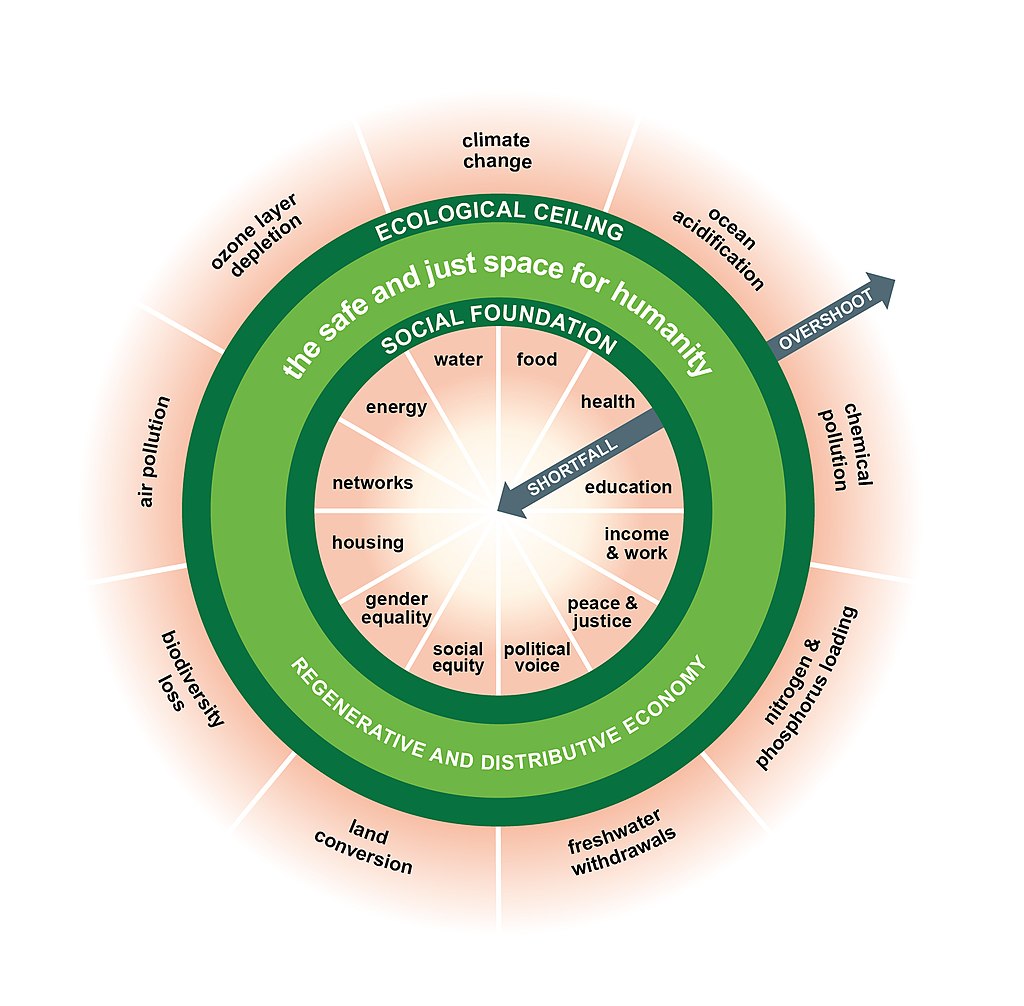
Source: DoughnutEconomics, CC BY-SA 4.0 <https://creativecommons.org/licenses/by-sa/4.0&gt;, via Wikimedia Commons

What do the alternatives require of us? 

Most of the alternative economic systems require a shift in responsibility. 

It would be on us, not the banks or the government or the unscrupulous developers. We will all have to step up and understand the consequences of our choices. 

The banks would continue to do their thing on our behalf; only we would be responsible for the consequences of what they do.

And so we get to the rub.

Capitalism has delivered growth and, on average, betterment for humanity. Only it comes at an uncomfortable cost. And the only way to pay back that cost is to take responsibility for it.

Are banks bad? No, they are a caricature of our abdication from personal responsibility.


Please like or share or comment. It helps me heaps, thanks.

Are you looking the other way?

Are you looking the other way?

Photo by Dan Meyers on Unsplash

I am.

There, like an addict in rehab, I admit that cognitive dissonance has got the better of me and I am looking the other way from a host of societal and environmental ills.

As a career scientist who works with the evidence of climate, food security, and the social reality of nature’s exploitation, I am still in denial. I am no more ready to give up my morning latte or my afternoon stroll across the links than the next over indulged Westerner.

I console myself with this admission. 

At least I know that my ecological gumboots are stomping on the world even if there is little that I can do about it. And, of course, there is further balm in knowing that l am not alone but a member of the vast majority.

A pandemic, a climate crisis, the Taliban, and 40 million Americans on foods stamps notwithstanding, here are three randomly selected things from recent news feeds that I let happen…

  • In the decade from 2010-2020 diplomacy decreed that the nations of the world attempt 20 targets for the protection of global biodiversity including protecting coral reefs and tackling pollution. We failed. And in response to that abject failure negotiators are now working on a better plan with new goals for the next decade and beyond. Einstein just turned in his grave.
  • Republican governors of Florida and Texas have stopped schools, colleges and local authorities from the requirement for vaccines, proof of vaccination, a Covid test or masks. Any Florida school administrator who demands the wearing of masks could lose their pay. Just one of the many things that should never be politicised.
  • The national security advisor in the White House this week asked global oil producers to increase production so that US motorists can buy gasoline more cheaply. This week is 8 months into the Biden administration, he of the green deal and a pledge to ban new drilling and fracking on federal lands, yet his administration has granted more than 2,000 new permits.

“Ah,” I hear you say, “but it wasn’t just you. It’s not your fault,” coming to your own as well as my defence.

Well, it was. 

I am part of the system that allowed and continues to allow such ineptitude, lies and selfishness to persist.

The only solace is that I can admit it now. The first but the most important step to making things better.


Please share with others who might want to own it.

Death and taxes again

Death and taxes again

Photo by Grant Whitty on Unsplash

The theme of death and taxes we gave an evidence argument in a previous post. This one is about the hip pocket.


As a private citizen in Western democracies, you are certain of two famous things: death and taxes. 

Except for those independently wealthy, to survive in the system you have to earn income and that income is taxed. Modestly for low-income earners and at a greater proportion as your remuneration grows. 

This ‘work for money that is taxed’ keeps going until the inevitable happens and your body can’t fight entropy anymore.

Would you rather pay $20,000 or $1,000,000 in tax per year?

The weird part of this is that, after some thought, most people would be more than happy to pay a million dollars a year in personal income tax.

Obviously, it would mean that earnings are high enough to spend at least 10 grand a week and still have change. Compared to the low-income individual who plays $20,000 a year in tax, your bum is in the butter. 

Similarly, a business paying tax is a good thing. 

Corporations have many more ways of avoiding the tax dollar than the individual, but the reality is that net profit after tax, NPAT, where profit is the operative word, is the objective of the business, the reason it exists. 

The company will have directors who, should they fail to maximize profit for their shareholders, risk prosecution. That NPAT number, the profit measure should be as high as possible. 

A business not declaring a profit is very creative in its accounting or has previously made losses or isn’t a very good business. 

Either way, the shareholders are not too happy if profit is not declared because that is their reward, their dividend for risking their own hard-earned to invest in the company. 

Once the accounting smoke and mirrors are over, paying little to no tax is not a good thing. 

Taxes benefit everyone

All this preamble comes before any moral argument about whether or not taxes are for the public good.

Remember that tax pays for collective benefits: roads, schools, police, defence plus a whole raft of services and structures that are hard to pay for as individuals, but that benefits everyone. 

Tax is an integral part of the modern democratic system. It supports the social structure and a whole chunk of individual well being. Drive out of your front gate and you benefit from the tax dollar as soon as you hit the tarmac. 

Without a tax system, we can say goodbye to the current quality of life that we enjoy. Arguably there is a moral obligation through the social contract for all legal entities and individuals to pay their way. 

What is a fair share?

A fair share of tax is designated by the policies and the politics of the day. 

And sure there’s no reason to pay more than your fair share according to the rules.  As long as the tax system is equitable then everyone at some point in the process will have benefited from the taxes that they’ve paid. There should be a certain pride in paying tax toward the public good.

So to claim that you’ve paid no tax. Or to even hint that such a thing is good does not stack up in any sensible argument. 

Paying no taxes as an individual means that you’re either at the very low end of the income scale in need of support or you’ve diddled the books somehow and claimed payments or shifted money around to avoid paying your fair share. 

If a company pays no tax then at some point in the process the business has failed to disclose a profit or manipulated the books to sail very close to the wind and, again, avoids a fair share. 

There is no doubt that corporations do this. They use all sorts of systems and hire expensive lawyers and accountants to move money around to avoid paying tax and one of the things that society has struggled to do is to reign in that avoidance behaviour. 

But when no tax is paid for a very long time then the company is poor at what they do or they’re extremely good at dodging their fair share. Which even if it’s not illegal has certain moral nefariousness. 

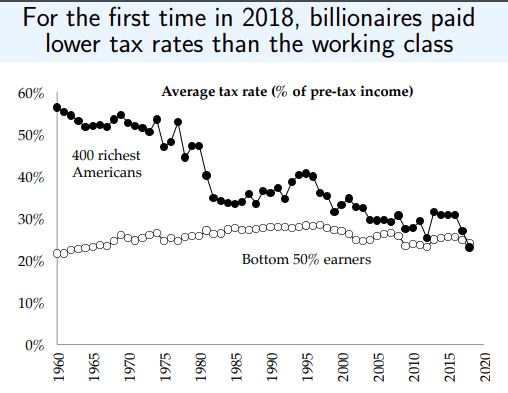
The graph below can speak for itself. 


Source: Tax Justice Now!

Alloporus would suggest tax is a good thing. 

Paying your fair share according to your means should be everyone’s responsibility.

Can your manager read faces?

Can your manager read faces?

Photo by Khashayar Kouchpeydeh on Unsplash

I recently completed a mesquite emotional intelligence test. 

This sort of thing happens periodically in the business world. Executives decide that the company needs better management of staff and seeks to upskill it’s managers, usually with limited success. This trend has leaked across into the bureaucracy. Notorious for its dreadful management capabilities and leadership vacuums, the civil service is hoping to fix some of these problems by getting managers to understand their emotional insides. 

So I completed the test. 

Later, I had a fascinating hour-long debrief with the lady from the consulting firm conducting the process. 

Turns out I’m skilled in the area of emotional intelligence, which is encouraging I suppose. Gives the old ego a massage and a feel-good factor for not being a complete dope when it comes to feelings. 

We proceeded to have an interesting conversation about what emotional intelligence brings to the workplace. She soon figured that I needed a bit of emotional uplift and was very complimentary about many of the scores on my test. 

However, one area with a poor score was recognizing emotions in people’s faces. 

The test results decided I wasn’t skilled at finding the tell that flashes across people’s faces before they put on their mask. The signal that people can’t hide before they say, “oh yes, I’m all very fine, thank you” and smile at you. 

The little dip in the eyebrow or the clenching across the mouth indicating that they’re actually either in pain or some form of distress. All those little tells that are the stuff of spy dramas and whodunit mysteries. 

The suggestion was that I might want to improve my skills in this area. Wouldn’t it be great if I could pick a colleague’s emotional state from their facial responses? 

I jumped into my ego and said, “Well actually, I use body language, tone of voice and other information sources not just looking at people’s faces.” 

Yes,  such additional information was conceded as giving up more than the fleeting glance. But I should still get better at face reading. 

The rationale given for improving my skills in facial tells was not to understand people’s emotions better, but so that I could manage those emotions. Now, the word manipulation was never actually said but the notion of managing somebody’s emotions I found disturbing. 

In my world, your emotions are yours, my emotions are mine, and whilst they sometimes clash when triggered, what you feel and how you feel is entirely yours and your responsibility to manage, or not as the case may be. 

I pulled the lady up on her assumption that managers should manage the emotions of their staff with the alternate that I wasn’t interested in managing people’s emotions because that was their responsibility. And whilst I understood that emotions in the workplace might need tweaking to get the best possible outcome for the team, it should be a personal thing, not one for the manager. I was really keen to let her know that I didn’t like the manipulation idea. 

My hunch is I haven’t chosen to actively improve my face reading skills over the years because I don’t want to engage at that level of detail in people’s emotional selves. 

The return argument was this. 

“Well, okay, that’s fair enough, but it’s also always useful to have much more information about how people are feeling in order to be better informed yourself about their state. It helps you with empathy, helps you with understanding and a chance to be kind and thoughtful towards those people. Doesn’t always have to be about manipulating them for a particular end.”

 Fair comment. 

But then she spoilt it by going on to quote the following rationale. Apparently, the Organisation for Economic Co-operation and Development (OECD) says emotional intelligence is an important skill that senior managers need to have in order to be successful. 

It’s almost as though because it was the OECD that said it, it must be true. 

So obviously, I jumped on that one. 

With a howitzer, I said, “Why would I listen to the OECD? Why would I be listening to the neoliberal capitalist model that has got us into this mess in the first place? The reason why people are putting on their happy face when in fact inside they’re all chewed up.”

That didn’t go down so well. 

What I found interesting was that this person who was clearly an expert in emotional intelligence had taken on, hook, line, and sinker, that commerce is great. That we should be understanding emotions for the bottom line when for everyone there are many, often more important reasons. 

Emotional intelligence matters to people. It improves our relationships, our intimacy with others, our ability to form strong and meaningful bonds. It gives us the ability to have well-being both inside and outside the trappings of modern life. 

I don’t think the lady got what I was saying and there wasn’t enough time to fully explain. 

Maybe she went away and realised that she was subconsciously peddling a message that she might not even have believed in herself. And this is what we do all the time. We take on board messages subconsciously and we run with them. Often without realizing that we’re doing it even when the topic of the exercise is our inner selves and our emotions. 

I’d like to think that we could move on from these primitive fundamentals. We can take the chance offered by a pandemic to reset some of these core agendas of managers taking control of our emotions and that the OECD must be right as examples of modernity. At the very least to question them and try to decide if they’re actually what we want. 

I think it’s happening. Some people are having conversations to decide what the options might be. And it’s a hugely challenging area. It’s never going to be easy to move the juggernaut that is modern economics in a different direction or even dismantle some of it and put it back together in a different shape and size. 

Anything requiring a transition on that scale is likely to cause an enormous amount of grief and upset. But we have to recognize that the current model is flawed. It’s not supporting all of the people all the time the discrepancy between the rich and the poor is growing. 

In crises like COVID it’s the vulnerable elements of society that are impacted. The poor, the old, the unfit. Groups that occur across the whole of society. 

So I’ve decided that I will have a look at that weaker skill of mine. Maybe learn more about how to look at people’s faces more precisely and try to understand what they’re thinking. There’s plenty of opportunities, particularly in the days of Zoom calls where you can actually stare at people for quite some time without them even realizing it’s happening. 

And we’ll see if that improves my understanding of how the world works and whether it raises empathy or whether it just makes me more annoyed about how people are not able to control their emotions. 

I’ll get back to you on this one.


Please browse around for a while on Alloporus | ideas for healthy thinking there are over 400 posts to choose from

Can you ready the jet Jeeves

Can you ready the jet Jeeves

Photo by Chris Leipelt on Unsplash

This post is a little petty, a bit of a whinge, and yet necessary.

There should be some advantages to high office. Typically the benefit is not stellar remuneration. For example, the Prime Minister of Australia earns A$550,000. Whilst this amount is considerably more than the average punter, the top ten CEOs in Australia all earnt over A$10 million in 2019.

If you want to make millions don’t try for the top political jobs. You won’t starve but you won’t be buying a yacht anytime soon. You will need to borrow one from your business mates.

The head of the Reserve Bank of Australia, technically a bureaucrat given that the government pays his salary, Dr Philip Lowe earned just over A$1 million in 2019 and was responsible for managing a $182 billion balance sheet. The highest-paid pure bureaucrat was the Department of Foreign Affairs and Trade secretary with a total remuneration of $936,442.

Alright, so the more significant monies go to the private sector and the help.

Now I am not sure this is even remotely sensible for two reasons.

The first is that how are the best people for the job going to apply if they can get an order of magnitude better money elsewhere. Politicians are underpaid. Never thought you would hear that one. Only the current crop is overpaid for their capabilities but if we are to attract the best to do the toughest jobs, we need some pay parity to make the remuneration for messing about in parliament worthwhile.

The second reason is that CEO salaries are way too high. The way to achieve parity is to get a grip on the private sector’s excesses. Sure a reward for responsibility is necessary and they also want to compete for the best minds but really, $10 million. That is just taking the piss.

But wait, I have missed something.

There are perks to high office.

Here is one taken up with extraordinary enthusiasm by the recent POTUS.

Meantime the CEOs are circling their wagons.

The biggest Australian telco, Telstra CEO decided to blame the kids. Back in 2019 he was quoted as saying “Young kids are earning $5m playing Fortnite but when a business executive devotes a huge portion of their life … that it’s somehow morally wrong they get rewarded for it.”

Wait a minute.

A youngster with millions of online followers who love everything their hero does can earn a hefty sum. This is a simple supply-demand function that the CEO should understand. Just that same way that top-level professional soccer players with massive followings for themselves and their clubs can command crazy salaries, the CEO can get one too.

Perhaps not.

The point is the balance has gone. High public office should be rewarded by more than a medal for service and the CEOs should be paid on performance, not by their mates on the board.

And then there is this snippet from the Guardian on how Australia’s billionaires became 50% richer during pandemic

Australian billionaire, Solomon Lew, pocketed $24.25m in dividends after his retail empire, Premier Investments, received almost $70m in wage subsidies during the coronavirus crisis.

What bullshit is this.

If 50% richer during a global crisis that put workers into lockdown in their homes doesn’t raise your hackles, then paying out big dividends to shareholders with one hand whilst holding out the other for a subsidy surely will.

It makes the abuses of power by Trump look benign.

In what universe can you believe that?

In what universe can you believe that?

Photo by Juan Rumimpunu on Unsplash

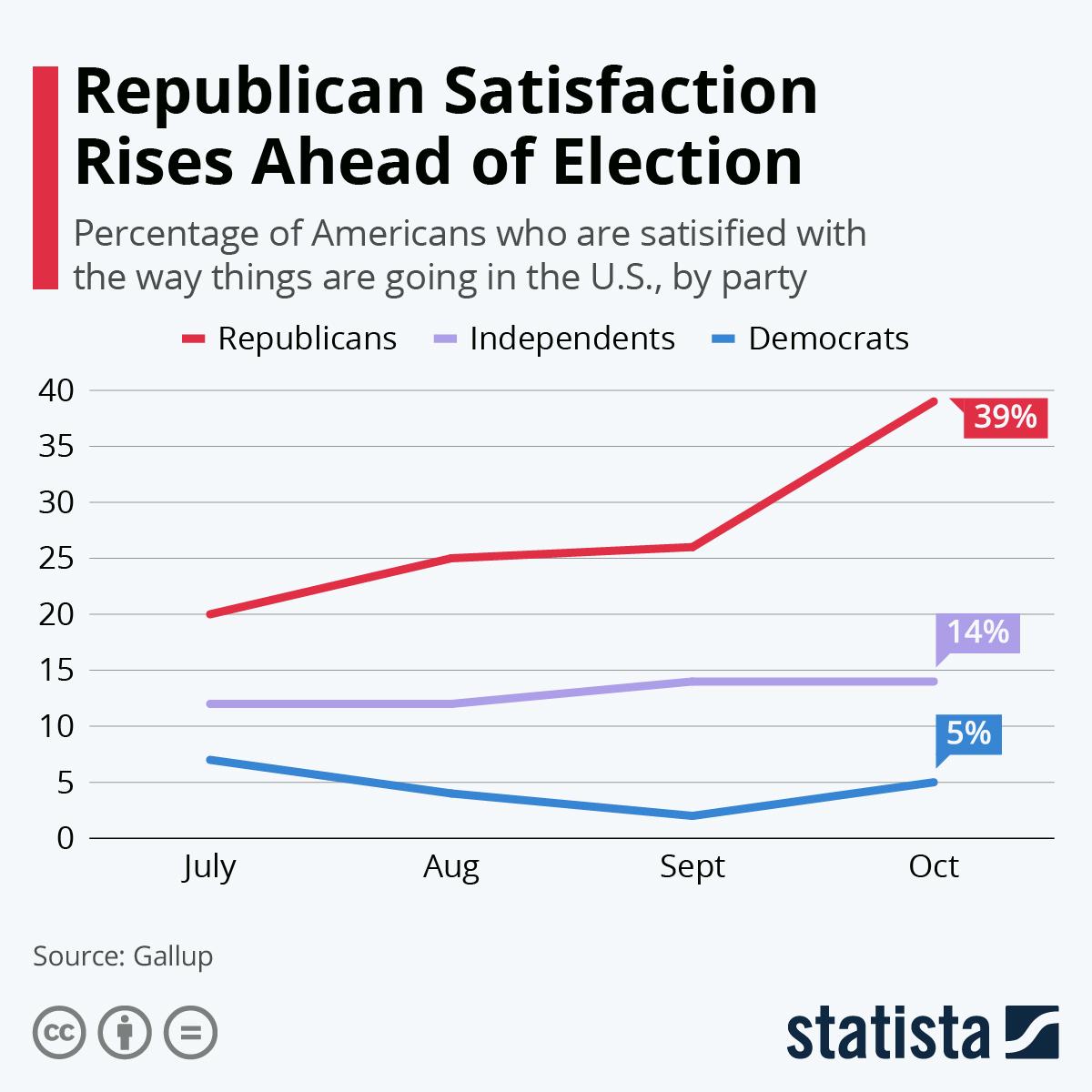
According to a Gallup poll, the proportion of Americans who identify as Republicans and are satisfied with the way things are going in the US reached 39% in October 2020 up from 20% in July. This compares to the October number for Democrats of only 5%.

On what planet does 40% of a particular section of a community agree that the way things are going are satisfactory when the US is in such an incredible mess?

There is the COVID problem with world-leading infection and death rates, the racism problem, the sexism and misogyny, the general incompetence of Trump… What more is there?

Well, there is gun control, climate change including some of the worse bush fires on record, domestic violence, trade tariffs, unemployment, incarceration rates, national debt, and the long, long list of western ills that we don’t seem able to fix.

It doesn’t make any sense as to why 2 in 5 Republicans think that everything is going well. What would it take for them to say that it’s not going well?

More to the point what has happened between July and October to double the satisfaction rate? That 20% increase is bizarre. It could be that the polling technique was flawed or maybe the sample size is small or biased. But it’s hard to imagine that during the course of a major pandemic with substantial hits to the economy and personal freedoms through lockdowns along with job losses and massive debt, that everything is satisfactory. What kind of craziness brings out such a statement in people is really hard to figure out.

Should we take notice of polling? Well, most politicians would argue no. But the stark thing here is that only 5% of respondents identifying themselves as Democrats were satisfied with the way things are going. So Democrats are panicked or at least concerned while Republicans think it’s fine.

This is the growing separation of political view in the US which is interesting after decades of convergence onto centrist type policies on most of the issues that matter. A division in the political stance at least gives people something to adhere to and to be against.

Here is…

another astonishing statistic

Recall what QAnon actually is

At its heart, QAnon is a wide-ranging, unfounded conspiracy theory that says that President Trump is waging a secret war against elite Satan-worshipping paedophiles in government, business and the media.

QAnon believers have speculated that this fight will lead to a day of reckoning where prominent people such as former presidential candidate Hillary Clinton will be arrested and executed.

QAnon: What it is and where did it come from, BBC Reality Check

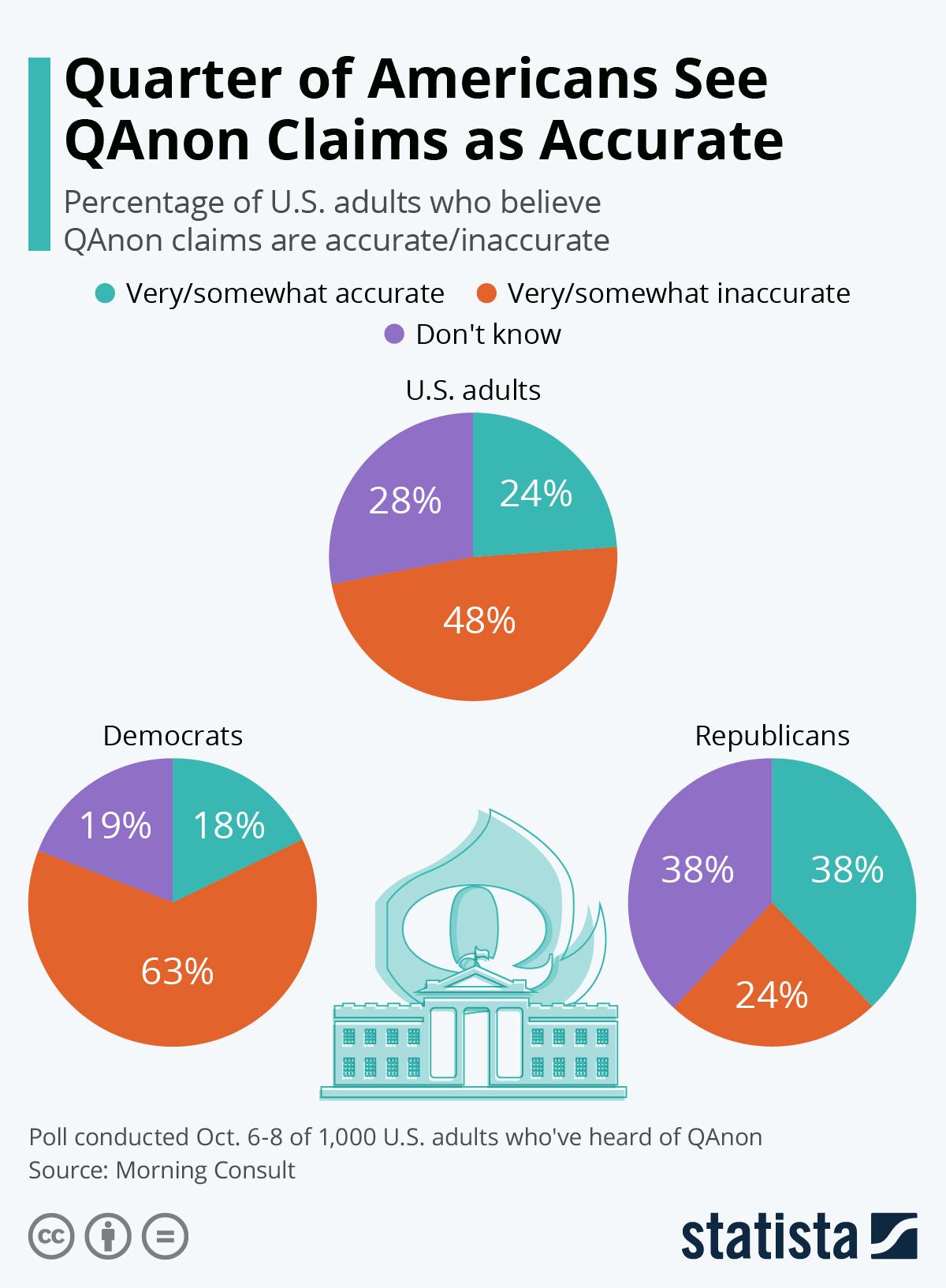
So 2 in 5 Republicans believe in conspiracy theory and nearly 1 in 5 Democrats do too. This is just as alarming. What goes through a person’s mind to allow these two statistics to appear? What were they thinking?

The answer is that they don’t.

There is a dearth of critical thinking on all sides. Instead, it is easier to think fast in the Daniel Kahneman sense, and not force any detailed analysis or appraisal of the evidence, not even a quick reality check.

People can then exist in a kind of bubble that comfortably fits their current world view and only engage with material that supports it. Confirmation evidence is easy to determine because it feels good. Evidence or views that feel off or a bit uncomfortable is just those nasty GOPs or lefties depending on the colour of your own bubble. These views can be just shouted down or, where necessary, trolled. Heck, if that doesn’t work there is always a demonstration.

Ask any of the 40% if they have thought carefully about what they say they agree with and they will confirm that they have, very carefully. This is the elegance of a bubble. It wafts a gentle lullaby over you to make believe that thinking has happened… by someone else. No need for me to do any heavy lifting, if the POTUS tweeted it, it must be true.

And so here we are at the end of 2020. A frantic and genuinely eventful year. When we need to be thinking about what amazing opportunities the circuit breaker of a global pandemic can give us, 24% of Americans think QAnon claims are accurate.

Get thinking people, truly.


Think about it, you have to repost this one.

Disturbing dream that might help

Disturbing dream that might help

Photo by Gabriel McCallin on Unsplash

I don’t know whether it’s COVID or Trump or time of life or stressful work conditions or all of the above but I’ve been having the weirdest dreams lately.

For a long time, I would have only one dream. The theme was that I had a lot of luggage and a plane to catch. The problem was getting to the airport with all that baggage and getting it on the plane without outrageous excess charges.

Only in the dream I rarely made it to the airport. First-year psychology students could figure out the meaning of that one.

Last night I had a different, rather disturbing dream.

I was in a written exam, something I haven’t done for four decades and the subject, English. The questions on the exam paper were difficult to find and impossible to put into the correct sequence.

It was the weirdest experience as the questions were on different kinds of paper and the words were hard to read. What the questions were actually asking seemed obscure.

I tried and I tried and I tried and in the end, failed to complete the examination.

Me, the ultimate nerd, failing to complete an academic task. It felt like the most incredulous thing ever. After some time deciding whether or not I did actually complete the exam or if I did enough to pass the test, maybe I could reset the examination later on, maybe the next year… After all of that trying to recover from disaster, it was clear that I had failed the examination and would have to deal with it.

Part of the psychology around all this would be that in the real world I have been pushing myself to do more writing and thinking, maybe, I should go back to my educational roots.

The obvious explanation is such a change is frightening. There is something about receiving a comfortable salary that influences your way of being even if you don’t enjoy the work that you’re paid to do.

But it got me thinking about our general state of mind.

Especially how easy it is for people to become unsettled. And there’s no doubt that the COVID crisis is extremely unsettling. Anyone with an eye to global politics or with even a passing interest in American politics has just gone through a terrible and settling period and it’s still going.

Anyone who cares or concerns themselves with equality and egalitarianism is easily in strife because of the continuing racism, misogyny and concentration of wealth that we talk about often.

Given all these stresses on top of the many immediate ones that are part of daily life, there is no doubt that mental health is new cancer. It will affect everybody when they least expect. And, if we were smart at all, then we would be building capacity to help people through such times.

We are helping each other a little. If you go on social media feeds and let the algorithm do its work, having chosen a few inspiring quotes and videos, you can see there are a lot of people engaged with positive messages and this is very powerful. Such grassroots, bottom-up approaches are essential. Empowering the positive messages, maybe with a share or two, is an easy way to help.

Then there is the harder work to make sure that politics can catch up. Maybe something like what Margaret Thatcher did in the first episode of the latest season of the Crown. When she was hounded by the old school, stupid white men, she got rid of them all, replacing them with young white men. So she got halfway there, at least.

Sidenote though, the Johnson cabinet is young, inexperienced and widely considered to be totally incompetent.

Thatcher’s motivations were not pure but that ‘getting rid of the old school’ is something that is imperative in our political systems. We need young imaginative ideas. And it’s time to get those. They’re there, all we have to do is empower them.

But back to my slumbers. Bad dreams are part of life and they send subliminal messages.

Throughout my career, I’ve tried many different obscure paths, and the odd blind alley, only to end up in a very traditional workplace. So in a way, I’m challenging my own response to being innovative and to support the changes that we have to make. Dreams have the uncanny knack of pointing it out with a poke around in the dark corners in the closet of life.

Obviously, to learn is the key.

And in this instance, I think the dream is giving me the courage to pursue this return to education. And to try and pass on some of my experience to the next generations so that they can forge their own paths with a little more confidence.

And obviously to ban all forms of academic examination as they really don’t help.


Thanks for getting this far, a share would be fantastic.

The bible tells me so

The bible tells me so

Photo by Ben White on Unsplash

When I was a child, I spoke as a child, I understood as a child, I thought as a child; but when I became a man, I put away childish things

1 Corinthians 13:11

The Bible tells us that grownups put away childish things.

You have to wonder about that. When they’re young and before they’re beaten into submission by all the cultural norms and frightened to death by their egos, kids are still innocent. They have a remarkable ability to call out elephants and to say what they think, unfiltered. They come up with great common sense. Sure they don’t have the experience and they don’t have all the details, but they’re still in tune with their instincts for what is right and wrong and what makes sense to them in their particular frame of reference.

In other words, they are honest.

Even if their little personalities might be a little bit sus, they are still able to tell it as it is. So when we put away childish things, what does that actually do to us?

Half the time it makes us into closed, guarded individuals who are fearful of actually saying what we think. In truth because it might go against everyone else’s truth or might be a career-limiting move.

Recently, I was. In a position where I was forced to call out a few childlike behaviors, but not in the sense of those innocent youths, more in the sense of the petulant adolescence who were now grunting into their coca-cola because they’d prefer to have a triple scotch. There was a requirement to call out the fact that we should be having adult conversations about certain policy and scientific matters. And not simply throw our toys out of the cot because we heard something that we didn’t like.

I thought about that a little. What is adult conversation? What is it, that putting away of childish things concept? I’m assuming that it is, take what you now know about the real world about humans operate as adults, gather more information about topics, and begin to act sensibly not with petulance or with innocence, but knowing what the world is like. Removing some of the naivety and having objective conversations about things.

Cultures have the dinner party or the pub or the conversation around the fire, where these matters can be discussed among elders where youngsters listen in or where people are able to extend their knowledge and test out ideas with others.

In the workplace healthy conversation needs to be part of the process. Everyone has a common agenda set by the organization they’re working for and it shouldn’t be a problem to put aside every small nuance and put down your ego for a little bit and have those intelligent adult conversations about the current and the future.

It’s disconcerting when this is not possible. And if this is how society is going, where we can no longer have adult conversations even though the good book told us that that’s what we should do, then we’re in a bit of strife.

Those adult conversations are critical in order to explore options and to decide what is an opinion and what is fact and to work through the logical flow of things. Understand parts of the process that you might not have thought about but someone else has.

If we can’t be adults about it. And we can’t be children because we left all of that behind. And we are left with the petulant adolescent who is grunting away because he’s not the centre of attention…

Then we’re in a great deal of strife.


If you enjoyed this post or even if it made you cringe, post about it. I don’t mind.