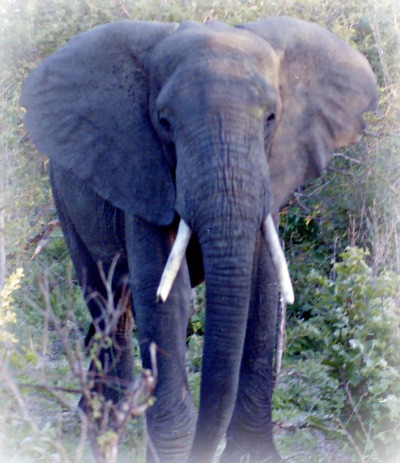
As the author of ‘Awkward News for Greenies‘ it is a little odd to see alloporus promote green thinking of the tree hugging variety, but…
this time they are right and we should pay attention.
Check out this video on the elephant in the room
As the author of ‘Awkward News for Greenies‘ it is a little odd to see alloporus promote green thinking of the tree hugging variety, but…
this time they are right and we should pay attention.
Check out this video on the elephant in the room
 “We must protect mother nature from our worst excesses” is the headline of an article in the Enquirer section of The Weekend Australian this week.
The tagline “We can raise our living standards without destroying the natural world” introduces an opinion piece about growing human numbers and our deepening psychological motivation to keep up with the Joneses. Two things that are leaving us with stress and putting strain on the environment. And yet the ”wonderland of nature” is still there to us inspire the spirit. Natural glories abound that should garner our respect and “a determination to protect Mother Earth from our worst excesses.”
All good stuff you would think.
There are posts a plenty on this blog and by many thousands of other bloggers saying pretty much the same thing. Hey, it is even the main tenet of my latest book Missing Something.
_
Missing Something | get your print on demand copy from Amazon or download a paperless version Missing Something Kindle Edition.
_
So why mention this piece from the sunday paper? Well, the curious thing is that the article is attributed to Craig Emerson, the federal Minister for Trade and Competitiveness in the struggling Labour government.
Now if the juxtaposition of topic and source doesn’t make you smile, then it is worth remembering that the newspaper is as brown as it gets [being owned by News Limited is a bit of a give away] and is always sticking the knife into anything with a green hue.
Clearly the editor was having a laugh and providing a great gotcha opportunity to catch the hapless minister sometime later in the election year.
It is shameful that the sordid media cycle and political agendas do this to such important ideas. We do need to be more mindful of nature, more concerned about our exploitation of natural resources, and even to take time out to feel the wonder for ourselves.
What the Minister did, apart from being suckered, was miss the opportunity. It is not enough to say that there are now very many of us putting the environment under pressure, we have to confess to our dysfunctional desire to exploit and find the emotional fortitude to think before we act.
Maybe my lesson was to enjoy the chuckle I had at reading a green rant from a trade minister and leave it at that.
–
NEW BOOK | NEW BOOK | NEW BOOK | NEW BOOK | NEW BOOK | NEW BOOK | NEW BOOK
It is true, I do have a new book that is all about how we perceive natural resources and those wonders of nature.
Check out a description here or better still order a print-on-demand copy of Missing Something from Amazon or download the Amazon Kindle edition of Missing Something right now.
 This picture I have used before in an optimistic post on Rhinos.
It was taken in 1988 in the Mana Pools National Park, Zimbabwe — 24 years ago. The skulls are from black rhinos shot by poachers.
At the time the conventional wisdom was that the main market for rhino horn was in the Yemen where the many princes required the matted hair as raw material for artisans to carve ornate dagger handles.
This year a new wave of poaching has hit the species that since the losses in the 1980’s is now spread far and wide, mostly in smaller reserves that are heavily protected. This time the story is that the market is Asia where ‘medicinal’ use is setting high demand.
Maybe it was Asia back in the late 1980’s too as there can only be so many Yemeni princes, but whatever it was then there seems little doubt that today it is a large and powerful market that seeks rhino horn. And market forces are hard to stop. High demand and limited supply generates prices that make for good business and, for some, small fortunes.
But there is something more. Scarcity seems to trigger something primal in us.
As consumers we go to great lengths to sooth that feeling, paying whatever it takes to be in possession of that limited commodity.
The real worry for anyone with empathy for the rhinoceros is that these markets are newly flush with dollars thanks to two decades of double-digit economic growth in many parts of Asia. This economic growth has brought many benefits and it has also dramatically increased the proportion of people with disposable income. There is vastly more money in the system than there was in the 1980’s and as we know it matters little if you come from Chengdu, Chennai or Chicago consumers want to spend their surplus cash on themselves.
Chengdu at a tick over 14 million is the 4th largest city in China and is home to 5 times the number of people living in Chicago. Given there are currently 22 cities in China with more residents than the 2.7 million that live in Chicago, there is no shortage of potential customers for medicinal products.
Protecting the rhino is now a much harder problem than it was in the 1980’s. When you live far away from the rhino and have probably not even seen one, except maybe on television, you don’t even ask the fundamental question: rhino or me?
You just say, “me, thanks”, just like every consumer has done since commerce was invented. And, as the Lilly Allen lyric in her song ‘The Fear’ so profoundly puts it: “I am a weapon of massive consumption, it’s not my fault, it’s how I’m programmed to function.” We simply cannot help it.
So, if you are fond of a bet there would be very short odds on the only living rhino in 2036, another 24 years after the picture was taken, being in a zoo. And maybe this is necessary. Loss on a scale large enough and scary enough will probably be what it takes to change the knee-jerk “me, thanks” to…
“me, once I have thought carefully about the consequences of my choice”.
Here is an idea for the rhino problem.
Why not ban all false advertising across the entire globe.
Any claims made by an advertisement of any kind in any media must be falsifiable according to a strict set of international rules. And the onus of the proof falls on the advertiser, the company or individual who runs the ad.
So you cannot say that rhino horn powder cures any number of ailments and promotes everlasting life unless you have evidence — good, old-fashioned falsifiable evidence.
Failure to comply would result in an on-the-spot $1 million fine payable into a national environmental fund.
This edict need not just apply to wildlife products, but any product where the seller claims it to be what it is not.
Now there’s a thought.
 When historians sit to appraise the environmental actions of the baby-boomer generation they will say that they tried, did some good things, but failed to grasp the big picture.
They will also record that the most important consequence of this failure was that people did not see the solutions that were there for the taking.
Instead they focused on issues that they believed were real but turned out, with the benefit of hindsight, to be only partially relevant.
I have just published a short ebook at Smashwords that takes a sideways look at 10 environmental issues and puts them into context. It collates a few examples around one core idea that may be useful to the historians of the future.
And it can be yours for less that the price of a skim latte.
 Stephen Fry is prolific, so much so that it is hard to avoid him. Fortunately this is entirely tolerable for the man is smart, erudite, witty, and has a passion for knowledge that is as important as it is infectious.
I did, however, find one occasion when he might have erred.
An episode of his wildlife series “Last chance to see” was filmed in Madagascar, where the unlikely adventurer went in search of the curious and elusive aye-aye, a type of lemur. The search criss-crossed the island to find the few remaining patches of forest where there might be a sighting, only to finally catch up with one in a coconut palm in a villagers back yard.
Along the way the film crew passed vast swathes of deforested land that clearly left an impression and brought forth laments on the loss of unique biodiversity once the trees are felled.
Much of the cleared land was planted to sisal that grows well in the Malagasy climate and produces a cash crop for farmers. Fibre from sisal is used in packaging in the west that is biodegradable and often labeled as green. The irony was not lost on Mr Fry.
Madagascar produces around 9 million tones of sisal, about 4% of global production, and a seemingly trivial mount in the grand scheme of things.
Surely the unique biodiversity was worth far more.
Not for the farmer, for cash is cash. And if there is, right now, a market for sisal and it is easy enough to grow then it is a profitable use of land. And if it is more profitable to the farmer than an aye-aye, then sisal it is. Not because it is the best use of the land but because, like the rest of us, the Malagasy farmer needs to make a living.
The same happened in Australia. Sheep are not the smartest use of the dry and dusty outback, but at the time there was a market for wool in Europe and wool was durable enough to travel. So like sisal, sheep production was profitable – handsomely so for some on the less marginal country.
The last chance to see is because we all want to make a living and because we make that living from the options available to us. It is hard to make a living from the sale of ecosystem services, or from forest protection or taking people to see an aye-aye; usually far too hard.
What we need to do is to be smart about the available options for making a living so that the one that is easiest does not become the default.
 This question came in a forum on REDD, Reduced Emissions from Deforestation and Degradation, the somewhat controversial mechanism to tackle global warming. The idea is that because greenhouse gas emissions from clearing of land for agriculture makes up around a fifth of anthropogenic emissions, it makes sense to reduce clearing especially in tropical forests that are high on carbon and overall environmental value.
One typical pattern is that forests are first logged for commercial timber. This opens up the forest, makes access and further clearing easier. People move in to grow cash and subsistence crops.
REDD projects aim to substitute the financial returns from clearing with the sale of carbon credits that come about from the avoided emissions when forests are protected. In short local people receive payments for keeping their trees and their forest intact.
When it works there are less anthropogenic emissions, forests are protected, funds become available to help people create local economic development. Neat idea.
Since there are a few REDD projects that seem to be working pretty well in Africa, the question in the forum was about extending the concept to address wildlife poaching as well?
A successful REDD project would also protect wildlife because the financial incentive is to retain the integrity of the forest. Local communities are paid to be custodians of the resource.
A collective will would be enough to significantly reduce poaching so long as three key things happen:
local engagement is real
sufficient financial returns from the sale of carbon credits go to the local communities and
there is some long-term certainty in those financial returns
These are the key success criteria for any REDD project and, if met, then local protection of all the natural resources should follow. At least this is my experience talking to landholders in rainforests of Asia.
People everywhere prefer to live where the environment is healthy, the air is clean, the trees are green, and the wildlife free to roam. Only we need to live. Our priority is for a good life for ourselves and our families that is free from strain, risk and uncertainty. Meet this priority and any amount of environmental protection is possible.
What we have to remember is that throughout human history the forests have been cleared to meet these basic needs. So we are asking a lot to forego the route to development taken just about everywhere.
There has to be enough money in the system to meet the needs over the long haul.

The real challenge is that financial returns on REDD projects are neither certain nor comparable with the usual alternatives. Exactly why is another, long story. But I am sure you can guess the message. If we want to save trees or wildlife we have to pay a reasonable market price.
 Not satisfied with haranguing readers of this blog with environmental woes, I have branched out into the dynamic new world of ebook publishing.
Thanks to the amazing people at Smashwords my latest collection of essays on the environmental issues of the day is now available to download in all the usual formats.
Give it a whirl and maybe leave a review on the site. It would be great to hear what you think.
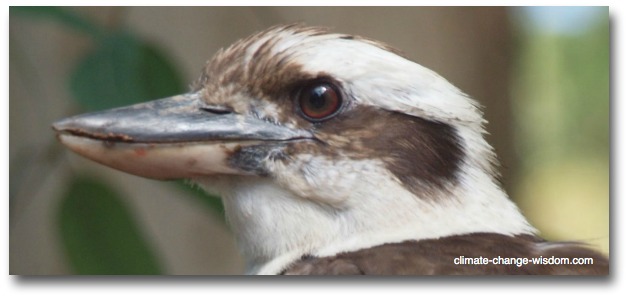
The recent natural history series Earthflight has been interesting to watch.
It follows birds as they fly around the planet, the sort of thing the BBC have done many times. Only this time the idea is to take the bird’s eye view.
And it is amazing where advances in digital, miniaturization and lens technology can take us. Some of the shots would have been unthinkable even a decade ago.
Here is my quick synopsis. Truly staggering photography is spoilt by gratuitous segways (usually to footage of large ferocious animals other than birds) and an inane sales copy narrative. But, hey, not every audience wants to hear Sir David all the time.
The images are so amazing that figuring out how they did it takes the mind away from what the bird sees.
Maybe it is a bit like the experience with flight simulator games. We know we cannot be up in the air because we are holding a game console and so part of us stays attached to that reality. It was similar with images of flight.
My brain said that it was not possible to be 1,000 feet up gliding on thermals across an Andean mountain top and so I did not see the landscape below as the condor might, even though the camera was right there on its back (at least that’s what we are supposed to think is how it was done – I have my doubts).
The footage I remember though was taken in conventional fashion. It was of 40 or so Andean condors chattering around a carcass at the end of a landfill site on the outskirts of Santiago. The narrator tells us that the carcass is provided for the birds so that they are not at risk from the bulldozers that are spreading out the garbage.
It was not so long ago that the Andean condor was classified as an endangered species by the IUCN. It is better off today with a near threatened classification, but remains susceptible to human influence.
Only here were 40 individuals on a rubbish tip. And this is a good thing?
I’ll leave you to decide.
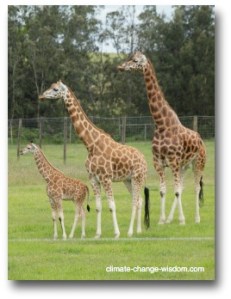 Earlier I posted a somewhat acerbic commentary on gardens.
In brief it concluded that we must have them even though we don’t really use them. I am curious to know if the same thought process could be applied to zoological gardens.
Zoos began as collections, or more strictly, menageries.
Some of the wealthy and idle rich, who often liked to collect things, developed a fascination for animals and started to collect them. The more weird, more wonderful, and wilder the better.
It is not hard to imagine the independently wealthy of the early industrial era with access to travel on the new steam ships and trains wandering off to see the wondrous wildlife of Africa, all hurrahs, what ho’s, and gin and tonics. Once they were done with shooting the lions, buffalo, elephants, rhino and leopards it was inevitable that they would want some in their copious back yards at home
It probably started with taxidermy they had done on all the trophies. But stuffed didn’t quite cut if you could have a roaring lion the other side of the rose garden.
Plus, if you could have a botanical garden, then why not a zoological garden?
So live animals became the go and menageries an inevitable consequence of wealth and travel.
And for a long while these were private collections, places where the privileged few showed off their latest acquisitions to a handful of their friends and guests. Even today, the majority of the exotic creatures held in captivity are in private collections.
Only later did the fascination spread to the general public and the notion that there might be a buck in showing the weird and wonderful to the masses.
If you have been fortunate enough to witness wildlife in the wild then even the best zoo is an anathema. You know there is something about a cage, enclosure, display (the noun choice cannot really hide the reality) that strips the zoo animal of its essence.
It does not matter that most animals are not aware of their situation as captives or that a well run zoo is no more cruel than keeping a dog or a cat at home.
And that even all the zoos in the world hold a miniscule fraction of the extant specimens of all but the rarest species. The number of captives is a blip. What is a few hundred elephants when there are hundreds of thousands still alive in the wild?
Then there are the well-rehearsed reasons in favour; various expansions on themes of
And these all have merit.
The concern I have is an impression that we have not stretched these themes far enough. Especially to the importance of maintaining viable wild populations of the species that we like to exhibit.
Whilst I find a trip to the local zoo to stand and admire a zebra, giraffe and even a tubby lion rewarding, I cannot escape this feeling that something’s missing.

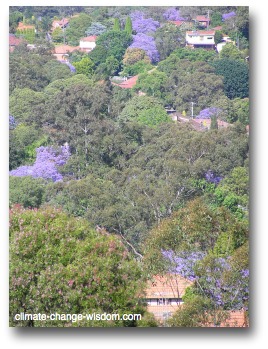 A garden is a place that humans create from nature.
We carve out a parcel of land around our dwelling, add some landscaping and select plants to display nature’s beauty and bounty. This orderliness of things is pleasing to us. We feel in control as though our effort has tamed the wilderness.
The cleared patch puts some space between our homes, allows us to potter around outside without bumping into the dangers that trigger our fight and flight response and even provides fresh lettuce for a salad.
The first gardens were probably about clearing the vegetation around the hut so that we would not step on an unseen snake and the water would drain away more easily.
Most of us have or would like a small garden, our own small patch of tamed tranquility. We also enjoy visits to grander spaces that surround opulent homes for a garden is also a statement. It says something about the owner.
These spaces are so important to us that when we allow half the land area in the suburbs of many of our cities to be gardens. This makes our cities bigger, city infrastructure more expensive, and our commutes longer.
So why is it that with all these good reasons and commitment to have a garden we actually don’t spend that much time in them?
Obviously during the week we are at work and our kids are at school so we cannot be in two places at once. Then there is homework, the newspaper or TV, and dinner to prepare. At weekends we have shopping and sports and, well, a whole bunch of things to do.
There is some gardening of course; only this is mostly to keep the garden looking good.
And then you can’t be in the garden in the rain.
Take away all the effort in upkeep and we hardly spend any time in the garden at all. Only the kids use it and for them it is an attractive space until they get to high school when other things tweak their interest or the space is just too small for real soccer.
There must be another reason for our love affair.
It could be because all we need is to see evidence of our personal control over nature. A garden is a space close to us that we (or perhaps the landscaper) have tamed and bent to our will if you like. It is a safe buffer between the real world and us.
And yes, we like that space to be beautiful. We like to select and display selections from nature that we especially like or on occasion might even want to eat. Most of all we want it to look good simply because looking at it is what we will do most.
Perhaps it is OK that we do this, that we create this visual buffer. Especially if when we get a spare moment and its not raining we wander around the garden or just sit in it, maybe even on the grass. Maybe we are now so removed from nature that it really is too much for us to be exposed directly to its real tooth and claw and that our modifications of nature are a necessary half way house.
My guess is that these days, gardens get looked at only occasionally and entered for their own sake very rarely. When I travel on the train to the city, a journey of 60km each way, I can count on one hand the times I have seen people in their gardens.
So maybe gardens are actually about that neighbour thing.
Perhaps they are there to demonstrate how wealthy we are. It explains why when we look to buy a house, the size and shape of the garden around it is so important to our purchasing decision.
It would be better if we actually spent more time in our gardens, just because we can.
 Alloporus