Buying up the land

Land has always been an asset. If you control land you can live on it, grow food, exploit other natural resources on or under it, and even charge people for passing through. Land makes money. We didn’t call the old money upper classes ‘the landed gentry’ for nothing.

What we choose to do with land depends on its potential and the owner’s ability to realise that potential. Assuming, of course, the owner recognises the opportunity.  In turn opportunity is about where the land is and what other people want either from it or from what it can produce.

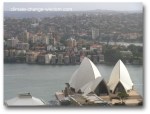
A hectare that overlooks Sydney harbour to the opera house might have been used to raise sheep 200 years ago before there was such an iconic view. Not even the most recalcitrant planning officer could block development of dwellings on such land today. It simply has orders of magnitude more value as a place for dwellings than as a paddock.

Sheep production will not suffer for a few hectares given up to buildings. Grazing properties in Australia cover more than 4 million km2, more land area than India and seven times the size of France.

Nevertheless the Sydney Morning Herald recently printed a story with the following opening line: “FARMERS fear a new rush of environmental plantings for biodiversity and carbon offsets will accelerate the loss of land for food production”.

The story was about mining companies, energy utilities and investment banks buying up land, often through carbon trading companies, to plant trees that will become biodiversity and carbon offsets under the Australian governments Carbon Farming Initiative.

Much of the land purchased is degraded or marginal with limited production potential – a gentle way of saying uneconomic. The new owners have trees planted and account the carbon that these plants pull out of the atmosphere as they grow. This they can register as credits to offset their obligations to purchase emission permits.

Under the carbon accounting rules the new plantings are expected to be “permanent”. That is they must persist long enough to count as emission reductions on the greenhouse gas balance sheet.

An offset planting is not a plantation or production forest. There is no mechanism to allow for later use of the timber resource.  They are carbon sinks, soaking up CO2 from the atmosphere, and providing habitat for any number of creatures that were under pressure as a result of land clearing.

The green end of town is happy indeed. A good thing you would think.

Farmers and their advocates are less enamoured. The prospect of losing large tracts of agricultural land sends a disturbing message to a community already worried by drought, flood, pests, a strong currency and uncertain terms of trade. Then there is also the buy up of productive land by foreign entities, both companies and sovereign states, looking for food security at home.  More land going out of our control.

With this kind of reporting it is a small psychological step to thinking that the land is being appropriated from under our feet creating a threat to a 200 year old way of life.

This will not happen. Even at their maximum extent offsets will be a tiny percentage of the total land area. After all it takes a lot of plantings to cover an area the size of India. However, the reality is that there will be questions asked of land use in the coming decades. We will need more efficient production, regrow vegetation for its carbon value, pay more attention to conservation efforts and be smarter about water use. There will be changes. And this is what the reporters latch onto. Tradition will not be enough to guarantee persistence of the current use everywhere. We will find new ways of making the land productive. Like the plot of land across from the Opera House values will change in ways that make alternate so attractive that change is inevitable.

And in the shakedown, who owns the land may be less important than what is done with it.

Sheep

There are 67 million sheep in Australia. This is a lot of sheep, roughly 3 for every Australian resident. Ten years ago there were enough for 6 per person, a small flock per household.

Together with cattle, the current herd grazes across 430 million hectares or 56 percent of the continent.

If averages were a useful thing to quote, then each sheep might have 6 ha each, many times the area of the average suburban housing lot. It would seem that we are happy enough to let livestock roam.

Time will come when we will rethink this decision.

Spending on the environment

The Australian government budget outcome for 2008 reported an expenditure of A$280 billion (US$180 billion at time of writing) or 25% of GDP.

Divided equally, 280 billion would give each resident of Australia A$13,340 and that was, more or less, what happened to the money.

Welfare, health and education combined to account for A$161 billion or 58% of the expenditure. People accept taxes as a necessity of life partly because these things, along with infrastructure, defense and other primary needs are best paid for collectively.

It makes sense to also pay for fundamental services such as clean air, fresh water, food and shelter. The food we eat and the roof over our heads we pay for after the taxman has taken his cut. What about paying for the rest?

The government spend on the environment is difficult to estimate. There is no line item in the budget, so we must estimate for the following:

  • A3.8 billion on agriculture, fisheries and forestry
  • A$3.2 billion on recreation and culture
  • A$16.6 on the public service

Let’s be generous and say this adds up to A$10 billion or 3.6% of the federal environment spend. That’s A$10 billion for a land area of 7,692,024 square km.

This rounded amount, A$10 billion, is a curious figure. It suggests that we can get clean air, clean water, conservation, and aesthetic outcomes for 21 million inhabitants, plus extensive natural resource exports, for $13 per hectare.

“Ah,” the skeptic would interject, “what about the monies spent by the state and local government, not to mention the huge amount of input from farmers, resource managers and community groups?”

Fair enough. Let’s double the amount to capture the contribution from all pockets in the government purse – $26 per hectare is now more than the defense budget… by $4 per hectare.

It makes you think that from the government perspective at least, the environment is free.

Mark

A wicked conundrum

A colleague of mine came to a meeting visibly shaken. He had just received a phone call to say that one of the union members he represents had been killed. A dead tree had fallen onto him.

The deceased man was a forester who had been about to begin a harvesting operation. It was a tragic accident.

Although occupational health and safety (OH&S) regulations allow for the removal of dead trees from forests to reduce the likelihood of similar fatalities, it would seem impossible to eliminate all risk to operators felling trees. Trees are large, unwieldy and, in Australia, many species are prone to losing branches and bows without warning. Yet when a person dies there is renewed pressure to tighten regulations.

However, there is a counter pressure. Many mammal and bird species in Australia rely on the holes that form in standing dead and large trees as roost and nest sites. Some of these species are rare and some of these are endangered. The retention of at least some of the larger and standing dead trees is considered a conservation imperative. Separate to those on OH&S, other acts of parliament exist to protect rare and endangered species that inhabit dead trees. Regulations in these acts limit the removal of standing dead and large trees.

What do regulators do with this mixed message?

  • Allow all dead trees to be removed to ensure human life is preserved.
  • Keep the dead trees and force workers to accept the risks.
  • Go away from mixed land use and assign areas to either forestry or conservation and only have dead trees in designated conservation areas.
  • Retain the trees for conservation in all areas but minimise the risk to the foresters with better training, equipment and access constraints.

When the law overlaps and when different government departments administer the regulations, it is not easy to come to a compromise. In the end we lean toward risk management, preserving human life first. We regulate to remove dead trees wherever there is risk and limit retention to the conservation estate. And this is understandable.

We fix the conundrum, but we unwittingly perpetuate the misnomer that conservation happens only in reserves. It doesn’t. It happens everywhere. Soon we must learn to manage whole landscapes, to protect the forester and the tree hollows. Then we will see the old laws and regulations replaced by new ones that promote rather than restrict.

Mark

Milky

There are roughly 2.5 million dairy cattle in Australia.

Dairy farms send a tick over 9 billion litres of milk to the factory every year and around 2.1 billion litres end up on breakfast cereals and in drinks.

A city of one million souls uses 274,000 litres of milk per day. That is the output from around 27,000 cows.

Today there are 472 cities with more than one million inhabitants and 25 with more than 10 million.

These are amazing numbers.

Makes you think.
M