Populate or perish

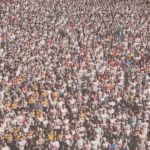
Runners in City to SurfI heard this populate or perish grab on the radio today as projections for Australia were revised to see 35 million inhabitants by 2050, another 13 million more than today.

Enthusiasts were calling in saying we need more people ‘to defend ourselves” presumably because there is a perception of security in numbers.

Others wanted more people because there was a buzz, “it means growth and make the place more vibrant” and, of course, creates bigger markets for the sale of goods and services.

Then others responded with “what about the crowding, the roads, the planning we don’t have?” and then finally someone said “what about the water?” No worries, we will construct more dams.

These exchanges are fascinating for they expose real truths about the human condition and the shape of our future.

In short we really like having more people, so long as we get what we want… and it’s not too crowded.

Mark
Missing Balinese wildlife

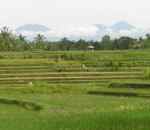
Bali countrysideI have just been to Bali, the tourist capital of what used to be called the East Indies and now part of Indonesia.

I was one of around 2 million visitors that arrive each year to sample the hospitality, culture and warmth of a tropical island that is home to 2.5 million Balinese.

Bali has hotels for every budget, warm oceans, surf beaches, culture, cheap eats and some of the best value for money massages on the planet.

I was amazed at the dexterity needed to guide a scooter through the traffic, marveled at the skill of the many artisans and enjoyed the barbecued seafood served on tables stretched out in rows across the beach.

What I missed was wildlife. Everything was absent. Sure the tourists ooh’d and aah’d at the long tailed macaque’s that reproduce in profusion in monkey forests.

I saw one hotel guest jump at a gecko on a wall.

I looked carefully and spotted a sparrow in a tree and some herons in the rice paddies; but that was about it.

In an essentially rural society I figured that humans do not need industry to reduce biodiversity.

M

8,000 an hour

Do you know how many books are sold before you have bestseller? Or how many patients go through emergency rooms? Or the significance of 8,000 an hour? No, then read on.

All authors would love for their latest book to become a best seller. But it’s not easy. Sales in the order of 3,000 per week are needed to get onto the New York Times best sellers list, so it helps if you are famous or get to chat with Oprah.

Here are some other numbers:

  • Hospital emergency departments vary in size but on average each ER treats 600 patients every week.
  • A medium–sized high school might have 1,500 students enrolled.
  • A suburban train with eight carriages can ferry 1,600 commuters at time from their homes to offices in the city.
  • A person who goes about their business but does not take much exercise will take 6,000 steps in a day, whilst active individuals might manage 10,000.
  • At rest a human adult will breathe steadily, roughly 12 times in a minute and 720 times in an hour.

And here is another one. Every hour of every day there are 8,000 more people on earth.

That is two and a half times the number of book buyers, the weekly throughput of 13 ERs, enough for five high schools, and the passengers from five commuter trains, every single hour of every day. If you prefer bigger numbers, 8,000 an hour grows to 192,000 per day, 1.3 million per week, and 70 million per year.

Every year there are more people added to the global population (births minus deaths) than there are Frenchmen. In two and a half days we add more people than there are elephants in Africa.

Amazing isn’t it. Staggering even.

Makes you think.

M

Kind of thinking

We can’t solve problems by using the same kind of thinking we used when we created them.” This famous quote is attributed to Albert Einstein, who seemed to be rather fond of the erudite sentence.

Always acknowledging the great man, I have often quoted this one myself, with a secret wish that it were my original. I use it so much because it always seems to be true.

So often we use the same thinking over and over again in the vain hope that the outcome will be different.

A recent proposal to solve our environmental woes is to account for nature. The idea is that if we can fully account for the resources we use by putting all the costs and values onto the dollar balance sheet, then this true costing would determine an adequate price paid to be paid for the array of environmental goods and services we consume. Even those sneaky externalities would get dragged onto the books.

I can see the logic. If resources are made available at full cost, then we might think twice before we buy them.

We could also begin to value and start to pay for the hidden services – clean air, fresh water, pollination, nutrient cycling etc – that we rely on but are currently free. And, by definition, we have a hard time valuing something that is free. Trouble is that this accounting logic is the child of an economic system that got us into the mess in the first place.

There is no evidence that accounting will slow demand. It is, after all, just a tool to understand the numbers, not a driver of resource use.  Indeed it may have the opposite effect of increasing demand for certain resources, especially in high demand locations, because if use is accounted, then it is legitimate. After all it is on the balance sheet.

I believe we need to think this one through very carefully.

Mark