Investment in energy research

In the US Federal research funding into energy is $3 billion. This figure includes investment into oil, coal and gas as well as solar and other alternative energies.

Then there is a further $5 billion invested by the private sector for a total of $8 billion in an industry worth $1 trillion a year; making investment in R&D only 0.8% of revenues.

Apparently $8 billion pays for about 9 days of military involvement in Iraq – pretty scary and perhaps something they might look at when considering reducing budget deficit, but I digress.

The point here is that 0.8% is woeful. Any company that spent less than 1% of revenue on R&D would not last long. Given that energy is so critical to economic performance and given that we have reached peak oil and will eventually run out of coal and gas too, 0.8% seems irresponsible.

And then there is a huge global movement that believes we must tackle climate change by reducing emissions from greenhouse gases.

What should the investment be? In successful economies upwards of 3% of GDP is allocated to R&D, which is roughly $430 billion. This amount must cover many sectors but energy security should be worth at least 5% of the available budget or an order of magnitude more than the current allocation.

We are kidding ourselves if we think that energy security can be achieved when we invest peanuts.


Green has moved on – it’s no longer about the environment

A flowerFed up and frustrated Green has ended her long-term relationship with environment  and moved on.

We have all seen how Green used to jump out of bed and dance along on the promise of great things. There was a spring in her step and a focus on what needed to be done to better her man.

Green could look at Environment with that sense of knowing born of a lover’s pride.

But for some time now it seems that the buzz had gone. The relationship had clearly lost its spark and begun to disintegrate. The rumour is that it is all because Environment has let himself go. He has been binging to excess, giving in to his mining and agricultural mates, and failing miserably to be romantic.

Insiders say the whole relationship has become quite spiteful.

No longer able to tolerate the angry arguments over resource use and pollution, beaten down by endless rhetoric and false promises, tired of the need to put everything on the line, it’s ended. Yesterday, Green walked out.

Not one to linger, Green hit the clubs and was seen with her Mercedes owning nemesis we know as Economics. That slick Rick famed for drive, determination and dirt. Whilst there are numerous paparazzi photos that suggests they were more than chummy in wee hours, it seems that Green’s new beau is actually the trend setting global bachelor Climate.

This reporter has tried to get an interview with the happy couple without success, but sources close to Climate claim that it was his new-found warmth that has made him more attractive. More likely it is his inevitable breakup with live-in partner Change that tipped things in his favour. Whatever the reason, Green is smiling again and we wish her well.

Environment did not take our calls.

Buying up the land

Land has always been an asset. If you control land you can live on it, grow food, exploit other natural resources on or under it, and even charge people for passing through. Land makes money. We didn’t call the old money upper classes ‘the landed gentry’ for nothing.

What we choose to do with land depends on its potential and the owner’s ability to realise that potential. Assuming, of course, the owner recognises the opportunity.  In turn opportunity is about where the land is and what other people want either from it or from what it can produce.

A hectare that overlooks Sydney harbour to the opera house might have been used to raise sheep 200 years ago before there was such an iconic view. Not even the most recalcitrant planning officer could block development of dwellings on such land today. It simply has orders of magnitude more value as a place for dwellings than as a paddock.

Sheep production will not suffer for a few hectares given up to buildings. Grazing properties in Australia cover more than 4 million km2, more land area than India and seven times the size of France.

Nevertheless the Sydney Morning Herald recently printed a story with the following opening line: “FARMERS fear a new rush of environmental plantings for biodiversity and carbon offsets will accelerate the loss of land for food production”.

The story was about mining companies, energy utilities and investment banks buying up land, often through carbon trading companies, to plant trees that will become biodiversity and carbon offsets under the Australian governments Carbon Farming Initiative.

Much of the land purchased is degraded or marginal with limited production potential – a gentle way of saying uneconomic. The new owners have trees planted and account the carbon that these plants pull out of the atmosphere as they grow. This they can register as credits to offset their obligations to purchase emission permits.

Under the carbon accounting rules the new plantings are expected to be “permanent”. That is they must persist long enough to count as emission reductions on the greenhouse gas balance sheet.

An offset planting is not a plantation or production forest. There is no mechanism to allow for later use of the timber resource.  They are carbon sinks, soaking up CO2 from the atmosphere, and providing habitat for any number of creatures that were under pressure as a result of land clearing.

The green end of town is happy indeed. A good thing you would think.

Farmers and their advocates are less enamoured. The prospect of losing large tracts of agricultural land sends a disturbing message to a community already worried by drought, flood, pests, a strong currency and uncertain terms of trade. Then there is also the buy up of productive land by foreign entities, both companies and sovereign states, looking for food security at home.  More land going out of our control.

With this kind of reporting it is a small psychological step to thinking that the land is being appropriated from under our feet creating a threat to a 200 year old way of life.

This will not happen. Even at their maximum extent offsets will be a tiny percentage of the total land area. After all it takes a lot of plantings to cover an area the size of India. However, the reality is that there will be questions asked of land use in the coming decades. We will need more efficient production, regrow vegetation for its carbon value, pay more attention to conservation efforts and be smarter about water use. There will be changes. And this is what the reporters latch onto. Tradition will not be enough to guarantee persistence of the current use everywhere. We will find new ways of making the land productive. Like the plot of land across from the Opera House values will change in ways that make alternate so attractive that change is inevitable.

And in the shakedown, who owns the land may be less important than what is done with it.

Staggering numbers

It is a tick over 1,900 km from Sydney to Melbourne and back again. Two full days of driving are needed to cover this distance if you keep to the speed limits.

Imagine each side of the road lined with oil tanker trucks parked end to end in one giant parking lot. Each of the 98,000 trucks is roughly 18m in length and is carrying 34,000 litres of crude oil.

This amount of oil, roughly 21 million barrels, is the amount of oil burnt in America in a single day.

Two-thirds of this vast amount goes into the engines of cars, trucks, planes buses and trains whilst the rest goes to heat buildings and manufacture chemicals and plastics.

OMG those Americans!

Well, hold on.

Australia uses around 950,000 barrels a day or a line of trucks 60 km long.

Hah, that’s nothing, won’t even get you across the Sydney basin.

Except that in less than a month there would be enough trucks to park along the road to Melbourne and back.  Just like the Americans.


Who’s behaviour are we trying to change?

The Australian government has just released its clean energy future legislation, a long awaited climate change policy framework.

In line with other jurisdictions the focus is emission reduction by putting a price on carbon to change behaviours away from dirty, fossil fuel based energy and industry to a cleaner, more efficient economic system. Clean energy futures is an elaborate, and in many ways clever, market based system for the commercial exchange of what amount to licenses to pollute, is transitioned in through a tax on the 500 heaviest emitters.

Hit commercial entities with a cost and, on the assumption that the hit hurts, they will do their upmost to avoid it. They are expected to be rational after all. Some will cop the cost and simply pass it on to their customers. But this will benefit their competitors who choose to become more efficient and change to less carbon intensive activities. So the market will sift the options and favour the cleaner ones. Exactly what is wanted.

In this case $25 billion over 5 years is the hit – evened out it is $1 million a year per entity – and that sounds like it should hurt enough to prompt a change. Some entities will become more efficient, trade to get the best price for what they must pay for and, eventually, transition to clean practices.

So we have a system to change the behaviour of… the 500 heaviest emitters.

Only why do these companies emit? For the majority it is because they supply energy or goods to the market at a profit. In other words they have customers, ultimately us.

In the formulation of the clean energy future policy, the $25 billion raised from emitters will go back to consumers through raising the tax threshold at a cost $15 billion and another $10 billion to support exposed jobs. This is so that should the emitters pass the cost of their permits on to the consumer or cut costs in the form of jobs, it is not too painful for those on the receiving end. Us again.

No collective hurt there. And so no change in behaviour.

Propping up the consumer also eases the pain on the emitters and reduces the incentive to change.

At some point it will be necessary to try and change our behaviours too; or even the most intricate of policy formulations will be a waste of effort and opportunity.

The missing link

Some years ago I wrote an essay entitled ‘What if it’s not emissions’. I was not in denial or even sceptical about climate change, more concerned that we had become fixated with emission reduction as the solution to climate change. So convinced had we become that it was a given that if emissions came down, we would have fixed that awkward problem and all will be well with the world.

My real issue was that we risked putting all our eggs into the emission reduction basket.

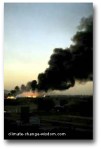
Burning landfill site, GaboroneAfter more years of political inaction than seems decent, the Australian government has just released a clean energy future policy on climate change. And, guess what? We still have the same fixation. The proposal is all about emission reduction, initially through a tax on pollution followed by a cap and trade system to make emitting greenhouse gas so expensive that no rational business could afford such behaviour.

It might be about emissions, but the policy formulation sees only a modest reduction target – 5% below 2000 emission levels by 2020. This means in 2020 Australia is pledging to emit 509 million tCO2e in greenhouse gases or 56 million less than it did in 2009.

Only by 2020, even with the proposed intricate emissions reduction policy fully functional, emissions of 679 million tCO2e are predicted.

Actual emissions will increase because the Australian population will grow in numbers at roughly 890 people per day, the economy will grow and so will affluence. Economic growth will require energy to follow the historical trend of a doubling in consumption every 30 years. And although the policy does talk about energy efficiency and alternative sources, the required capacity increase will inevitably be met by traditional means.

Emissions growth will leave a shortfall in the target of 170 million tCO2e or 30% of current emissions. So it would seem that the emissions reduction basket has few eggs.

This again begs the question ‘What if it’s not emissions?

Let us accept what the science tells us and agree that it is emissions that are a significant driver of the current climate warming. What the policy shows is that, rather like American debt ceiling, we cannot quite admit the severity of the problem. And, more importantly, we lack the courage to tackle the problem head on. It is just too hard and too scary.

And this would actually be ok if we hadn’t missed the critical issue in all this.

We have stopped talking about how 7 billion people are going to sustain growth in affluence on a warming planet. We have forgotten about adaptation. Forgotten that we will need to use water wisely, deliver sustainable production on farms, and manage our landscapes when the temperatures change, rains forget to fall, seasonality shifts, severe weather events become more frequent and the sea levels rise.

Less than $1 billion of the $25 billion revenue generated from the carbon tax will go incentive land management through carbon offset projects. They will mostly be Kyoto compliant activities such as permanent tree plantings and flaring methane – just as the international agreement to proceed with a second commitment period of the Kyoto protocol teeters.

There will be money for biodiversity initiatives. Good stuff, but just more of what we have already been doing.

What happened to incentives to revegetate the landscape and put carbon back into the soil? The critical activities that will help us manage that scarce water, produce reliable quantities of food and help save what is left of nature. Missing, presumed dead.

Seems like we should ask again, ‘What if it’s not emissions?

Can we have sustainability?

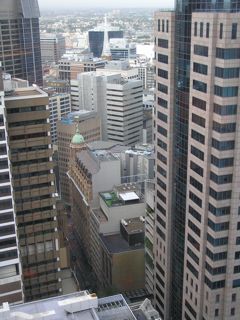
Sydney at four million inhabitants is a moderate sized city by modern standards. It is a similar size to Phoenix, half the size of Chennai, and a suburb compared to the 34 million inhabitants of Tokyo.

But Sydney is plenty big enough to have transport problems. The arterial roads that feed into the harborside CBD are mostly modern freeways, with tunnels and six lane bridges, but they just cannot handle peak flow. Smart commuters travel on the train.

One bonus of train travel is that on the days when you forget your ipod you get to hear people chat. A young couple sat ahead of me on one such day and discussed water.

“No we can’t.”

“Why not” said the husband.

“Those things just spray you with drips that don’t even get your hair wet. I need to get my hair wet.”

“What about the water crisis?”

“What about it?”

“Here, the dams at 39.2%”

It was true; there in the black and white of the morning paper ‘Dam levels at a record low’.

Sydney relies on water storage in a major dam, Warragamba, and the rain sometimes forgets to fall in its catchment in the Blue Mountains some 80km inland from the coast. The significant drought that began in 2006 and broke three years later forced water restrictions on all domestic use. To augment supply and reassure consumers there was drawdown of groundwater together with pumping from catchments further afield. And then, just to be absolutely sure, a desalination plant was commissioned and constructed.

The husband pressed his point.

“If only half the residents of Sydney took a shower this morning that’s two million showers,” he said.

“Ah, you want me to sit next to someone who hasn’t showered. Gross.”

“No, if they all showered for a minute less than usual they would save ten litres a minute, that’s 20 million litres saved.”

He said 20 million as though it was a large number and it certainly sounds impressive. The water from a minute of 2 million showers is 20 megalitres, enough to fill 30 Olympic sized swimming pools, provide 2 million toilet flushes or irrigate several hectares of winter wheat.

“I don’t care if it saves the planet I need a real shower.”

“It would help,” the young man said with hope in his voice.

It is easy to imagine a similar discussion over all sorts of conservation actions that can be done around the home. Recycling kitchen waste for example. All it requires is a sealable tub on the kitchen bench.

“But it smells and clutters up the place, get rid of it. And I hate those ants.”

Yet even in an average household it is easy to generate 10 litres of apple cores, vegetable peels and melon skins every week. Then if everyone in the street did it, say thirty homes, then we might see many tons of green stuff that the garbage men would not have to truck, saving fuel and space in the landfill for the garbage we cannot recycle.

There is a 60 litre black plastic bin in my garden that receives all the kitchen scraps. Every now and then there is a layer of brown leaves added and a bucket of water from the washing machine rinse cycle. All those apple cores and potato peelings decompose readily so that the bin is never full, even in winter. The magic of entropy facilitated by the military style operation conducted by decomposer organisms keeps the breakdown ahead of the household ability to generate waste. In spring the material under the bin is carbon rich compost ready to start off the vegetable patch.

If every second household in Sydney did this then, over a few years, millions of tons in greenhouse gas emissions would be avoided just by not having to shift the waste into landfill. There would be issues around nitrogen runoff into remnant vegetation patches from gardens now replete with green manure, but it is food for thought.

These sustainability actions are all good but surely we can do better. It would be great to do more than change the light bulbs, install a low-flow shower head, manage the compost to help build up the carbon in the stony garden soil, recycle the gray water, install solar panels, grow vegetables and any number of household behaviours for sustainability. Perhaps we could become self-sufficient.

The reality is that there is little prospect of genuine self-sufficiency for most of us. Even with half a hectare of yard and the compost going great guns, most of the vegetables I grow end up feeding the wildlife. There is greenery but not enough to provide for the family. The household members are also used to vigorous hot showers, power on demand, perfect fruit and veggies, the air conditioner in summer and the fireplace lit when it gets chilly.

No longer do we sit in front of smoky coal grates in high backed chairs with wings to keep the draft off our necks. We are acclimated to an even twenty something degrees wherever and whenever we happen to be. This level of comfort has sensitized us to the point where we really feel deviations from our comfort level, not that a few degrees colder or hotter would have any affect at all on our chance of survival.

We have climbed the hierarchy of needs yet, in our minds, we sit as though we are still at the basal level where deviations from what feels safe have the power to upset us.

Does this mean that westerners are desensitized to the problems we have in the environment? Not totally. The media runs stories of environmental challenges and energy saving bulbs are sold in supermarkets. There are energy use ratings on white goods and grants to install water saving devices or solar heating systems.

In Sydney, the Inconvenient Truth made it onto the most watched movie list for a few weeks despite being shown only in selected cinemas; school kids prepare assignments that help them learn about water, land and wildlife challenges; market surveys put the environment high on the list of issues that decide elections hot on the heels of taxes, education, health and the military. Yet whatever we say people still want their needs met. This is their priority.

What we must accept is that our living environment has changed. For better or worse we are sensitized human beings. Most of us really would struggle to survive in the wild and this puts very different parameters on sustainability. Now we must sustain conditions in narrow comfort bands, supply only certain food types and ensure a high level of creature comforts.

The exchange on the train said it all. Not in the words, but the incredulity in the woman’s voice and the despairing logic of her husband.

“Ah, you want me to sit next to someone who hasn’t showered. Gross.”
Forest for the trees

There is a consensus among climate scientists that the net greenhouse gas emission reductions we must achieve to keep warming below dangerous levels cannot happen without the agricultural sector. They are right, it can’t.

There are three reasons for this assertion.

The first is that emission reductions from energy efficiency, mitigation and renewable projects will struggle to keep pace with ever-growing emissions from global energy demand. Mitigation projects in energy sectors will slow emission rates but leave legacy emissions in the atmosphere.

The second reason follows from a need to deal with this legacy. Smart agricultural and forestry practices can suck back CO2 and store it in vegetation and soil – so-called biosequestration. In Australia the sequestration potential in agriculture alone is 100 million tonnes of CO2 emissions (CO2e) per annum, or a quarter of Australian anthropogenic emissions with the bonus that soil with more carbon in it is far better for production that soil with less.

The third reason, and the big one, is land clearing. Globally we are still cutting down forests to grow food at a rate of 35,000 hectares a day, or an area equivalent to the urban footprint of Sydney every five days. On its own, this source accounts for 18 per cent of global emissions.

The problem is how to reduce land clearing.

We have cleared vegetation ever since we invented agriculture some 10,000 years ago and even the Ancient Greeks knew that clearing altered climate. Yet we can’t stop ourselves, because mechanised agriculture has become the engine of prosperity from Persia to Pennsylvania. It is quite something to tell a government minister that his government should forego the economic opportunity and the social security a robust agricultural sector brings. “Why not develop available land,” he will say, “there are mouths to feed.”

It is much easier to sell the idea of keeping the trees to the indigenous land owner, who is pained when forced to fell his trees to fund his children’s education.

And this is the nub of the matter. For what we have cleared are forests – vast stands of carbon locked up in the timber and in the soil that supports the trees (at least 40 per cent of the carbon even in the tallest rainforest is in the soil as plant roots and organic matter). Even where the logs are taken for product, clearing releases the carbon from the tree branches and roots through fire or decomposition and as exposed soil dries out, so the carbon oxidises to the atmosphere.

Enter a hugely contentious solution called REDD, reducing emissions from deforestation and degradation. The text of the Copenhagen accord describes what it means:

We recognise the crucial role of reducing emission from deforestation and forest degradation and the need to enhance removals of greenhouse gas emission by forests and agree on the need to provide positive incentives to such actions through the immediate establishment of a mechanism including REDD-plus, to enable the mobilisation of financial resources from developed countries.”

In short, the west pays to avoid deforestation and so help reduce that 18 per cent slice of global emissions.

REDD, and its latest manifestation REDD-plus (same idea but with wider scope), are criticised for two reasons.

REDD projects amount to welfare payments to the developing countries where the projects reside. And welfare is disliked by both giver and recipient.

Then there is a vociferous green argument against the market approach to delivery as in this case there will be cowboys and governments who rip off the funds before they reach the resource owners. So despite the accord, REDD has been slow to start.

Lost somewhat in this debate on clearing is another mechanism for reducing degradation of forests, Improved Forest Management (IFM).

This is where emission reduction comes from projects on lands designated for forestry. Mitigation is achieved through combinations of longer harvest rotations, improvements to silviculture, better harvest practices and a specific category of protecting forests that would otherwise have been logged.

Whatever the specifics IFM is more like a commercial transaction, industry to industry, and is more comfortable to buyers. The outcome is better managed forests that continue to sequester carbon while emissions are avoided. In the developing countries where these projects are most likely, the forests also remain to supply traditional use.

It would be unfortunate if arguments over REDD derailed or slowed the “immediate establishment of a mechanism …to enable the mobilisation of financial resources from developed countries,” as stated in Copenhagen, because IFM already exists as a mechanism that can deliver.

It would be cheeky to call IFM green, but it is definitely not REDD.


This piece first appeared in Climate Spectator in 2010.

Journeys

In 2009 2.5 billion journeys were taken in aircraft.

Evened out across the global population, every third person on earth took a flight. In reality it is the wealthiest proportion of the 1 billion people in western economies who took most of the journeys.

The projection is that by 2014 there will be 3.3 billion journeys taken.

This represents a 32% increase in 5 years.

Mobility is an inevitable consequence of affluence. As more and more people have disposable income, many will want to use some of those funds to travel. As economies grow, more business is done and so travel to buy, sell and negotiate also increases.

In the mid 1960’s the first Boeing 737s carried 100 passengers up to 2775 km. This was quite a revolution at the time.

The latest Boeing 737-800s carry twice the number of people over 5,500 km and use 23% less fuel.

Suppose it were possible to replace all the aircraft flying in 2009 with the latest fuel efficient models. It would be possible to absorb almost all of the 5 year increase in passenger volume to 2014 through fuel efficiencies that these more efficient vehicles bring.

Future aircraft construction materials that are lighter and still strong enough will see even greater fuel efficiencies. Aircraft built in the next decade or two might only use a third of the fuel guzzled by the earliest models.

Replace all the 737-800s with aircraft of composite material designs and 13 years of growth in passenger numbers could be accommodated without increasing fuel use above that used in 2009.

But even if all these replacements were possible by the mid-2020s, less than a generation from now, fuel use in air travel would begin to increase over 2009 levels.

In half the time since those first Boeing 737 aircraft began flying all the fuel efficiencies would have been used up by the increased volume of traffic.

Clearly instant replacement with the best technology is impossible.

Some of those fuel hungry early models are still in the air on the more remote routes operated by obscure airlines. And it is these cheaper fare options that will be responsible for much of the growth in passenger numbers. The fuel efficiencies will arrive incrementally.

In the absence of some remarkable technology that can replace jet engines running on aviation fuel, greenhouse gas emissions from or air travel will grow along with the airline industry.

PS

There is talk of a jet-rocket vehicle that would travel in the stratosphere, have no emissions because it flies above the atmosphere on hydrogen fuel and could reduce the travel time from Sydney to London to a few hours. Commercial flights might happen by 2040.

By then there will be close to 10 billion journeys per year.