Poor choice

Poor choice

Suppose you are marooned on a desert island.

Luck would have it that, on the island, there is a stream with fresh water, a seemingly endless supply of fruits on the trees close to the beach and, bizarrely given you don’t smoke, you remembered to pack a cigarette lighter.

Other than the ability to make fire, you have very little else. Not even a sunhat.

Chances are you could survive for many days, weeks even. Malaria or other insect vectored lurgy notwithstanding, you could even survive to Crusoe-esque timeframes.

There will be any number of specific challenges to overcome beyond the boredom and the need to find food and water. Avoiding cuts and sprains, not getting bitten by a shark or a spider, avoiding any unknown foods and being sure to cook the shellfish as well as you can. Most of these are, to some degree, under your immediate control. They are avoidable through choice.

Your island is iconic.

A tiny, low lying place with no real high ground to speak of and as you explore you notice evidence of past storms. There are more fallen trees than seems plausible. The biggest trees aren’t really that tall. There is debris from the beach everywhere, even when you think you are as far away from it as you can be. The reality is clear. Come the next storm there might be very few places to hide. Should there be a hurricane, survival would be slim.

So whilst there is no immediate danger, you certainly are in a pickle.

Against all the odds the government hears of your predicament. Phew, rescue is on the way. Perhaps there might even be an airdrop of provisions and a temporary hurricane shelter before the relief vessel arrives.

Turns out that the government appraised the policy position on your predicament and rather than deal with your immediate challenges and imminent risk, they are sending you a lifetime supply of sunblock.

From a policy perspective this makes perfectly good sense. Todays danger is the taxpayers responsibility and if there is unavoidable danger then it is the fault of previous governments for failing to plan ahead.

Providing sunblock is exactly the kind of future thinking that is needed. It means that while you are out there so exposed on the island you are far less likely to develop a melanoma and will stay out of the healthcare system. Not to mention the benefits of government contracts to the local sunblock manufacturer and supplier.

The problem of increasingly more severe and frequent storms or, heaven forbid, a rise in sea level or hotter sea temperatures killing the coral that fringe your island with an underwater wall of protection from the ocean swell, or any other proximate causes of your likely demise, are not issues for the local jurisdiction. They are for everyone else to resolve.

The obvious issue to fix is skin care.

Early the next morning on the faint sound of an engine you jump up from under the simple palm frond tent you cobbled together and, gorilla like, replace every other night. Scanning the horizon the sun reflects off something into your eye.

It must be an aircraft.

It must be.

Sure enough, a few minutes later a transport plane flies directly over your tiny island disgorging a package that floats down gently on a bright yellow parachute to land in the sea, halfway between you and the coral reef.

Fortunately the package floats but it drifts away from the shore far further out that you have dared to go until now. Not expecting anything more than the obvious food and shelter provisions you decide to take the risk, wading and then swimming toward the welcome gift that fell from the sky.

It takes far longer than you would like but weary, you make it to the yellow package. On the side it says “Banana Boat” which strikes you as odd but it’s a float that stays on the surface even when you hang on so you really do not care. Kicking toward the shore is way to hard with the parachute still attached and precious energy reserves are used in trying to free the tangled ropes. Your mind registers that your arms and legs are aching.

All of a sudden you are in the most real and present danger you have been in since you arrived on the island.

Panic begins. It takes courage that you have never used before to stay calm enough to hang onto the banana boat and kick. You keep kicking, frantic at first and then more measured as the panic subsides a little once your brain registers the palm trees inching closer.

In the end your legs are moving on a reflex until one kick hits sand.

The scariest event of your entire life is over. You are belly first on the shore with the boat beside you.

A plastic catch flips easily at the end of your finger and the lid opens with a slight click. Inside there are several boxes with the same logo as the side of the boat. Inside the boxes are tubes of sunscreen. At least one hundred of them all up. And nothing else.

Bewildered but still comforted that an aircraft flew by knowing you were there, you return to the shade of the palm tree and your makeshift shelter. You wait more alert than before for at any moment real help will arrive.

A week later the storm you knew would come is there on the horizon. A wall of black in the middle of the day. Already the waves on the coral sand are rising higher up the beach. You retreat to the leeward of the biggest tree on the island and crouch down into its bowl and start to pray.

It is the only thing left to you.

The storm hits with such ferocity it uproots your shelter tree. You escape the falling fronts and other flailing debris but the waves are crashing over where you used to spend the night. The sea continues to rise on the storm surge and washes the banana boat out to sea. Despite any number of drenchings from what felt like walls of water you survive the tempest by clinging onto ancient coral that the water revealed under the sand.

The next day you limp around your island home. There are deep gashes in your hands and you have blurred vision out of your right eye. The spring is covered in sand and it takes an hour of digging to find it again. The water is salty.

In less than a week you die of dehydration. It was a painful, soulless end.


If you think this story is absurd, then of course you are right. It is ridiculous.

Only this announcement from the Australian government Minister for Environment on how to “save” the Great Barrier Reef is just as absurd.

The real problem is not about nutrient runoff or starfish, even though these are known risks, the problem is that the water is too warm, too often. And that cannot be easily fixed, if at all, without some serious forward thinking and a commitment to the reality of climate change.

On your island sunblock is not even useful, what you needed was a vessel to take you back to the real world.


Insects

Insects

All around the world there are entomologists, people who study insects. We should be very proud of these fine folk for without their understanding it would be harder to manage many diseases transmitted by insects, resolve many pathogens, figure out how to assist insects pollinate crops and, most importantly, support insects and their invertebrate cousins maintain soil fertility.

Then there are insect people you might know about. The pest control folk who make sure the fly spray kills the flies and not us.

Sounding a bit posh and, dare we say a little ivory tower, ‘entomologist’ usually refers to the researchers who gather the data and sift through it to find evidence for the good, bad and ugly on the insects that share our spaces. So we can listen to them with some confidence. Not only are they spending their days with ‘bugs’, yuck, they are also the right kind of skeptic using the numbers to find inference.

Lately the number of insects observed by entomologists are in decline. This is not because the entomologists are getting lazy, spending more time watching TV than setting malaise traps or peering down microscopes, but because there are fewer insects around to be studied.

A recent publication confirmed from long-term trapping data in 63 German nature reserves, what many have casually observed in many parts of the world. Insect numbers are going down. And not just by a little bit, they are plummeting.

Hallmann C.A., Sorg M., Jongejans E., Siepel H., Hofland N., Schwan H., Stenmans W., Müller A., Sumser H., Hörren T., Goulson D., de Kroon H. (2017) More than 75% decline over 27 years in total flying insect biomass in protected areas. PLoS ONE, 12(10), eo185809

Three quarters in a generation.

If such a collapse had happened to the Dow Jones the sky would have fallen in. Imagine trying to survive on a quarter of your wages you earned when you started out. Heaven forbid if the defence budget from the 1990s was reduced by all those billions, how scared and vulnerable would we feel?

“Not a problem” the observant reader cries out. “The crawling insects will simply fill the space left by the loss of the flying ones, that’s what you ecology types tell us all the time.”

Perhaps.

Equally a loss in numbers does not necessarily mean a loss of function. Pollination only needs one bee to transfer pollen from stamen to stigma. Fewer mosquitos has to be a good thing and those beetle larvae can’t be doing that much to soil when we have fertilisers.

It is always very easy to play the ostrich. Only they are remarkable and very dumb birds.

When an observation so dramatic and material to so many key ecological processes becomes known we dismiss it at our peril. If we ignore these numbers just because we like the idea of fewer midges at summer evening picnics without looking deeper to find out what is going on, we increase risk to our already precarious food security.

We need to enable our entomologists to find out why the numbers went down and if the decline is going to affect the key ecosystem services we rely on.

Or, of course, we could ignore them and buy more submarines.

Ecological grief

Ecological grief

Research shows that people increasingly feel the effects of [these] planetary changes and associated ecological losses in their daily lives, and that these changes present significant direct and indirect threats to mental health and well-being

So goes the introduction to an article on ecological grief by Neville Ellis and Ashlee Cunsolo, young academics interested in the mental health consequences to people living in the Anthropocene, the geological epoch man has created.

They suggest that we feel the ecological change going on around us so profoundly that we grieve for the loss of its more comforting attributes.

Bullshit.

There is no way that the average city dweller en route to a job they hate after grabbing a pop tart that will give them indigestion at best and yet so happy to be out of the house where all they seem to do is argue, is grieving over the loss of Amazonian rainforest and 2 degrees of warming.

Not unless you unfurl a hugely long bow and claim that all this angst is, actually, ecological grief manifest.

Sorry, I don’t buy it.

The stress people experience in their lives starts much closer to home. It is their ego propelling them into chaos. Whilst it is true that the ecological cliff we are hurtling over adds to the problem, it seems unlikely that our insatiable needs for wealth, recognition and personal power all have their origins in grief.

There is far too much basic evolutionary biology that can explain these human drivers. It’s just that the selfish gene has spectacular psychological and emotional expression in the Anthropocene.

Ecological grief is an enchanting concept though. I have no doubt that we all feel it even if almost all of those good folk on the 7.32am from Barking never make the association.

So my challenge to the inventors of the the term, is to figure out how much of this grief exists and is it strong enough to influence present and future behaviour.

There are glimpses that it might be. The zero waste girl who lived for a year without generating any garbage. Or the global movement to ban single use plastic bags. But there is also endless examples where, if people are grieving, it is not changing their behaviour.

Unless, of course, this is their grief.

Ah, such sweet tautology.

Cost shifting

Cost shifting

I guarantee that at some point in your day you shift a cost.

Something done will benefit you at the expense of someone else and, in far too many instances, ultimately impact on the environment.

But don’t feel too bad for you are not alone. We all do it.

Every day I put waste items in the garbage. When the kitchen bin is full, I empty it into the dustbin that each week is collected. My garbage is transported to a landfill where it is covered with layer after layer of trash from my neighbourhood and periodically capped with soil. In time my garbage decomposes and releases methane to the atmosphere and a smell to the surrounds.

I trust that the landfill facility is well managed so that any smell is contained and that nothing too toxic leaks into the groundwater.

I know that my garbage is going to be in the ground for a very long time carrying risk of contamination so I also hope that the landfill site is well chosen and remains contained.

Of course I pay for the collection, transport and management of my garbage that in modern times might include the capture and flaring of the methane. But these costs are really to cover the collection actions and not the long-term contamination risk.

That risk is external to my transaction. I do not expect to pay if the structural engineer got it wrong.

What if I wanted to do something about this external cost? It is impossible to live in a modern city and not generate at least some garbage.

I might compost any green waste at home. This would be good, as would diligence in filling up the recycling bin. I could separate all the plastic bags and send them to a recycler. And, of course, take reusable bags to the grocery store. And even if I were diligent in these things there would still be some packaging around the cheese or the preschitto that would need a bin.

When I’m out and about there is coffee, the muffin, the business lunch, the snacks my wife so lovingly packs into my man bag and goodness knows how much garbage from Tuesdays take away sushi.

The reality is that there is a packaging externality created in our modern world. Just now we are beginning to realise that the oceans are copping most of this cost as huge plastic gyres and then surreptitiously returning some of it to our bodies in the seafood we consume.

The truth is that every resource we consume creates an externality somewhere. Greenhouse gases, ozone depletion, water pollution, smoke, dust… You get the idea.

Human ingenuity changes the way ecosystems function and we are not always sure by how much or with what consequence. When the consequence is the depletion of function that humans find useful then it is a cost. And if we’ve ignored the cost by assuming its either of no consequence or absorbed by the system without undue pain then we have shifted it.

Shifting costs is pervasive and hard to stop. Everyone does it all the time, individually and collectively.

There is little point in beating yourself or a drum on this though. It is impossible to live as a modern human and not shift costs. It is an inevitability built into our lifestyles and the commerce that creates them.

However, it is possible to become much more aware of this reality and at least give some thought to the external costs of the things we do.

In time, thinking might even change us a little bit. Perhaps enough to stop the gyres accumulating out of control to rise out of the water and take over the world.

Tuppence a bag

Tuppence a bag

Should you feed the birds?

Well, they are wild animals, more than capable of feeding themselves.

Of course, if they fly around and don’t find food they go hungry. If this foraging fail continues for too long they either starve or are too weak to nest and rear chicks. Those that find enough food pass their genes on into the next generation – bog standard natural selection.

The presence of my house and suburb is, of course, a huge disturbance to the natural habitat. It alters the outcome of natural selection drastically favouring those species that like what houses and gardens offer over the resources available in the bush that was there for millennia before westerners.

Feeding the birds is only a tiny blip in this dramatic habitat change. Trees and shrubs to paved roads and gardens is way more important than a few seeds or apple cores on a bird table. Throw in an Indian or a noisy myna bird that come along with the houses and, well, feed all you like, the aggressive mynas will still be there to chase the passerines away.

Feeding the birds is only ever going to affect wild birds at the margins. In time of extreme heat, cold or drought it might keep a few specimens alive a little longer, enough to get through, but this would be the exception not the rule.

So, the reason to feed them is for my benefit.

I get to see them up close and squabble amongst themselves on the feeder. The pecking order between and amongst the species is a fascination as is their choice of the morsels offered. There can be half a dozen brightly coloured specimens parading at any one time. It is quite a sight.

Then the sulphur crested cockatoos glide in and spoil the party. They are big, brash and more than capable of taking a chunk out of the hardwood balustrade when they get bored. I sometimes chase them off which is bizarre given I got them to come over in the first place.

And if I forget to put out a fresh supply of ‘wild bird seed’ the cheeky buggers line up on the outdoor furniture, peering into the house at any movement with a chirp and a forlorn look.

In a pique I refuse to replenish the supply. After a few days the lineup dwindles to nothing and normality is restored until, in a moment of weakness, I put some seeds out again to repeat the cycle.

Yes, it’s OK to feed wild birds in your garden – so long as it’s the right food

As you probably gathered I live in Australia. There are conservation minded folk here who dislike, even detest, my bird feeding behaviour. That I should feed birds at all is bad enough, that I do so intermittently borders on the criminal. Wild should be wild they say. What right do I have to cause obesity in lorikeets by feeding them the wrong seeds?

Instead all I need to do is plant some wild bird friendly plants in my garden and enjoy the wild birds from a distance.

Only here is the thing.

Those aforementioned noisy mynas arrived in our yard about 5 years ago. They took up residence en mass and now patrol the airspace chasing away everything but the butcherbird, the kookaburras and the cockatoos. All the smaller species, the treecreepers, whistlers, wagtails, scrubwrens, and the like that I used to marvel at from my office window are nowhere to be seen or heard. They have retreated to safer habitat.

If I planted, it would be like trying to win a battle on the ground without first dealing with superiority in the air. Any bird trying for a feed at the bottlebrush blossom would just be hounded away before they took a sip.

It is actually rather sad. There was once a wonderful distraction when I glanced up from my computer screen toward the gum trees. But not any more.

The only hope is that we have a drought. For then the garden might be attractive enough for more species to brave the myna harassment long enough for me to view them again.

Meantime I will make do with feeding the bigger birds and not feel guilty because the damage is already done by me. Not because I feed the birds, but because I chose to live in a suburb carved out of the bush.

Conservation questions

Conservation questions

The current loss of biological diversity is a problem that calls for a collective characterization of what we want to protect and conserve and of what biodiversity we value. Should the focus be on local or global biodiversity? Should alien species be eradicated to protect ecosystem integrity and endemism? Should mammals be favored over plants? Should priority be given to useful species over useless ones? Should natural diversity be valued per se, or should it be valued on the basis of the goods and services it ensures? It is likely there is no one answer to any of these questions; rather, different contexts will give rise to different outcomes. Conservationists should tackle this kind of uncertainty and attempt to bring to light and discuss the moral values at stake. Maris & Bechet (2010)

What an extraordinary set of questions. Ask any one of them in the pub late on a Friday and you will start a ruckus. There will always be a least two individuals with diametrically opposite answers and any number of weird and wonderful interpretations given half the revellers will not understand what on earth you are on about.

Ask the same questions at an ecology conference of learned academics and you will get equally passionate answers. The lecture hall will buzz with erudite responses argued from one or other theoretical position with responses debunking each one as simplistic or impractical. And just like in the pub the answers will be interpretations rather than definitive inference because each question is contentious in its own way.

Here are a few examples.

Local or global becomes… I really want to see the sea eagle when I go to my favourite beach and have no trouble with it being on the list of threatened species. Only this species is distributed widely from Mumbai to Melbourne and is often locally common and the IUCN list it under the ‘least concern’ category.

Aliens becomes… We really should remove willows from creeks across the Australian countryside as they are a nasty invasive alien species. Only when they are removed and not replaced habitat and water quality declines and erosion can accelerate to the point where multiple values are degraded.

Mammals obviously… If the koala goes then it’s just not the same to have its food trees around the place. Plus if you keep the koala you also keep the trees and the umbrella works to protect more than just the animal.

Useless species… No species is completely useless because they all have existence value and a moral right to be, except in the minds of those people who believe that human beings are the apex of evolution and the moral right to lord over nature.

Services take precedence… Given there are so many people and with people coming first it is impossible not to value services over natural diversity. Unless we can use species somehow, directly or indirectly, there is no point in keeping them in a crowded world where every single patch of land and water has to do something for mankind. After all what is nature if it is not in the service of humanity. Only without nature there would be no humanity.

Questions of value

There is contention everywhere because whilst the questions appear scientific, the answers are all about values. Even in a room full of experts loaded opinions flash from every corner with no obvious way to separate them or decide which has the most to offer.

I doubt that conservationists have any idea about how to tackle this value conundrum any more than the average Joe. My experience is that they jump onto values and run with them without even realising there was any uncertainty in them. They also seem intent on the dichotomy as the wrong that only their opinion puts right.

Inevitably they will be up against those who see nature as a resource for humans to exploit, the gift that was given to mankind that no other creature ever has or will possess.

Context will favour one or other view as more logical or moral, consequently, as Maris & Bechet (2010) conclude “there is no one answer to any of these questions”. In other words each question has an uncertain answer.

Recognition of uncertainty would be a major advance but I doubt that holders of strong opinions, especially when claimed as the moral high ground, easily conceded their answers in a values argument.

Perhaps the best we can hope for in values debates is some objectivity.

This begins with recognition of all answers to the various questions and of the plurality of values. Objectivity would also recognise that if we land on one or other side, then the other side has compromised, often massively. Same for plurality. If you want to keep koalas, then the objective arguments says that this cannot happen everywhere, choices must be made on where effort is put to keep them alive. In other words morals are compromised to let some of them go.

Objective answers should let everyone one win, some of the time, in some places.

Think global act local

Think global act local

At its inception, ‘think global, act local’ was about empowerment. An endless stream of bad environmental news had affected people. Many became bewildered and overwhelmed.

Concerned individuals could not see how their own effort could make any difference against the global economic juggernaut. ‘Think global, act local’ became an engaging mantra because it implies that there is more than the sum of the parts and, however small, each part matters.

‘Every little helps’, ‘Look after the pennies and the pounds will take care of themselves’ are hewn from the same psychological rock.

I like that. You probably do too.

Whilst at some level we all know that we are small and insignificant, it is a fact that our egos refuse to accept. So anything that implies greatness, even via aggregation with our fellows, feels good.

Unfortunately, most individual acts actually are insignificant against the tide of economic development. Standing down the bulldozer and chainsaw by living on a platform in a tree at the edge of the forest is meaningful at the time for the tree dweller, the dozer driver and the handful of people following the social feed. But not to the logging company, as rarely will their licence be revoked for long.

In time, the act of bravery and defiance is forgotten and a new agreement reached to create jobs for the timber industry and paper for the printer.

And yes, the cardboard used for the placards at the demo originated in a tree. The road, vehicles and fuel that transported both the protagonists and antagonists to the forest have an environmental footprint. The tree dwellers family have jobs in the city and after tossing their disposable coffee cup into the bin went online and transferred $500 into their daughters account, claiming the gift against tax.

The local act was noble and courageous. It will have raised awareness a little and stalled a poor development decision — for the record I believe that any further logging of primary forest is not development but degradation of the worst kind and that timber production should be all about revegetation and management of already logged forests — only the act did not go global. The thought might have but the action did not.

So here is a suggestion.

Act global, think local.

At first, this sounds stupid. If individuals are and feel so small and insignificant they cannot possibly act globally. It is beyond them and why the original mantra became popular. The best they can do is vote for global change and look where that got us.

But they can think local.

What happens if we think about everything we do. Think about the disposable coffee cup, the commute by car for an hour by yourself, the printer when there is the cloud, and any number of commonplace actions that all have an environmental cost.

If we think we question. The answer might be that coffee is an essential that should not be passed over and, anyway, it was fair trade coffee that spread the love across the world. All right, the thought at least triggered a logic flow.

Do this many times and the logic starts to accumulate.

Gather enough logic thoughts and, before long, the futility of so many of our individual and collective decisions will become obvious.

Do not underestimate the force of this process. Awareness is not a step, it is a leap. It can empower just as strongly as any collective action because it changes individuals where it matters. In their value set. In the way they perceive themselves and the world they live in. In what they believe in.

There is no doubt that environmental issues are the aggregation of all our common actions. A world with over a billion wealthy people, and another three billion more hot on their heels, will strain the limits of natural resources and global resilience. And changing the light bulbs is never going to be enough.

If we think local we become more aware. We start to realise the extent of the challenge and only then does act global make any sense at all.

Real numbers

Real numbers

Recently Alloporus lamented in an incredulous post the fake news that is too often a part of the conservation story about the return of an extinct species. An obvious impossibility, but spin it fast enough and the whine turns into a noise you want to hear.

Well, there is a recent counterpoint to this story that talks about the real numbers behind the sorry state of the Earth’s species.

The Intergovernmental Science-Policy Platform on Biodiversity and Ecosystem Services (IPBES) has recently published a major assessment on the health of the world’s species that comes from over 120 cooperating countries. It’s not good folks for pretty much everything is in decline.

The specific numbers can be cherry-picked based on your own interest but from elephants to soils everything is falling in quality and quantity as risks rise. The real headline is that these trends are recorded in double-digit percentages. We are not talking about a little bit of loss at the margins, this is one in four (25%) or three in five (60%) type effects.

Quotes like

25,821 plant and animal species of 91,523 assessed for the 2017 “Red List” update were classified as “threatened”

means that 28% of the assessed species on the Red List are threatened with extinction, pretty darn close to a third.

And it’s not all about rapid human population growth in the developing world when you see

Soil erosion has affected 25 percent of agricultural land in the European Union

So even where we can apply the technological and supply chain efficiencies of mature economies we are still degrading the place… a lot, a quarter in this example.

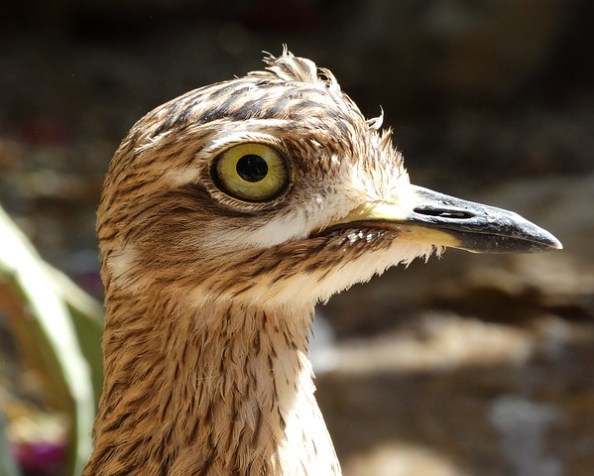
Just think now about the Bush stone curlew fake news. It is meaningless in the light of the reality. Even the faint hope it might bring if it were true, the saving of one species is only a brief ‘feel good’ in the bigger picture.

It is time to be rational. We need to fess up to the reality that not only has the horse bolted, but the barn doors are off their hinges.

Fortunately, there is still some habitat to save through smarter resource and land use decisions. Much more habitat and soil to rehabilitate with more sensible land management practices. And maybe even a few species to save.

But the reality is that this has to be done whilst at the same time feeding and raising the living standards of 7.5 billion souls growing at 250,000 a day. Because if this fundamental need is ignored in favour of a conservation ideal, the resources will be taken anyway. It has to be about all values with the humans ones up front.

This is an unpleasant reality but even a limited understanding of human psychology and history tells us that people come first as individuals and then as tribes. It’s what gave us our numerical success and is as unstoppable as the tide. This basic biology has only one outcome.

The real numbers are only going to get worse. This is the truth.

The hope we have is that it should be possible to feed, clothe and house (and put online) all the people currently here (and those about to arrive) whilst still retaining some of the Earth’s innate heritage through smart choices. But there is a big if. Reversing declines and saving some of the best bits will happen, if, and only if, we accept that this is multi-value problem with no one value able to preclude all others.

Crudely this means that production cannot exist without some conservation values and, critically, vice versa. We have to get multiple values from the remaining natural resource base or the real numbers will get an awful lot worse.

Incredulous

Incredulous

Here is a recent headline from an ABC online article, a reputable publicly funded media source

Bush stone-curlews popping up in suburbs as bird once extinct in ACT makes a comeback

Nice you might think given that headlines containing good news are like threatened species themselves, rare and at risk of being lost forever.

Here is the problem.

The IUCN lists the conservation status of the Bush stone-curlew as “least concern”. In other words, its not under any immediate threat of extinction in the wild.

In fact, the species has a broad habitat preference throughout Australia pitching up in open forest, eucalyptus woodland, rainforest edges, grassy plains, arid scrubland and along inland watercourses across much of the vast continent. It is a common species in the cities of Brisbane, Cairns and Townsville and is abundant in the tropical and subtropical north. In other words, it’s not a rare species at all.

I’m told there are pubs up north where you can sup on a stubbie alongside a foraging stone-curlew.

To use the word extinction, the termination of a lineage, where the moment of extinction is generally considered to be the death of the last individual of the species, is a lie.

This bird is not extinct.

Placing a geographic limit so as to use the term is disingenuous. Strippers are extinct in the Vatican is about as crazy a statement.

So is this fake news?

I think it is. The bird species is not actually extinct. It’s not even at risk unless you specify a discrete subset of its natural range. And when we learn that the Canberra specimens were almost certainly taking a wander from a nearby reserve artificially stocked with a few pairs to “reintroduce” them to the local scene, then the implicit hope in the story takes a huge dive.

I know that there are feeds to feed in this modern age of lightning fast news cycles. And I also know that there are good reasons for at least trying to be upbeat when, for the conservation minded, the world appears to be crashing down. But, like cricketers crossing the line, there are consequences for cheating on the truth. In the end people do not respect you, they dismiss everything you say even when you are actually being honest.

So my call to myself, and everyone who is in the business of information, let’s be as honest and as truthful as we possibly can and leave the spin alone when it comes to the facts.

This is easy to say and not at all easy to do but we all have to try.

Little gem: Why not?

Here is a little gem so obvious that Blind Freddie would not only see it but would immediately invest in it…

And it is so simple.

  • Extract out of the ground fossil energy
  • Heat it so that it changes its structure into material that can be molded into infinite number of useful objects and then manufacture them on mass.
  • Sell these useful items to consumers, ideally so that they use them once and have to go and buy another one the next time they need it
  • Let the used item fall away into whatever waste system is in place
  • Rummage around in the waste to find the used useful items
  • Reheat them again so as to make another even more useful material
  • Sell this useful material and make roads out of it
  • Ignore the obvious flaws in the gem