Warrior 2

warrior-2


It took many days returning to the shade of the Acacia. Dust fogged the horizon and silt found the folds of fingertips. A branch had fallen, its leaves fermenting in the goats stomach as the timber warmed the warrior’s bones against the night air. A grub crawled out from the severed bough and shrivelled in the amber glow. Regret flicked at the flames then rode the smoke to find the stars. Fitful rest interrupted the fear that all warriors banish with bravery and the thrust of a spear into the dark.

Both sides of the coin

We are told that the universe is fond of opposites: black and white, ying and yang, United and City. And this week gave us a cracker.

In the UK the supermarket chain Asda had its corporate responsibility director come out with a climate change adaptation solution. He said “Businesses and other stakeholders in the food sector need to work with farmers and suppliers on water-related activities to ensure current and future demand for produce is met and to reduce their risk to supply-chain disruption.” Good PR speak as you might expect, only he went on to say, “We launched a water-trickle scheme for celery growers in Spain that provided a water-spray kit to farmers with the aim of ensuring a secure supply of product to our stores.

Asda justified this largess because they believed that global food prices and supply would be affected by “dire droughts” around the world. Not to mention the floods in the UK.

In other words the retailer realized that farmers are critical to their business and although this sounds like a no brainer to a supermarket, it is surprising how modern complexity of the commodity markets makes it easy for them to forget.

And so on to the other side of the coin.

Coles, a similar sized food retailer in Australia, asked its suppliers for cash payments. Yes, they just went out and asked suppliers to pay for the privilege of having their commodities sold in Coles stores. Nominally these payments were to “to help pay for what it claimed was improvements to the super­market’s supply chain”.

The competition watchdog got wind of this cheek and got upset. According to court documents Coles had a $30 million target from their supplies and had penned sales scripts to help their staff get on with it. We will wait and see if they get more than a wrist slap.

Now we could accept that the universe will always throw out some bad with the good on the celestial wind and let it land where it will. Apply this karmic logic to food supply in a commercial world and for every company with a vision there will be another out for a buck. Coles were just not in touch with the good bit.

Except that the world is looking at a doubling of food production by 2050 and I am not sure what the celestial balance makes of that.

Lost post | big challenges for carbon offsets

This is a lost post that languished as an unpublished draft for over a year. As with most things with any resemblance to climate change policy the comment remains relevant a year later…


The ‘elephant in the bathroom may have farted’ post tells us that the possibility we all knew was there — that market forces can go in both directions — now seems likely for the Australian carbon market.

At the end of the fixed price period in 2015, the carbon price in Australia may well be considerably less than $24. The new estimate is $10 per tCO2e, a shortfall that would deliver a $4 billion budget ouch on forward projections for the government.

Late last year the Australian government decided to remove the collar on the carbon price originally proposed for the 2015-18 period, presumably to allow alignment with the EU carbon market. It also allowes Australian companies to buy up to 50% of their permit requirement from international credits. This means that the domestic carbon price is more likely to track international markets, hence the potential permit price of $10 at the end of the fixed price period in 2015.

Not quite what is supposed to happen if the policy is to work, not least for the nascent offset market.

Here are three big consequences of $10 tCO2e for carbon offsets.

Big consequence #1 — few offset activities are viable at $9/tCO2e

When the permit price is low, then carbon credit prices will be lower still, around 10-15% usually. This makes sense because why go to the trouble of buying an offset credit if it is the same price as a permit? The only time you might is when you have some desire to commit a random act of kindness or to get PR advantage from the co-benefits that offset credits can bring. So usually credits are cheaper than permits.

Reminder of what offset credits are all about — short version is that credits can be generated from activities that abate, reduce emissions or sequester carbon into the landscape [e.g. capturing and burning landfill gas, growing trees on degraded land, managing manure from piggeries] so long as the activity complies with a several important carbon accounting rules

A $9 carbon credit will severely limit the number of offset activities that can be financially viable whilst still complying with all the rules.

In energy, infrastructure, waste and land based carbon projects it will be very hard to cover activity, transaction and opportunity costs of project implementation from a $9 tCO2e return.

Big consequence #2 — revenue from offsets do not go to Treasury

When projected revenue is halved the last thing a government would want is for emitters to buy offset credits instead of permits. Large-scale emitters will act rationally and buy offsets if they are cheaper only this money goes to the offset provider and not treasury. This makes the fiscal hole deeper.

There is also the significant risk that too many offsets could further deflate the price by increasing supply. This was probably the main, but rarely stated, reason for why REDD [reduced emissions from degradation and deforestation] mechanisms that generate credits from protection of tropical forests have not been embraced — too much credit volume further depresses the carbon price.

So we can expect government to be much less enthusiastic about offset credits, at least the complaint kind that can be exchanged for permits. They will, of course, continue to promote and talk up voluntary offset credits, the ones you might buy to offset a flight or a company might purchase in order to be carbon neutral.

It should be no surprise that, despite the fanfare, Australia’s domestic offset scheme called the CFI is taking a very long time to get going.

Big consequence #3 — not enough pain to change behaviour

Remember that the climate change policy that puts a price on carbon was all about reducing greenhouse gas emissions from human activities by making it increasingly more expensive for emitters to carry on emitting under business as usual. Create sufficient pain in the hip pocket and there will be a change in behavior.

Emitters will become more efficient, saving energy themselves, or pass the price on to consumers who will become more frugal. If it the price continues to rise and efficiency gains are exhausted then it pays to make more substantial shifts in behavior, mostly toward alternative energy sources.

At $9 tCO2e for an offset there is not enough pain to make the change.


May 2014 Postscript

See what I mean?  A year on and offsets are still a pipe dream for all but a very few activities such as landfill gas capture that was already there anyway [so much for additionality].

And sometimes glacial pace of progress helps people forget the problem the policy was supposed to address.

Not good enough I say.


Goanna


goanna

I can’t get this image out of my head.

A road in the outback and a young aboriginal kid in western clothes bashes the long grass on the verge with a big stick. He is trying, along with his mates, to flush a goanna all under the watchful eye of an elder. The hunted creature remains hidden and may or may not have avoided the blows.

The elder has his own stick, a baseball bat in metallic blue. After a fruitless search he calls time and the hunting party climb back into a late model land cruiser station wagon.

The sound bite captured by the media crew before the elder drives away is that this country is sacred to his people and should not be exploited for shale gas.

I know it is unholy to drawn attention to the truth of this scene. An ancient culture lost but still pretending to exist whilst embracing with both arms the trappings of a new one. I am afraid that even with a few baseball batted visits to the bush those youngsters will not have a feel for country. They will know mobile phones, internet porn, Call of Duty and soggy chips.

This is sad. The generations of indigenous kids that went before had a wholesome life that was connected to the earth. The kids that climbed into the air-conditioned land cruiser will live longer than their ancestors but maybe not with the same wellbeing.

It’s just that whilst fracking probably will contaminate groundwater, clutter the landscape with drilling rigs and mess up all the local roads with traffic, resource use is a requirement for a western lifestyle. We cannot fly, drive and cavort around with technology trappings by chasing goannas. We have to exploit natural capital and subsidize our own energies from external sources. And that is a truth.

Of course it would be nice to do this with the least externalities and with care to restore any damage that is done. But let us at least acknowledge the truth that we cannot make mobile phones with a goanna.

Nor can everyone who owns a car go out and hit one with a stick.

The Kardashian Index

Take a look at this graphic. It records the number of two somewhat related terms — climate change and food security — appear in Google searches.

GoggleTrends-climatechange+biodiversity

The data is for the number of searches over time presented as relative to the peak number of searches that in this case was for climate change in December 2009, the Copenhagen COP [out].

Now we have talked about these trends before [Climate change | Google trends #1 and Biodiversity | Google trends #2 ] and concluded that either everyone now knows all they need to about these terms and so has no further need for the Google Gods, or nobody cares.

What we need is something more positive, something trending in the right direction. All we have to do is add another term to climate change and food security.

GoggleTrends-climatechage+biodiversity+KimKardashian

Now the numbers are relative to a new peak for Kim Kardashian in June 2013, presumably because we wanted to know about her new beau.

The averages are meaningful here of course. Relative to that heady peak, the proportional averages mean that we need to know 30x more about Kim than the other two boring terms.

And we still want to know more. None of this ‘we know already’ about Kim for there is always something new to find out. People are still interested.

There is no doubt in my mind that the best source of information on how the world is travelling is to follow this Kardashian Index. It is, after all, going in the right direction — none of this decline or flat lining nonsense.

Governments, market analysts, even environmentalists need go no further than keep their eye on Kim’s search rankings to have a reliable, predictable and highly informative measure of the state of the planet.

And respect to Google for providing this index for free.

Ah, the depths to which we fall.

Postscript | I guarantee that with Kardashian as a keyword tag this post will receive orders of magnitude more views than any other on this blog… Thanks Kim.

Failure

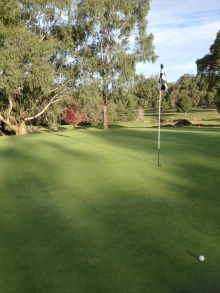
Springwood golf clubHow do you know when it is you who has failed or when the system has failed? Is it possible to tell the difference or even what failure is at all?

Everyday life is enough to trigger such anguished questions in all of us. Should we ‘man up’ and take responsibility or go the way of the mountaintop and realize that nothing is ever fired directly at us?

Recently a series of events made my own thoughts about failure acute.

First I enjoyed a delightful [if somewhat rainy] charity golf day to raise money for bushfire victims. The local community rallied as it has done consistently since 193 homes were lost in a fire that an ecologist friend of mine described as a huge blowtorch.

Sponsors showered golfers with freebies and the golfers duly purchased vast numbers of raffle tickets and made generous bids in the auction when the golfing was done. The clubhouse was packed with people and there was a palpable sense of unity in a shared cause… and that isn’t so common in these distracted days.

Out on the course it was a team game [the scramble format for those in the know] and we were doing ok. We had an ideal handicap mix and the will to win that seems to gush out of every golfers pores no matter their [in]ability.

Coming to the last two holes we knew we had a bit of chance but really needed a couple of birdies. Drive, 6 iron, putt gave us one. Then, a 9 iron to two feet. That was two and enough for a credible 4th place. We were quietly chuffed with that.

Not a failure at all and, for me, sticking that 9 iron when it [kind of] mattered made me quite proud of myself. Such moments make the memories of an amateur sporting life.

I’ll pass over the conversation a few days later with a social media marketing guy who politely said I would never make any money from my books along with the ongoing anguish that is every consultants daily grind — clients who, bless their cotton socks, don’t really want the help you are offering — and cut to the chase.

The system of information gathering on how the environment works in the state of NSW is, abruptly, surplus to requirements, along with the conceptual framework that supports environmental decision-making.

The new[ish] state government have thrown out statewide natural resource management targets and cut the guts out of the human capital and budgets that previously gathered data on the health of the environment. A brutal dismantling that stinks of the political polemic.

Why would anyone do this? Knowledge is power and always has been. The environment is and always has been the foundation of our success, not to mention the source of what keeps each and everyone of us alive. So why stop trying to understand it by scrimping on the measly current spend on collecting the data?

Perhaps it is a sinister plot, a backlash against all those closet greenies in the previous government who had run the show [somewhat corruptly as it turns out] for more than a decade. Or, more worryingly, a belief that natural capital is inexhaustible and that humans were invented to mobiise it into wealth, fast cars and tea parties.

Whatever the reason the news hit me as a monumental personal failure. Clearly I had nothing to do with the decision or any influence over it either way and yet I took it personally.

Even as I fought the illogical feelings with personal pep talks and a viewing of Despicable Me 2, anguish was taking hold. It has since solidified into a funk that if I don’t shake it loose will sit for a long time in the pit of my stomach.

Of course there is some justification for my malaise.

Since the early 1990’s I have been variously teaching, researching, advising, criticizing, developing and talking up environmental monitoring — I even switched out of academia into the risky world of entrepreneurship to build an environmental monitoring company that for a time helped accumulate data and understanding.

Wearing my consultant’s hat I have prepared countless reviews of strategy and provided policy advice on MER that has consistently talked it up and tried to explain the value proposition. Recently I even came up with some new approaches to data analyses that will add more value to the raw numbers.

And it feels like it was all for nothing.

Only worse, it also feels like I should have done more to make it obvious, even to blind Freddie, that monitoring the environment was worth it for everyone.

As I write there is still a lead weight in my midriff that I am sure will take some shifting…

But this too shall pass.

Time will lighten the load and another golf game will see a white ball fly and land somewhere near the flag.

I hope.
Natural capital

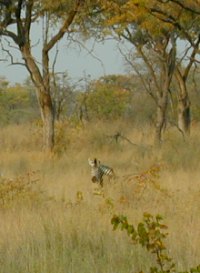
Okavango delta Botswana.jpgSuppose you are given $100,000 as an inheritance and told to live off it for a year. You are also told not to worry too much because there would be more money from the estate coming your way in the future.

It would be a pretty safe bet that most of us would happily spend at least some of this $100,000 bonus — perhaps a new car, maybe a nice holiday or two.

The cautious amongst us might put most of the money aside for a rainy day knowing that in the real world such windfalls are rare and we would be right not to be taken in by promises of it being windy again next year.

Now suppose that the $100,000 was definitely a one-off with no unexplained windfalls to follow. Receive the capital as a one off and a few more of us might decide to invest it and only spend the interest — invested wisely $100,000 would yield enough return on investment for a nice vacation each year for years to come.

Now suppose that the relative who left the money to you was not quite so well off or maybe there were a few other relatives to share the legacy and the sum bequeathed was $1,000.

It is unlikely that this amount would be spent on shares, bonds or bullion.

More likely it would be absorbed into the current account of everyday life and barely touch the sides.

Now consider an admittedly rare and unlikely situation where the relative was Buffet-like wealthy and left you a more serious $10,000,000.

You could spend all of this in a year but you would be getting quite a lot of ebay deliveries. Even with the attentions of the taxman, most normal folk would have trouble spending the annual interest on this sum.

If the money didn’t go to your head the interest on investment would see you and your family live like kings indefinitely.

All this makes sense. It has been explained many times over and the subtleties consume the days and nights of many a financier.

So here is a question. Why do we ignore all these fundamentals when it comes to natural capital?

We treat natural capital — the fundamentals of nature that supply useful goods and services — as though it were in the $10 million bracket: infinite, and inexhaustible with endless yield.

Admittedly there is some justification for this. Agriculture has leveraged natural capital most efficiently. We know this because there are now 7 billion of us. The mines and drilling rigs still bring minerals and fossil fuels to help us create goods and power with apparently no end on sight… yet.

Only it is just like the $10 million. It sounds like a huge sum for most people. And yet just like the majority of lottery winners, even big sums can be spent given enough profligacy

It is time that we both learn and accept that natural capital is finite and that we should pay the same attention to nurturing its yields as the investment bankers do attending to their profits.

One million people

Runners in City to SurfConsider a city of roughly 1 million people, Adelaide, Australia for example [Calgary, Canada; Bonn, Germany; Tuscon Arizona; or Bristol in the UK would do equally well]

Adelaide has two Australian Football League teams, a pro soccer team, two professional basketball teams, three Universities, a cathedral, numerous hospitals, many shopping malls, around 440 schools, an International airport, and a zoo.

There are over 400 suburbs arranged around a CBD that has high-rise office blocks that provide a common destination for a metropolitan public transport system includes a fleet of over 1,000 buses.

There are doctors, dentists, lawyers, Artisans and actors; and enough skilled tradesmen to build or engineer almost anything.

In short, Adelaide is a self-contained community surrounded by enough farmland to feed everyone.

Put all the people who live in Adelaide in one place and it would be quite a spectacle. It is hard to imagine what it would look like.

There would people as far as the eye could see. Lay them down head to toe and the line would stretch 1,800 km — 400 km further than a road trip from Adelaide to Sydney.

Stand these people in single file and the line would be 30 km long, similar to the queue at the post office.

Now having conjured the image of so many people in your mind’s eye put them all onto commercial aircraft.

Because 1 million is roughly the number of human beings who are, at any one time, airborne in commercial airliners making vapor trails around the globe.

And we wonder why we have environmental issues?

Bushfire in our back yard | some first thoughts

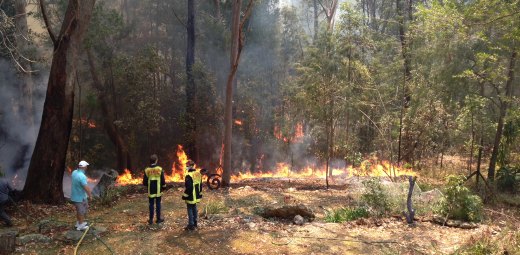
OLYMPUS DIGITAL CAMERAI live in Springwood in the Blue Mountains and we were fortunate to be just south of the horrendous fire front that ripped through on Thursday 18 October 2013 and took out more nearly 200 homes. And I am hugely grateful to brave firefighters and the community spirit that saved all the homes in our street when the fire burnt back on itself on the Friday. The loss of our back fence was an easy trade.

The thing is we were due a fire.

The last one in this patch of bush was in 2007 and the one before that 2001 and any number have been through before then. We had an especially warm winter and a warm, unusually dry and windy spring. And last summer there was an above average wet period in February that the plants used to their advantage. There is nothing exceptional in each of these events, but in combination we ended up with a heavy and highly volatile fuel load. All it needed was a spark and a strong wind. We got that last Thursday.

Bushfire-Banjo-Place-01


And on Wednesday 23rd October 2013…

All afternoon three heavy helicopters have flown over and around our house countless times.  They are ferrying water to drop on the bushfire that has flared again less than a kilometer away.

Illogically the sound is terribly disconcerting.

My ears are constantly reminding my mind of a real and present danger.

Except that it was last Friday that the fire was in our yard, licking its way up the gully to devour our back fence. Dense smoke stacks dwarfed the houses on both sides of the street as tenacious fireman set back burns and hosed their way into the fire fronts saving each property one at a time.

Everyone helped each other without a thought – it was just wonderful to witness.  Courage, generosity, kindness and compassion are words that feel right and yet they are not even close to explaining what it was like.

Today the same fire that nestled in the bush for days is trying to get at another street and the helicopter noise should be reassuring. After all it is the sound of human bravery and endurance, resources being thrown at a force of nature. Whilst logic keeps this thought acute the body reacts to the sound and to the smell of smoke and sets itself on high alert.

Given the option to leave for a safer place, we chose to stay at home today and defend our home should embers be blown our way.

The dustbins full of water on the deck next to me together with the garden hoses placed strategically to spray the perimeter are only mildly reassuring. Is also less brave a choice than it sounds as the prevailing wind from the south-west has sent smoke and any real danger further north.

OLYMPUS DIGITAL CAMERA

What can it mean to have a wildfire too close to your home?

What comes to mind is how privileged I am to live in a World Heritage Wilderness.

Even more so to live in a community that so efficiently and skilfully mobilises emergency services and where people care for each other when it matters.

193 houses were lost in the neighbourhood on the Thursday the closest just a few hundred metres over the ridge so I also feel fortunate and blessed that ours was untouched.

The firefighters, many of them volunteers, were all heroic, tireless and committed. When we needed help they were right there and I thank them all.

Extra special thanks go to the crew of Arcadia 2 who protected our home.


Sounds crazy #7 | Hidden hazards in the backyard

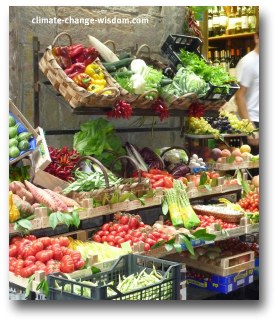
produce-01This ‘sounds crazy’ is an absolute ripper.

This bottom column headline and grab appeared on the front page of the weekend Sydney Morning Herald this week…

Hidden hazards in the backyard — Families are unwittingly exposing their children to the risk of sickness and even brain damage from lead hidden in backyard soil and paint… 

Fair enough. No doubt there is many an older inner city property that has not been renovated since the time lead was in most paint stock and some of that old stuff is peeling away and ending up in garden soil across the suburb.

Any city dweller knows that cities are not exactly pristine. The air is heavy with particulates from brake dust to builders waste and on a rainy day it washes all over your shoes. It comes with the territory.

The grab continued…

Lead experts fear the trend towards home vegetable patches and community and verge vegetable gardens is also putting children at risk.   

So at a time when all our electronic conveniences have deprived our youth of knowing anything about life giving soil, we must put the fear of god into those with the umph and initiative to get back to sharing produce they have tended.

Thousands of generations of good folk grew vegetables in their backyards. They planted, watered and cared for their crops and then fed their families wholesome fresh food. The extra they exchanged with their neighbors or sold at a local market helping to create the very essence of community that is so central to our wellbeing.

And they did this even when cars were spitting out lead, when the pipes were made of lead and when DDT was the pesticide of choice.

Did those dangers stop them? Not at all, they prospered and went ahead to multiply by the millions. So much so that today we need to double global food production in the next 30 years just to keep up with demand and will need every square foot of productive space we can find.

All I can say is shame on those ‘experts’, university academics with a career to build, and shame on the media for printing such fear mongering [and this time you can’t even blame Rupert].

For heavens sake, growing veggies in the backyard is a good news story.

I just wish the possums would stop eating mine.