Golf scores

Springwood Golf Club 10th green

How retentive is this?

For the last 5 years each time I come home from playing golf I have recorded my score on a spreadsheet.

If that wasn’t bizarre enough I plot the scores, handicap calculations, number of puts per round and even the consecutive times I can keep the over par score in single digits for 9 holes [133 is the record].

The longer this habit goes on the harder it is to break. Every time I try to ignore my score, I make a mental note of it and later open the spreadsheet to enter the numbers.

Why do I do this? The scores have no bearing on competitions, as I haven’t played in one for a decade. I don’t even have an official handicap. The numbers only make comparisons against myself.

I could put it down to the weirdness of the human condition or perhaps that I am nuts. Both unsatisfying explanations I think. Here is another.

What if it is about satisfying a deep the need to know what has gone before, so as to help predict an uncertain future? If I have a record of what has happened, the more confidence I will have in future events. And the longer the past record the more reliable is my prediction of the future.

This satisfies my left-brain dominance and the logic confirms that I cannot be nuts.

Except that it is not true either. The only reason I write down my golf scores is to make me feel good. It fuels my ego by working as a record of achievement. Even if there is a bad score, better ones can follow. My egoic self revels in the contest… against myself.

This is classic pleasure and a pain. It sets up and fuels an internal conflict and pampers the very thing I want to loose. It is definitely not the path to enlightenment.

Todays score was a 38 on the back 9 with 14 putts.

Evidence-based decisions

Melbourne-skylineIn the last month I have been exploring decision making in business. It’s a long story that spins around one core assumption that I needed to test. The assumption is this.

If evidence is available people will use it to help them make smart choices.

Now I always thought that before any serious decision was made the brain recalled and sifted its available knowledge relevant to the decision. This coffee is hot. It must be because I just saw the barista pour steaming milk into it so I will sip it to avoid burning my tongue.

Other decisions rely on less categorical evidence. My superannuation scheme allows me to choose between steady and more risky but high-yield investments that have something to do with the mixture of stocks and bonds in my portfolio. I choose the steady option because I remember seeing a graph showing share price crashes occur often enough for another big one to happen before I retire.

Sipping coffee or avoiding risky stocks are evidence-based decisions even if the amount and quality of the evidence used is vastly different.

As a professional scientist evidence is my currency. Training and experience have taught me the skills to sift data into facts and to understand how facts can become evidence. And I always hope that the evidence is articulated in forms that influence decisions. This is a powerful paradigm that still underpins my consulting practice alloporus environmental.

It always made perfect sense to believe that if the human brain makes decisions based on facts, then if evidence were available people would use it.

Oh the bliss of naivety. If only it were possible to be in such a state indefinitely. Life would be so much easier.

Then I began to ask business types this question.

If evidence were available to help decision-making, would you use it?

Mumbling ensued. In just a handful of meetings it was clear that the real answer was no. There were claims of course and even the occasional example of actuarial prediction or due diligence report, but in reality decisions are gut feel things.

At best evidence is gathered in support of a decision already made.

It has been quite a shock to find a core assumption that is a given for a scientist is at best bent and at worst ignored in other walks of life, even where evidence is needed.

Then I paused and realised where evidence comes from for the majority of people who do not have the time or inclination to peruse academic tomes. It comes from their experience; usually their immediate experience that is still in the front of the mind.

And a good deal of this ‘evidence’ is incomplete.

What we see in the workplace or told by the boss or browse on the web is not evidence in the scientific sense. Even if it involves data it has no context to determine inference. In short we decide on a whim. What our guts tells us.

If this is true it begs some very interesting questions.

Why doesn’t the system fall over if we are relying on the [mostly] corpulent guts of [mostly] male business managers?

Why do we have evidence at all if nobody uses it?

Would decisions be better if they were made analytically?

Fate

Over a decade ago I was at the Sydney Cricket Ground with my son. South Africa were playing a tour game against NSW and in a break in the play we took a walk. A couple of the South Africans not playing in the match were practicing in the nets and we watched at close quarters.

Makaya Ntini, yet to become the fast bowling legend, was sending a few down. We stood behind the net just a yard or two from the single stump that Ntini was trying to hit — just a few strands of cotton mesh between us and the ball travelling at 140+ kph.

Now I had played cricket a lot and my son was about to start on his cricketing odyssey so this was quite a treat. Imagining yourself trying to protect that stump and send the ball to all parts with just willow in your hand.

I remember the sound. The ball goes fast enough to whistle through the air. And I remember that it was crazy quick. Unless you watched with your whole body and responded with  cat like reflexes, the ball was gone.

It was a pure moment. I realised then that in any human endeavour the very best are so much better at what they do than the rest of us.

On Tuesday at the same ground a cricket ball fatally injured one of the very best. Philip Hughes was good enough to dispatch those whistling fastballs to all parts of cricket grounds from Sydney to Durban, in a flash notching 26 first class centuries and over 9,000 runs.

Tragically one delivery that was slower than he thought hit him. It stuck in the wicket and he had played it before it arrived. Fate then played cruelly.

All cricket lovers are grieving the loss of a great talent. We feel it deeply for only a gifted few have the ability to stand and play balls delivered at such great pace without a care.

Phillip Hughes was one of the very best.

Gross national happiness and the truth about policy

snakeMy wife is scared stiff of snakes. The passing of a large python along our back deck one evening had her stomping down stairs to the laundry for months. She still carries that wariness with her.

Just as seemingly continuous sweeping around the African rondavel meant you could see the mamba before it could strike you, so a general fear of slithering things has a survival benefit.

Fear of snakes makes perfect evolutionary sense. Those with the ability to avoid such dangers will survive longer than the more blasé. Often this trait can translate across to a fear of nature in general on the logic that snakes, mosquitos, siders, scorpions, wasps… just about anything that bites, stings, or looks like a critter that bites or stings, could be under any rock.

It is a surprise that nature in the form of woodland and forest equates to happiness and could become part of the ‘GDP plus’ approach to measuring national well-being — the elusive gross national happiness index.

The survival instinct that took us away from forests into man-made buildings with fly screens is tempered by an emotional connection to the trees for their nurturing quality. A gentle breeze through the trees as the birds sing and the blossoms waft their scent across our senses has a calming effect — a counterbalance to the fear. Not to mention the sustenance from the deer and berries.

But give 1000 people a choice between either living rough in the forest for 30 days or living in an all expenses paid 5 star resort at the beach for a month and I would put money on 999 of them choosing the beach.

This creates an interesting conundrum for GDP plus.

If people prefer the hotel to the forest but are supposed to be happier in the forest, what should governments do? They could promote economic growth to give more people the money to stay at hotels or focus on retaining the forests that might otherwise have to make way for the hotels and money-making activities.

Put in these terms the choice seems far too simplistic yet it actually goes to the heart of policy making. Policy has to understand values and then decide on trade-offs among them. How much more should economic development be valued over the protection of rainforest is a question of values. Building new hotels is a decision to trade commercial and comfort values against the benefits of the wind in the trees, the filtering of air and water, and the odd forest product.

What the policy makers must remind themselves every day is that the values traded are inseparable. They exist together in each person. The 999 folk who chose to go to the beach also value the forest even if they don’t choose to go there, even for a visit. It is true that our value for nature and its nurture are often buried deep enough in our psyche for us to deny its existence, but it is there.

Policy is not actually about keeping enough stakeholders happy to ensure future election victory. It is about understanding where the real value trade-offs happen, inside each person. Even the ones that are buried or smothered by those from instant gratification.

People are frightened of snakes for good reason and yet deep down they also remember that nature is good to them too. Sometimes they even think of this as they sip cocktails by the pool.

What policy has to do is remind them of this truth.

Doors closing please stand clear

passenger trainIn life there are opportunities everywhere. It is possible to start a revolution, a company or a friendship almost anywhere at any time. All you need is enough energy and commitment.

It is a marvel of the human condition that the societies we create mostly facilitate this desire for opportunity that is in all of us. We even pen a plethora of self-help literature on the back of this universal potential. Books on positivity that show us the glass as half full to overflowing only sell because they catalyse our innate desire for opportunity.

Fair enough you say.

Such a hippy-dippy worldview may be upbeat but it is only part of the truth. There is the downside too.

The cheats, naysayers and greed infested abound to ruin many an opportunity with their negativity. The world is nothing if not two-sided. It always has enough ying and yang for everyone, even those with a library full of Tolle tomes.

I agree. Opportunity does exist for us all but so too does misfortune. Both are a heartbeat away.

Here is the thought. I suspect that those who cheer their way through life easily coping with misfortune and insatiably seeking opportunity know one crucial thing…

Doors closing please stand clear

In other words everything is transient. The opportunity will not be there forever any more than the misfortune. The doors will close on both so that new doors can be opened.

The human condition is honed to this flux.

We intuitively know that when an opportunity comes along it will only be there for a short time. Our chance at it is likely to be brief. We either act to grab the chance or we watch it pass by and say ‘better luck next time’.

In day-to-day life the loss of an opportunity is rarely life changing. There will be stories of the record producer who passed up the Beatles or a soccer manager who said no to signing Lionel Messi, but these are rare anecdotes. The frequency of opportunity in everyday life means that misses do not matter that much.

Not so with nations. They move more slowly and are less nimble in both recognising and taking opportunities. Leaders of nations must be much more alert to see opportunity on the horizon and position themselves and their constituents to be ready.

Australia for example has done very nicely out of wool and then minerals, especially iron ore and coal. It took these soft and hard commodity opportunities with both hands and has become wealthy as a result. Only to keep the wealth coming it needs to ready to grab the next opportunity. Current leadership seems to be doing the opposite and holding on tight to the past.

It’s a poor choice.

What, no job

mural

Suppose that you had a role instead of a job.

You go through school and train for your role and can choose one that suits you, but there is no salary. You don’t get paid, nobody does. Reward comes only from the role.

Instead of a salary all the needs and little luxuries of life are taken care of by a totally new system that doesn’t use capitalism — a bit like the Star Trek universe. All the stuff you need is made in the replicator or gets delivered by folk whose role is to drive trucks.

The only rule is that the free stuff is conditional on you delivering on your role for 24 hours per week in three 8-hour shifts.

Would you do it?

Would you go through the education, learning and apprenticeships to qualify for the role knowing that you would not be paid? You will not need money for all the needs, the good stuff, even the unnecessary stuff, because they are plentiful and free.

I wonder if you would.

Most people feel incomplete without some sort of occupation. At some level all human beings need to feel useful. We actually want to help each other out even when ‘each other’ might be limited to our kin.

A role would fulfil that requirement to be useful.

But is that enough?

Do you really need to get paid?


Time for scepticism

coal mineAt what point did scepticism become a dirty word?

Perhaps it was when political correctness overtook us and we were forced to accept convention or risk ridicule from everyone, including the kids. Maybe it was when we disappeared into the virtual world where the only thing reminding us of reality was stiffness from ‘smartphone neck’. Or maybe it was when the media purposely made sceptic and denial mean the same thing.

Here is quick reminder of the real definition of sceptical… not easily convinced; having doubts or reservations.

What this means is that a sceptic is not convinced by the first thing she hears. She thinks about new information, turning it around to see it from all sides. She seeks other opinion, even counsel. She thinks some more and then makes a decision to believe or not.

The sceptic is not a denier even though she may choose to reject what she is told. She is much smarter than that — she starts with the idea that whatever new information is heard may not be all that it seems.

Recall any scene from your favourite reality TV show. The editors pull together snippets of action to present the most drama and then milk it with liberal use of mood music enhancement. This can make the little craziness in the scene much wilder and entertaining; but if we believed all these capers as the truth we would be foolish indeed.

Now let’s consider how the sceptic would deal with a more difficult example.

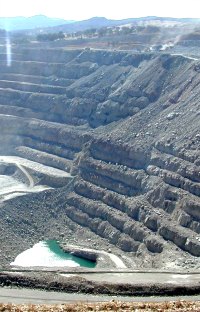
Should we believe the Australian government when it says that giving mining companies taxpayer funded offset credits to capture methane at new coal mines is a good tactic to achieve policy targets for emission reduction?

Under any carbon price mechanism the idea is to reduce the carbon intensity of human activities. This means that energy generation, manufacturing, transport and agriculture [the sectors that make up almost all the greenhouse gas emissions] should release less carbon to the atmosphere than in the past. Where the activity can’t be made less intensive, such as a coal-fired power station, emitters can buy credits [or are given allowances] that, in time, make them commercially inefficient and so they are replaced by cleaner technologies.

Methane gas is often associated with coal seams. The whole coal seam gas debate is about extracting this methane as a fuel source. But when the resource in demand is the coal, the methane is either incidental or too expensive to capture. Usually it is released to the atmosphere where it contributes to climate change effects because methane has 23 times the global warming potential of carbon dioxide. Capturing and burning the methane from coal mines would reduce this emission source because methane converts to carbon dioxide when burnt. And carbon dioxide has a net global warming potential of 1.

Burning methane would reduce net emissions from the activity of mining coal.

Except how does this contribute to emission reduction when new coal mines will extract millions of tons of the very stuff that generates greenhouse gases in the first place. No matter that most of the coal is exported and ends on the emissions accounts of another country.

Whatever the rhetoric the taxpayer is actually paying for more emissions not less. In effect it subsidises the development of new coal extraction capacity. This cannot be “a good tactic to achieve policy targets”.

So what should the sceptic do with all this? Be themselves and be sceptical, very sceptical.

This is a ruse by the mining sector to get paid for emitting, the exact opposite of the original policy objectives.

Warrior 2

warrior-2


It took many days returning to the shade of the Acacia. Dust fogged the horizon and silt found the folds of fingertips. A branch had fallen, its leaves fermenting in the goats stomach as the timber warmed the warrior’s bones against the night air. A grub crawled out from the severed bough and shrivelled in the amber glow. Regret flicked at the flames then rode the smoke to find the stars. Fitful rest interrupted the fear that all warriors banish with bravery and the thrust of a spear into the dark.

Inspiration

workstationHave you ever stared at a blank page and wondered how on earth you will ever fill it with words? Yes, it has happened to us all. Maybe it was a long time ago in the exam hall, or perhaps more recently in front of the computer as the icy cold keyboard repels your fingertips.

And yet blank pages usually end up stuffed with words. Often it is drivel, but the empty screen is patterned soon enough. Somehow we find something to say.

It is amazing how this happens. We dip into the recesses of our synapses and an idea pops into being followed by words in some logical sequence to describe the thought. Blank is transformed because our brains conjure up meaning from somewhere.

Neuroscientists claim, as they populate their own blank pages, that this learned process is all about higher brain functions communicating with the more ancient limbic system in ways unique to humans. Something about our frontal cortex physically enveloping the base of the brain.

As maybe, only this inevitable mechanistic explanation sounds like an apology. Why not admit that we have no idea just how staring at a blank page can yield nothing, or a page of drivel, or on those very rare occasions a masterpiece.

There was a blank page before Shakespeare came up with “Shall I compare thee to a summer’s day?” Enough said.

After many decades trying to fill pages and screens with drivel from technical reports to blog posts, I believe that the inspiration that finds the idea and sets the words in motion is with us all the time. A portal if you like that can connect us to all the ideas in the universe. Only we constantly forget where it is and how to open it.

If we are tenacious or stubborn we find tricks to get around this amnesia. Reading related material, preferably of poor quality, often opens the portal for me, as does a tedious conference presentation. Something ego related happens when exposed to someone else’s drivel. It fires up my competitive instinct.

“You see,” says the neuroscientist. “It’s all about the limbic system.”

Touché

Another trick I use is to find a place to write. A spot where there is nothing else to do or has been done other than fill the blank page. The first draft of ‘Fences’ an as yet unpublished novel was written long hand on the train. By the way if anyone wants to read a ripping yarn about Jacob Morafe’s adventures as an African game ranger, let me know. Someone has to be the first to read a future bestseller. It could be you.

But I digress. Any actions taken to help fill the page are just triggers to achieve the portal and you will have yours. It is the mystery of the muse.

And there you go. Before you know it another 500-word post has appeared on a blank page. Drivel or not, it is as much a necessity for those afflicted with the writing curse as the limbic system was for our early survival.


Idea for healthy thinking

Here’s a thing.

Is this portal, the mythical link to the inspirational power of the universe, just the moment when we connect with each other?

Drivel or masterpiece is only known by how much it connects with other people. Somehow the masterpieces resonate.

I like this idea. Wouldn’t it be amazing if this were to permeate all the fluff that fill screens and clogs printers every day. So instead of just covering up the white space of the page, we waited for the good stuff.

“Nice thought Mark, but tell that to the limbic system.”

Happy thinking.

Inspiration 

budda statue smlHave you ever stared at a blank page and wondered how on earth you will ever fill it with words? Yes, it has happened to us all. Maybe it was a long time ago in the exam hall, or perhaps more recently in front of the computer as the icy cold keyboard repels your fingertips.

And yet blank pages are usually filled. Often with drivel, but the empty screen fills soon enough. Somehow we find something to say.

It is amazing how this happens. We dip into the recesses of our synapses and on an idea pops into being followed by words in some logical sequence to describe the thought. Blank transforms because our brains conjure up some meaning from somewhere.

Neuroscientists claim, as they feel their own blank pages, that this learned process is all about higher brain functions communicating with the more ancient limbic system in ways unique to humans. Something about our frontal cortex physically enveloping the base of the brain.

As maybe; only this time the inevitable mechanistic explanation sounds like an apology. Why not admit that we have no idea just how staring at a blank page can yield nothing, or a page of drivel, or on those very rare occasions a masterpiece.

There was a blank page before Shakespeare came up with “Shall I compare thee to a summer’s day?” Enough said.

After many decades trying to fill blank pages with drivel from technical reports to blog posts, I believe that the inspiration that finds the idea and sets the words in motion is with us all the time. A portal if you like that can connect us to all the ideas in the universe. Only we constantly forget where it is and how to open it.

Inevitably we find tricks to get around this amnesia. Reading related material, preferably of poor quality, often opens the portal for me, as does a tedious conference presentation. Something ego related happens when exposed to someone else’s drivel. It fires up my competitive instinct.

“You see,” says the neuroscientist. “It’s all about the limbic system.”

Touché.

Another trick I use, along with ignoring smartarses, is to find a place to write. A spot where there is nothing else to do or has been done other than fill the blank page. The first draft of ‘Fences’ an as yet unpublished novel was written long hand on the train. By the way if anyone wants to read a ripping yarn about Jacob Morafe’s adventures as an African game ranger, let me know. Someone has to be the first to read a future bestseller. It could be you.

But I digress. Any actions taken to help fill the page are just triggers to achieve the portal and you will have yours. It is the mystery of the muse.

And there you go. Before you know it another 500-word post has appeared on a blank page. Drivel or not, it is as much a necessity for those afflicted with the writing curse as the limbic system was for our early survival.


idea for healthy thinking

Is this portal, the mythical link to the inspirational power of the universe, just the moment when we connect with each other?

Drivel or masterpiece is only known by how much it connects with other people. Somehow the masterpieces resonate.

I like this idea. Wouldn’t it be amazing if this were to permeate all the fluff that fill screens and clogs printers every day. So instead of just covering up the white space of the page, we waited for the good stuff.

“Nice thought Mark, but tell that to the limbic system.”

Happy thinking.